
 Neng Nana
By Charlie Wright
Updated November 7, 2026, 4:33 PM CDT
The landscape of Major League Baseball is bracing for an uncertain winter, but for future Hall of Famer Max Scherzer, the upcoming months are less about labor negotiations and more about personal introspection. At 42 years old, the legendary right-hander finds himself at a career crossroads, recently confirming that he will utilize "lockout games"—informal, high-intensity training sessions—to determine whether he will return to the mound for a 20th professional season in 2027.
Scherzer, whose illustrious career has been defined by an unrelenting, almost obsessive competitive fire, is not ready to hang up his spikes just yet. Speaking with Jon Heyman of the New York Post, the three-time Cy Young Award winner revealed that his decision-making process will hinge on how his body responds to rigorous, game-simulated intensity during this period of uncertainty.
The Final Bow: A Toronto Curtain Call
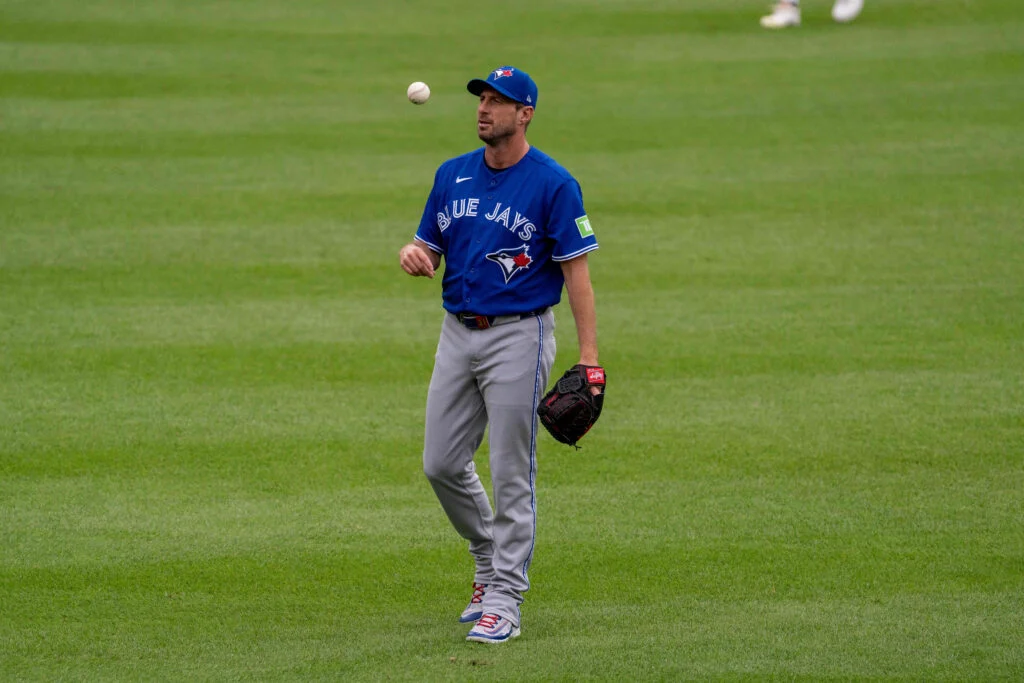
The sentiment surrounding Scherzer’s potential retirement reached a crescendo during his final start of the 2026 season with the Toronto Blue Jays. In a game that held no weight regarding postseason implications, Scherzer took the hill with his family watching from the stands. The atmosphere at Rogers Centre was palpably emotional; the Toronto faithful, recognizing the gravity of the moment, treated every pitch with the reverence reserved for a departing icon.
Scherzer delivered a performance that served as a microcosm of his career—grit, precision, and efficiency. He navigated seven innings of one-run baseball, racking up seven strikeouts and silencing opposing hitters with the same intensity he utilized in his prime. While the scoreboard read as a standard win, the visual narrative was unmistakable: a final, appreciative tip of the cap to a storied career.
A Chronology of the 2026 Campaign
To understand the nuance of Scherzer’s decision, one must look at the trajectory of his 2026 season. It was a year characterized by intermittent brilliance overshadowed by the persistent specter of physical decline.
- Spring Training: After a late-March signing, Scherzer arrived in Toronto to bolster a rotation plagued by injury concerns. His arrival was viewed as a stabilizing veteran presence, though the limitations of his age were already a subject of debate.
- Mid-Season Turbulence: The middle months of 2026 were defined by a carousel of IL stints. Scherzer dealt with forearm discomfort, ankle issues, and chronic back spasms, limiting him to a mere 84 2/3 innings—a figure nearly identical to his injury-shortened 2025 campaign.
- The Late-Summer Resurgence: Following a return from back spasms in late July, Scherzer underwent a performance shift. Over his final dozen starts, he posted a 4.16 ERA. While his peripheral metrics—specifically an xFIP of 4.81 and a SIERA of 4.69—suggested he was "pitching lucky" at times, his xERA of 3.56 indicated that he was still capable of inducing high-quality contact and maintaining a competitive edge.
- The Final Outing: The season concluded with the aforementioned gem against the Reds, leaving the door slightly ajar for a return.
The Pursuit of the Strikeout Throne
Perhaps the most compelling narrative driving a potential 2027 return is the ghost of his long-time rival, Justin Verlander. The two titans of the modern era have spent nearly two decades chasing one another across the record books.
Entering the final game of 2026, Scherzer knew exactly where he stood on the all-time strikeout leaderboard. With his seven punchouts, he ascended to 3,557 career strikeouts, leaving him exactly three behind Verlander. For most pitchers, reaching ninth place all-time would be the crowning achievement of a career. For Scherzer, it is a deficit.
The rivalry is not merely a statistical footnote; it is the fuel for his engine. The prospect of overtaking Verlander in the record books—a feat that would solidify his status as one of the top five strikeout artists in the history of the sport—is a carrot that might be too enticing for a man of Scherzer’s makeup to ignore. If he returns, the pursuit of that eighth spot (and potentially higher) will serve as the primary catalyst for his continued participation.
Analytical Breakdown: Can the "Mad Max" Persona Sustain 2027?
Data analysts are divided on whether a 42-year-old Scherzer can contribute meaningful value to a contending roster. A 5.74 ERA across 18 starts in 2026 paints a grim picture, yet that number is heavily inflated by his early-season struggles and mid-season rust.
When isolating his late-season performance, the "something left in the tank" theory gains traction. His ability to maintain a 3.56 xERA after returning from his mid-summer back injury suggests that his command and pitch-mix deception remain effective. However, the recurring nature of his injuries—specifically the back and forearm—presents a significant risk profile for any team considering an investment.
If Scherzer chooses to return, he will likely be looking for a low-risk, high-reward arrangement. He has proven comfortable in the role of a late-signee, joining a club with specific rotation needs. For a team seeking a veteran mentor or an emergency depth piece, a healthy Scherzer—even in a limited capacity—remains an asset that few teams would outright dismiss.
Official Responses and Industry Outlook
The baseball industry has reacted to Scherzer’s comments with a mixture of nostalgia and pragmatic caution. While no front office has formally commented on his status, scouts note that his velocity, while diminished from his Cy Young years, remains functional within a modern "pitch-to-contact" framework.
Scherzer’s focus on "lockout games" is telling. By scheduling his own simulated competition, he is bypassing the traditional public scouting process, choosing instead to test his mechanical consistency in private. This indicates a high level of self-awareness; he is not looking for a guaranteed spot based on his legacy, but rather based on his current ability to prevent runs.
Implications for the 2027 Offseason
Should Scherzer decide that he has one more season in him, the implications for the 2027 free agent market are intriguing.
- The "Mentor-Starter" Dynamic: Younger, pitching-needy clubs (such as those facing internal rotation injuries) could benefit from Scherzer’s presence. His preparation routines are legendary, and having a future Hall of Famer in the clubhouse is often cited by management as a factor in developing younger arms.
- The Roster Construction Gamble: Teams that sign Scherzer must be prepared for the reality of the 2026 season: the IL is an inevitable part of the package. Any contract offered to him will likely be heavily incentivized, based on innings pitched and active roster status.
- The Narrative Factor: The marketing value of a legend chasing a historic milestone cannot be ignored. A team in a mid-market position might find that the ticket sales and fan engagement generated by Scherzer’s final pursuit are worth the gamble of a rotation spot.
Conclusion: The Final Verdict
As the winter settles in, the baseball world will be watching closely for updates from the Scherzer camp. Will the "lockout games" reveal a body that is finally ready to rest, or will they provide the confirmation he needs to return for a 20th season?
For now, the man who has defined a generation of pitching remains in the shadows, working out, testing his limits, and staring down the career of his greatest rival. Whether he returns for one more season or chooses to step away, Max Scherzer has already secured his place among the pantheon of baseball’s elite. But if history is any indication, he won’t be satisfied until he has squeezed every last strikeout out of his arm.
The stage is set. The workouts begin soon. And in the silence of the offseason, the greatest competitor of his era is making his final, most difficult pitch.

 Iffa Jayyana

 Asro

 Laily UPN

 Nana

 Layla Zulfa

 Pevita Pearce