Pevita Pearce
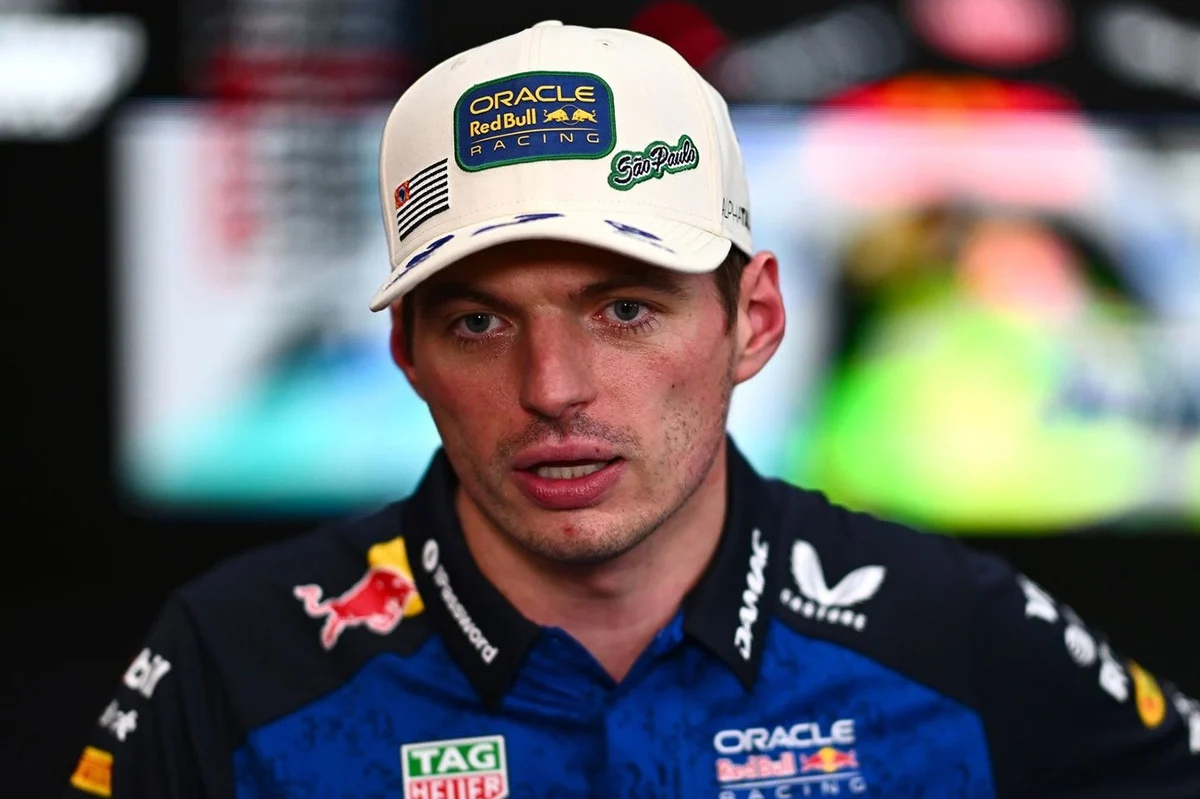
SAO PAULO — Formula 1 qualifying sessions are typically scenes of intense pressure, high-stakes drama, and relentless physical and mental exertion from drivers pushing machinery to absolute fractions of a millimeter. Yet, during Saturday afternoon’s wet-weather qualifying session at the Autódromo José Carlos Pace in Interlagos, Red Bull Racing’s Max Verstappen offered a masterclass in pragmatism—treating Q1 as little more than a warm-up before casually retreating to the garage to catch up on Premier League football.
With a confirmed engine-related grid penalty hanging over his head for Sunday’s Brazilian Grand Prix, Verstappen elected to call it a day after the opening segment of qualifying. Settling comfortably into 21st place on the FIA’s provisional starting grid—sandwiched just behind Lewis Hamilton and immediately ahead of teammate Sergio Perez—the four-time world champion’s early withdrawal was not a reflection of a lack of pace, but rather a calculated exercise in damage limitation.
While his brief on-track stint once again highlighted his peerless mastery of wet conditions, Verstappen’s weekend points toward a wider, more concerning narrative: under Formula 1’s evolving technical regulations, climbing through the field from the back of the grid is becoming an increasingly insurmountable uphill battle.
Main Facts: The Anatomy of a Calculated Early Exit
The logistical reality of Verstappen’s weekend in Sao Paulo dictated a defensive tactical approach long before the pit lane traffic light turned green. Hit with an inevitable power unit component change that triggered a back-of-the-grid penalty, the Dutchman knew that setting a blistering time in Q3 would serve no functional purpose for Sunday’s grand prix start.
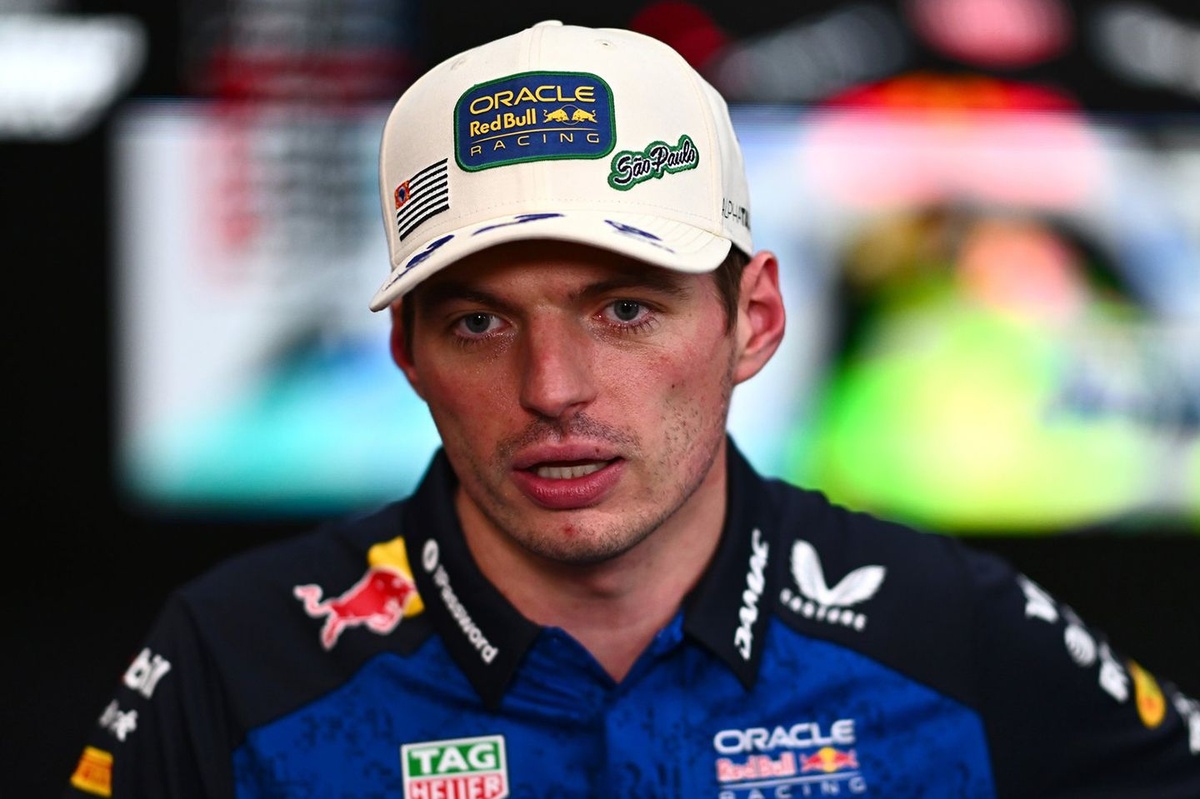
Despite this, Verstappen’s raw speed in treacherous, wet conditions could not be entirely masked. When he finally ventured out onto the soaked Interlagos circuit during Q1, he immediately reminded the paddock of his extraordinary wet-weather adaptability. His very first flying lap was a staggering 1.4 seconds faster than the provisional benchmark at that stage, and four tenths clear of Ferrari’s Lewis Hamilton, who crossed the timing line moments later.
When the checkered flag dropped on Q1, Verstappen had comfortably secured third place—trailing only Lando Norris and George Russell. But rather than prepping his RB machine for the rigors of Q2, the Red Bull charger simply climbed out of the cockpit, peeled off his helmet, and effectively ended his competitive participation for the afternoon.
Chronology: A Multi-Hour Weather Delay and Premier League Distractions
The path to Verstappen’s unorthodox Saturday afternoon was defined by long, tedious stretches of waiting. Persistent torrential downpours over Sao Paulo forced race control to implement a prolonged red-flag delay, leaving drivers, teams, and fans stranded in the paddock for nearly an hour and a half while drainage crews battled standing water on the circuit.
While most drivers utilized the downtime to review telemetry, analyze radar maps, or converse with engineers, Verstappen found a far more relaxed way to pass the time. Speaking candidly to Viaplay’s broadcast crew in the media pen, the Dutchman offered a glimpse into his surprisingly casual pre-qualifying routine.
"Watching football. Premier League," Verstappen laughed when asked how he spent the extensive rain delay.
When pressed on which specific fixtures had captured his attention, he detailed a heavy afternoon of English football viewing. "A lot of different games, but Nottingham Forest-Manchester City was the last one before I got into the car. It was 3-1, I actually saw a great goal just before I got back in!"
Given the extreme danger and razor-thin margins of handling an elite Formula 1 car in monsoon conditions at Interlagos, the notion of casually watching a Premier League match moments before stepping into the cockpit seemed surreal to observers. Verstappen, however, remained unfazed.
"I’m starting last anyway, so it doesn’t matter," he shrugged, reflecting on the sluggish pace of the weather-delayed schedule. "I’ve lost 12 hours of my life today that I’ll never get back."

Supporting Data: Past Glories vs. Modern Realities
For years, Interlagos has been synonymous with breathtaking, career-defining charge-through-the-field performances. The historic Brazilian circuit boasts long straights, unpredictable microclimates, and numerous heavy braking zones that traditionally make overtaking far more viable than on tight, twisty street circuits.
Verstappen himself is no stranger to pulling off miraculous recovery drives in Sao Paulo. His resume features three legendary comeback performances at the venue, two of which occurred during the preceding racing seasons:
- The 2024 Masterclass: Verstappen secured an astonishing victory from 17th on the grid under wildly volatile conditions, effectively crushing Lando Norris’s lingering championship aspirations in one definitive stroke.
- The Pitlane-to-Podium Drive: The following year, the Red Bull star manufactured another stunning recovery, slicing through the pack from a pitlane start to claw his way onto the podium.
These historical precedents suggest that starting from the back row in Brazil is far from a death sentence. However, Verstappen is adamant that repeating such heroics under the technical landscape of the upcoming 2026 regulations will be a fundamentally different—and vastly more difficult—undertaking.
Official Responses and Driver Insights: The Technical Hurdle of 2026
When questioned in the media pen about whether he managed to extract any enjoyment from driving in the Brazilian rain, Verstappen’s response was brutally honest.

"Not really, because I’m not fighting for anything," he admitted. "My mind is already set on tomorrow, so it was just about doing a lap, not risking anything. Every lap that I did, we were up there, but for me that’s not a surprise."
Looking ahead to race day, the conversation quickly shifted to the mechanical and aerodynamic constraints that will govern modern Formula 1 cars. While fans love to anticipate a dramatic Sunday charge, Verstappen warned that the structural design changes implemented in the current generation of machinery have stripped away the tools drivers once relied upon to clear traffic.
"It was [possible to fight back] in the past, but now we don’t have DRS anymore. And the overtake mode is very limiting around here, because of the long straight," Verstappen explained, highlighting the shifting technical philosophy of the sport.
Furthermore, he pointed out the aerodynamic and energy-management bottlenecks that plague close-quarters racing on long acceleration zones. "Everyone is draining the battery, so your speed difference on the straight is going to be a lot less. It will be a bit like Mexico really, so it will be quite a lot harder to pass than normal."

Implications: Strategic Penalties, Weather Volatility, and Championship Ripples
Verstappen’s decision to cut his qualifying short encapsulates a broader tactical game currently being played up and down the pit lane. With power unit reliability testing the limits of manufacturers, top-tier teams are increasingly willing to absorb engine penalties at tracks where overtaking—however difficult it may now be—is at least mathematically feasible compared to circuits like Monaco.
Ferrari notably adopted a similar strategic mindset at Interlagos, opting to take grid penalties for both of their drivers. The overarching gamble for these powerhouse outfits is simple: accept a back-row start, unleash superior race pace, and leverage unpredictable meteorological conditions to salvage a points-scoring haul.
Fortunately for Verstappen—and for fans hoping to witness an entertaining recovery drive—weather forecasts for Sunday in Sao Paulo continue to predict rain. Interlagos rarely follows a predictable script when the heavens open, and a wet race could quickly neutralize the tactical limitations of the 2026 overtaking modes, introducing sheer chaos into the field dynamics.
Whether Verstappen can channel his past Interlagos magic to slice through the spray remains to be seen. But one thing is certain: whether he is analyzing race telemetry or checking out Premier League highlights on his tablet, the Red Bull driver approaches adversity with a cool, calculated detachment that separates him from the rest of the grid.

 Neng Nana
 Ammar Sabilarrohman

 Muslim
 Sagoh
 Lina Hope