
 Nana
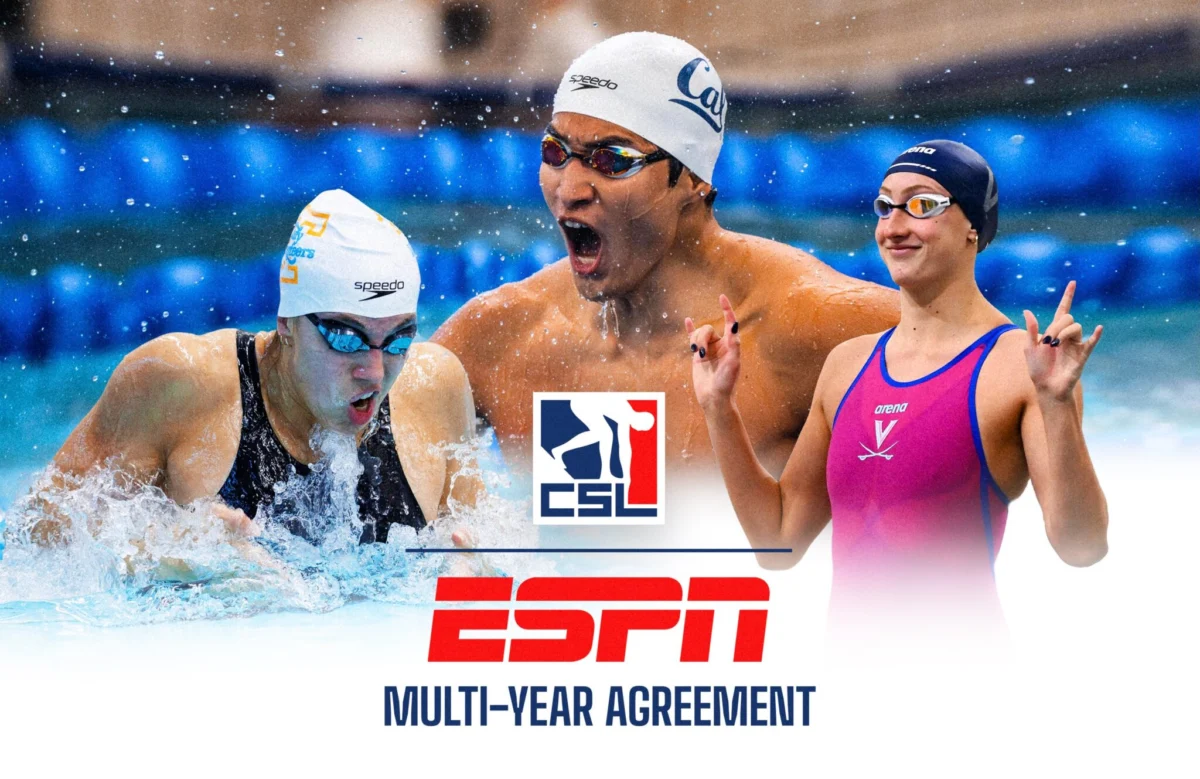
The College Swimming League (CSL) has officially confirmed that it will return for a second season, a move that signals the organization’s intent to become a permanent fixture in the landscape of American collegiate athletics. This announcement comes less than 24 hours after the conclusion of the league’s inaugural championship match in Indianapolis, where NC State emerged as the first-ever CSL titleholder, capping off a high-stakes debut season that aimed to modernize how fans engage with competitive swimming.
The Inaugural Season: A New Era for Collegiate Swimming
The CSL was designed to break away from the traditional, long-form meet format, offering a condensed, broadcast-friendly product that emphasizes head-to-head team competition. By prioritizing fan engagement and television production, the league sought to bridge the gap between niche sport status and mainstream collegiate programming.
The league’s first season featured a high-caliber roster of 12 programs: the University of Virginia, Indiana University, the University of Tennessee, the University of California, Berkeley, Stanford University, the University of Michigan, NC State University, the University of Louisville, Ohio State University, the University of Georgia, the University of Alabama, and Auburn University.
The structure of the season saw these powerhouses battle through a series of matches, culminating in a championship final that pitted Virginia, Indiana, Tennessee, and NC State against one another. The intensity of the final match underscored the success of the format, which focuses on point accumulation and team-based performance rather than individual event dominance.
Chronology: From Concept to Championship
The journey of the CSL has been rapid, moving from institutional discussions to a fully realized media product in a remarkably short window.
- July 2024: The league solidified its future by announcing a multi-year media rights deal with ESPN. This partnership was a watershed moment, providing the league with the platform necessary to secure its longevity and reach a national audience.
- The Regular Season: Throughout the fall and winter, the CSL rolled out its schedule, testing the appetite for localized, team-focused meets. The league allocated nearly $1 million toward logistical support, covering travel, accommodations, and prize pools, signaling a high level of investment from organizers.
- The SEC Showdown (Match #6): One of the most significant indicators of the CSL’s potential was the success of Match #6. Hosted on the campus of the University of Georgia, the event featured a fierce SEC rivalry between Georgia, Alabama, Auburn, and Tennessee. The match sold out entirely, demonstrating that collegiate swimming fans are willing to pay for premium, on-deck experiences. General admission tickets were priced at $25, while the exclusive on-deck VIP suites—which offered 19 seats positioned directly across from the competing teams—sold for $100, proving the viability of a premium tiered-ticketing model.
- The Championship Finale: The season concluded in Indianapolis, where NC State’s victory served as the capstone for the league’s initial run. The final four teams—Virginia, Indiana, Tennessee, and NC State—each earned $25,000 in prize money, contributing to a total of $100,000 distributed to the finalists.
Supporting Data and Financial Framework
The CSL operates on a model that emphasizes professionalization. By allocating $1 million in total funding to support the inaugural season’s operations, the league ensured that participating universities were not burdened by the costs of travel or lodging for these high-profile meets.
The prize money structure, while modest by professional sports standards, represents a significant shift for collegiate athletes who are accustomed to competing strictly for institutional pride or NCAA championship titles. The distribution of $25,000 to each of the top four programs in the final serves as an incentive for participation and performance, a factor that likely played a role in attracting the country’s top swimming programs to the league.
Furthermore, the ticketing strategy employed during the SEC showdown provides a blueprint for future growth. By creating "on-deck VIP suites," the CSL successfully integrated the audience into the physical space of the competition, creating a television-ready atmosphere that emphasizes the proximity between the fans and the elite athletes. This immersive experience is a cornerstone of the CSL’s value proposition.
Official Responses and League Outlook
The league’s official stance following the championship was one of optimism and calculated mystery. In a brief statement, CSL representatives noted, "Schools, match dates, and venues to be announced at a later date. See y’all next year!"
While the organization is keeping its specific plans for Season Two under wraps, the confirmation of the league’s return is, in itself, a definitive statement. The league is clearly in a phase of evaluation, likely analyzing the viewership metrics from the ESPN broadcasts and the attendance figures from the various host sites to determine the optimal schedule for the coming year.
The multi-year nature of the ESPN deal is the most critical piece of the puzzle. With the broadcast rights secured for the foreseeable future, the CSL is insulated from the immediate pressures of media acquisition, allowing the organizers to focus on refining the team roster, scheduling, and venue selection without the looming threat of broadcast instability.
Implications for the Future of Collegiate Swimming
The emergence of the CSL poses several interesting questions for the future of the sport. Traditionally, collegiate swimming has been dominated by the NCAA championship calendar, which focuses heavily on the month of March. The CSL offers an alternative rhythm, suggesting that the sport can support a professionalized "league" format that exists alongside, or perhaps in parallel to, the traditional university-based season.
1. Recruiting and Athlete Retention
The existence of a league that offers prize money and national television exposure could eventually influence recruiting. High-level swimmers looking for opportunities to compete at a professionalized level while still maintaining their collegiate eligibility may find the CSL to be a major draw.
2. Media Exposure and Niche Sports
By securing a multi-year deal with ESPN, the CSL has provided a roadmap for other Olympic-style sports to potentially find sustainable broadcast homes. If the CSL can continue to show year-over-year growth in viewership, it may encourage media companies to invest in similar "league" formats for sports like track and field or gymnastics, which also struggle to maintain consistent national attention outside of the Olympic cycle.
3. Fan Engagement
The CSL’s decision to move away from the "all-day meet" format toward shorter, more intense head-to-head matches is a direct response to modern consumption habits. By shortening the duration of the broadcast and focusing on team narratives rather than individual event times, the CSL is positioning itself to capture the attention of a younger, more casual demographic that might otherwise be deterred by the length and complexity of traditional swimming meets.
Looking Toward Season Two
As the CSL transitions into its off-season, the industry will be watching closely to see which programs sign on for the second year. The inclusion of powerhouses like Virginia, Stanford, and Cal in the first season was essential to establishing the league’s legitimacy. Maintaining this level of institutional participation will be the primary challenge for the organizers in the coming months.
Furthermore, the expansion of the league remains a distinct possibility. With the success of the SEC showdown in Georgia, it is likely that the league will look to host more matches in regions with high concentrations of swimming talent and fanbases. The success of the venue-based VIP experience suggests that future seasons may prioritize facilities that can accommodate such premium seating, further bridging the gap between spectators and athletes.
In conclusion, the first season of the College Swimming League has proven that there is a viable, high-energy market for collegiate swimming outside of the NCAA championship structure. With the backing of a multi-year media rights deal, a demonstrated ability to sell out venues, and a clear plan for a second season, the CSL has successfully moved beyond the experimental phase. As the league prepares to announce its next steps, it stands as a testament to the potential for innovation within collegiate sports, provided there is a willingness to adapt to the demands of modern media and the expectations of a new generation of sports fans.

 Lina Hope

 Siti Muinah

 Iffa Jayyana

 Layla Zulfa
 Pevita Pearce
 Muslim
 Ammar Sabilarrohman