
 Neng Nana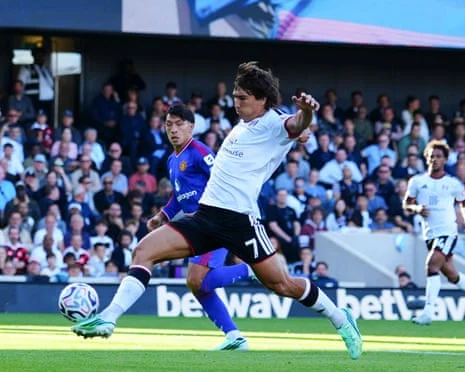
By Taha Hashim
Reporting from Craven Cottage
The sun-drenched banks of the Thames provided a picturesque backdrop for a Premier League encounter that, while failing to produce a breakthrough, offered a frantic, high-octane spectacle. In a fixture laden with pressure for both managers, Fulham and Manchester United played out a 0-0 draw at Craven Cottage on Sunday, leaving both sides with more questions than answers as they navigate the early-season malaise.
For Michael Carrick, the spotlight remains fixed. Four games into the league campaign, the noise surrounding his position—fueled by speculative reports and mounting fan anxiety—has reached a fever pitch. Conversely, Alvaro Arbeloa’s Fulham arrived at the weekend anchored to the bottom of the table, desperate to kickstart a campaign that has yet to ignite. What transpired was an end-to-end affair, defined by stellar goalkeeping and a shared inability to find the clinical edge required to seal three points.

A Tactical Tug-of-War: The First Half
Manchester United arrived in West London sporting an all-blue strip, looking to bounce back from a bruising derby defeat to Manchester City. Carrick opted for a front-line featuring Matheus Cunha, Bruno Fernandes, Bryan Mbeumo, and Marcus Rashford, aiming to inject pace into a side that has looked lethargic in the opening weeks.
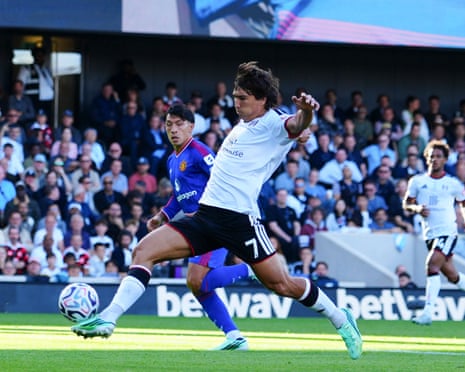
The early exchanges were characterized by a cautious probing from both sides. Fulham, unchanged from their resilient draw at Anfield, looked to utilize the creative spark of Alex Iwobi and the burgeoning talent of their forward line. Yet, it was the visitors who signaled their intent early. By the 10th minute, Lisandro Martínez forced a world-class save from Bernd Leno, his long-range pile-driver tipped away as it threatened to nestle into the top corner.
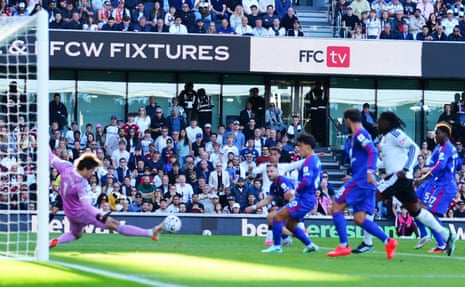
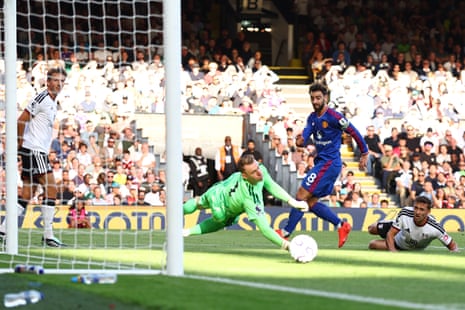
As the half progressed, the game opened up. United’s midfield, anchored by Kobbie Mainoo and Youri Tielemans, began to dictate play, but Fulham’s defensive shape remained disciplined. The hosts, led by the energetic play of King and Iwobi, began to find gaps on the counter. In the 25th minute, the game saw its most dramatic moment of the first half: Cunha outmuscled his marker, setting up Fernandes, who struck the woodwork with a fierce effort that echoed around the stadium.
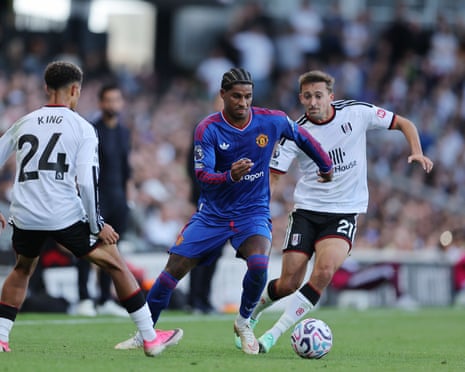
Despite the intensity, the first half finished as it began—level. United registered an impressive 17 shots, but only two forced Leno into significant action, a statistic that perfectly captured the theme of their afternoon: persistent effort, limited precision.
The Second Half: A Lull in the Storm
If the first half was a chaotic exchange of blows, the second half began with a noticeable decline in tempo. The urgency that defined the opening 45 minutes evaporated, leaving Gary Neville, commentating from the gantry, to express his bemusement at the lack of incision from both outfits.
Fulham spent long spells recycling possession at the back, inviting little pressure from a United side that seemed content to sit in a mid-block. The game became disjointed, marked by tactical fouls and a succession of stop-start moments. Rashford continued to threaten down the left flank, his speed a constant concern for Timothy Castagne, who eventually found his way into the referee’s book after a tactical foul on the England international.
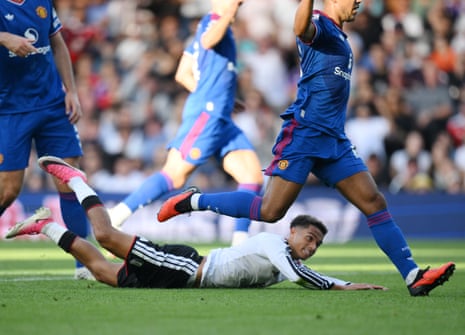
By the 55th minute, the atmosphere had flattened. Both managers looked to their benches, but the game remained stuck in a cycle of lateral passing and missed connections. The sight of Sir Alex Ferguson in the stands served as a reminder of the standards expected at Manchester United, standards that, on this Sunday, felt miles away from the pitch at Craven Cottage.
Key Statistical Breakdown
The underlying data from the match highlights the frustrations felt by both tactical setups. Manchester United’s heavy shot count—nearly 20 by the hour mark—indicates a team that is creating chances but lacks the lethal touch of a top-tier finisher.
- Possession: Evenly split, reflecting the deadlock in midfield.
- Shots on Target: A combined total of just four across 90 minutes.
- Discipline: A flurry of cards in the second half, highlighting the desperation of defenders trying to halt transitions.
The absence of Benjamin Sesko, who remains sidelined with an injury, was felt keenly by the United faithful. As one supporter noted, the reliance on Cunha—who has historically performed well against Fulham—has not yielded the results the board would have hoped for in the absence of their marquee striker.
Official Responses and Managerial Posture
Following the final whistle, the atmosphere was one of shared disappointment. Alvaro Arbeloa, facing mounting pressure as his side remains winless, praised his team’s defensive fortitude. "We played against a high-quality side and kept a clean sheet. The discipline was there," Arbeloa told reporters. "We need to find that extra 10 percent in the final third, but the fight is evident."
Michael Carrick, meanwhile, addressed the persistent questions regarding his job security with a calm, albeit strained, demeanor. "It’s a tough league," Carrick stated. "We had the chances to win it, we hit the post, we forced the keeper into saves. The intensity is what we ask for. We will keep working."
The sentiment within the United camp is one of transition. Without the ‘interim’ tag, Carrick is under no illusions that the scrutiny is permanent. His side’s inability to turn dominant possession into goals is a recurring theme that will undoubtedly be the focus of training ground sessions this coming week.
Implications for the Season
The implications of this result are stark. For Fulham, a point against a "Big Six" side is a platform, but with the table showing them at the bottom of the pile, they are running out of time to find their rhythm. They are joined in the lower reaches by Tottenham Hotspur, whose own crisis has led to calls for a "klaxon" to sound.
For Manchester United, the road ahead is treacherous. Sitting in 13th place with only four points from four games, they are already lagging behind the title contenders. The parity in the league is such that a single win can catapult a team into the top half, but for both of these sides, the current trajectory is one of stagnation.
As the sun set over Craven Cottage, the reality for both clubs was clear: performance is secondary to points in this league, and as of this afternoon, neither side has enough of them. The "crisis klaxon" may not be blaring just yet for Carrick or Arbeloa, but the frequency of the alarms is certainly increasing.
Conclusion: Looking Ahead
The draw at the Cottage serves as a microcosm of the 2026 Premier League season so far—unpredictable, occasionally frantic, and defined by a lack of clinical efficiency in front of goal. Whether this result acts as a springboard for either side remains to be seen.
For the fans, the frustration is palpable. They leave the ground having seen moments of brilliance—the save from Lammens, the post-rattling strike from Fernandes—but ultimately feeling hollow. As the international break looms or the next fixture approaches, the managers will return to the drawing board, knowing that the "spammy emails" and the whispers of the press are only silenced by one thing: the back of the net.
The battle for survival and the fight for relevance will continue, but for now, Fulham and Manchester United must accept that today, at least, they were equals in their struggle to turn promise into performance.

 Ali Ikhwan
 Raul Delapena Setiawan
 Jia Lissa
 Iffa Jayyana
 Dwi Wanna
 Evan Lee Salim