
 Laily UPN
QUÉBEC CITY, Canada — Professional cycling is a sport defined by fine margins, split-second decisions, and, all too often, capricious cruelties. For Lidl-Trek’s rising star Juan Ayuso, the familiar specter of bad luck struck once again on a crisp Friday afternoon during the finale of the 2026 Grand Prix de Québec.
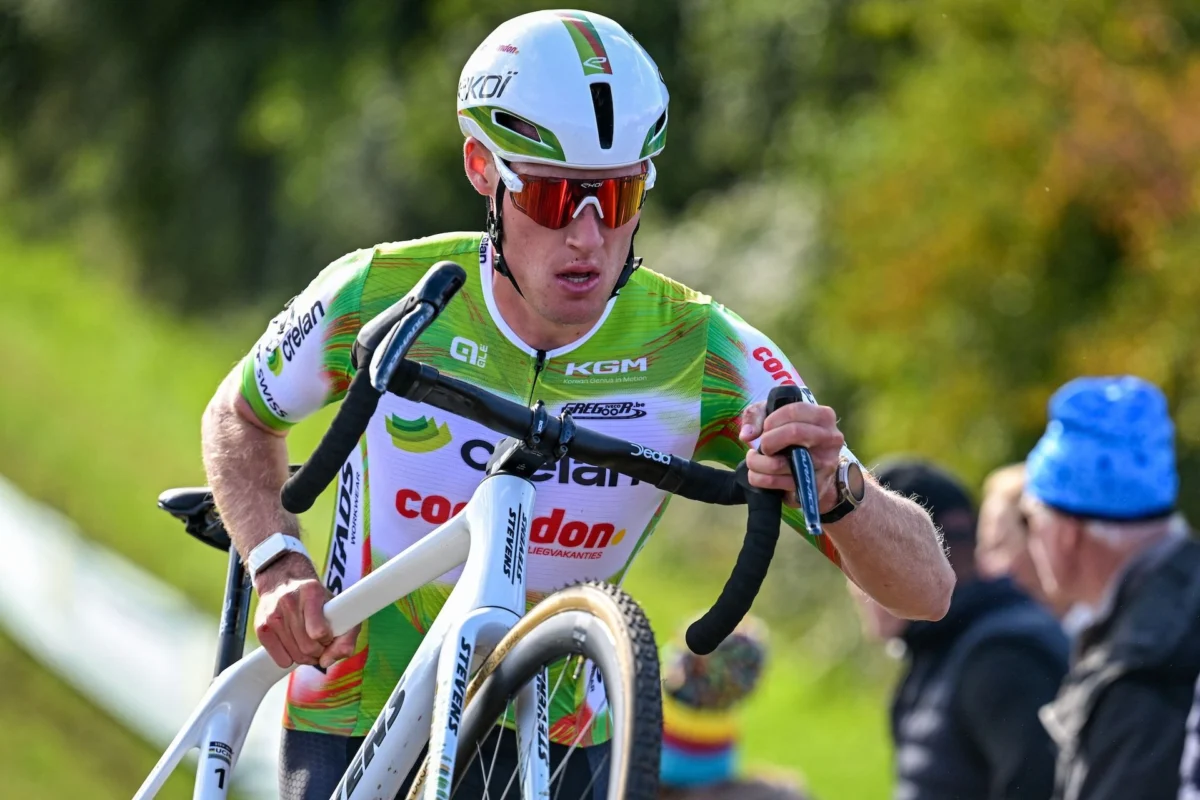
While the race for the victory had already been aggressively contested at the front of the elite field, the battle for minor placings within the chasing groups turned chaotic in the closing meters. A sharp, unexpected swerve from a competitor triggered a violent chain-reaction crash near the tail end of the group. Amid the tangled carbon fiber and sliding bodies, Ayuso absorbed the worst of the impact. Unable to remount his damaged machine due to a ruined frame and mechanical failure, the Spanish sensation was forced to cross the finish line on foot, pushing his disabled bike alongside him in an arresting image that quickly captured the sympathy—and concern—of the global cycling community.
Main Facts
The incident occurred during the frantic final kilometers of the prestigious 2026 Grand Prix de Québec, a WorldTour one-day classic renowned for its attritional, punchy circuit through the historic streets of Old Québec.
- The Rider: Juan Ayuso, competing in the colors of Lidl-Trek, was navigating the closing stages of the race.
- The Incident: Ayuso was caught in a high-speed crash sparked by a sudden rider swerve within a chasing group contesting lower-tier placings rather than the overall podium.
- The Aftermath: Suffering the brunt of the collision, Ayuso’s bike was rendered unridable. With the finish line agonizingly close, he was forced to abandon his saddle, pick up his compromised bicycle, and jog across the line on foot.
- The Context: The crash adds to a growing catalog of unfortunate incidents and ill-timed setbacks that have occasionally punctuated the otherwise meteoric career of the young GC contender.
Chronology of Events: A Race Undone in Seconds
To understand how a routine afternoon of WorldTour racing transformed into a scene of distress, one must look at how the 2026 Grand Prix de Québec unfolded from the starter’s gun to the chaotic finishing straight.
Early Control and the Circuit Dynamics
The Grand Prix de Québec is famous for its punishing, repetitive urban circuit featuring the grueling climbs of Côte de la Montagne, Côte de la Potasse, and Boulevard Champlain. From the opening laps, major WorldTour squads sought to control the pace, neutralizing early breakaways and setting up a war of attrition.
As the race entered its final hour, the elastic band snapped repeatedly. Attacks flew off the front as elite puncheurs and explosive climbers attempted to shed the heavier sprinters. While the front-runners splintered away to contest the podium and the coveted champion’s trophy, a secondary group of elite riders—including Ayuso, who was working to salvage a strong position or test his legs ahead of upcoming Autumn targets—found themselves locked in a fierce pursuit.
The Final Kilometers and the Domino Effect
With less than a kilometer remaining, the urgency within the chasing pack spiked. Riders jostled aggressively for position, seeking every possible UCI ranking point and minor placing available.
As the group hurtled around a technical bend into the final straightaway, the tension reached a boiling point. According to eyewitness accounts and broadcast replays, a rider near the front of the chasing group made an abrupt, reactionary swerve to close a gap. This sudden lateral movement left zero margin for error for the athletes drafting directly behind.
The Crash and the Walk to the Line
A domino-effect crash tore through the center of the pack. Tires slipped on the asphalt, and bodies hit the ground at high speed. Ayuso, positioned unfavorably in the thick of the melee, had no time to brake or evade the falling riders. He went down hard, absorbing a heavy impact against the road surface.
While some riders quickly untangled themselves, grabbed their handlebars, and sprinted for the line, Ayuso’s machine bore the brunt of the kinetic energy. A twisted rear derailleur, a cracked carbon frame, and jammed chainrings made remounting impossible. Refusing to succumb to a DNF (Did Not Finish) without officially logging a time—or perhaps simply operating on pure, adrenaline-fueled instinct—Ayuso hoisted the wreckage by the frame and jogged the final meters across the finish line.
Supporting Data & The Mechanics of the Classic
The Grand Prix de Québec—alongside its sister race, the Grand Prix de Montréal—stands as one of the most demanding one-day races outside of Europe. Understanding the structural parameters of the race highlights why crashes in the finale are both common and particularly devastating.

| Race Metric | Detail |
|---|---|
| Event | Grand Prix de Québec (2026 Edition) |
| Terrain | Rolling urban circuit featuring sharp climbs and technical descents |
| Total Distance | Approximately 201.6 km (16 laps of a 12.6 km circuit) |
| Elevation Gain | ~3,000 meters of climbing |
| Key Challenge | Explosive power demands combined with narrow, barrier-lined city streets |
| UCI Status | UCI WorldTour |
The architectural nature of the Québec circuit concentrates the peloton into narrow corridors during the final kilometers. As fatigue sets in after nearly five hours of intense racing—featuring upwards of 3,000 vertical meters of climbing—cognitive lapses and micro-adjustments in positioning frequently result in high-speed crashes. For riders like Ayuso, who excel in longer stage races but must occasionally sharpen their speed and tactical positioning in one-day classics, these finales represent high-risk environments.
Official Responses and Team Reactions
In the immediate aftermath of the race, the paddock was a mix of celebration for the podium finishers and quiet concern for the casualties of the late-race carnage.
Lidl-Trek Management Speak Out
Lidl-Trek medical and coaching staff rushed to the finish area to evaluate Ayuso. Initial assessments focused on checking for acute trauma, concussions, and severe road rash.
"Juan is a fighter, and seeing him cross the line on foot shows his commitment, but our primary concern is always his physical well-being," a team spokesperson noted shortly after the incident. "Modern one-day racing is fiercely contested down to the very last centimeter. Unfortunately, crashes are an inherent risk when everyone is fighting for position. We will conduct a thorough medical evaluation tonight to determine the extent of any injuries and map out his recovery."
Competitor Sentiments
Riders from rival squads who witnessed the crash expressed solidarity with the young Spaniard. In a sport where physical danger is an everyday reality, the unspoken brotherhood of the peloton often transcends team rivalries. Several peers checked on Ayuso in the recovery zone, acknowledging how easily a split-second chain reaction can take down even the most technically skilled bike handlers in the world.
Implications for the Season Ahead
While the Grand Prix de Québec is a marquee event in its own right, it also serves as a crucial tactical stepping stone for riders preparing for the late-season calendar, including the upcoming World Championships and the final block of European autumn classics.
Health and Rehabilitation
The immediate implication of the crash is physical recovery. Even if scans reveal no broken bones, severe road rash, deep contusions, and muscle strains can severely disrupt a rider’s training block. Lidl-Trek’s performance staff will be forced to carefully monitor Ayuso’s rehabilitation to ensure that a minor placing in a September one-day race does not jeopardize his overarching seasonal targets.
Psychological Resilience
For a young athlete who has experienced both meteoric highs and frustrating bouts of bad luck, resilience is key. Ayuso has previously spoken about the mental fortitude required to bounce back from crashes and unexpected setbacks. The image of him walking across the finish line—stubbornly refusing to let the race defeat him entirely—serves as a testament to his competitive character.
Strategic Adjustments in Classics Racing
The incident also reignites ongoing safety debates within professional cycling regarding the chaotic nature of finales in narrow city circuits. As speeds continue to rise due to aerodynamic innovations, nutrition science, and hyper-optimized training, the margin for error in bunch sprints and chasing groups narrows further. Teams and race organizers face mounting pressure to evaluate barrier placements and final-kilometer routing to protect athletes from avoidable multi-rider pileups.
As the dust settles in Québec, the cycling world waits anxiously for medical updates from the Lidl-Trek camp, hoping that Juan Ayuso’s latest brush with misfortune leaves nothing more than bruised pride and superficial scars, clearing the path for his return to the front of the peloton.

 Nana Muazin
 Jia Lissa
 Suro Senen
 Asro
Asro
 Iffa Jayyana
 Dwi Wanna