
 Lina Hope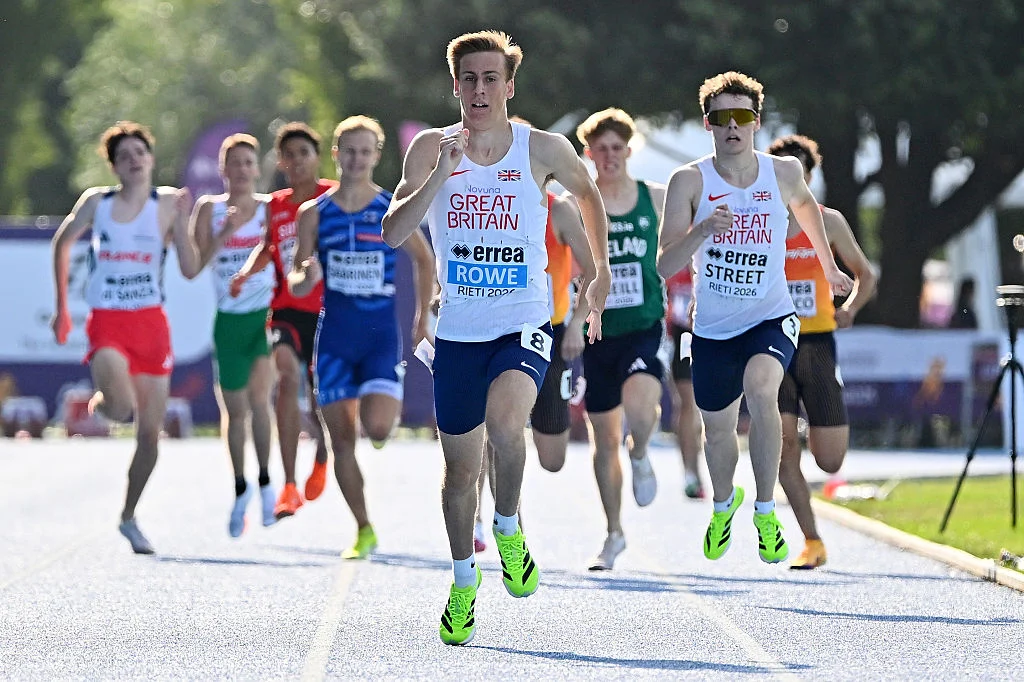
By Sports Desk | July 20, 2026
In a display of sheer dominance and burgeoning potential, Great Britain and Northern Ireland have officially closed out the 2026 European Athletics U18 Championships in Rieti, Italy, as the undisputed kings of the medal table. Over four days of high-octane competition at the historic Stadio Raul Guidobaldi, the British youth contingent secured a total of 14 medals, including eight golds, cementing their status as the continent’s premier nursery for future athletics stars.
The final day of action on Sunday, July 19, served as a microcosm of the entire championships: a masterclass in tactical execution, personal resilience, and record-breaking talent. With seven medals captured in the closing session alone, the British team ensured that their return flight would be heavy with silverware.
The Final Day: A Golden Climax in Rieti
Heading into the final session, the pressure was palpable, yet the British athletes exhibited a composure that belied their tender years. The momentum was ignited by Tito Odunaike, whose performance in the men’s triple jump was arguably the highlight of the closing day.
Representing Marshall Milton Keynes and coached by David Johnson, Odunaike entered the competition as the youngest-ever winner of a British senior indoor title earlier this year. He justified that billing in spectacular fashion, launching himself to a distance of 16.12m. The jump was not only a championship record but also matched his personal best and equaled the world U18 lead for the year. He finished more than half a meter ahead of his closest rival, signaling a massive leap forward in his burgeoning career.
Following this, Lucy Bull added to the gold tally in the women’s javelin. The Cheltenham & County Harriers athlete, under the guidance of Carolyn Franks, had arrived in Italy riding a wave of domestic success, remaining unbeaten throughout the 2026 season. She proved her mettle under the ultimate pressure, smashing her personal best with a throw of 56.60m to claim the title.
The golden hat-trick for the final day was completed by the middle-distance squad. Freddie Rowe, representing Havering AC and coached by Patrick Gahagan, showcased a sophisticated tactical mind, timing his finishing burst in the men’s 1500m to perfection to take gold in 3:55.33. The joy for the British camp was doubled as Alistair Street crossed the line in 3:56.80, securing a brilliant British one-two finish.
Chronology of Excellence: From Opening Night to Final Glory
The success witnessed on Sunday was the culmination of a four-day campaign that began with immediate intent. The tone was set on the opening night by Joe Scanes, who claimed gold in the men’s 3000m. This momentum was sustained through the explosive speed of Divine Iheme, who captured the 100m title with a new championship record, while Celine Obinna-Alo secured bronze in the women’s 100m.
The third day of competition proved to be a watershed moment for the team. Bronson Hearn-Smith captured gold in the 200m in a championship record time of 20.70. His victory was particularly poignant, coming as it did after the controversial disqualification of his teammate, Ethan Heggarty, in the semi-finals—a testament to the team’s collective resilience.
Simultaneously, the field events provided massive points. Moyo Stumpenhusen delivered a UK record-breaking performance in the discus with a throw of 64.92m, and Samuel James etched his name into the history books by equaling Steve Smith’s 36-year-old British U18 high jump record with a championship record-clearing 2.25m. Magnus Riddell added to the haul with a bronze in the 800m.
Supporting Data: A Statistical Overview of British Depth
The strength of the 2026 British U18 team was not merely defined by those standing on the top step of the podium, but by the extraordinary depth across the entire squad. While 14 medals (eight gold, two silver, and four bronze) provided the headline, the peripheral performances were equally telling.
In the men’s javelin, Ned Scott secured a silver medal with a personal best of 70.02m. The decathletes also performed admirably, with Oliver Downs taking bronze (7341 points) and Douglas Knox finishing a respectable fifth with a personal best of 7255. On the track, Lucia Bertacchini provided a thrilling end to the day with a bronze in the women’s 400m hurdles, clocking a PB of 58.13.
Other notable performances included:
- Leila Newth: Set two national U18 triple jump records, finishing fourth with 13.16m.
- Women’s 3000m: Poppy Guest and Sonny Allen demonstrated immense grit, finishing fifth and sixth, respectively.
- Women’s 800m: Jorjia March clocked 2:07.84 to secure eighth place.
International Context: Standout Global Talents
While British athletes were the story of the medal table, the 2026 championships were defined by individual brilliance from across Europe. The most staggering performance came from Czechia’s 16-year-old sensation, Linda Botková. In the women’s 400m hurdles, she annihilated the field, running 55.19. This time not only shattered the championship record but set a new European U20 best, suggesting she is destined for senior international success.
Slovenia’s Živa Remic also left an indelible mark on the track. After a commanding semi-final run, she dominated the women’s 800m final, crossing the line in 2:03.77 to set a new championship record. Furthermore, the host nation, Italy, celebrated a landmark moment when Kelly Doualla won the women’s 100m in a breathtaking 11.14—a European U18 best that ranks among the fastest marks globally this year for any age group.
Implications for the Future of British Athletics
The return to the Stadio Raul Guidobaldi has proven to be a serendipitous decision for British Athletics. Much like the 2013 European U20 Championships, where the nation flourished, Rieti has once again served as a crucible for elite development.
The implications of this performance are significant. With several championship records falling to British teenagers, the national governing body has clear evidence that their youth development pathways are functioning at an optimal level. The ability of athletes like Tito Odunaike and Bronson Hearn-Smith to perform under the glare of international pressure suggests a promising transition into the senior ranks.
As the athletes return home, the focus will shift toward the 2027 season and beyond. For the coaching staff, the task will be to manage the transition of these teenagers into the senior international scene without burnout. The talent is undeniable, the pedigree is established, and if the 2026 Rieti cohort is any indication, the future of British track and field is in incredibly capable hands.
In conclusion, these championships were more than just a competition; they were a definitive statement of intent from the next generation of European track and field athletes. For Great Britain, it was a triumph of preparation, talent, and tactical acumen—a gold-plated foundation for the years to come.

 Nana Wu
 Siti Muinah
 Neng Nana

 Sagoh
Sagoh
 Iffa Jayyana