
 Sagoh
Sagoh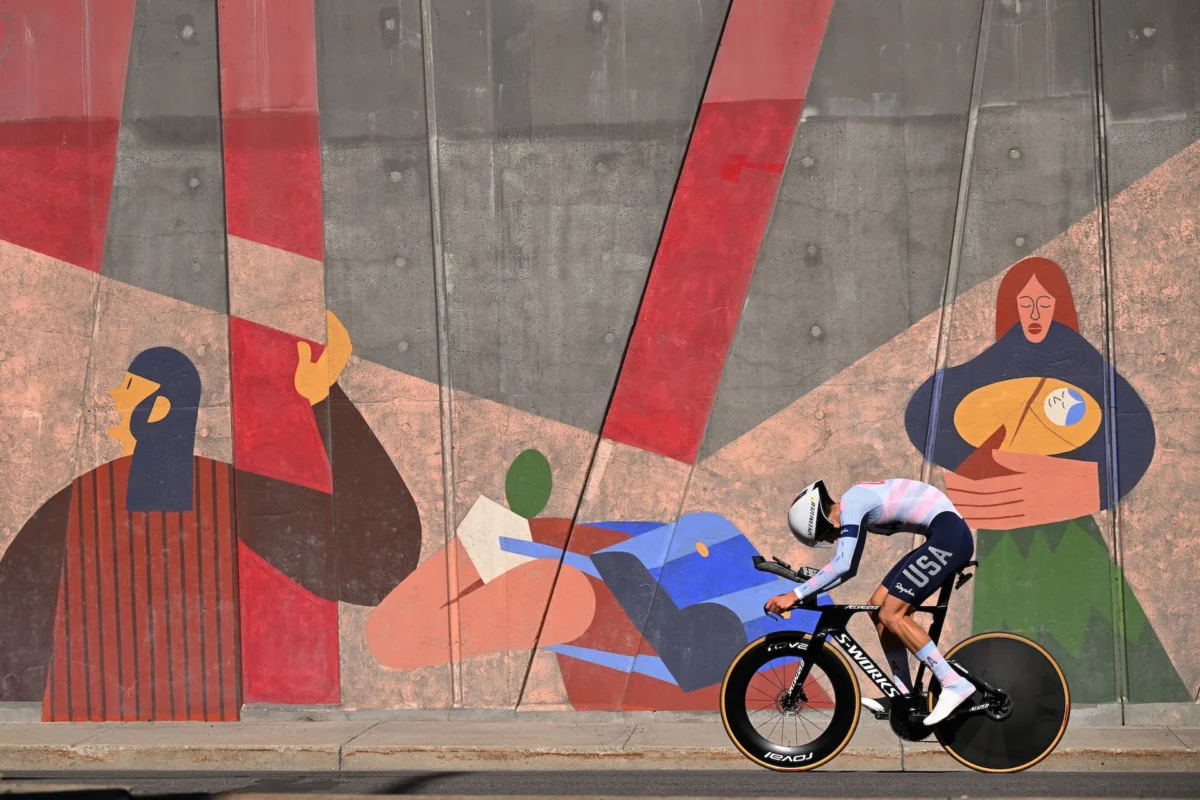
MONTREAL — The crisp autumn air of Quebec set the stage for one of the most anticipated showdowns of the international cycling calendar as the 99th UCI Road World Championships descended upon Montreal. Among the brightest young talents drawing the attention of fans, scouts, and media alike is two-time US junior road champion Enzo Hincapie. Carrying a storied surname and a reputation for relentless aggression on the bike, Hincapie stepped onto the world stage to tackle the Men Junior Individual Time Trial—a grueling 20.3-kilometer test against the clock that culminated in a punishing uphill finish designed to separate the contenders from the pack.
While Hincapie’s primary focus and greatest strengths have traditionally shone in the chaotic, tactical theater of the junior men’s road race, his participation in Tuesday’s time trial served as a crucial reconnaissance mission. For the young American, the race against the clock was not merely an event to chase a medal, but a high-stakes dress rehearsal for the upcoming road race, offering a firsthand look at the leg-burning ascent that will ultimately crown the world champion.
Main Facts: The Battle Against the Clock in Montreal
The Men Junior Individual Time Trial at the 2026 UCI Road World Championships presented a formidable technical and physical challenge. Spanning 20.3 kilometers, the course tested the world’s premier under-19 cyclists with a blend of high-speed urban flat sections, technical cornering, and a decisive, energy-sapping uphill finish.
For Enzo Hincapie, the day was defined by pacing strategy and terrain adaptation. As a rider known for his explosive power and tactical intuition in road races, the pure, unadulterated suffering of the individual time trial required a different psychological approach.
- Event: Men Junior Individual Time Trial, 99th UCI Road World Championships
- Location: Montreal, Quebec, Canada
- Course Length: 20.3 kilometers
- Key Feature: A brutal 600-meter uphill finish that tests maximum aerobic capacity after a sustained effort.
- Athlete Focus: Enzo Hincapie, two-time US junior road champion representing Team United States.
While the day’s ultimate podium spots were captured specialists who had fine-tuned their aerodynamic positions and pacing algorithms for months, Hincapie’s performance provided valuable data points for his coaching staff and crucial physical adaptation ahead of the road race.
Chronology: A Day of Reconnaissance and Resolve
Pre-Race Preparation and Anticipation
Weeks of meticulous preparation culminated on Tuesday morning as teams gathered in the staging areas across Montreal. The atmosphere was charged with nervous energy. For Enzo Hincapie, the morning routine involved hours of warm-ups on the trainer, gear checks, and mental visualization of every turn, descent, and transition on the 20.3km route.
As a two-time US junior road champion, Hincapie is no stranger to the pressures of wearing stars-and-stripes jerseys on international soil. However, the time trial discipline strips away the shelter of the peloton, leaving the rider completely exposed to the wind, the course profile, and their own physiological limits.
The Mid-Race Effort
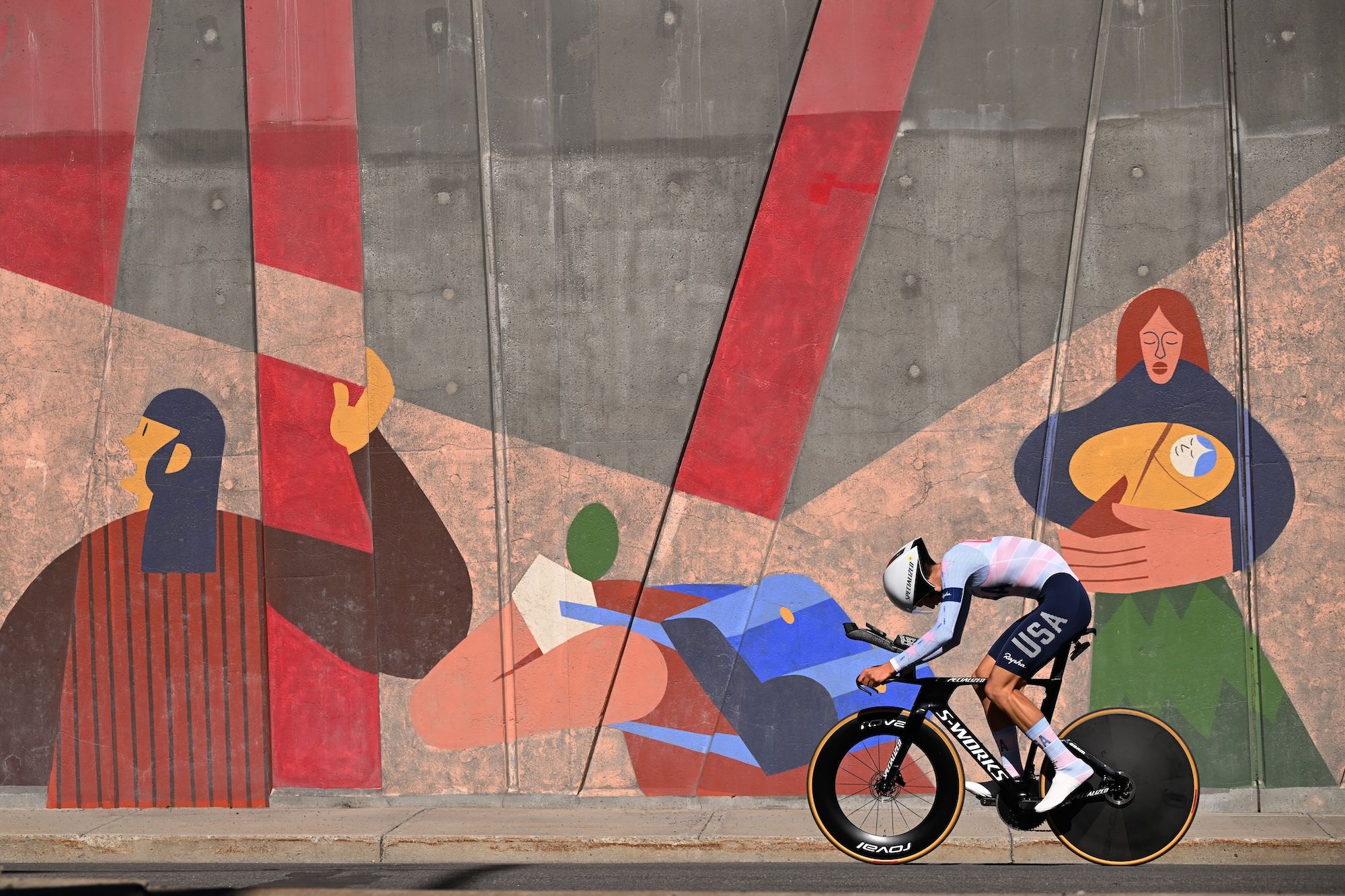
As Hincapie rolled down the starting ramp, he immediately settled into an aggressive rhythm. The early kilometers of the Montreal circuit demanded absolute focus, requiring riders to navigate technical urban corridors while maintaining high speeds. Hincapie’s pacing strategy was designed to conserve enough explosive energy for the latter half of the course, where the terrain began to tilt upward.
Throughout the intermediate time checks, Hincapie rode with characteristic grit, holding a steady cadence and staying tightly tucked into his aerodynamic extension bars. Yet, the depth of the international junior field—featuring the finest time-trial specialists from cycling powerhouses across Europe and beyond—meant that any minor margin in equipment or aero-efficiency would be heavily magnified.
The Decisive Uphill Finish
The defining moment of the day arrived in the final kilometers. The course profile funneled the exhausted riders toward the race’s marquee physical obstacle: a punishing, unrelenting 600-meter uphill surge to the finish line.
Having climbed the ascent only once during the heat of competition, Hincapie confronted the grade at the end of a maximum-effort 20.3km time trial. The final 600 meters left zero margin for error and no physical space remaining to claw back lost seconds for a podium finish. Pushing deep into the red zone, Hincapie emptied the tank across the summit, crossing the line and immediately absorbing the physical toll of a modern championship time trial.
Supporting Data: Analyzing the Junior Time Trial Dynamics
To understand Hincapie’s performance, one must examine the unique physiological demands of junior championship time trials. At the under-19 level, athletes are still developing their aerobic engines, absolute power outputs, and recovery capabilities.
- Distance vs. Intensity: At 20.3 kilometers, the race bridges the gap between a short prologue and a long-form endurance test. Riders must sustain a power output very close to their functional threshold power (FTP) for roughly 25 to 30 minutes.
- The Final Kilometer Factor: Course architecture in modern world championships often utilizes uphill finishes to create cinematic, highly selective finales. The final 600 meters of the Montreal circuit required a violent transition from high-speed aero pacing to steep-gradient climbing, forcing riders to rapidly shift muscle recruitment patterns from the hamstrings and lower back to the quadriceps and glutes.
- Field Depth: The UCI World Championships bring together the absolute elite of global cycling. Seconds gained or lost in technical corners accumulate rapidly, meaning that specialized time-trial bikes, wind-tunnel-tested skinsuits, and precise pacing strategies often dictate the medal ceremonies long before the final climb begins.
Official Responses and Team Perspectives
Speaking after his effort, members of the Team United States support staff emphasized the strategic utility of Tuesday’s race. Rather than viewing the time trial as a standalone disappointment, the American camp framed the event as an essential stepping stone toward the main objective: the junior men’s road race.
"The time trial at the World Championships is always an honest test of where you stand against the best in the world, but for a rider of Enzo’s profile, it’s also the ultimate reconnaissance," noted a team insider close to the US delegation. "You can study videos and maps all you want, but nothing compares to suffering up that final 600 meters with the weight of a world championship race in your legs."
Hincapie himself acknowledged the brutal nature of the finale, noting that the climb offered a stark preview of what the peloton will face during the multi-lap road race. The data gathered from his power meter and heart-rate monitors during the effort will be scrutinized by coaches to fine-tune his nutrition, hydration, and pacing strategies for the upcoming showdown.
Implications: Setting the Stage for the Road Race
For Enzo Hincapie, the conclusion of the individual time trial marks not an end, but a beginning. The overarching narrative of his campaign in Montreal has always pointed toward the junior men’s road race—an event where his tactical acumen, bike-handling skills, and aggressive racing style can be fully unleashed.
Tactical Insights Gained
- Elevation Profile Mastery: Having experienced the exact gradient, road surface texture, and wind patterns of the final 600 meters under full race stress, Hincapie now holds a psychological and tactical advantage over competitors who chose to skip the time trial or rely solely on pre-ride course walks.
- Pacing and Energy Conservation: The road race will demand hours of positioning within a chaotic, nervous peloton. Knowing how his body responds to a maximal threshold effort on the Montreal course allows Hincapie and his US teammates to calibrate their energy expenditure across the early and middle laps of the road race.
- The Weight of Expectation: As a two-time US junior road champion bearing a legendary name in American cycling history, Hincapie is accustomed to carrying the spotlight. The time trial served to burn off any lingering nervous energy, allowing him to settle completely into the rhythm of the World Championships atmosphere.
As the focus now shifts entirely to the road race, all eyes will be on the young American. With the leg-burning climb of Montreal freshly etched into his legs and memory, Enzo Hincapie stands poised to translate Tuesday’s suffering into tactical supremacy when the flag drops for the ultimate crown in junior cycling.

 Muslim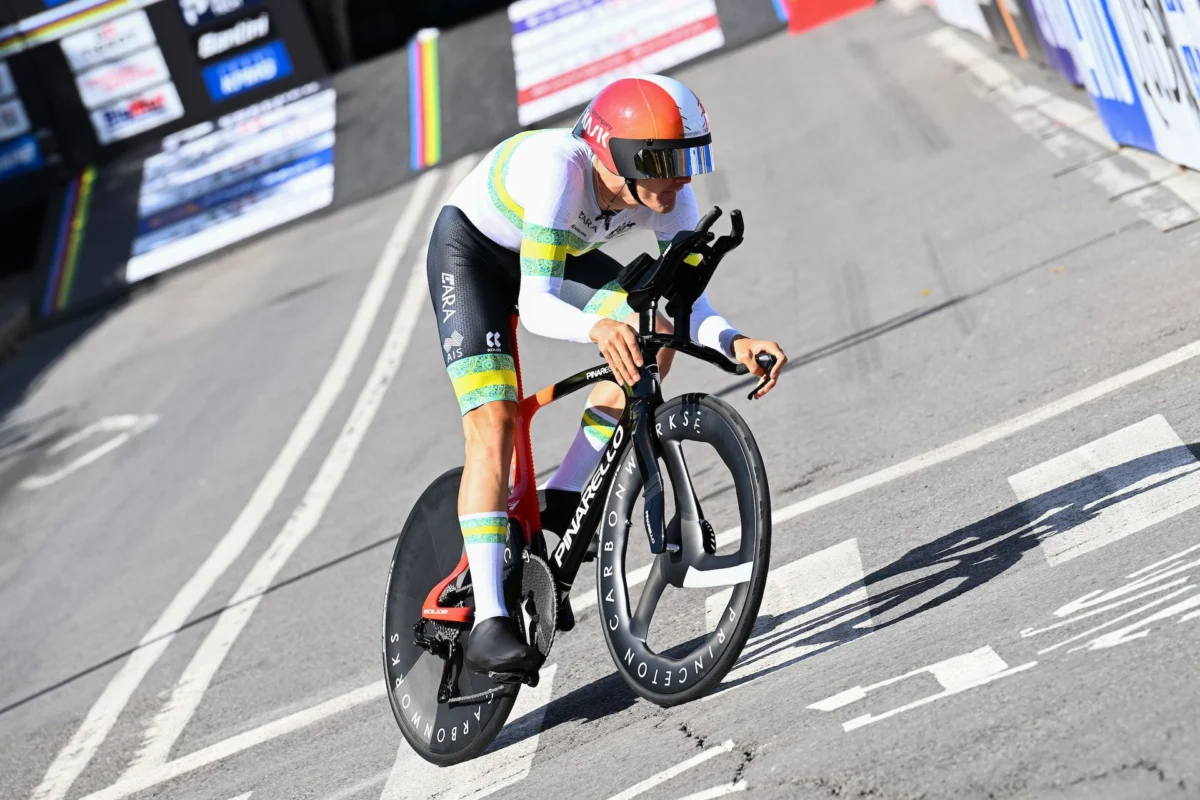
 Pevita Pearce
 Iffa Jayyana
 Ali Ikhwan
 Jia Lissa
 Neng Nana
 Dwi Wanna