
 Reynand Wu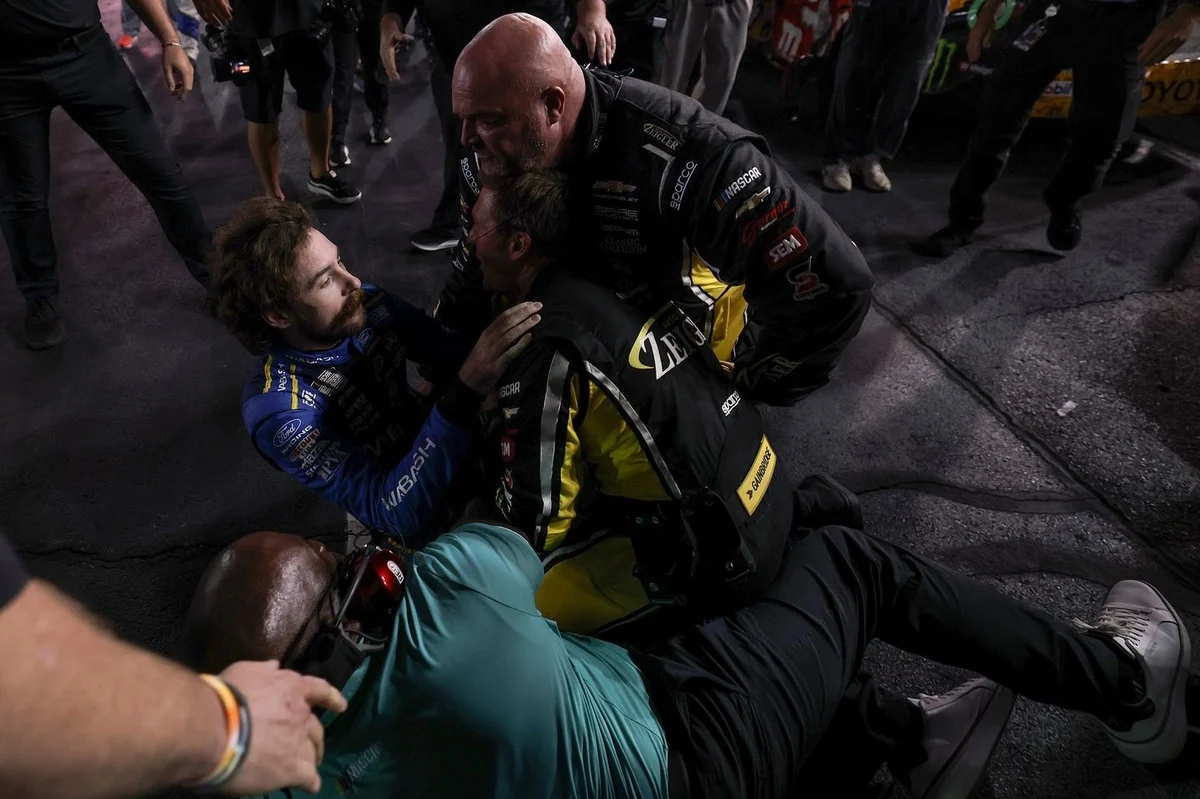
BRISTOL, Tenn. — NASCAR has officially drawn a line in the sand regarding driver behavior, electing to let raw emotion and personal accountability dictate the outcome of a fiery post-race altercation. On Monday afternoon, sanctioning body officials confirmed that neither Ryan Blaney nor Carson Hocevar will face fines or point deductions for their physical confrontation following Saturday night’s grueling Bristol Night Race.
However, while the drivers have escaped immediate disciplinary action for settling their differences face-to-face, the incident is far from entirely closed. NASCAR has announced that it is actively reviewing race-day footage to determine whether any pit crew members crossed the line by inserting themselves into the fray.
The decision underscores a delicate balancing act for the sport’s leadership: encouraging authentic human emotion and fierce competition while attempting to maintain professional boundaries in the pressure cooker of America’s premier stock car racing series.
Main Facts: The Bristol Aftermath
The controversy stems from the chaotic conclusion of Saturday’s night race at Bristol Motor Speedway, a venue historically renowned for short-track tempers, high-banked thrills, and frayed nerves. Following the checkered flag, reigning Cup Series champion Ryan Blaney and rising sophomore competitor Carson Hocevar engaged in a heated verbal exchange that rapidly escalated into a physical altercation on pit road.
The clash immediately ignited the motorsports world, polarizing fans, pundits, and fellow competitors alike. Social media channels lit up with instant analysis, memes, and impassioned debates over driver etiquette. Yet, despite the physical nature of the clash—which left visible marks and humbled egos—NASCAR leadership opted for a lenient approach regarding the primary combatants.
Appearing on Kevin Harvick’s Happy Hour show on FOX, NASCAR Chief Operating Officer Steve O’Donnell laid out the governing body’s rationale. O’Donnell made it clear that while fighting is not formally endorsed, NASCAR actively values the competitive fire and genuine passion that drives athletes to the breaking point.

"If drivers are going to handle their own business, the way we looked at that, how it played out, we’re not going to encourage fighting, but what we are going to encourage is passion, right," O’Donnell explained to Harvick. "And those are two guys—Blaney’s showing his passion, showing his fire. So no, there’s nothing coming from us in terms of [penalties]. We’ll obviously watch what happens the rest of the way, but nothing in terms of post-race penalties."
Chronology of Events: From On-Track Tensions to Pit Road Blowup
To fully understand NASCAR’s leniency, one must examine how the evening unfolded both on the asphalt and in the immediate aftermath of the race.
The Short-Track Crucible
Bristol Motor Speedway is often referred to as "The Last Great Colosseum" for a reason. Its concrete half-mile layout forces 36 high-horsepower stock cars into extremely tight quarters, where contact is virtually guaranteed over 500 laps. Throughout Saturday’s race, traffic was heavy, tempers flared, and various drivers found themselves squeezed or turned as positions were fiercely contested down the stretch.
As the race wound down, interactions between Blaney—driving for Team Penske—and Hocevar—wheeling the No. 7 for Spire Motorsports—began to sour. While short-track racing inherently breeds contact, the cumulative effect of race-long frustrations spilled over the edge once the cars came to a halt on pit road.
The Pit Road Fracas
Upon climbing out of their machines, neither driver was in a mood to wait for a cooling-off period. The confrontation moved swiftly from pointed fingers and heated words to a physical scuffle. Cameras captured the moment the exchange turned hands-on, drawing immediate attention from surrounding media members, officials, and team personnel.
As crew members rushed to intervene, the scene briefly threatened to cascade into a multi-person brawl. The presence of athletic, heavily built pit crew members—many of whom were recruited directly from collegiate football programs—heightened the volatility of the situation before officials and cooler heads finally managed to separate the two camps.

Post-Fight Admissions
By Monday, the dust had begun to settle, and the drivers offered candid reflections on the incident. Appearing on Denny Hamlin’s Actions Detrimental podcast, Ryan Blaney addressed the altercation with surprising self-awareness and humility. Rather than doubling down on aggressive posturing, Blaney admitted fault for how the situation deteriorated and delivered a blunt assessment of the physical outcome.
"I got my ass kicked," Blaney conceded candidly, expressing regret for his actions while acknowledging that Hocevar got the upper hand in the brief physical exchange. The honest admission instantly humanized the veteran driver, earning him respect across the garage area for owning up to the confrontation.
Official Responses and NASCAR’s Philosophy on Discipline
NASCAR’s handling of the Bristol incident provides a fascinating window into the current philosophy of the sport’s officiating crew. Under the leadership of Steve O’Donnell and other key executives, the sanctioning body has increasingly sought to balance modern professional standards with the gritty, gladiatorial heritage that has defined stock car racing for decades.
Preferring Fists to Fenders
A cornerstone of O’Donnell’s commentary on Monday was a stark distinction regarding how drivers express their grievances. According to NASCAR, a physical altercation between two competitors is viewed as significantly preferable to drivers using their multi-ton race cars as instruments of retaliation on the racing surface.
"Don’t use your car as a weapon so to speak, right," O’Donnell elaborated during his appearance on Harvick’s show. "We know, Brad Keselowski and the incident at Talladega with Carl Edwards, those types of things. We don’t want to see that."
By drawing this line, NASCAR is effectively telling its drivers: If you have an issue with a competitor, step up and handle it man-to-man outside the car. Using a race car as a weapon introduces catastrophic safety risks to the entire field, whereas a localized scrap on pit road—while disorderly—poses little danger to innocent bystanders.
The Problem with Over-the-Wall Crew Members
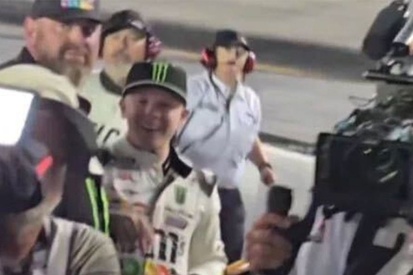
While Blaney and Hocevar escaped punishment for handling their own business, the same leniency may not extend to everyone on pit road. O’Donnell made it explicitly clear that NASCAR takes a dim view of crew members interjecting themselves into driver-to-driver disputes.
Modern pit crews are no longer just mechanics who happen to change tires; they are elite, highly trained athletes aggressively recruited from NCAA Division I football programs and professional sports leagues. When men with that kind of size and collegiate gridiron background insert themselves into a racing squabble, the potential for severe injury escalates exponentially.
"Those guys are coming out of D1 football," O’Donnell noted, signaling that NASCAR’s ongoing video review will focus heavily on whether any crew members stepped over the line by escalating the physical violence. If personnel are found to have instigated or worsened the brawl, fines and suspensions could still be forthcoming for supporting staff.
Broader Implications for the 2024 NASCAR Season
As the Cup Series marches deeper into its grueling schedule, the fallout from the Blaney-Hocevar clash carries several important implications for the garage area and the broader fan base.
1. The Revival of "Peak NASCAR" Culture
For years, veteran fans and industry veterans have lamented what they perceived as a sanitization of the sport—a corporate shift aimed at making drivers media-trained, sanitized corporate entities. Incidents like the Bristol fight offer a stark reminder of the raw human element that makes motorsports compelling. The willingness of drivers to show genuine fire, followed by Blaney’s self-deprecating and honest podcast admission, captured headlines across mainstream sports media outlets. As pundits noted, raw drama and unfiltered rivalries are foundational to capturing the public imagination.
2. A Precedent for Future Disputes
By establishing that on-the-ground fights resulting from pure passion will go unpunished—so long as they do not involve weapons, dangerous car driving, or overzealous crew interference—NASCAR has set a clear operational precedent. Drivers now understand the boundaries: settle it verbally or face-to-face away from the steering wheel, but keep the racing clean and leave the pit crew out of it. This clear demarcation gives competitors a psychological safety valve to let off steam without instantly fearing a heavy-handed penalty from the championship points leader.
3. The Hocevar Factor
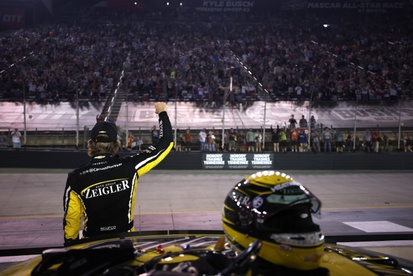
For Carson Hocevar, navigating intense rivalries is becoming a defining characteristic of his early Cup Series career. Known for an aggressively fast driving style that occasionally pushes the patience of veterans, the young Spire Motorsports driver demonstrated that he can hold his own both on the track and when the helmets come off. How veterans and peers approach racing Hocevar in the upcoming weeks will undoubtedly be one of the most closely watched subplots of the season.
Conclusion
Ultimately, NASCAR’s decision to withhold penalties from Ryan Blaney and Carson Hocevar reflects a pragmatic and audience-conscious approach to officiating. By recognizing the difference between reckless endangerment on the track and passionate human conflict on pit road, leadership has allowed a compelling storyline to breathe naturally.
As the video review of pit crew behavior concludes later this week, the spotlight will shift back to the racing action. Yet, the memory of Bristol—and the bruised egos left behind—will linger, serving as a reminder that beneath the high-tech aerodynamics and corporate sponsorships, NASCAR remains a sport fueled by fierce pride, raw adrenaline, and human fire.

 Neng Nana
 Laily UPN
 Iffa Jayyana
 Ali Ikhwan
 Jia Lissa
 Dwi Wanna