
 Nila Kartika Wati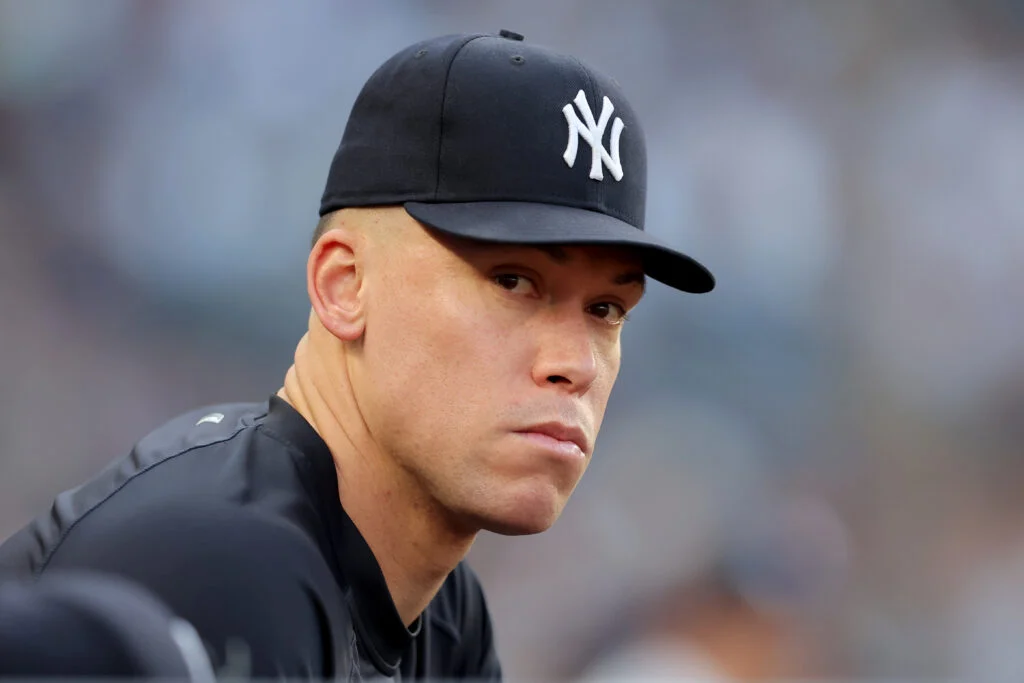
The New York Yankees, perennial contenders and heavy favorites in the American League, find themselves staring down a familiar and deeply concerning obstacle as the regular season reaches its crescendo. In a move that sends shockwaves through the Bronx and beyond, the organization announced that superstar outfielder Aaron Judge will be placed on the 10-day injured list, effective tomorrow, due to a right calf strain.
This latest setback is not merely a personnel adjustment; it is a significant disruption to the championship architecture of one of baseball’s most potent lineups. With the postseason looming, the Yankees are once again tasked with navigating the final stretch of the schedule without their offensive talisman.
The Immediate Situation: A Race Against the Clock
The Yankees confirmed that the injury stems from discomfort Judge experienced during the September 16 contest. By placing him on the 10-day injured list with a retroactive date of September 17, the team is attempting to maximize the possibility of his return for the final game of the regular season on September 27.
However, the medical reality remains murky. Calf strains are notoriously fickle, often requiring patience that a team in the heat of a playoff push simply does not possess. While the administrative move allows for a potential return by late September, there is no guarantee that the reigning offensive titan will be physically prepared to handle the rigors of Major League Baseball—let alone the high-intensity environment of the postseason—by the time the calendar turns to October.
A Season of Interrupted Greatness: A Chronological Review
To understand the gravity of this injury, one must look at the erratic path Judge has walked throughout the 2026 campaign. His season has been characterized by brilliant flashes of dominance bookended by frustrating, lengthy absences.
The Rib Injury and the Long Road Back
The current narrative cannot be separated from the ordeal that defined Judge’s early summer. In early June, the Yankees were forced to shut down their captain after he suffered a stress fracture in the first rib on his right side. The injury, initially identified on June 2, was a significant blow to the team’s identity. What followed was a grueling three-month rehabilitation process that kept the face of the franchise out of the lineup until September 7.
The September Return and the Sudden Stoppage
When Judge returned to the lineup on September 7, the hope was that he would serve as the catalyst for a dominant postseason run. Yet, the momentum was short-lived. In just over a week of game action, Judge struggled to find his rhythm, posting a slash line of .174/.208/.304 across 24 plate appearances. More concerning than the surface-level statistics was his inability to make consistent contact, as evidenced by a 54.2% strikeout rate. The rust was apparent, and before he could fully shake it off, the calf injury occurred on September 16, forcing him out of the game and back into the training room.
Supporting Data: Why Judge’s Absence Looms Large
The concern surrounding Judge is not just emotional; it is rooted in his statistical profile. Aaron Judge is widely considered the premier offensive force in the sport. His track record includes four separate seasons of 50-plus home runs and three campaigns where he finished with a wRC+ (weighted Runs Created Plus) exceeding 200—an elite tier of performance that essentially doubles the production of an average major leaguer.
When Judge is in the lineup, he alters the opposing pitcher’s approach entirely. His presence protects the hitters around him, forces pitchers into the strike zone, and provides the Yankees with a "walk-off" threat every time he steps to the plate. Without him, the Yankees are an objectively different—and less daunting—team. The lack of a rehab assignment before his September 7 activation likely contributed to his sluggish start, and this new injury adds another layer of uncertainty to his timing and pitch recognition.
Tactical Implications: Navigating the Final Stretch
In the short term, the Yankees’ path to the playoffs remains relatively secure. They currently sit five games behind the Tampa Bay Rays for the American League East crown with only ten games remaining, while maintaining a 5.5-game cushion over the Boston Red Sox for the top Wild Card spot.
Mathematically, the Yankees are likely to secure a postseason berth as the top Wild Card team. However, the loss of Judge changes the calculus for the postseason seeding. Failing to catch the Rays means the Yankees will be forced to play in the Wild Card round, which begins on September 29—just 48 hours after the conclusion of the regular season. This provides virtually zero margin for error regarding Judge’s recovery.
The Roster Shuffle
Managerial staff must now reorganize an outfield that is already depleted. The team is currently contending with the absence of Giancarlo Stanton, Jazz Chisholm Jr., and Trent Grisham, all of whom are on the injured list. This has necessitated a series of creative, if desperate, roster decisions:
- Left Field: Cody Bellinger is expected to shoulder the primary duties, providing veteran stability.
- Center Field: With Grisham sidelined, the organization has turned to prospect Spencer Jones to serve as the everyday center fielder.
- Right Field: Heliot Ramos is the likely candidate to handle right field against left-handed starters.
- The Dominguez Factor: All eyes are on Jasson Domínguez. Currently on optional assignment, the highly touted prospect is the primary candidate to be recalled to fill the roster spot left by Judge. The team may utilize a platoon approach, rotating Domínguez and Ramos to maximize matchups.
Implications for the Postseason
The looming question is not just whether Aaron Judge will return, but what kind of version of Aaron Judge the Yankees will receive. Even if his calf heals sufficiently to allow him to take the field by the Wild Card round, the lack of consistent playing time since May is a major hurdle.
The playoffs require a level of pitch recognition and timing that can only be forged through repetition. Having played fewer than 30 plate appearances in over three months, Judge faces an uphill battle to regain the form that made him a perennial MVP candidate. If he is limited—or if the calf injury hampers his ability to drive the ball or patrol the outfield—the Yankees lose their most potent weapon at the most critical time of the year.
Furthermore, the team’s organizational depth is being tested at an unprecedented level. To win a championship, the Yankees will need their secondary pieces—the Joneses, the Ramoses, and the Bellingers—to outperform their career averages. The front office will be monitoring the medical reports with bated breath, knowing that their championship window is currently being held open by a very thin margin.
Conclusion: A Test of Resilience
As the Yankees prepare for their final push, the atmosphere surrounding the team is one of cautious anxiety. The news of Aaron Judge’s injury serves as a stark reminder of the fragility of even the most dominant rosters.
The organization’s ability to adapt, recover, and push forward despite these setbacks will define their 2026 legacy. For the fans, the hope is that this is merely a minor speed bump on the road to the Fall Classic. For the team, it is a high-stakes emergency that requires immediate, calculated responses. The final ten games of the regular season will not just be about securing a playoff seed; they will be a rehearsal for the high-pressure environment that awaits in October, with or without their captain at the helm.
The Yankees have been here before, and they have the institutional knowledge to persevere. Whether that perseverance translates into a title, however, remains one of the most compelling storylines in professional baseball as the postseason countdown begins.

 Azzam Bilal Chamdy
 Pevita Pearce
 rifanmuazin
 Laily UPN
 Nana
Nana
 Asro
Asro
 Muslim