
 Nana Wu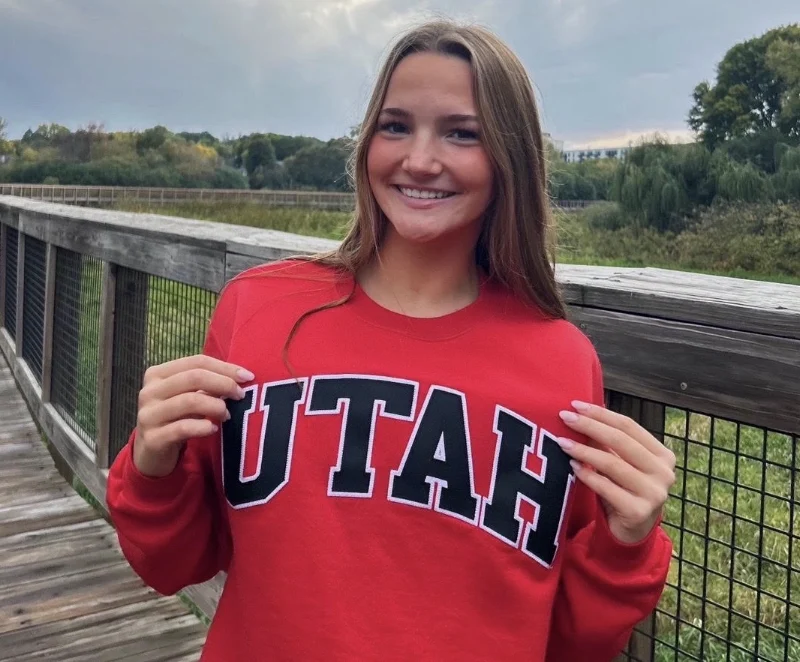
The landscape of collegiate swimming is constantly shifting as young, high-potential athletes weigh their academic and athletic futures. Recently, the University of Utah’s women’s swimming and diving program secured a significant commitment from Winter Juniors qualifier Macy Malinski. A standout talent hailing from Edina, Minnesota, Malinski has announced her verbal commitment to join the Utes beginning in the fall of 2027.
As a program competing in the increasingly competitive Big 12 Conference, Utah’s recruitment of Malinski signals a focus on long-term development. With several seasons of growth ahead of her before she steps onto the deck at the collegiate level, Malinski represents a foundational piece for the Utes’ incoming class of 2031.
The Journey to Salt Lake City: A Commitment to Excellence
For many student-athletes, the decision to commit to a Division I university is the culmination of years of early morning practices, rigorous training cycles, and the pursuit of academic balance. Malinski’s path has been defined by her versatility and her ability to thrive in the high-pressure environment of competitive swimming.
Upon making her decision, Malinski took to SwimCloud to express her gratitude. "I am beyond excited and blessed to announce my verbal commitment to continue my academic and athletic career at the University of Utah!" she wrote. She specifically credited the coaching staff at Utah, stating, "First, I need to thank Coach Jonas and Aly for this amazing opportunity; I am beyond grateful."
Her support system remains a cornerstone of her success. In her public announcement, she extended heartfelt thanks to her family, friends, and the dedicated coaching staffs at both Edina High School and the Aquajets Swim Team, emphasizing the role they played in navigating the complexities of the recruiting process.
Chronology of Progression: From Edina to the National Stage
Malinski’s trajectory over the past two years has been marked by a distinct upward trend in her performance metrics. As a rising senior at Edina High School, she has been a mainstay on the varsity squad since her freshman year, demonstrating the kind of consistency and leadership that collegiate programs value.
The 2025-26 Breakout Season
The most recent season served as a catalyst for Malinski’s national recognition. At the Minnesota State High School League (MSHSL) Class AA State Championships held in November 2025, she solidified her status as one of the state’s premier middle-distance threats.
Her performance at the state meet was multifaceted:
- 400 Free Relay: She spearheaded the Edina effort with a 51.57 leadoff leg, helping the team secure a victory.
- 200 Free Relay: She contributed a 23.53 split, aiding the team in a second-place finish.
- Individual Success: Malinski clocked a 1:49.39 in the 200-yard freestyle and a 4:58.30 in the 500-yard freestyle.
These times were not merely podium finishes; they represented substantial personal bests. She shaved nearly 1.5 seconds off her 200 free time and over 2.5 seconds off her 500 free time, proving that her training with the Aquajets is yielding significant physiological gains.
Refinement in the Butterfly
Beyond her freestyle dominance, Malinski has shown impressive range. In March 2026, at the Minnesota AQJT Senior SC State Championships, she clocked a 56.93 in the 100-yard butterfly. This performance was particularly notable, as it represented a drop of more than two seconds from her start-of-season mark—a testament to her technical refinement and increased aerobic capacity.
Supporting Data: Analyzing the Performance Metrics
To understand the implications of Malinski’s commitment, one must look at the data. Her sprint freestyle foundation was laid during the 2024-25 season, where she established a 100-yard freestyle personal best of 51.19 at the MSHSL Girls Section 2AA meet. Shortly thereafter, in January 2025, she demonstrated her raw speed with a 23.83 in the 50-yard freestyle at the MN FOXJ Winter Classic.

Long Course Potential
While the bulk of her high-level competition occurs in Short Course Yards (SCY), Malinski has demonstrated the ability to translate her speed to the long-course pool. Her summer performance of 26.65 in the 50-meter freestyle served as the qualifying mark for the prestigious Winter Junior Championships. This ability to adapt across pool lengths is a vital trait for collegiate swimmers who must compete across diverse formats and disciplines.
The Big 12 Landscape: Implications for the Utes
The University of Utah finished seventh out of ten teams in the Big 12 during the most recent season. To elevate their standing in the conference, the Utes are actively recruiting athletes who can push the boundaries of their current scoring potential.
Current benchmarks for scoring at the Big 12 Championship level are rigorous. To compete at the top of the conference, athletes generally aim for times in the range of 23.12 (50 free), 50.55 (100 free), 1:49.33 (200 free), and 4:56.89 (500 free). Malinski’s current times are within striking distance of these thresholds.
Given that she has two full years of high school and club training remaining before she arrives in Salt Lake City, the room for improvement is significant. The Utah coaching staff is clearly betting on her trajectory. By the time she enters her freshman year in 2027, the expectation is that her continued development will position her as an immediate contributor to the team’s relay depth and individual scoring efforts.
Building a Future: The Class of 2031
Malinski is not joining this journey alone. Her commitment is part of a broader recruiting effort that is shaping the University of Utah’s class of 2031. She joins a talented cohort of recruits, including Ella Butcher, Rainie Moran, Sophia Friestedt, Riley Hollingsworth, and Makenna Sherman.
This group represents a diverse set of skills that will be essential for Utah as they look to build internal competition and team depth. In collegiate swimming, a strong recruiting class often dictates the success of a program for a four-year cycle, and the early solidification of this class suggests a strategic, long-term vision from the Utah staff.
The Role of Support and Mentorship
The success of a recruit like Malinski is rarely the result of individual effort alone. The ecosystem surrounding youth swimming—comprised of club coaches, high school mentors, and family support—is what facilitates the transition to the Division I level.
Organizations like the Fitter and Faster Swim Tour, which sponsors the SwimSwam College Recruiting Channel, play a critical role in providing platforms for these athletes to showcase their achievements. By highlighting the commitment news of athletes like Malinski, these platforms foster a culture of recognition that encourages younger swimmers to set ambitious goals.
Conclusion: Looking Ahead
As Macy Malinski turns her attention toward her senior year of high school and her final seasons with the Aquajets, the focus will undoubtedly be on refining her technique and increasing her threshold capacity. Her transition to the University of Utah in 2027 will mark a new chapter in her athletic career—one that will test her mettle in the Big 12 Conference.
For the University of Utah, the acquisition of a versatile swimmer with proven year-over-year improvement is a clear win. If Malinski’s recent history is any indicator, the Utes have secured an athlete who is not only capable of contributing to their points tally but one who possesses the grit and determination necessary to succeed in the rigorous environment of major collegiate athletics.
As the sport of swimming continues to evolve, the stories of these young athletes serve as a reminder of the dedication required to reach the pinnacle of the sport. For Malinski, the hard work is far from over, but the path forward is clear: a future in Salt Lake City, competing for the Utes and testing her limits against the best in the nation.

 Azzam Bilal Chamdy

 Pevita Pearce
 rifanmuazin
 Laily UPN
 Nana
Nana
 Asro
Asro
 Muslim