
 Basiran
MADRID — Formula 1’s inaugural weekend at the brand-new Madrid street circuit kicked off with a flurry of technical intrigue, dramatic incidents, and unexpected performance deltas following Friday’s practice sessions. While the sport adjusts to a fresh urban layout promising high risks and thrilling action, Mercedes has once again cast a long shadow over the paddock.
George Russell led the way as the fastest long-run driver on heavy fuel loads, signaling that the Silver Arrows might possess a formidable race package. However, beneath the timing sheets lies a frantic debate over extreme tyre wear, battery management efficiencies, and a rapidly evolving track surface that has teams scrambling for setup answers heading into Saturday.
Main Facts: Russell and Mercedes Set the Early Standard
As the dust settled on Friday’s running, Mercedes emerged as the team to beat in race simulations. George Russell outpaced his nearest challenger, Red Bull’s Max Verstappen, over extended stint lengths. Once adjusted for varying fuel levels and tyre compounds, Verstappen sat a remarkably close 0.13 seconds per lap slower than the British driver.

World championship leader Kimi Antonelli underlined Mercedes’ strength by securing the third-fastest long-run pace, though he remained roughly 0.55 seconds per lap adrift of his teammate Russell.
Conversely, traditional heavyweights Ferrari and McLaren endured a troubled Friday. Both Ferrari pilots struggled significantly during race simulations, clocking in approximately nine tenths of a second per lap slower than the Silver Arrows. McLaren suffered an even worse fate: Oscar Piastri lagged a staggering 1.51 seconds off Mercedes’ long-run pace, while teammate Lando Norris was completely sidelined from completing long runs due to lingering technical gremlins.
In the midfield, Haas capitalized on rival errors to post the most encouraging race simulations, with Esteban Ocon slotting his car just 0.92 seconds behind Russell—effectively matching Ferrari’s long-run performance bracket.

Chronology of Friday’s Practice: From Initial Grip to High Drama
FP1: The Shock of Extreme Degradation
The morning session introduced the grid to a pristine, ultra-smooth asphalt surface that immediately threw engineers for a loop. Teams expected minimal degradation given the nature of a newly paved street circuit. Instead, drivers encountered an astonishingly high grip level that paradoxically made bringing the tyres up to operating temperature an arduous one-lap process, immediately followed by severe thermal degradation.
Mercedes team principal Toto Wolff revealed that early telemetry from FP1 pointed to an eye-watering "eight tenths of degradation per lap," prompting initial simulations to jokingly suggest a wild six-stop race strategy.
FP2: Lindblad’s Pace and Heavy Crash
The afternoon session saw the track evolve rapidly while the field began diving into performance runs. Racing Bulls once again captured the paddock’s attention through rookie Arvid Lindblad. The young driver posted a scintillating lap to finish fourth fastest in FP2, just 0.228 seconds off the ultimate pace.
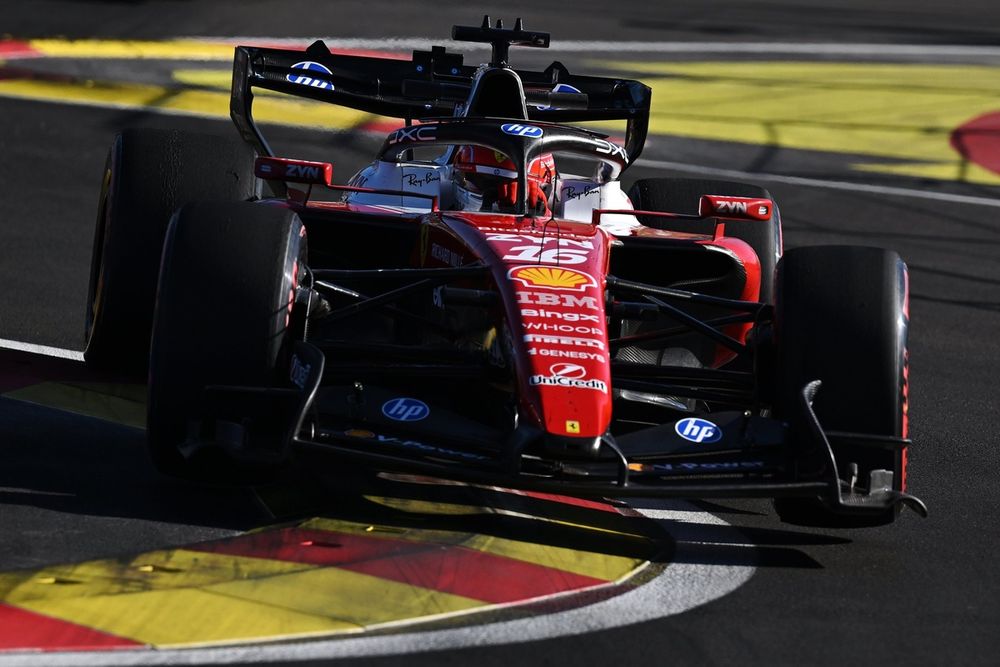
However, the high-risk nature of the Madrid circuit bit hard shortly thereafter. Lindblad suffered a heavy accident that brought out a red flag, abruptly ending his session. The resulting stoppage severely compromised Racing Bulls’ long-run data collection. Teammate Yuki Tsunoda, running an alternative programme, packed both his qualifying and race simulations into a single low-fuel stint, leaving the Faenza-based squad with an incomplete picture of their true race-day potential.
Supporting Data and Telemetry Analysis: Unlocking the Mercedes Advantage
A deeper dive into the telemetry data helps explain why Mercedes holds such a commanding edge, particularly in the long runs. The secret to the Silver Arrows’ pace appears to lie in a potent combination of battery deployment strategy and exceptional top-speed efficiency through Madrid’s layout.
- Sector Breakdown: Mercedes managed to balance its energy harvest and deployment masterfully. During qualifying simulations, they dominated the final sector. With heavy fuel loads on board during long runs, this third-sector advantage compounded significantly.
- Battery Management: Telemetry indicates that Mercedes uses less battery power in the first sector than its rivals while remaining only marginally slower. This leaves them with superior energy reserves and top-speed potential down the straights and through the final complex of corners.
- Rival Strengths: Ferrari showcased strong pace in the opening sector, while Max Verstappen and Red Bull extracted maximum performance from the fast, sweeping second sector. McLaren, meanwhile, struggled to find a sweet spot, appearing consistently off the pace across all three sectors.
- Midfield Gaps: Behind Haas’s impressive showing (+0.92s), the rest of the midfield spread out considerably: Alpine (+1.60s), Audi (+2.20s), Williams (+2.58s), Cadillac (+4.00s), and Aston Martin (+4.33s) all face mountains to climb overnight.
Official Responses: Wolff vs. Pirelli on Tyre Wear
The paddock was sharply divided on Friday evening over how the tyres will behave over a full Grand Prix distance, highlighting the inherent unpredictability of a brand-new venue.

Toto Wolff expressed profound astonishment over the tyre wear rates observed during practice. Speaking to Sky, Wolff remarked:
"At the beginning it was tricky because the track has so much grip, even though it is completely new asphalt. And interestingly, we have the opposite problem to what we expected. We can’t quite get the tyre up to temperature. It takes a lap and then it gets a little better. But of course, the tyre degradation is incredible, because of the grip."
When pressed on strategies, Wolff referenced the extreme numbers from the morning:

"We’ve never seen that before. Our strategy chief said six stops. But I think in the end it will be one stop."
By FP2, degradation rates had settled closer to three tenths per lap—a figure that leans heavily toward a standard two-stop race rather than a one-stop procession.
In stark contrast, Pirelli’s motorsport chief Dario Marrafuschi offered a much more optimistic outlook regarding tyre longevity, telling Sky:

"The grip of the asphalt is really good, so we will most likely have less degradation than expected."
Implications for the Rest of the Weekend
As the Formula 1 grid prepares for Saturday’s final practice and qualifying sessions, several critical narratives are taking shape:
- The "Sandbagging" Tradition: Mercedes has a recent history of concealing its true pace on Fridays. For instance, during the Italian GP weekend, the Silver Arrows appeared evenly matched with Ferrari in Friday long runs before pulling eight tenths clear per lap on Sunday. If Mercedes is holding cards back in Madrid once again, the opposition faces a steep uphill battle.
- Setup Adjustments on a Green Circuit: Because the Madrid track is an entirely new addition to the F1 calendar, track evolution is happening at a blistering pace. Teams are expected to make sweeping setup changes ahead of Saturday, which could dramatically shuffle the pecking order—especially in the volatile midfield.
- Chaos and Red Flags: Drivers have already universally praised the venue as a "high risk" layout with a genuine chance of race-day chaos. With tight walls, blind corners, and rookie mistakes like Lindblad’s already littering the timesheets, clean execution in qualifying and race strategy will be at an absolute premium.
The coming sessions will reveal whether Pirelli or Mercedes’ tactical simulations hold the truth, and whether anyone can unseat George Russell from the summit of the Spanish Grand Prix weekend.


 Neng Nana
 Nana Wu

 Lina Hope

 Sagoh
Sagoh
 Iffa Jayyana