
 Nana Muazin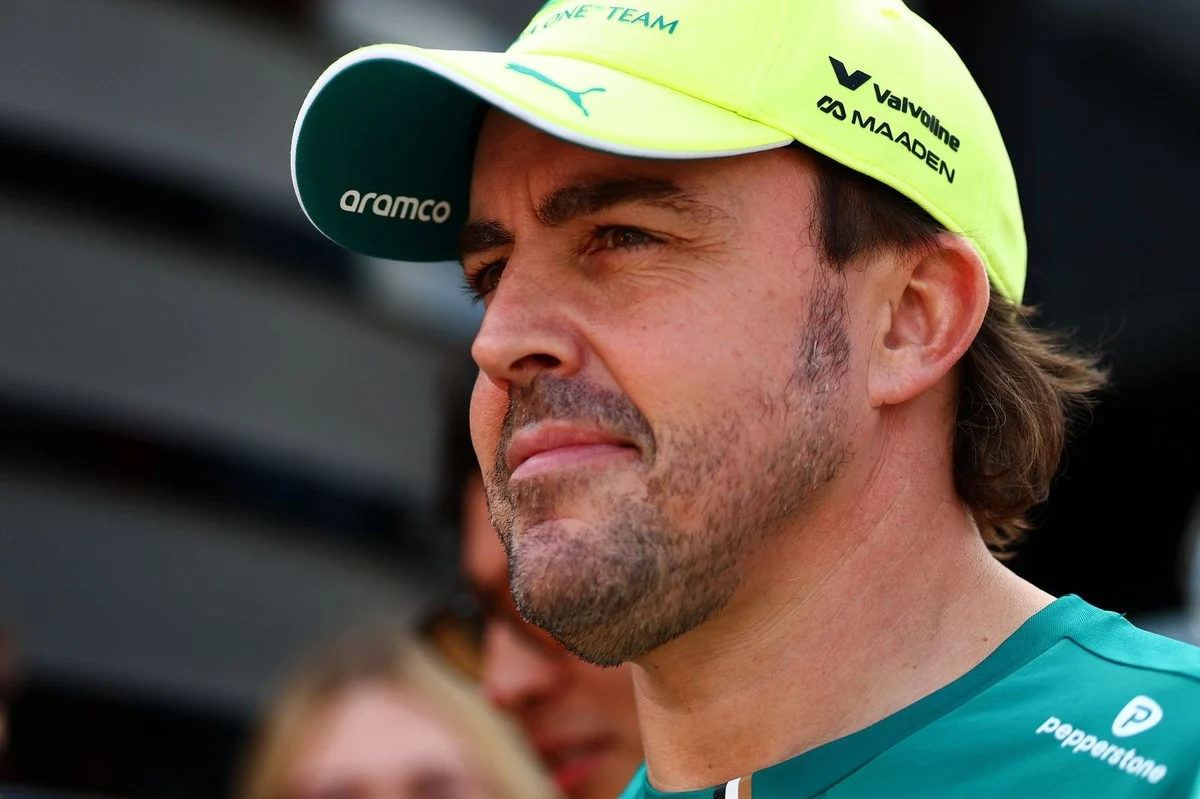
The Formula 1 paddock at the Hungaroring is buzzing with a singular, pervasive narrative: the radical transformation of the Aston Martin AMR26. While the rest of the grid has opted for the incremental, evolutionary approach to development—fine-tuning performance through a steady drip-feed of minor updates—Aston Martin has taken the road less traveled. In a high-stakes strategic pivot, the Silverstone-based outfit has bypassed smaller iterations in favor of a comprehensive, ground-up “B-spec” overhaul.
For the team, the weekend in Hungary is not merely another Grand Prix; it is a definitive test of their technical direction and a critical juncture for their long-term project.
The Technical Pivot: A Total Concept Shift
The scope of the upgrade package is staggering. Both Fernando Alonso and Lance Stroll have been provided with an entirely new chassis, a fresh aerodynamic philosophy, and, as confirmed by Team Principal Mike Krack, a fundamental change in the car’s rake philosophy. This is not a tweak; it is a reincarnation.
By shifting their aerodynamic and mechanical balance, Aston Martin is attempting to resolve the fundamental handling imbalances that plagued the first half of the season. Notably, while the aero and chassis components are entirely new, the powertrain and gearbox remain static for the time being. The team is looking toward the Zandvoort round for the next major milestone, where Honda is scheduled to introduce its first "ADUO" power unit upgrade. Until then, the burden of proof rests entirely on the new aerodynamic surfaces and the revised weight distribution of the B-spec chassis.

The Weight of Expectation
The pressure mounting on the team is multifaceted. Internally, the mandate from Lawrence Stroll is clear: the team must prove that their investment in facilities, personnel, and infrastructure is capable of producing a championship-caliber machine. Progress is not just a desire; it is a contractual requirement for the team’s continued trajectory toward the front of the grid.
Externally, the focus is fixed on Fernando Alonso. The two-time World Champion has endured a grueling, often anonymous first half of the season. While his commitment to the sport remains unquestioned, his patience is clearly being tested. Alonso has publicly stated that his future decisions will be governed more by the evolution of F1’s technical regulations than by the immediate competitiveness of his current seat. However, for a driver of his caliber, constant performance in the midfield is an unnatural state of affairs.
Verstappen’s Perspective: Empathy from the Top
The struggle of a veteran champion is a sentiment that resonates with the current dominant force in the sport, Max Verstappen. Speaking during the media day in Budapest, the Red Bull driver expressed a nuanced understanding of Alonso’s situation.
"I fully agree with him," Verstappen noted. "It is not what you want. Of course, Fernando is 44, so it’s probably a bit easier for him to say ‘I quit,’ because he has basically already done his career. I would love to see Fernando race until he’s 60, but I don’t think that is realistic in Formula 1."

Verstappen’s comments highlight the growing frustration among the drivers regarding the 2026 regulations. While the Dutchman remains committed to the sport, he admitted that his motivation is currently tested by the nature of the current car packages. "I’m 28 years old, so it’s a little bit different. I can easily stop, it’s not a problem, but I love racing. I’m just trying to deal with what we have, even though what we have at the moment is not what I like."
Chronology of the 2026 Season Struggle
To understand why this upgrade is so critical, one must look at the trajectory of the 2026 season thus far.
- Early Season (Bahrain/Jeddah): Initial promise for the Aston Martin package was quickly dampened by thermal management issues and a lack of correlation between wind-tunnel data and on-track reality.
- The Mid-Season Slump: As the calendar progressed, the team found itself locked in a difficult development cycle. Small, conservative upgrades failed to yield the expected lap-time gains, leading to a stagnation in the Constructors’ Championship standings.
- The Decision: In early summer, the leadership at Silverstone made the difficult decision to abandon the development path of the "A-spec" car entirely, funneling all resources into the B-spec concept currently debuting in Hungary.
- The Hungary Reveal: The arrival of the new car marks the culmination of weeks of round-the-clock work in the factory. It is the single largest technical update any team has brought to a single event this year.
Assessing the Driver Benchmark
Despite the frustrations of the current campaign, Alonso’s standing among his peers remains high. While critics argue that assessing the speed of a 44-year-old is complicated, his performance against teammate Lance Stroll provides a consistent—if limited—metric. Leading the qualifying head-to-head 8-2, Alonso has maintained a performance edge that suggests his racecraft and raw speed remain firmly intact.
Verstappen, for one, refuses to see Alonso’s current results as a reflection of his skill. "It’s a tough one," Verstappen said. "Fernando, of course, doesn’t deserve to be in P21. Fernando deserves to be in the top five, minimum."

This sentiment is echoed throughout the paddock. The consensus is that the current regulation set has flattened the field in a way that minimizes the "driver difference." When the machinery is balanced on a knife-edge and the margins are decided by millimeter-thin aerodynamic variances, even the most legendary drivers find their ability to influence results severely hampered.
Implications for the Future
The implications of the Hungary update are profound. If the B-spec car yields a significant leap in performance—potentially elevating the team into the Q3 fight and toward podium contention—it will validate the team’s aggressive engineering approach. It would provide the "light at the end of the tunnel" that Alonso is seeking and likely secure his commitment to the team for the foreseeable future.
Conversely, should the upgrade fail to deliver, the repercussions will be severe. A failure would imply that the fundamental issue lies not just in the aerodynamic surfaces, but perhaps in the underlying philosophy of the car’s architecture. Such a realization would necessitate a complete strategic review, casting doubt on the team’s readiness for the next era of technical rule changes.
Final Thoughts: The Cost of Ambition
As the cars head out for Free Practice, the atmosphere is heavy with anticipation. Formula 1 is a sport that punishes stagnation, but it also penalizes those who gamble too recklessly. Aston Martin has placed its chips on the table. They are betting that their radical shift in philosophy will pay off, not just in points, but in the trust of their drivers and the future of their competitive project.

The 2026 season has already proven that the gap between success and disappointment is narrower than ever. For Aston Martin, the next 72 hours in Hungary will determine whether they have successfully engineered a resurgence or simply accelerated their own uncertainty. As Max Verstappen aptly noted, even for the most talented, the sport is a test of endurance—not just of the machine, but of the spirit. Whether Alonso and Aston Martin can find their way back to the front will be the defining story of the second half of the season.


 Pevita Pearce
 Evan Lee Salim
 Neng Nana
 Nana Wu
 Lina Hope

 Sagoh
Sagoh
 Iffa Jayyana