
 Laily UPN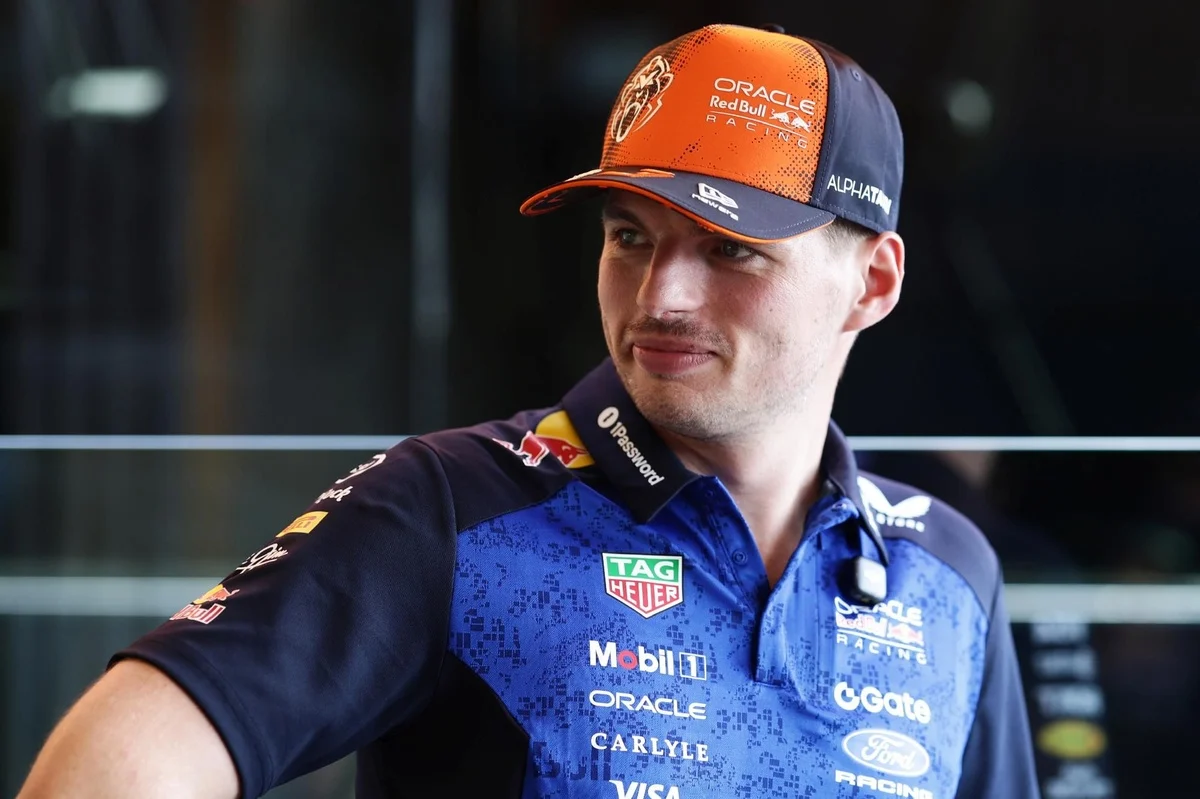
In the high-stakes theater of Formula 1, few narratives possess the gravity of Max Verstappen’s potential departure from Red Bull Racing. As the Milton Keynes outfit grapples with a performance plateau that has left their star driver languishing in uncharacteristic territory, the paddock is abuzz with speculation. Is the four-time world champion truly preparing to sever ties with the team that nurtured his ascent to greatness? According to Sky Sports F1 pundit Naomi Schiff, the answer is not only possible but entirely rational.
The State of Play: A Performance Crisis
The narrative surrounding Verstappen’s future is no longer mere paddock gossip; it is a calculated response to a sobering reality. After the opening nine rounds of the current season, the Dutchman sits in a precarious seventh place in the Drivers’ Championship with 76 points—a staggering 103 points behind championship leader Kimi Antonelli.
For a driver of Verstappen’s caliber, this deficit represents a crisis. The RB chassis, once the gold standard of aerodynamic efficiency, has struggled to find consistent pace, leaving the 28-year-old frequently battling in the midfield rather than competing for podiums. While Red Bull’s power unit remains formidable on paper, the integration of their current package has failed to provide the consistent, race-winning performance required to defend a championship crown.
Chronology of a Relationship Under Strain
To understand the current tension, one must look at the timeline of the partnership between Verstappen and Red Bull.
- The Dominant Era: Following his maiden title in 2021, Verstappen and Red Bull enjoyed a period of historic dominance, culminating in back-to-back-to-back championships that shattered numerous F1 records.
- The 2024 Inflection Point: As the 2024 season progressed, cracks in the armor began to show. Technical staff departures and internal power struggles within the team hierarchy created an environment of uncertainty.
- The Contractual Clause: Reports have emerged suggesting an "exit clause" exists in Verstappen’s current contract. This provision reportedly allows the driver to trigger an early departure if he sits outside the top two in the standings by the summer break—a deadline that is now just two races away.
- The 2026 Commitment: Despite the turbulence, Verstappen committed to the team for the 2026 regulation change, signaling a desire to see if the team could successfully navigate the transition to new engine and aerodynamic rules.
Naomi Schiff: "Why Wouldn’t He Be Looking?"
During the Sky Sports F1 broadcast from Belgium, Naomi Schiff offered a candid assessment of the situation, defending Verstappen’s right to keep his options open.
"Why wouldn’t he be looking around?" Schiff posed to viewers. "There was a real sense that he was looking around last season, but he made the right decision to stick with Red Bull and see what these regulations provide. Red Bull have the best engine on paper but don’t have a competitive package, or at least not one that is consistently quick."
Schiff’s analysis highlights the pragmatic nature of modern F1 drivers. Verstappen, who has been vocal about his desire to pursue interests outside of Formula 1 in the coming years, is acutely aware that his window of peak competitiveness is finite. "He’s always said he won’t spend another 10 years in Formula 1," Schiff added. "He wants to go on and do other things, so he wants to make the most of the time that he’s here."
The Competitive Landscape: Where Could He Go?
While the logic for an exit is sound, the mechanics of a transfer are fraught with difficulty. The current driver market is highly restricted, with most top-tier seats at teams like Mercedes, McLaren, and Ferrari locked away by long-term contracts and rising talents.
The Mercedes Possibility
Mercedes, having undergone a significant rebuild, remains the most logical destination for a driver of Verstappen’s stature. However, with the emergence of Kimi Antonelli as a title challenger, the "Silver Arrows" may be hesitant to disrupt their current equilibrium by introducing a driver who demands absolute priority.
The McLaren Factor
McLaren has arguably become the most consistent threat on the grid. However, their driver lineup is currently optimized for long-term growth. A move to Woking would require Verstappen to accept a different internal dynamic than the "Number One" status he has enjoyed at Red Bull for the better part of a decade.

"Unfortunately, there are not a lot of open doors in this paddock," Schiff noted. The reality is that for a driver of Verstappen’s salary and status, the list of teams capable of winning—and willing to pay the premium—is incredibly short.
Supporting Data: A Statistical Decline
The numbers tell a story of a driver fighting against his own equipment. In previous years, Verstappen’s average finishing position rarely dipped below the podium. This season, he has struggled to find grip in slow-speed corners and has suffered from erratic tire degradation—a stark contrast to the dominant RB19 and RB20 machines.
- Average Finishing Position (2023): 1.2
- Average Finishing Position (2024/25): 4.8
- Points Differential (Current Season): -103 points to P1
These figures illustrate a fundamental loss of efficiency. While Verstappen’s race craft remains sharp, he is consistently forced to over-drive the car to keep pace with the McLarens and Mercedes, leading to heightened frustration over team radio and, occasionally, costly mistakes.
Implications for the Future of Red Bull
Should Verstappen decide to activate his exit clause, the implications for Red Bull would be catastrophic. The team has been built around the Dutchman’s specific driving style and technical feedback. Losing him would necessitate a total overhaul of their racing philosophy and would leave a massive void in the team’s leadership.
Furthermore, it could trigger a mass exodus of key technical personnel who have remained with the team primarily because of their belief in Verstappen’s ability to win championships. The commercial impact would be equally severe, as Red Bull’s marketing machine is intrinsically tied to the brand of Max Verstappen.
Official Responses and The Path Forward
To date, Red Bull Racing has maintained a public stance of calm. Christian Horner and the team leadership have repeatedly emphasized that they are working around the clock to provide Verstappen with a car worthy of his talent. "We are in a development race, and we are confident we can close the gap," a team spokesperson recently suggested.
However, the silence from the Verstappen camp remains deafening. By refusing to commit beyond the immediate future, Verstappen maintains his leverage. He is effectively forcing Red Bull to prioritize the 2026 project and prove they can compete at the highest level again.
Conclusion: A Turning Point
The upcoming summer break will serve as a pivotal moment for both the driver and the team. If Red Bull can demonstrate a tangible upturn in performance during the next two Grands Prix, the exit clause may remain unused, and the partnership may be salvaged for at least one more season.
If not, we are witnessing the beginning of the end of one of the most successful driver-team pairings in the history of the sport. Max Verstappen is a driver who prizes victory above all else, and as Naomi Schiff rightly observed, he is far too talented to spend the twilight of his career waiting for a team to regain its form. The clock is ticking, not just on the summer break, but on the future of the Red Bull Racing dynasty itself.


 Neng Nana
 Nana Wu

 Lina Hope

 Sagoh
Sagoh
 Iffa Jayyana