
 rifanmuazin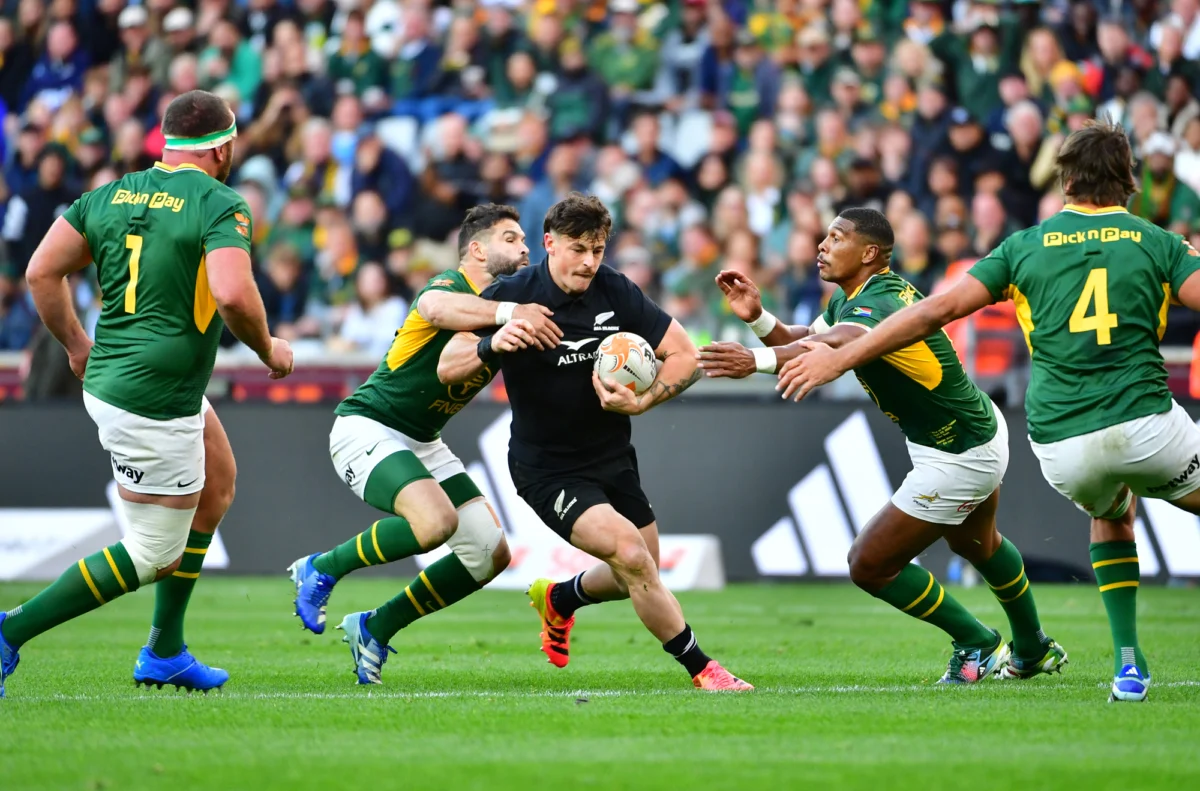
The narrative of modern rugby union often leans toward hyperbole, yet when South Africa and New Zealand collide, the reality rarely fails to match the magnitude of the marketing. Today, the FNB Stadium in Johannesburg—the iconic "Soccer City"—plays host to the third installment of the "Greatest Rivalry" series. With the series currently knotted at 1-1, this encounter represents far more than just a middle chapter; it is a tactical chess match between the two preeminent forces in the sport, each vying for the psychological and physical advantage before the final showdown in the United States.
The State of Play: A Series of Momentum Shifts
The series opened with a seismic jolt that reverberated throughout the rugby world. At Ellis Park, the All Blacks delivered a clinical, ruthless performance, dismantling the Springboks 33-16. It was a masterclass in pace and precision, leaving the home crowd stunned and the South African coaching staff scrambling for answers. The defeat was not merely a loss of points; it was an interrogation of the Springboks’ defensive structure and their ability to cope with New Zealand’s high-tempo transition game.
However, the hallmark of Rassie Erasmus’s tenure has been an uncanny capacity for rapid adaptation. In the second Test in Cape Town, the script was flipped. The Springboks re-asserted their physical dominance, suffocating the All Black attack and grinding out a 33-26 victory. By returning to their core strengths—a formidable set-piece and relentless pressure at the breakdown—South Africa proved that the series was far from a foregone conclusion.
As the teams take the field in Johannesburg today, the atmosphere is electric. While the series will conclude with a fourth Test in Baltimore, the winner of today’s contest will claim the psychological high ground, forcing their opponent to enter the final match in the U.S. trailing not just on the scoreboard, but in momentum.
Chronology and Strategic Evolution
The tactical evolution over the first two matches has been fascinating to observe. In the opening Test, New Zealand’s backline exploited the width of the pitch, with Will Jordan serving as the primary catalyst. Their ability to turn over ball and strike from deep caught the Springboks flat-footed.
In response, the Cape Town encounter saw the Springboks tighten the screws. By forcing the All Blacks into an arm-wrestle, Erasmus ensured that the game remained within his team’s preferred parameters. The Springbok pack, spearheaded by the intensity of Siya Kolisi and the uncompromising work rate of Eben Etzebeth, dictated the terms of engagement.
Today’s selection reveals further intent. Erasmus has shifted Cheslin Kolbe to fullback, a move designed to add a secondary playmaker and counter-attacking threat from the deep, while bringing Kurt-Lee Arendse onto the wing for his finishing prowess. On the other side of the tunnel, All Black boss Dave Rennie has opted for a subtle reshuffle in the engine room, introducing Asafo Aumua at hooker and Sam Darry in the second row, aiming to bolster their lineout stability and mobility around the park.
Supporting Data and Personnel Dynamics
The personnel changes are indicative of the granular detail being applied to this series. The Springboks’ front row of Ox Nché, Malcolm Marx, and Wilco Louw remains a terrifying prospect for any opposition, and their performance today will likely dictate the outcome of the scrummaging battle.
For the All Blacks, the inclusion of Peter Lakai on the blindside is a clear signal that they intend to challenge the Springboks at the breakdown. With Ardie Savea leading from the base of the scrum, New Zealand’s back row is built for speed and scavenging. If they can disrupt the service to Cobus Reinach, they will effectively blunt the Springbok attack before it gathers momentum.
Key Match Statistics:
- Venue: FNB Stadium, Johannesburg
- Series Status: 1-1
- Referee: Nika Amashukeli (Georgia)
- Kick-off: 4:10 PM BST / 5:10 PM SAST / 11:10 AM EDT
The appointment of Nika Amashukeli as referee is a significant variable. Having been sidelined last week, his return to the middle of the park will be closely watched, particularly regarding his interpretation of the breakdown and offside line—areas where both teams have looked to test the boundaries of legality in previous weeks.
Official Responses and Tactical Mindsets
Behind the scenes, the rhetoric has been predictably cautious, though the underlying tension is palpable. Rassie Erasmus, ever the master of the "mind game," has been characteristically coy regarding his tactical shifts. His willingness to make late, disruptive changes to his line-up—a tactic he utilized to great effect in previous seasons—has kept the New Zealand management on their toes.
Dave Rennie, meanwhile, has emphasized the need for discipline. "Against a team like South Africa, you cannot afford to hand them easy penalties or field position," Rennie noted in the pre-match press conference. "We know they will come at us with intensity. Our focus is on maintaining our structure under that immense pressure."
The captains, Siya Kolisi and Ardie Savea, have both spoken of the weight of history. For these players, this is not just another Test match; it is a test of legacy. Both men understand that their performance today will be scrutinized by historians of the game for years to come.
The Implications: Why This Matters
The "Greatest Rivalry" series serves as a litmus test for the current global hierarchy. While other nations continue to close the gap, the Springboks and All Blacks remain the standard-bearers for physical and technical excellence. The outcome of this third Test carries several significant implications:
- Series Dominance: The winner takes a crucial lead into the final, high-profile game in the United States, effectively dictating the narrative for the remainder of the tour.
- World Ranking Points: With the margins between the top teams in the world ranking so thin, a victory here is worth more than just the result; it is vital for maintaining the top-two status in the world.
- Psychological Warfare: A win for the All Blacks would prove that their opening victory was no fluke and that they have the blueprints to neutralize the Springbok power game. Conversely, a Springbok win would confirm their status as the world’s most resilient team, capable of overcoming tactical setbacks.
- The American Market: As the series moves to Baltimore, the spectacle of the first three matches will serve as the primary marketing vehicle. Both teams are aware that a high-quality, brutal, and skillful match in Johannesburg will generate massive interest for the series finale in the U.S.
How to Follow the Action
For fans across the globe, accessing this encounter is a priority. In the United States, the match is available for free via RugbyPass TV. Supporters in other regions looking to bypass geo-restrictions and maintain access to their domestic coverage can utilize reputable VPN services like NordVPN, which provide a secure and reliable way to stream the action from anywhere in the world.
As the teams prepare to march out into the cauldron of the FNB Stadium, the message is clear: the history of this rivalry is being written in real-time. Whether it is the tactical ingenuity of the coaching boxes or the individual brilliance of players like Damian McKenzie and Cheslin Kolbe, every second of this Test promises to be a masterclass in intensity.
The stage is set. The history is written. The only thing left to determine is which of these two giants will seize the initiative and claim their place in the lore of the Greatest Rivalry.
Team Line-ups
South Africa:
Cheslin Kolbe, Kurt-Lee Arendse, Jesse Kriel, Damian de Allende, Ethan Hooker, Sacha Feinberg-Mngomezulu, Cobus Reinach; Ox Nche, Malcolm Marx, Wilco Louw, Eben Etzebeth, Ruan Nortje, Siya Kolisi (captain), Pieter-Steph du Toit, Jasper Wiese.
Replacements: Deon Fourie, Gerhard Steenekamp, Thomas du Toit, Lood de Jager, Andre Esterhuizen, Cameron Hanekom, Morne van den Berg, Manie Libbok.
New Zealand:
Damian McKenzie, Will Jordan, Quinn Tupaea, Jordie Barrett, Leroy Carter, Ruben Love, Cam Roigard; George Bower, Asafo Aumua, Tyrel Lomax, Tupou Vaa’i, Sam Darry, Peter Lakai, Luke Jacobson, Ardie Savea (captain).
Replacements: Samisoni Taukei’aho, Xavier Numia, Fletcher Newell, Fabian Holland, Wallace Sititi, Kyle Preston, Anton Lienert-Brown, Josh Moorby.
Match Officials:
Referee: Nika Amashukeli (Georgia)
Assistant Referees: Angus Gardner (Australia), Christophe Ridley (Australia)
TMO: Eric Gauzins (France)

 Suro Senen
 Dwi Wanna
 Nana Muazin
 Asro
Asro

 Iffa Jayyana