 Evan Lee Salim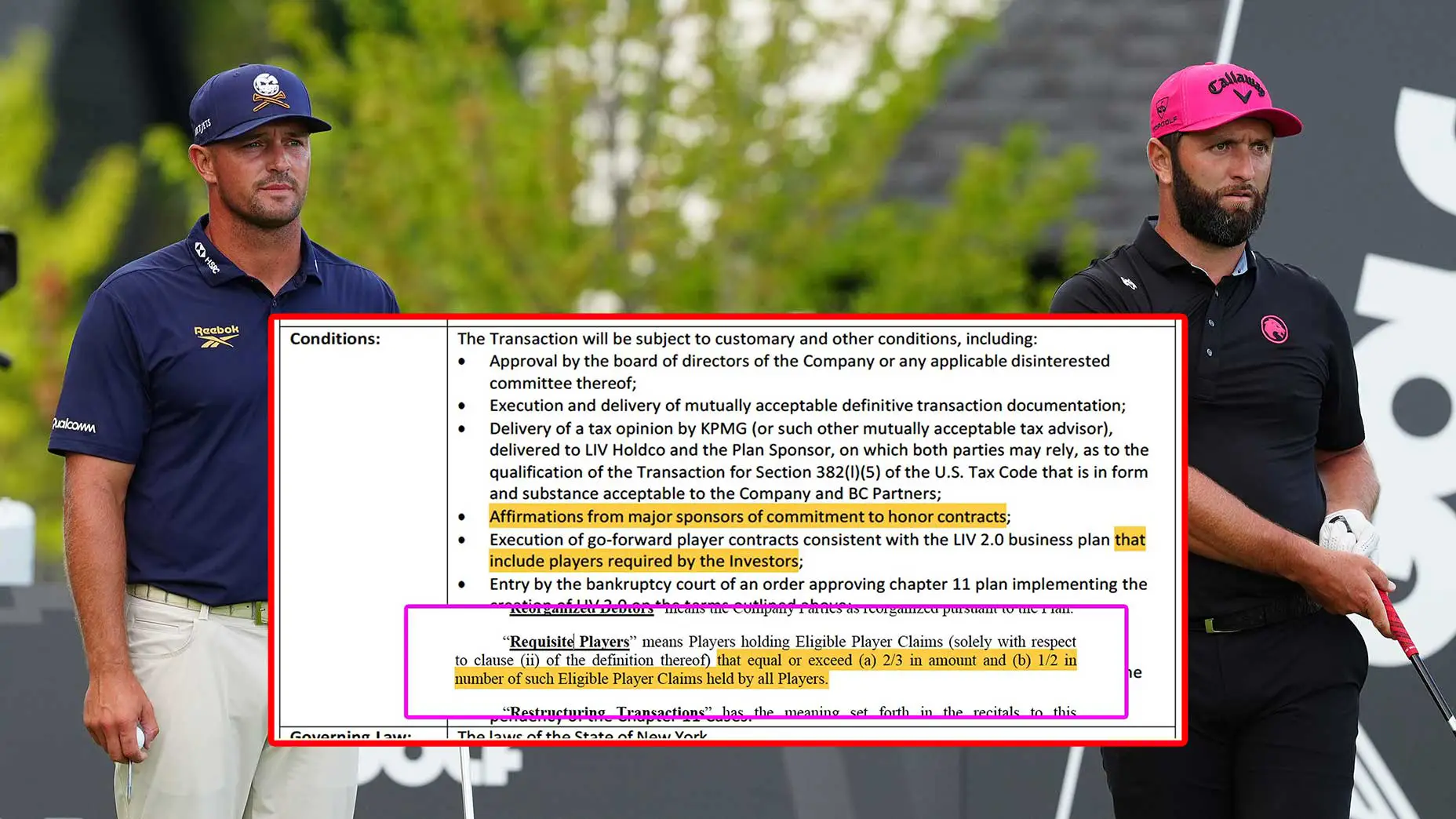
By Sean Zak
September 9, 2026
The high-stakes gamble that once threatened to tear the fabric of professional golf has officially hit a wall. On Tuesday, September 8, 2026, LIV Golf filed for Chapter 11 bankruptcy in New Jersey, marking a stunning, public admission that its ambitious, sovereign-wealth-funded model had failed to achieve commercial viability. As the league enters the courtroom of Judge Michael B. Kaplan, hundreds of pages of filings have been unsealed, revealing a narrative of astronomical spending, a fatal inability to capture television viewership, and a desperate, eleventh-hour scramble for survival.
The bankruptcy filing is not merely a legal proceeding; it is a post-mortem of an era defined by unlimited capital and the harsh reality of market economics. For LIV, the future now rests on a precarious "LIV 2.0" restructuring plan, one that demands total buy-in from the stars who once helped define the league’s disruptive spirit.
The Ticking Clock: A 35-Day Ultimatum
The path toward a reconstituted LIV Golf is narrow and fraught with risk. According to a term sheet included in the bankruptcy documents, LIV has entered into an agreement with the credit division of BC Partners to fund the interim bankruptcy period and provide exit financing. However, this lifeline is strictly conditional.

For the deal to close, LIV must secure commitments from a specific threshold of players by October 13—exactly 35 days from the September 8 filing. The requirements are stringent: the league needs 50% of players with "claims" to sign on, and the collective value of those claims must account for at least two-thirds of the total player debt. In layman’s terms, the league’s survival depends on convincing its marquee talent, including high-profile stars like Bryson DeChambeau and Jon Rahm, that the league’s second iteration is a viable investment of their time and brand. If the players walk, the restructuring fails, and the league likely faces total liquidation.
Chronology of a Collapse: From Masters Glory to Bankruptcy
To understand how the "Golf Super League" found itself in a New Jersey courtroom, one must look at the timeline of its internal decay.
The Spring Warning Signs
While the 2026 Masters served as a brief distraction—with Rory McIlroy defending his title in early April—the storm clouds were already gathering within LIV’s executive offices. On April 13, 2026, LIV took the decisive step of appointing veteran restructuring specialists Gene Davis and Jon Zinman to its board. The presence of two experts known for navigating bankruptcies indicated that the Saudi Public Investment Fund (PIF) had been weighing an exit or a major restructuring long before the official public announcement.
The Leaner Summer
By mid-summer, the "blank check" era was clearly over. LIV significantly scaled back its concert series, which had previously been a staple of its "golf-as-entertainment" pitch. From May to August, the league hosted only one concert, held in Korea. The eventual cancellation of the Indiana season-ending concert was, in hindsight, a formality. The organization also initiated a massive workforce reduction, laying off 289 employees across its U.S. and U.K. divisions—approximately 90% of its total staff—stripping the organization down to its barest bones.

Supporting Data: The "Eyeball" Deficit
Perhaps the most damning revelation in the bankruptcy documents is the breakdown of LIV’s revenue streams. In its five-year existence, the league struggled to translate its star-studded fields into a sustainable business model.
The primary culprit was anemic television revenue. While the PGA Tour typically generates upwards of 67% of its core revenue from broadcast rights, LIV’s broadcast deals accounted for a staggering 5% of its total revenue. Sponsorships made up roughly half of the league’s income, totaling $102 million in 2025. Extrapolating from these figures, the league’s annual revenue hovered around $208 million—a figure that, while substantial for a startup, was dwarfed by the massive capital outlays required to pay signing bonuses and operational costs.
Ultimately, LIV failed to solve the fundamental problem of modern sports: it could not generate the consistent "eyeballs" necessary to demand high-value media rights.
Official Responses and Internal Defenses
Despite the grim financial picture, the league’s leadership remains defiant in its narrative of what could have been. David Orlofsky, LIV’s Chief Restructuring Officer, included a notable defense in the filings: "LIV Golf firmly believes that, with appropriate funding and a level playing field with its competitors, its existing operating model would have reached profitability within five to seven years."

This optimism echoes sentiments expressed earlier in the year by executive Scott O’Neil, who publicly stated that the league was not expected to break even for nearly a decade. However, the market has proven less patient than the Saudi PIF’s initial budget. With only $15 million in remaining cash on hand at the time of filing, the company’s ability to pay vendors and sustain operations had effectively hit a dead end, forcing the hand of its creditors.
Implications: The Future of "LIV 2.0"
The restructuring plan, dubbed "LIV 2.0," is designed to transform the league from a top-down, sovereign-funded entity into a player-owned collective.
The Player Ownership Model
The new plan proposes that players will own a 52.5% majority of the league, with amended contracts providing signing bonuses and roughly 30% ownership in their respective teams. Most intriguing for the players is the promise of a "return of certain NIL (Name, Image, and Likeness) Rights." For marketable stars who felt stifled by the league’s previous, restrictive branding requirements, this return of autonomy is the primary carrot being dangled to ensure their continued participation.
The Rejection of Contracts
As part of the court proceedings, LIV has moved to reject a variety of previous contracts, including office leases and, most controversially, "player participation agreements." These documents provide a fascinating, historical look at the league’s recruitment efforts.

The filings reveal "Letter Agreements" involving stars such as Henrik Stenson, Lee Westwood, and Ian Poulter, dating back to May 2022. Even more revealing is the inclusion of PGA Tour stalwart Cameron Young, whose letter agreement was dated July 24, 2022—just one week after his runner-up finish at The Open Championship. These documents confirm that the league’s recruitment net was wider and more aggressive than previously understood, targeting players at the absolute peak of their leverage.
The Road Ahead
The bankruptcy of LIV Golf is not merely the end of a sports league; it is the end of an experiment in financial disruption. The court will now decide if the "LIV 2.0" proposal has the legs to stand on its own, or if the venture will be dismantled piece by piece.
For the players, the choice is stark: sign on to a restructured, player-owned entity with uncertain broadcast prospects, or attempt to navigate a return to a professional golf landscape that has been profoundly altered by their original defection. As the October 13 deadline approaches, the golf world watches not to see who will win the next trophy, but to see which players believe in the survival of a project that has effectively run out of both money and time.
The case of LIV Golf vs. Reality has reached its final round, and for now, the scorecard is overwhelmingly red. Whether the league can execute a miraculous back-nine recovery remains the most significant unanswered question in the modern history of the sport.


 Dwi Wanna
 Lina Hope
 Suro Senen
 Nana Muazin
 Asro
Asro
 Iffa Jayyana