
 Pevita Pearce
By Charlie Wright
November 12, 2026
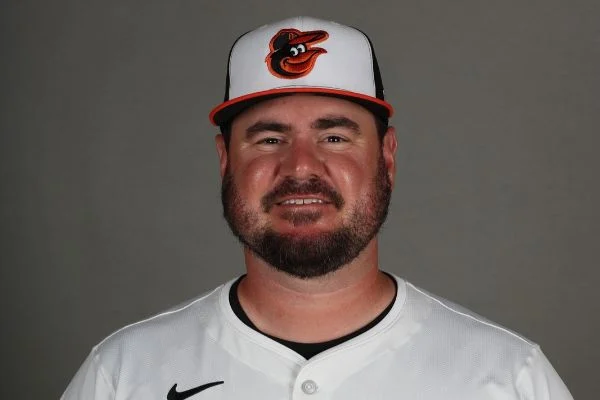
The Texas Rangers are signaling a clear intent to rectify their offensive struggles from the 2026 season. In a move aimed at refining the club’s approach at the plate, the organization is expected to hire Tommy Joseph to join the major league coaching staff, according to a report by Shawn McFarland of the Dallas Morning News. Joseph, a seasoned hand in the developmental and major league coaching ranks, will step into an assistant hitting coach role, working directly under lead hitting coach Justin Viele.
This addition comes as part of a broader strategy by President of Baseball Operations Chris Young to stabilize the coaching infrastructure while injecting new tactical perspectives into the clubhouse. With the Rangers looking to rebound from a disappointing campaign, the arrival of Joseph serves as a bridge between the analytical frameworks of the front office and the day-to-day execution required by a star-studded lineup.
A Career Built on Mentorship: The Chronology of Tommy Joseph
Tommy Joseph’s transition from a professional player—a former power-hitting prospect who spent several seasons in the big leagues—to an influential coach has been defined by rapid upward mobility and a reputation for technical precision.
Joseph’s coaching odyssey began in 2021, shortly after his playing days concluded. He cut his teeth within the New York Mets organization, serving as a minor league hitting coach. It was here that he began to earn a reputation as a communicator who could bridge the gap between high-level exit velocity data and the practical application of swing mechanics.
His work in the Mets’ system did not go unnoticed. By 2023, the San Francisco Giants recruited Joseph for a similar minor league hitting instructor role, where he was tasked with developing a young wave of talent in the organization’s farm system. The move proved to be a catalyst for his career, as his ability to synthesize complex data into actionable feedback became his calling card.
In 2024, Joseph made the jump to the major league level, joining the Seattle Mariners as an assistant hitting coach. Navigating the pressures of an MLB clubhouse, Joseph helped the Mariners’ offense manage the notoriously pitcher-friendly environment of T-Mobile Park. Most recently, Joseph served in the same capacity with the Baltimore Orioles, an organization lauded for its progressive hitting philosophies and development of young sluggers. By bringing Joseph to Arlington, the Rangers are effectively poaching a coach who has spent the last three years immersed in two of the most data-driven organizations in baseball.
Reassessing the 2026 Campaign: Statistical Realities
The decision to add Joseph is inextricably linked to the Rangers’ underwhelming performance at the plate in 2026. Despite a roster laden with high-ceiling talent, the team finished the season ranked 25th in total runs scored and 20th in collective OPS (On-base Plus Slugging). These figures represent a significant underperformance relative to the payroll and the pedigree of the core offensive players.
The 2026 season was a tale of "what could have been" regarding health and consistency. While veteran outfielder Brandon Nimmo provided a steady presence in the middle of the order, and Joc Pederson delivered a strong, productive campaign, the rest of the lineup struggled to maintain momentum. The trio of Corey Seager, Wyatt Langford, and Josh Jung—the theoretical engine of the Rangers’ offense—showed flashes of brilliance, yet all three were hampered by injuries that disrupted their timing and ability to anchor the lineup for extended periods.
When those core pieces were in the lineup, the individual metrics were often encouraging, but the collective output was disjointed. The Rangers struggled with situational hitting, particularly in high-leverage scenarios, leading to the low run-production numbers that ultimately doomed their postseason aspirations. The front office believes that with better health and a more cohesive hitting philosophy—the kind Joseph is expected to reinforce—the team’s offensive ceiling remains among the highest in the American League.
Strategic Continuity: The Role of Justin Viele and Eric Dorton
Despite the offensive shortcomings, the Rangers are not blowing up the entire hitting staff. Alongside the hiring of Joseph, it has been confirmed that Eric Dorton will be retained as an assistant hitting coach. Dorton, who joined the organization last year under the regime of new manager Skip Schumaker, has developed a strong rapport with the players and the front office alike.
The retention of Dorton and the continued leadership of Justin Viele indicate that the front office is seeking "evolution rather than revolution." Chris Young’s endorsement of Viele is telling. While the run production was stagnant, Young pointed to underlying improvements in the team’s offensive process—such as swing decisions and contact quality—that simply failed to manifest on the scoreboard.
"I think he’s done very good things," Young said of Viele, as relayed by McFarland. "It didn’t perfectly translate to the run production we needed last year, but there were improvements offensively in the overall performance. Now we’ve got to translate that individually to the collective and our ability to score runs as a collective group."
This suggests the Rangers believe the "process" is correct, but the "application" needs a different voice. Joseph is expected to be that voice, providing a new perspective on mechanical adjustments and mental approaches to help the hitters convert their underlying data into actual run production.
Looking Ahead: The 2027 Outlook and Internal Growth
As the calendar turns toward the 2027 season, the Rangers find themselves in a position of stability. With the exception of the departed Joc Pederson, the primary offensive core remains largely intact. The reliance on this returning group places immense pressure on the coaching staff to extract more value from players who are entering their prime years.
The most intriguing subplot for the upcoming season is the potential integration of top prospect Sebastian Walcott. Recovering from elbow surgery, Walcott is viewed as a foundational piece of the Rangers’ future. If he can secure a role on the big-league roster, the guidance of Joseph—who has significant experience developing prospects—will be vital in helping the youngster adjust to the rigors of Major League Baseball.
Furthermore, the team’s ability to stay healthy will be the ultimate variable. However, the Rangers are betting that by refining the daily preparation through the addition of Joseph, they can mitigate the impact of potential absences. The goal is to build an "offense-proof" system, where the philosophy is so ingrained that the collective production doesn’t crater when a star player goes down.
Implications for the Future
The hiring of Tommy Joseph is a tactical maneuver designed to address the "last mile" problem of the Rangers’ offense: the transition from good peripherals to great results. In modern baseball, where every run is precious, the difference between a 25th-ranked offense and a top-10 unit is often a matter of marginal gains in approach and execution.
By integrating Joseph into a staff that already includes Viele and Dorton, the Rangers are creating a collaborative environment designed to maximize the talent already in the clubhouse. For Chris Young, this move is a validation of the team’s internal belief that the 2026 struggles were an anomaly rather than a decline.
As the Rangers prepare for spring training, all eyes will be on how this new-look hitting brain trust shapes the daily habits of Seager, Jung, and Langford. If the strategy holds, the 2027 Texas Rangers may find the offensive consistency that eluded them, potentially turning a season of frustration into a march toward the playoffs. The mandate is clear: the process has been established, the staff is set, and the expectations have never been higher for a group that is ready to prove that their 2026 performance was merely a prologue to a more successful chapter.

 Neng Nana
 Iffa Jayyana
 Nana Muazin

 Nana

 Asro
 Lina Irawan

 Raul Delapena Setiawan