
 Evan Lee Salim
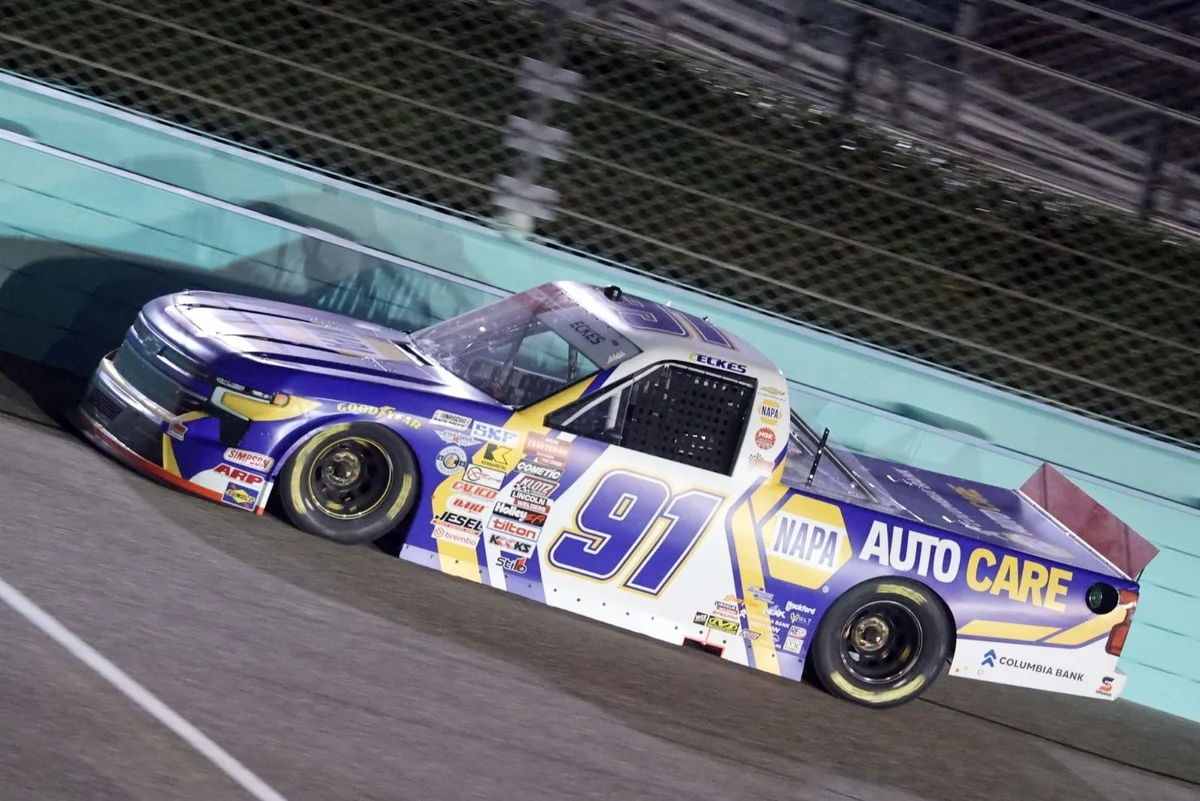
CHARLOTTE, N.C. — In professional motorsports, the pursuit of perfection rarely pauses for the offseason. As the roaring engines of the NASCAR landscape wind down their annual cycle, the strategic chess match of team organization, technical development, and human capital takes center stage.
For McAnally-Hilgemann Racing (MHR), the mandate heading into the 2027 season is unmistakably clear: transform consistency into checkered flags and elevate the organization back to the top step of the podium.
In a comprehensive announcement that reverberates through the NASCAR garage, MHR has officially revealed its redesigned leadership and crew chief lineup for the upcoming 2027 NASCAR FedEx Freight Truck Series campaign. The sweeping organizational restructure features a high-profile cross-series acquisition from the elite ranks of the NASCAR Cup Series, strategic internal promotions, and the integration of newly signed driving talent.
By strategically blending championship-pedigree experience from Hendrick Motorsports with the proven foundational strength of its existing garage infrastructure, MHR is leaving no stone unturned in its quest to capture its first championship in the premier truck-racing division.
Main Facts: The 2027 Leadership Blueprint
The cornerstone of MHR’s offseason restructuring is a calculated blend of external recruitment and internal mobility, designed to maximize operational efficiency at the team’s headquarters while sharpening race-day execution on the pit box.
The most prominent headline emerging from the MHR shop is the acquisition of Matt Barndt. A seasoned veteran of the elite Cup Series garage, Barndt steps down from his previous role as the car chief for Chase Elliott and the iconic No. 9 Hendrick Motorsports Chevrolet. Barndt’s arrival at MHR is far from coincidental; it is heavily facilitated by the deep-rooted, shared corporate sponsorship ties between Hendrick Motorsports and MHR through NAPA Auto Parts.
Barndt will immediately assume crew chief duties for Christian Eckes, guiding the technical direction of the high-profile No. 91 team.
In tandem with Barndt’s arrival, MHR has orchestrated several internal promotions to solidify its engineering and operational spine:
- Kevin Bellicourt Moves Upstairs: Former crew chief Kevin Bellicourt, who previously called the shots for Daniel Hemric and the No. 19 entry, is transitioning into a broader leadership role as the General Manager of MHR. His day-to-day tactical responsibilities on the box will be seamlessly assumed by Darren Fraley, who transitions over from MHR’s No. 81 entry.
- Dewey Townsend Pairs with Nick Sanchez: Edward “Dewey” Townsend—who spent the previous season orchestrating MHR’s part-time No. 20 entry program—has been tapped to lead the newly signed driver Nick Sanchez on the No. 18 team.
- Executive and Engineering Shifts: Mark Hillman has been elevated to the role of Operations Manager, overseeing the logistical and physical assets of the multi-truck operation. Meanwhile, Stephen Poswiatowski moves over from Hemric’s former No. 19 team to assume the critical Lead Engineer position, anchoring the technical data-crunching arm of the garage.
These moves represent a total alignment of personnel designed to eliminate friction points between the shop floor, the engineering trailer, and the pit wall.
Chronology: Building Toward a Championship Rebound
To fully understand the urgency driving MHR’s aggressive offseason overhaul, one must examine the timeline of the organization’s recent competitive trajectory.
The 2026 Campaign: A Season of Near-Misses
The 2026 NASCAR FedEx Freight Truck Series season was one of profound growth tempered by stubborn frustration for McAnally-Hilgemann Racing. Despite fielding competitive equipment and contending near the front week in and week out, the organization experienced a rare winless campaign in 2026—a statistic that team owner Bill McAnally and his executive staff found unacceptable for a championship-caliber outfit.
Yet, viewing the 2026 season solely through the lens of winless frustration ignores the formidable momentum the team generated in the closing months of the year. Christian Eckes and the No. 91 team engineered a furious late-season surge that served as the primary catalyst for the current organizational changes.
Over the final six races of the 2026 schedule, Eckes put on a driving clinic of consistency, securing an astounding four runner-up finishes. This late-season tear propelled Eckes and MHR as high as fifth in the final championship standings, proving that while the team possessed the speed to run with anyone, they lacked the final, decisive edge required to close out victories.
The Offseason Pivot (Late 2026 – Early 2027)
Recognizing that the difference between finishing second and lifting the championship trophy often lies in microscopic technical details and strategic pit-wall decisions, MHR leadership initiated a comprehensive post-mortem of their 2026 operations.
Discussions began quietly in the autumn months regarding how to inject fresh leadership into the program. The opportunity to pull Matt Barndt away from Hendrick Motorsports materialized as a transformative option. By leveraging the existing corporate synergy with NAPA Auto Parts, MHR laid the groundwork for Barndt’s transition.
Concurrently, internal evaluations led to the realization that Kevin Bellicourt’s vast experience would be better utilized in the General Manager’s office, steering the entire competitive vision of the organization rather than being locked into a single pit box.
By late fall, the chess pieces began to fall into place. Fraley was slotted to cover Bellicourt’s former seat, Townsend was paired with the incoming powerhouse talent of Nick Sanchez on the No. 18 team, and Hillman and Poswiatowski were assigned to their new executive and engineering posts.
The timeline culminates in the current announcement, setting the stage for mandatory pre-season testing and the ultimate curtain-raiser in Daytona.
Supporting Data: Statistical Insights into MHR’s Evolution
A deep dive into the numbers underscores why MHR’s leadership felt compelled to alter their personnel architecture. In the hyper-competitive ecosystem of the NASCAR Truck Series, stagnation is synonymous with regression.
Performance Breakdown (2026 Season):
- Total Wins: 0 (An anomaly for an elite-tier team)
- Final Points Position (Highest): 5th (Christian Eckes)
- Late-Season Surge Metrics (Final 6 Races):
- 4 Runner-up (2nd place) finishes
- 100% top-ten conversion rate during the closing stretch
- Average Running Position Improvement: Up 14% from the spring portion of the 2026 schedule to the fall finale.
Personnel Allocation Matrix for 2027:
- No. 18 Team: Driver: Nick Sanchez | Crew Chief: Edward “Dewey” Townsend
- No. 19 Team: (Transitioning infrastructure) | Lead Engineer: Stephen Poswiatowski
- No. 91 Team: Driver: Christian Eckes | Crew Chief: Matt Barndt (Ex-Hendrick Motorsports No. 9 Car Chief)
- Executive Leadership:
- Team Owner: Bill McAnally
- General Manager: Kevin Bellicourt
- Operations Manager: Mark Hillman
The quantitative data tells a clear story: MHR’s equipment is fundamentally fast, and their drivers possess the racecraft to pilot machines to the front. The missing link in 2026 was the final tactical optimization—the split-second adjustments on pit road, the setup calls that transition a second-place car into a race winner, and the overarching logistical support to maintain peak performance across a grueling 23-race schedule. The 2027 restructuring is mathematically and structurally engineered to solve precisely these issues.
Official Responses: Voices from the Command Center
The gravity of MHR’s offseason pivot is best captured through the reflections of its leadership. Team owner Bill McAnally, whose vision has built MHR into a perennial powerhouse in the NASCAR garage, addressed the media with a blend of fierce ambition and calm confidence regarding the upcoming season.
"We have high expectations of ourselves—to win races and compete for championships," Bill McAnally stated plainly.
"Having Kevin [Bellicourt], Matt [Barndt], Darren [Fraley], and Dewey [Townsend] puts us in the right spot to build on how strong we ended the season and will prepare us to come out of the box even better in February. We’re confident in the direction we’re going and excited about how we’re developing for 2027."
McAnally’s emphasis on coming out "better in February" highlights the immediate pressure facing the newly configured teams. Daytona International Speedway waits for no one, and the compressed winter testing window means that Barndt, Fraley, and Townsend must establish immediate chemistry with their respective drivers and pit crews.
Matt Barndt, stepping out of the powerhouse Hendrick Motorsports Cup garage into a lead crew chief role in the Truck Series, expressed immense enthusiasm for the challenge ahead.
While transitioning from a car chiefing role under the bright lights of the Cup Series is a significant step, Barndt’s familiarity with elite-level preparation, top-tier engineering standards, and the expectations associated with the NAPA Auto Parts brand provides him with an immediate transitional runway.
Furthermore, Kevin Bellicourt’s move to the General Manager position ensures that institutional knowledge remains deeply embedded within the organization. Rather than exiting the team, Bellicourt’s promotion allows him to apply his vast tactical experience across all entries, creating a unified corporate philosophy that bridges the gap between the engine room and the boardroom.
Implications: What the 2027 Overhaul Means for the NASCAR Truck Series
The ripple effects of McAnally-Hilgemann Racing’s restructuring will undoubtedly be felt across the entire NASCAR FedEx Freight Truck Series pit lane when engines fire up in February. As competitors size one another up for the new season, several key implications emerge from MHR’s bold moves:
1. Elevated Technical Standards via Cup-Level Cross-Pollination
By bringing Matt Barndt over from Hendrick Motorsports, MHR has directly imported elite-level Cup garage methodologies into its Truck Series operation. The technical precision, quality control standards, and setup philosophies utilized by championship-winning Cup organizations like Hendrick represent the gold standard of modern stock car racing. If Barndt can successfully translate those practices to Christian Eckes’ No. 91 truck, the rest of the Truck Series field will face a formidable technological benchmark.
2. Renewed Pressure on Championship Rivals
The Truck Series has evolved into an ultra-competitive battleground defined by razor-thin margins between victory and defeat. Teams like ThorSport Racing, Tricon Garage, and Spire Motorsports have raised the competitive bar over recent seasons. MHR’s decision to aggressively retool rather than rest on the laurels of a fifth-place points finish sends a clear warning shot to the garage: MHR is not merely aiming to run up front; they are gunning for outright dominance.
3. Heightened Expectations for Christian Eckes and Nick Sanchez
With elite operational backing comes heightened accountability. Christian Eckes proved in late 2026 that he knows how to consistently finish races; now, paired with Matt Barndt, the expectation is to turn those four runner-up finishes into trips to Victory Lane. Simultaneously, the pairing of Nick Sanchez with Dewey Townsend on the No. 18 team creates an explosive dynamic. Sanchez brings immense raw speed and aggression to the organization, and Townsend’s steady veteran hand on the pit box may provide the exact psychological and tactical balance needed to turn Sanchez into a weekly contender.
4. Long-Term Organizational Stability
By elevating Kevin Bellicourt to General Manager and Mark Hillman to Operations Manager, MHR is future-proofing its corporate structure. In a sport where executive brain-drain can derail a multi-truck operation overnight, MHR has retained its most valuable leadership assets by promoting from within. This ensures continuity of culture even as on-track personnel rotate into new roles.
Conclusion: All Eyes on February
As the winter sun sets over the MHR race shop in North Carolina, the sounds of air wrenches, metal fabrication, and dyno testing signal the dawn of a new era. The pieces of the puzzle have been meticulously placed on the board.
The integration of Matt Barndt’s Cup-winning expertise, the strategic deployment of Kevin Bellicourt into the General Manager’s office, and the pairing of proven crew chiefs with elite driving talent have transformed MHR into one of the most intriguing storylines of the 2027 racing season.
Bill McAnally’s vision is set. The blueprint has been drawn. Now, as the calendar inches closer to the thunderous roar of the season-opener in Daytona, the only question left to answer is how quickly this newly forged powerhouse will translate its winter renovations into checkered flags and championship hardware.

 Lina Irawan
 Pevita Pearce
 Laily UPN
 rifanmuazin
 Asro
 Nana