
 Muslim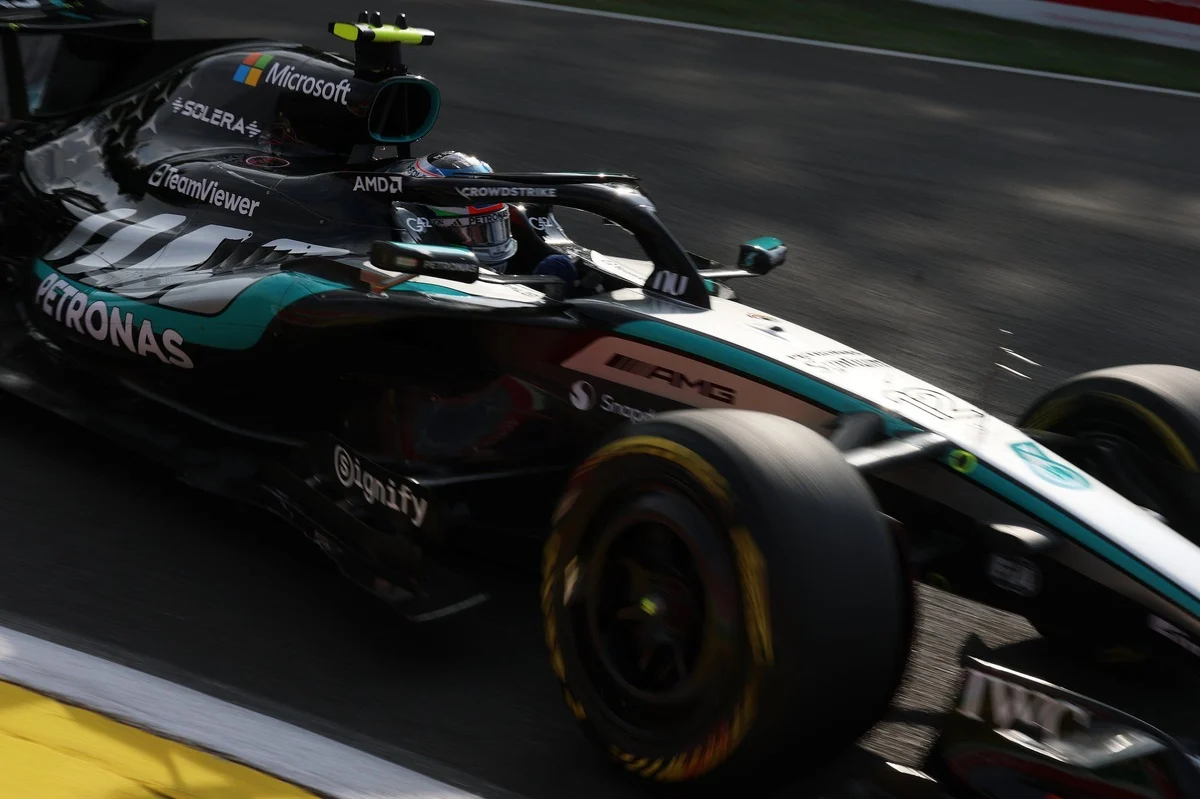
With six dominant race victories, six pole positions, and a firm grip on the Formula 1 championship lead, Kimi Antonelli has firmly established himself as the man to beat. As the paddock prepares for the summer break, the young Mercedes protégé finds himself in a position of authority that seemed improbable just twelve months ago.
Last season, the Belgian Grand Prix at Spa-Francorchamps served as a sobering reality check for the Italian driver. Hampered by a rear suspension configuration that failed to provide the necessary feedback or confidence, Antonelli struggled to find his rhythm. Today, however, that same circuit has become the stage for his professional "sweet revenge." His performance at Spa was not merely a victory; it was a clinical display of evolution, showcasing why his specific driving style has become the benchmark for the current generation of 2026-specification cars.
The Technical Shift: From Ground Effect to the 2026 Paradigm
To understand the magnitude of Antonelli’s ascent, one must analyze the seismic shift in technical regulations. The previous ground-effect era was defined by cars that were aerodynamically stable yet notoriously binary in their failure modes. When a driver exceeded the threshold of grip, the cars would "snap" with little to no warning, often making recovery an impossible task for even the most experienced pilots.
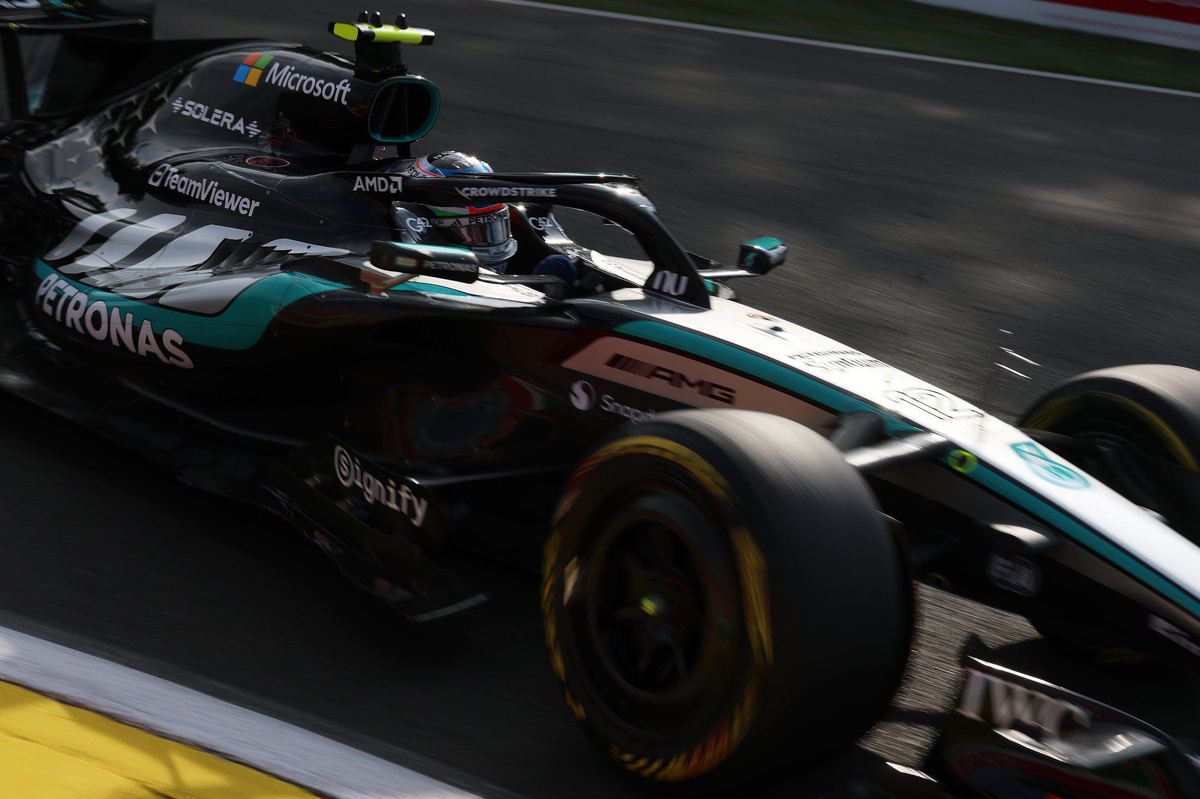
The transition to the 2026 car concepts has introduced a new, albeit different, set of challenges. Most notably, the reduction in tyre sidewall height—a byproduct of the move to 18-inch rims—has fundamentally altered the contact patch. Pirelli’s head of motorsport, Dario Marrafuschi, notes that the shorter contact patch reduces the margin for error during the transition between longitudinal and lateral grip.
"The transition in driving feel between having grip and losing it is more sudden," Marrafuschi explained in an exclusive interview with Motorsport.com. "It was expected that these difficulties would arise during corner entry in managing adhesion, exactly because the snap gives you less warning."
Furthermore, the narrowing of the tyres, mandated to reduce aerodynamic drag, has complicated the "combined phase"—the delicate moment where a driver is simultaneously braking and steering into a corner. This is where Antonelli has distinguished himself from his peers.

The "Shortening" Strategy: Anatomy of an Aggressive Style
Kimi Antonelli’s driving philosophy is built on the concept of "shortening the corner." While traditional racing theory often dictates a smooth, progressive arc to preserve tyre integrity, the 2026 cars respond differently to inputs.
"I try to shorten the radius of the corner, as well as the time I spend between braking and the dead zone," Antonelli revealed. "I try to fold the corner up like a handkerchief. I turn at the last moment, very aggressively. I make the car work a bit more."
This "fold" involves a sharp, violent steering input at the apex. While such an aggressive flick would have caused excessive tyre degradation or an immediate loss of rear stability under the old regulations, the current machinery demands this level of provocation. By "saturating the front" with a sudden steering input, Antonelli forces the front end to grip, which in turn settles the rear of the car. It is a counter-intuitive approach that requires immense precision, as the margin between a perfectly rotated car and a terminal lock-up is razor-thin.

Contrasting Styles: The Antonelli vs. Russell Divide
The divergence in driving styles between Antonelli and his teammate, George Russell, has become a talking point among team principals and technical directors. Russell, a product of the previous generation’s school of thought, favors a smoother, more progressive application of the steering wheel. While this technique was the gold standard for extracting performance from ground-effect cars, it is proving less effective in the current landscape.
"If we look at Russell and Antonelli, we do see that there’s a different driving style," observed McLaren team principal Andrea Stella. "It’s quite noticeable in the onboard footage and the way they use the steering wheel. The driving style definitely has an effect. If it were only downforce, you wouldn’t see these gaps between teammates."
Stella’s assessment highlights a growing trend in the paddock: the 2026 cars punish "passive" driving. Drivers who attempt to be clean and tidy are finding that they simply cannot generate the necessary tyre temperature or rotation to match those who are willing to "attack" the corner entry.

The "Dead Zone" and Tyre Management
A critical component of the 2026 challenge is navigating the "dead zone"—the period between the release of the brake pedal and the full application of the throttle. Under the new rules, finding the balance during this phase is the primary differentiator between a championship contender and a mid-field runner.
Antonelli’s ability to minimize time in this dead zone is not just a testament to his reflexes but to his deep understanding of tyre behavior. He admits that this style is not a "one size fits all" solution. At circuits like Silverstone, where high-speed, long-duration corners are the norm, he has had to temper his aggression to ensure the rear tyres don’t overheat.
"I have to say that in Barcelona I struggled a bit more in qualifying because I was asking too much of the car," Antonelli admitted. "The tyre dropped off quickly. It’s a style that helps on certain tracks, while on others, you have to adapt."

This adaptability is what separates the prodigy from the pretender. While his base setting is aggressive, he possesses the cognitive bandwidth to adjust his rotation mid-race, a trait rarely seen in drivers at such a nascent stage of their careers.
Implications for the Future of Mercedes
As the season enters its final stretch, the data gathered by Mercedes confirms that Antonelli’s approach is not merely a "lucky streak." The team’s telemetry consistently shows that the 2026 regulations favor a driver who can induce rotation through aggressive, high-frequency inputs.
For Mercedes, the implications are profound. Having a driver who intuitively understands the "language" of the new car—and who can extract performance from it that his peers cannot—provides a significant strategic advantage. It allows the team to focus on development paths that prioritize front-end responsiveness, knowing that their primary driver has the skill set to exploit it.

Furthermore, the psychological impact of Antonelli’s performance cannot be understated. By leading the championship into the summer break, he has shifted the burden of proof onto his rivals. He is no longer the "rookie" looking for a seat; he is the reference point for the entire grid.
A New Era of Technical Interpretation
The success of the 2026 regulations is often debated, but from a purely technical standpoint, they have forced a reset in driver education. We are witnessing the birth of a new archetype of Formula 1 driver: one who is as much a chassis tuner as he is a pilot.
Andrea Stella’s comments at Spa encapsulated the current reality: "If you try to smoothen out your input… it doesn’t pay off for lap time." This realization has forced a collective recalibration across the pit lane. As teams scramble to understand why some drivers are finding seconds where others find only understeer, the answer appears to lie in the hands of those who are not afraid to manhandle their machines.

Kimi Antonelli has not only mastered these cars; he has pioneered a way of driving them that may well define the next decade of the sport. As he heads into the remainder of the season, the rest of the field is left with a difficult choice: continue to chase the ghost of the old, smooth way of driving, or adopt the aggressive, "handkerchief-folding" philosophy of the young Italian who is rapidly becoming the face of the future.
With the summer break now upon the sport, the pressure to adapt will only intensify. For Antonelli, the path forward is clear: continue to push, continue to attack, and continue to dictate the pace in a championship that is, for now, firmly in his hands.


 Neng Nana
 Nana Wu
 Lina Hope
 Sagoh
Sagoh
 Iffa Jayyana