Reynand Wu
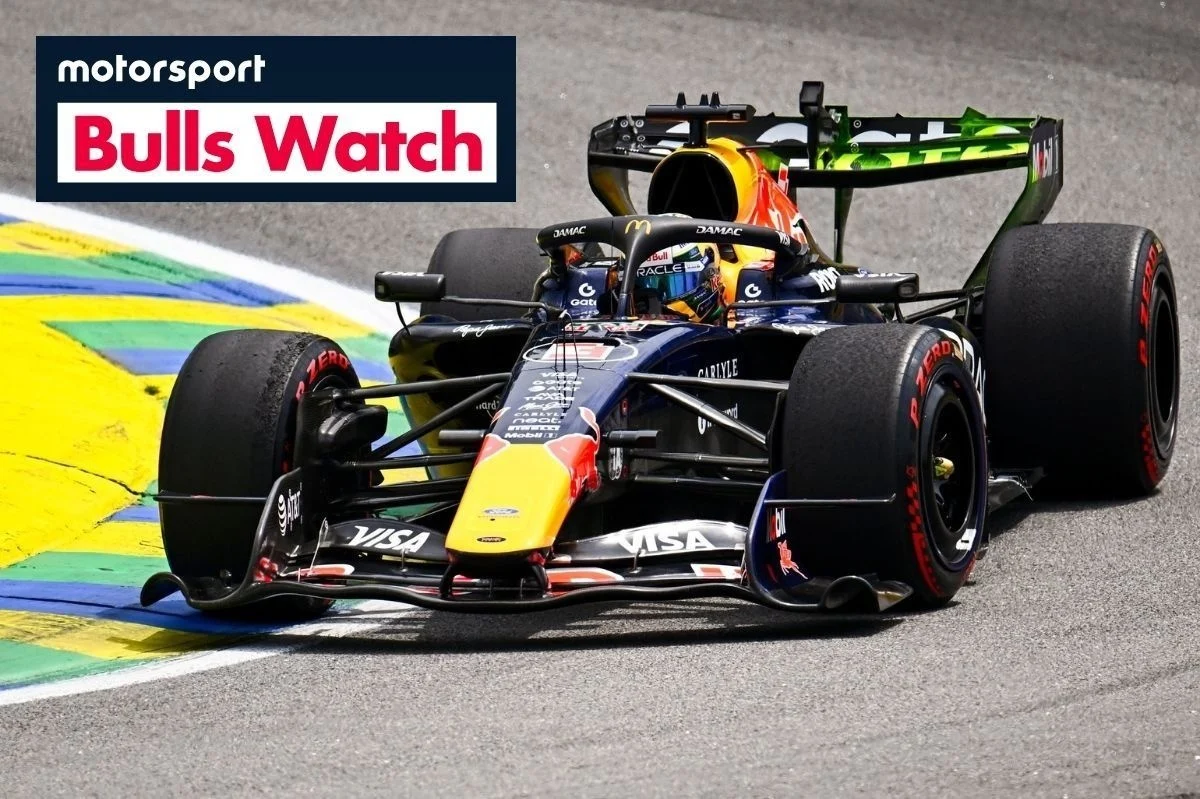
SAO PAULO, Brazil — In the high-stakes, data-driven theater of modern Formula 1, computer simulations are the gospel truth. Every strategy, tire degradation curve, overtaking probability, and race outcome is calculated to microscopic precision by supercomputers churning through petabytes of historical and telemetry data long before the red lights ever go out. Yet, on a dramatic Sunday afternoon at the Autódromo José Carlos Pace, Max Verstappen ripped up the playbook, threw away the algorithms, and authored a masterclass that left even his own team principal utterly speechless.
Red Bull team principal Laurent Mekies confessed to the media in the aftermath of the Brazilian Grand Prix that no supercomputer, predictive model, or advanced simulation tool on earth could have foreshadowed the sheer magnitude of Verstappen’s meteoric rise from 21st on the grid to a stunning second-place finish. In an era where race outcomes are increasingly homogenized by aero-maps and strategy software, the reigning world champion’s charge through the São Paulo mist and spray served as a stark reminder of the irreplaceable X-factor of pure, unbridled human genius.
Main Facts: A Masterclass in Overcoming the Impossible
The headline statistics from the São Paulo Grand Prix weekend read like a script from Hollywood fiction, yet they stand as cold, hard racing reality. Max Verstappen, piloting the Red Bull machine, carved his way through 19 cars on one of Formula 1’s most technically demanding and historically unpredictable tracks, securing a improbable runner-up finish.
The weekend’s tribulations began well before Sunday’s lights-out. Following an unplanned power unit issue during Friday’s practice sessions, the team was forced to bolt a fresh engine component onto Verstappen’s car, triggering a grid penalty that relegated the Dutchman to the back foot. Compounding matters, Verstappen himself had admitted after a tricky qualifying session that overtaking at Interlagos appeared significantly more difficult this season compared to prior campaigns, citing changes in dirty air aerodynamics and track evolution.
Yet, when the race commenced, Verstappen converted skepticism into stardust. He systematically picked apart the field, culminating in a jaw-dropping sequence where he gained 14 positions in the span of just five laps.
When the checkered flag waved, Verstappen stood on the podium, collecting vital championship points that solidified his hold on second place in the Drivers’ Standings with 279 points. Behind him, a ferocious battle for the remaining steps of the runner-up honors rages on, featuring Mercedes’ George Russell (262 points), Lewis Hamilton (261 points), and Ferrari’s Charles Leclerc (249 points), while Kimi Antonelli has already secured the ultimate prize following his triumph at the Mexican Grand Prix a week prior.
Chronology of a Weekend: From Despair to Domination
To fully appreciate the scale of Verstappen’s achievement, one must retrace the timeline of the São Paulo Grand Prix weekend, a narrative arc defined by escalating tension, mechanical frustration, and ultimate redemption.
Friday: The Catalyst for Chaos
The weekend opened with optimism during the early free practice sessions. Red Bull’s underlying pace looked competitive, with the RB chassis displaying strong correlation to the simulator data. The car was hooked up, and the drivers were comfortable. However, late in the Friday running, a minor yet critical power unit anomaly reared its head.
With Red Bull navigating its transitional era as a fully-fledged works power unit manufacturer—developing its own in-house systems in partnership with Ford following the conclusion of its long-term collaboration with Honda at the end of 2025—reliability nuances are an inherent part of the learning curve. The detection of the issue left the engineering crew with an agonizing choice: run the risk of an on-track failure or take the tactical penalty. They opted for the penalty, ensuring reliability at the cost of grid position, effectively throwing Verstappen to the wolves of the back row.
Saturday: Qualifying Realities
Saturday morning brought fleeting moments of competitive promise during the sprint and qualifying phases. In Q1, when Verstappen was briefly unleashed to post representative times, the pace of the car was blindingly apparent. However, knowing that a deep grid penalty awaited him, the strategic focus shifted toward damage limitation.
Post-qualifying interviews painted a sobering picture. Verstappen, speaking candidly to the press, warned that passing rival cars around Interlagos would prove to be an uphill battle. The combination of high degradation and specific aerodynamic wake behaviors made the circuit a notoriously difficult place to orchestrate a traditional freight-train overtake. The mood in the Red Bull garage was pragmatic; points finishes would be celebrated, but a podium seemed entirely out of reach.
Sunday: The Charge of the Century
When the race got underway, Verstappen wasted zero time settling into a predatory rhythm. Utilizing alternative lines, supreme car placement, and devastating traction out of the slower corners, he began picking off backmarkers with clinical efficiency.
By lap five of his specific recovery phase, the paddock was in a state of collective disbelief. Through a blend of opportunistic lunges into Turn 1 (the Senna S) and calculated DRS deployments down the Reta Oposta, Verstappen bypassed 14 cars in five laps—a statistical anomaly that defies standard racing logic. As the race unfolded with strategic pit stops and fluctuating weather elements, Verstappen’s relentless pace kept him climbing. By the closing stages, he had not only salvaged his weekend but had hunted down the front-runners, ultimately securing a monumental second-place finish that left the grandstands roaring.
Supporting Data: By the Numbers
To quantify just how extraordinary Verstappen’s Brazilian Grand Prix performance was, one must look at the telemetry and championship metrics that frame the event:
- Grid Position: 21st (due to power unit element penalties).
- Finishing Position: 2nd.
- Positions Gained: 19 total cars overtaken on track and through strategy.
- The Statistical Outlier: 14 positions gained in just 5 racing laps.
- Current Drivers’ Championship Standing: 2nd place with 279 points.
- Championship Pursuers:
- George Russell (3rd) – 262 points
- Lewis Hamilton (4th) – 261 points
- Charles Leclerc (5th) – 249 points
- Power Unit Era: Year one of the independent Red Bull Powertrains and Ford collaborative project.
These figures highlight a driver operating at the absolute zenith of his powers, wrestling an evolving mechanical package to results that consistently outpace mathematical expectations.
Official Responses: Inside the Red Bull Garage
The post-race media pen provided a fascinating window into how the Red Bull leadership processed what they had just witnessed. Team principal Laurent Mekies was visibly both awestruck and philosophical when addressing journalists about the race.
"As always, I think no sim in the world will predict that you will go from P21 to P2 or that you get 14 places in five laps," Mekies explained to the gathered media, a mixture of awe and relief evident in his tone. "There is no sim able to do that. So, he’s beating the sim on a regular basis."
Mekies did not shy away from addressing the initial frustration of Friday’s mechanical gremlin, which forced the team’s hand regarding the grid penalty.
"Of course, it’s frustrating [to start 21st] because the pace seemed good on Friday and also on Saturday morning, and in some respects in Q1 when we let him qualify," Mekies noted. "लेकिन it’s part of the game, you know?"
Crucially, the French team principal contextualized the penalty within the grander strategic picture of Red Bull’s ongoing technical evolution.
"It’s easy to forget it’s the first year with the power unit," Mekies reminded reporters, pointing to the monumental logistical and engineering shift currently taking place at Milton Keynes. Following the end of the Honda partnership after the 2025 season, Red Bull stepped into uncharted waters as a complete works constructor, designing and building its own power units in alliance with American automotive giant Ford.
"And the guys have been doing an extraordinary job, and we take the first penalty with Max this weekend, and that’s what it is. It was not planned; we had a small issue on Friday that forced us to do so. But that’s what it is."
Implications: The Battle for Second and the Future of Red Bull Powertrains
While Kimi Antonelli’s coronation as World Driver’s Champion at the preceding Mexican Grand Prix wrapped up the primary championship fight, the reverberations of Verstappen’s Interlagos masterclass will be felt deeply across the remainder of the season and into the future development of the team.
1. The Fight for Runner-Up Honors
With Verstappen clinging to second place in the standings on 279 points, the battle behind him is a mathematical war zone. George Russell (262), Lewis Hamilton (261), and Charles Leclerc (249) are separated by a razor-thin margin with races remaining. Verstappen’s ability to turn a potential zero-points weekend into a heavy-haul 18-point podium finish could very well be the decisive swing that protects Red Bull’s pride in the drivers’ runner-up fight, especially as constructors’ developments shift focus toward future regulations.
2. Validating the Red Bull-Ford Powertrain Project
Perhaps the most significant long-term implication of the weekend ties back to the power unit. Transitioning to an in-house power unit manufacturer status is one of the most perilous undertakings in modern motorsport. Teaming up with Ford was a bold statement of independence, but early-season reliability hurdles—such as the Friday issue in Brazil—were anticipated growing pains.
The fact that Red
Bull could recover so emphatically from a forced engine penalty proves that the raw performance architecture of the power unit is fundamentally sound. Once reliability is locked down over the coming seasons, a power unit capable of propelling a car from 21st to the podium in the hands of a generational talent signals terrifying potential for Red Bull’s long-term dominance.
3. The Human Element Prevails
In an era where Formula 1 is increasingly criticized for being overly reliant on wind tunnels, CFD simulations, and race-strategy algorithms, Verstappen’s drive at Interlagos stands as a triumphant counter-narrative. It serves as a reminder that motorsport remains, at its core, an extreme test of human bravery, spatial awareness, and visceral instinct.
As Laurent Mekies aptly summarized, when the computers throw their hands up in defeat and declare a scenario statistically impossible, Max Verstappen simply puts his head down, defies the simulations, and rewrites the laws of racing physics.

 Sagoh
 Lina Hope
 Laily UPN
 Iffa Jayyana
 Ali Ikhwan