
 Reynand Wu
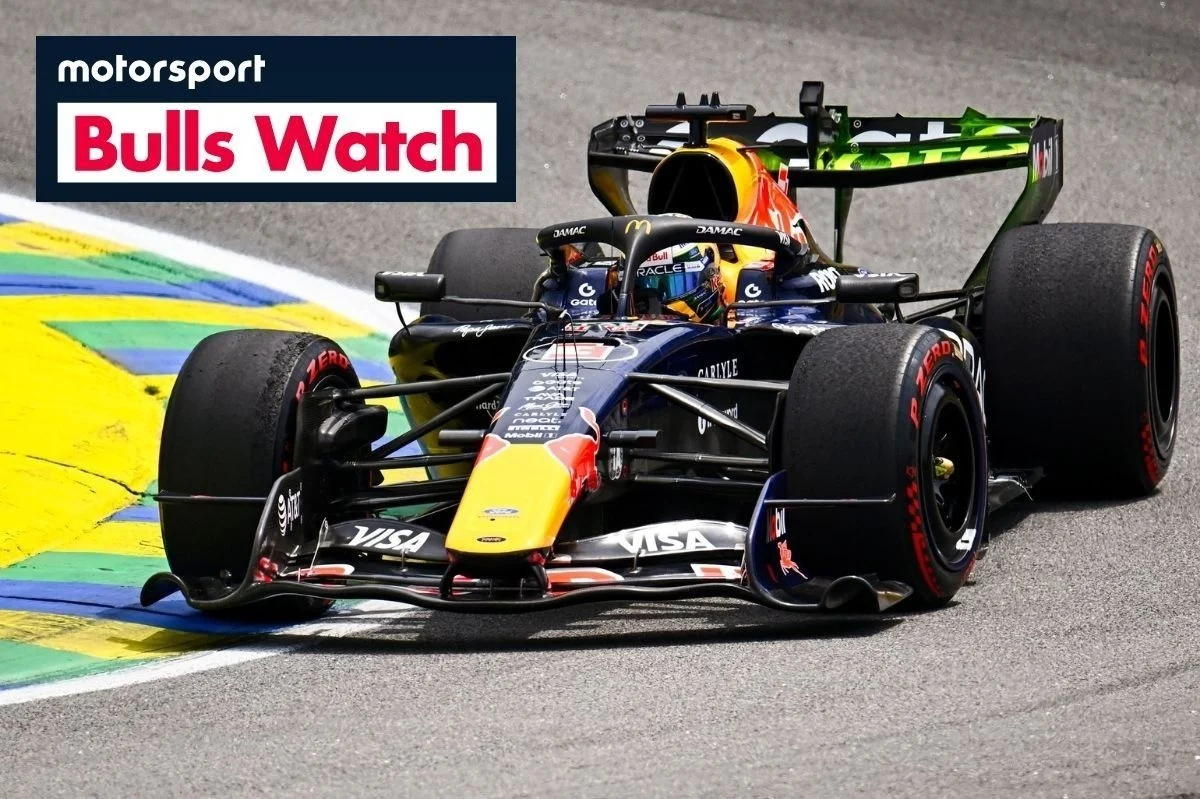
SAO PAULO — In the high-stakes, data-driven ecosystem of modern Formula 1, supercomputers, algorithmic simulations, and predictive telemetry dictate virtually every strategic move a team makes. Every pit stop window, tire degradation curve, and overtake probability is calculated down to the thousandth of a percent before the lights even go out.
Yet, on a dramatic Sunday afternoon at the Autódromo José Carlos Pace, Max Verstappen rendered millions of lines of sophisticated computer code entirely obsolete.
Starting down in 21st place following a disruptive engine penalty, the reigning icon delivered a masterclass in racecraft at the Brazilian Grand Prix, carving through the field with terrifying precision to secure an improbable second-place finish. For Red Bull Racing team principal Laurent Mekies, the performance was not merely a brilliant drive; it was a living, breathing anomaly that shattered the boundaries of what their pre-race simulations deemed physically possible.
Main Facts: A Masterclass in the Rain and Retribution
The headlines from Interlagos will long be dominated by Verstappen’s meteoric rise from the back of the grid, but the path to the podium was fraught with tension, tactical intuition, and raw, unadulterated talent.
- The Grid Penalty: Verstappen was forced to swallow a significant power unit penalty, relegating him to the 21st spot on the starting grid. The setback stemmed from an unplanned engine change necessitated by a minor reliability issue discovered during Friday practice.
- The Sakhir Circuit Realities: Entering the weekend, Verstappen himself had publicly voiced skepticism, warning media during Saturday briefings that overtaking at the historic São Paulo circuit would prove considerably more difficult than in previous seasons due to aerodynamic and tire-handling shifts.
- The Charge: Dispelling his own pre-race pessimism, the Dutchman executed an aggressive, calculated surge through the pack, most notably vaulting an astonishing 14 positions in a mere five-lap window.
- The Championship Picture: With Mercedes’ prodigy Kimi Antonelli having already wrapped up the 2026 Drivers’ Championship at the preceding Mexican Grand Prix, Verstappen’s runner-up finish solidified his grip on second place in the standings. He currently sits on 279 points, fending off a fierce multi-driver battle that includes George Russell (262), Lewis Hamilton (261), and Charles Leclerc (249).
Chronology of a Miracle: How the Brazilian Grand Prix Unfolded
To truly appreciate the magnitude of Verstappen’s drive, one must trace the weekend chronologically—from the anxiety of the Red Bull garage on Friday morning to the champagne-soaked podium celebrations on Sunday afternoon.
Friday: The Unforeseen Hiccup
The weekend began with high hopes. Red Bull’s pace during Friday practice sessions looked genuinely formidable, with the RB22 appearing nimble and responsive across both long runs and single-lap simulations. However, late in the day, engineers detected a minor anomaly within the power unit.
Faced with the choice of risking a catastrophic failure during the Grand Prix or taking a tactical grid penalty, the team elected to change components. It was an unwelcome disruption in a championship battle where every single point is fiercely contested.
Saturday: Qualifying Realities and Cautious Warnings
During Saturday morning’s sessions and into the early phases of qualifying (Q1)—where Red Bull briefly let Verstappen stretch his legs to showcase the car’s inherent speed—the pace was undeniable. But the reality of the impending penalty loomed heavy. Speaking to reporters after locking in his fate, Verstappen offered a grim assessment of his prospects, pointing out that overtaking at Interlagos had grown increasingly tricky.
His engineers went to work running countless simulations. They crunched historical data, safety car probability curves, tire wear metrics under various fuel loads, and DRS zone efficiencies. The most optimistic models pointed toward a respectable points-scoring finish, perhaps scraping into the lower edge of the top ten if chaos unfolded ahead. A podium finish from 21st was statistically grouped alongside a lightning strike.
Sunday: The Five-Lap Blitz
When the red lights went out at Interlagos, Verstappen wasted no time mourning his grid position. Utilizing a combination of supreme situational awareness, ruthless race starts, and a car setup that exploited every ounce of available traction, he immediately set about dismantling the field.
The defining sequence of the race occurred early on. In a breathtaking display of opportunistic driving, Verstappen picked off competitors in rapid succession, pulling off high-risk, high-reward moves in braking zones where others dared not tread. In the span of just five laps, he miraculously gained 14 positions.
As the race settled into a rhythm, Verstappen managed his Pirelli rubber masterfully, executing seamless strategy calls with the pit wall to navigate through traffic cleanly. By the checkered flag, he crossed the line in second place, completing a climb of 19 positions that left the paddock utterly spellbound.
Supporting Data: The Numbers Behind the Madness
To understand why Mekies and his engineering department were left shaking their heads, one must look at the quantitative reality of Formula 1 grid progression.
| Metric | Pre-Race Simulation | Actual Race Result | Variance |
|---|---|---|---|
| Starting Grid Position | P21 | P21 | 0 |
| Projected Finish (Optimistic) | P8 – P10 | P2 | +6 to +8 positions |
| Positions Gained in 5 Laps | 2 to 4 positions | 14 positions | +10 positions |
| Total Positions Gained | ~11-13 positions | 19 positions | +6 positions |
| Current Championship Rank | 2nd (279 pts) | 2nd (279 pts) | Maintained |
Modern F1 simulations are built on deterministic models and Monte Carlo probabilistic forecasting. They factor in tire degradation cliffs, dirty air coefficients, track width, and historical overtaking data. Historically, climbing from 21st to the podium at Interlagos requires either torrential weather chaos or a heavily disrupted race featuring multiple Safety Cars and high attrition. While the race featured its typical Brazilian Grand Prix drama, Verstappen’s raw pace-differential relative to the midfield was the primary driver of his ascent—a variable that standard predictive models simply cannot scale linearly.
Official Responses: Inside the Red Bull Garage
Speaking to the media in the frantic aftermath of the race, Laurent Mekies could not hide his blend of awe and pragmatic acceptance regarding his driver’s extraordinary output.
"As always, I think no sim in the world will predict that you will go from P21 to P2 or that you get 14 places in five laps," Mekies explained to assembled journalists, a smile breaking through his professional composure.
"There is no sim able to do that. So, he’s beating the sim on a regular basis. Of course, it’s frustrating [to start 21st] because the pace seemed good on Friday and also on Saturday morning, and in some respects in Q1 when we let him qualify. But it’s part of the game, you know?"
Mekies also took the opportunity to zoom out and provide context regarding Red Bull’s broader technological journey. Following the conclusion of their legendary partnership with Honda at the end of the 2025 season, Red Bull entered a bold new era in 2026 as a fully fledged works team. Utilizing their proprietary power unit—Red Bull Powertrains, developed in strategic partnership with American automotive giant Ford—the team has been navigating a steep developmental curve.
"It’s easy to forget it’s the first year with the power unit," Mekies noted, addressing the engine issues that forced Friday’s penalty. "And the guys have been doing an extraordinary job, and we take the first penalty with Max this weekend, and that’s what it is. It was not planned; we had a small issue on Friday that forced us to do so. But that’s what it is."
Implications: The Battle for Second and the 2026 Landscape
While Kimi Antonelli has already secured the 2026 Drivers’ Championship crown for Mercedes following his stellar campaign—cemented last weekend in Mexico City—the war for the remaining spots on the championship podium is white-hot.
Verstappen’s 18 points for finishing second in Brazil provide vital breathing room in the standings. With 279 points to his name, he maintains a tenuous cushion over a surging chasing pack. Mercedes’ George Russell sits closely behind in third with 262 points, teammate Lewis Hamilton holds fourth with 261 points, and Ferrari’s Charles Leclerc lurks in fifth with 249 points. With multiple rounds remaining, a single DNF or poor weekend could violently shuffle the final runner-up positions.
Furthermore, Verstappen’s performance serves as a psychological boost for Red Bull Powertrains and Ford. As they iron out the reliability creases in their maiden power unit architecture, proving that the chassis and engine package possess race-winning, field-scything pace bodes exceptionally well for the team’s long-term competitive trajectory heading into the twilight of the current regulations and the dawn of the next aerodynamic era.
Ultimately, Interlagos 2026 will be remembered not just as another trophy in Verstappen’s illustrious cabinet, but as a stark reminder of the limits of technology. No matter how advanced the simulators become, human brilliance—operating at the absolute knife-edge of physics and courage—can still rewrite the data.

 Raul Delapena Setiawan
 Layla Zulfa
 Sagoh
 Lina Hope

 Lina Irawan
 Ammar Sabilarrohman