
 Jia Lissa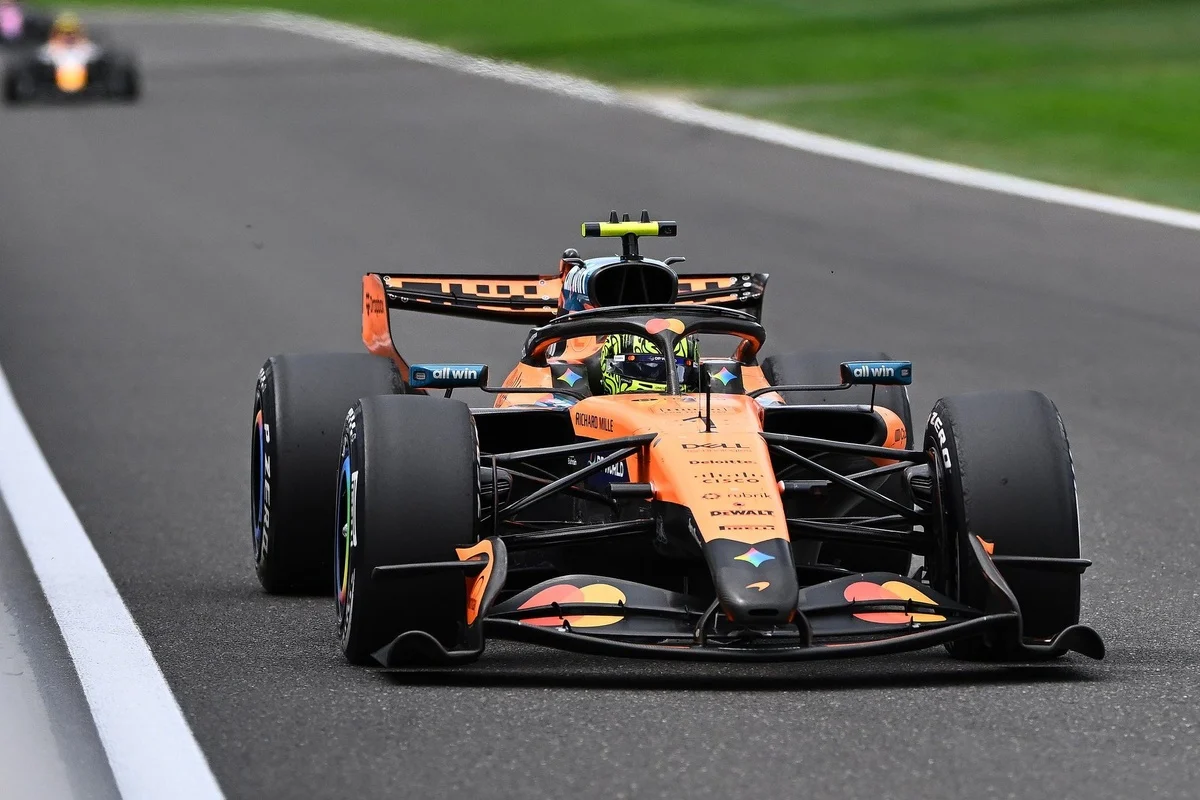
Introduction: A Critical Turning Point for Woking
The Formula 1 paddock arrives in Budapest this weekend with anticipation hanging heavy in the air. For the McLaren Formula 1 team, the Hungarian Grand Prix represents more than just another round in a grueling championship calendar; it serves as a litmus test for the team’s long-term technical recovery. After a season defined by a challenging aerodynamic development gap and the echoes of a protracted 2025 title battle, the Woking-based outfit is finally pulling the trigger on a comprehensive upgrade package for the MCL40.
The centerpiece of this technical offensive is the long-awaited trial of their "upside-down" rear wing—a revolutionary aerodynamic concept colloquially dubbed the "Macarena" wing. Following a difficult start to the 2026 campaign, during which McLaren admitted to being several months behind their primary rivals, this weekend’s developments are designed to bridge the performance chasm that has opened up between them and the pace-setting Mercedes and Ferrari squads.
The Technical Gap: A Story of Development Cycles
To understand the significance of this weekend, one must look at the trajectory of the 2026 season thus far. McLaren entered the year with a competitive, albeit conservative, baseline. However, the internal focus required to sustain a title fight in 2025 left the team playing catch-up on the new aero regulations. While Mercedes surged to the front and Ferrari unleashed a relentless series of floor and sidepod updates, McLaren found itself locked in a development race where it was consistently running at a two-to-three-month deficit.
"The development on the ground has been quite strong for a few months now," team principal Andrea Stella remarked ahead of the weekend. "This has led to the upgrades we had in Miami and now there will be another round of upgrades which will come in Hungary and then after the shutdown."

The upgrades in Budapest are not merely superficial; they include a complete redesign of the floor geometry and a suite of auxiliary aerodynamic components aimed at maximizing both downforce and aero-efficiency. The objective is to stabilize the MCL40’s balance through low-to-medium speed corners—a traditional strength of the Hungaroring—while simultaneously reducing drag for the longer straights.
Chronology: The Road to the ‘Macarena’ Wing
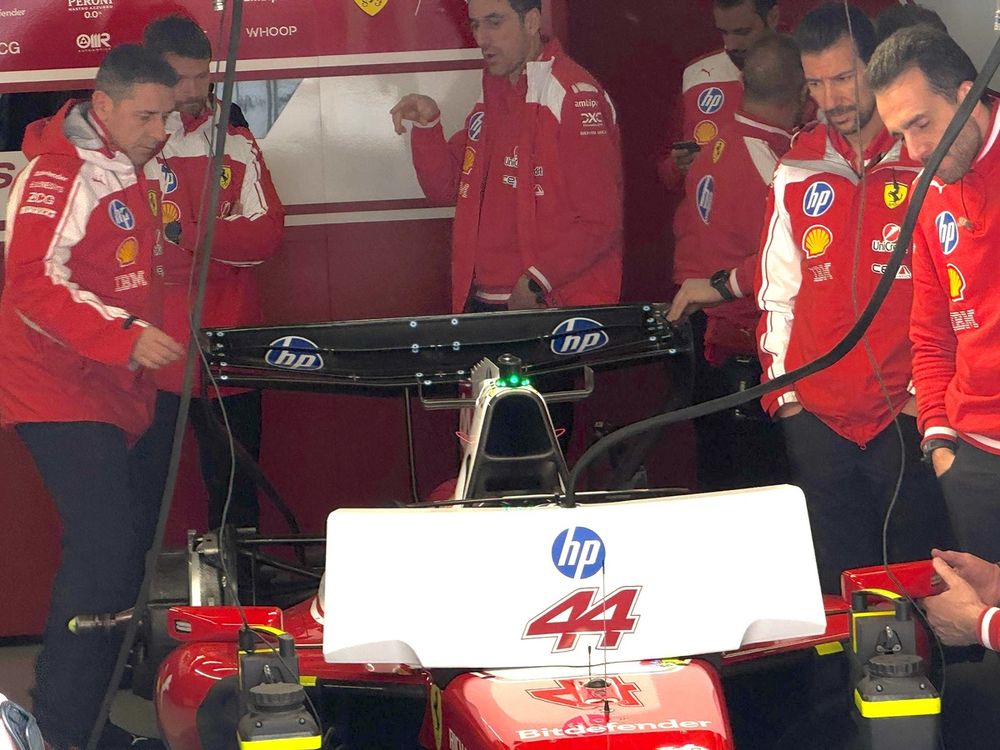
The journey to this weekend’s test of the "Macarena" wing has been fraught with engineering hurdles. The concept, which features a rear wing mainplane capable of rotating 180 degrees when "Straight Mode" (a high-speed, low-drag configuration) is enabled, was pioneered by Ferrari during winter testing.
The Austria Setback
McLaren initially targeted the Austrian Grand Prix for the prototype’s track debut. However, the project hit a wall in the garage. Unexpected mechanical interference and integration issues meant the team could not safely deploy the system during FP1. The wing was subsequently shipped back to the MTC (McLaren Technology Centre) for extensive refinement.
The Budapest Trial
The team has confirmed that the revised wing will make its first public appearance during Free Practice 1 on Friday. This will be an evaluation-only run. Engineers will monitor the wing’s closure mechanisms and airflow reattachment—the two areas that have proven most volatile for competitors.

"It is not scheduled to be introduced fully at this or the following race in the Netherlands," a team spokesperson clarified. The intention is to gather telemetry data that can be correlated with the wind tunnel, allowing the team to decide whether the design is ready for high-speed, drag-sensitive circuits like Monza or Baku later in the year.
Supporting Data: The Competitive Landscape
The urgency behind these upgrades is backed by the current standings and the performance deltas seen on track. Ferrari’s recent resurgence has propelled both Charles Leclerc and Lewis Hamilton into the winner’s circle, effectively closing the door on any complacency from the leaders. Meanwhile, Red Bull’s RB22 has seen significant gains, forcing the midfield pack to scramble.
McLaren’s senior director of racing, Randy Singh, highlighted the necessity of this aggressive approach: "In such a competitive season, every development is important. Our aim is to maximize everything we have available, carry positive momentum into the shutdown, and put ourselves in the strongest possible position for the second half of the championship."
Reliability vs. Performance
The "Macarena" wing is a high-risk, high-reward proposition. The dangers are well-documented. Red Bull’s attempts to implement a similar system were met with disaster in Spielberg and Silverstone, where Max Verstappen experienced two terrifying spins caused by the wing failing to transition correctly. The reattachment of airflow over the mainplane upon braking is a critical safety factor; if the air fails to "latch" onto the wing surface, the car loses a massive percentage of its rear downforce, leading to sudden, uncontrollable snap-oversteer.
Official Responses and Strategic Outlook
The atmosphere at McLaren is one of cautious optimism. Andrea Stella has been transparent about the team’s situation, acknowledging the difficulty of fighting giants like Mercedes and Ferrari while operating on a compromised development timeline.
"It’s difficult to lean on the range of performance that Ferrari and Mercedes are operating in at the moment," Stella admitted. "But hopefully as of Hungary, we will start to see a bit of an acceleration in our competitiveness. We have now a clear direction in terms of development, but in some areas of the car, it took a couple of months to get it to be realized."
This "clear direction" is what gives the Woking staff confidence. By prioritizing a new aerodynamic philosophy, the team believes they have finally unlocked the "hidden" performance they were chasing since the end of the 2025 season.
The Broader Implications: F1’s Technological Arms Race
The introduction of the "Macarena" wing by multiple teams signals a new phase in the 2026 technical arms race. As the season nears its summer break, the battle for supremacy is shifting from pure engine power to complex, active-aero efficiency.

The Summer Shutdown Buffer
The timing of these upgrades is strategic. By introducing these parts in Hungary, McLaren hopes to collect critical data before the mandatory summer shutdown. During this period, factories are closed, and no development can occur. By having a "known" package before the shutdown, the team can spend their time off performing CFD (Computational Fluid Dynamics) simulations on the next iteration of the car, rather than troubleshooting fundamental design flaws.
Looking Ahead
Should the upgrade package succeed, the second half of the season promises a tighter, more volatile fight for podiums. If the floor upgrades provide the expected downforce gains, McLaren could legitimately challenge for the runner-up spot in the Constructors’ Championship. Conversely, if the technical risks prove too high—or if the "Macarena" wing fails to deliver the promised efficiency—the team may be forced to revert to their base-spec aerodynamic configuration, effectively conceding the development war for the remainder of the year.
Conclusion: The Path Forward
The Hungarian Grand Prix is a pivotal moment for McLaren. They are at a crossroads: one path leads to a successful recovery and a strong second half of the season, while the other leads to stagnation. As the cars roll out for Friday practice, all eyes will be on the rear of the MCL40. The team has done its homework, the simulations are promising, and the engineering team is confident. However, in the unforgiving world of Formula 1, data on paper is vastly different from the reality of the tarmac.
Whether the "Macarena" wing becomes the catalyst for a McLaren revival or remains a footnote in a season of "what-ifs," one thing is certain: the team is no longer willing to sit on the sidelines while their rivals dictate the pace. The race for the podium begins in the garage, and this weekend, McLaren is making their strongest play yet.


 Neng Nana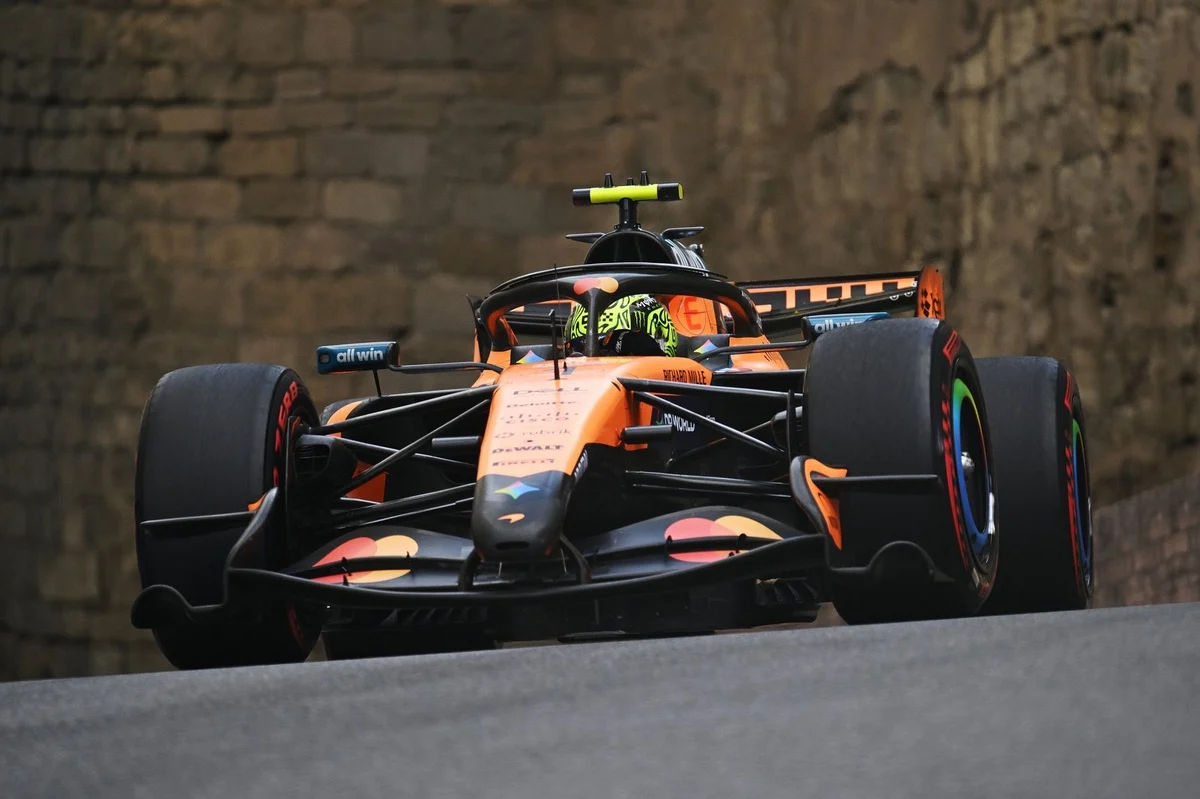
 Nana Wu
 Lina Hope
 Sagoh
Sagoh
 Iffa Jayyana