
 Ali Ikhwan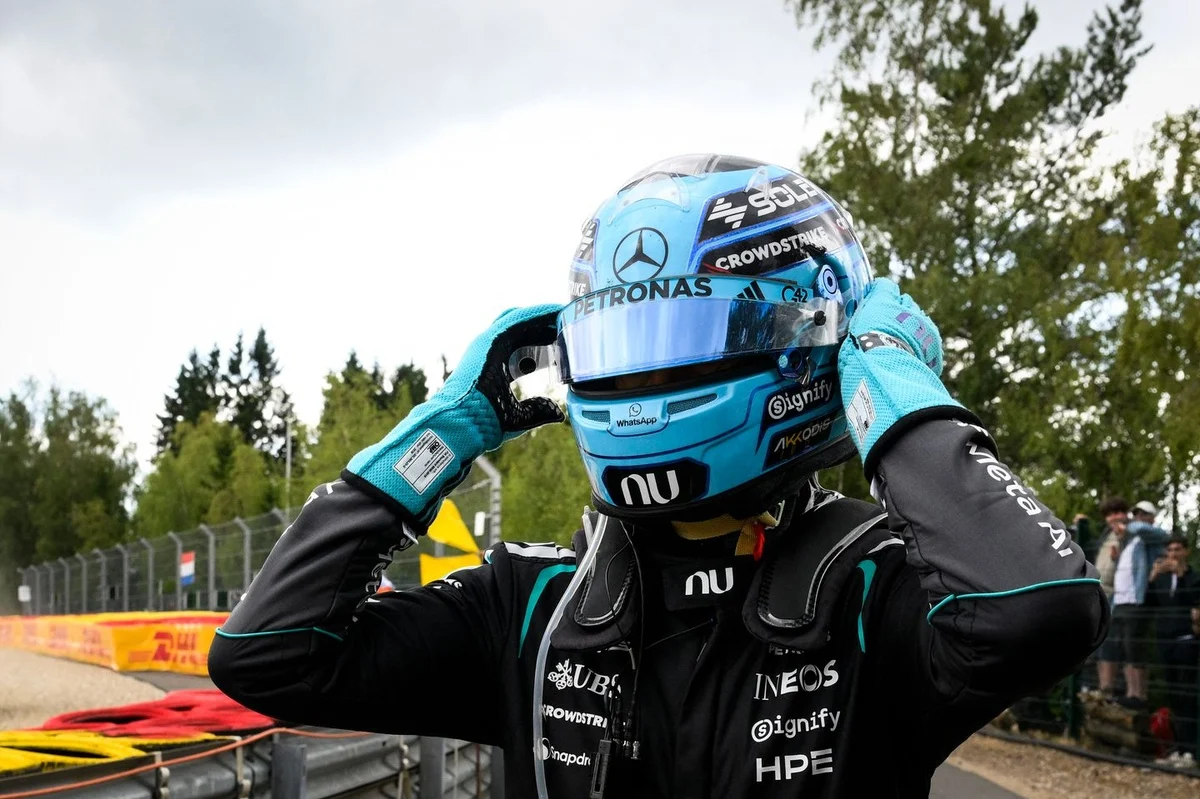
The Formula 1 paddock is a theater of marginal gains, where milliseconds are carved out of thin air through obsessive data analysis and mechanical refinement. Yet, for Mercedes-AMG PETRONAS, the recent Belgian Grand Prix at the legendary Spa-Francorchamps circuit exposed a vulnerability that has left engineers in Brackley scrambling for answers. George Russell, a driver known for his technical precision, found himself in the peculiar and frustrating position of being a spectator to his own performance deficit, as his W15 machine suffered from recurring energy deployment issues that rendered him a sitting duck on the circuit’s high-speed straights.
A Persistent Enigma: The Roots of the Issue
The trouble did not begin in the Ardennes forest. Mercedes’ internal investigation suggests that the seeds of this crisis were sown at the British Grand Prix at Silverstone. During that race, data telemetry began to highlight a concerning divergence in energy deployment between the two Mercedes entries. While the team initially attributed these variances to differences in driving style—specifically regarding throttle application and energy management—the problem persisted despite rigorous efforts to correct it.
For George Russell, the Belgian GP was meant to be the turning point. Having spent the preceding 36 hours in deep-dive simulations and technical debriefs, the Briton arrived at Spa with a modified driving style designed to optimize the car’s ERS (Energy Recovery System) harvesting and deployment. Instead of the anticipated resolution, Russell found himself battling the same gremlins. Throughout the practice sessions and into qualifying, the top-speed deficit between Russell and his teammate, Kimi Antonelli, remained stark. While Antonelli successfully steered his machinery to pole position, Russell’s qualifying effort was hampered, leaving him a frustrated fourth on the grid.

Chronology of a Frustrating Weekend
The weekend in Belgium served as a microcosm of the team’s current technical struggles. The frustration was palpable from the onset of the race.
- Pre-Race Preparation: Russell devoted every waking hour of the 36-hour lead-up to the race to analyzing straight-line speed data, deliberately sidelining setup and tire-degradation optimization to solve the mystery of the “missing” power.
- Qualifying Woes: Despite these efforts, Russell reported losing a significant tenth and a half on the straights alone, a deficit that occurred even when his throttle was pinned wide open. The sensation, as described by the driver, was one of absolute helplessness.
- The Start: When the lights went out on Sunday, the consequences of the energy deficit were immediate. Both Mercedes drivers experienced a catastrophic failure to deploy energy on the run up to the Kemmel Straight. Deprived of the electric boost that should have kept them competitive, both cars were immediately vulnerable.
- The Incident: The loss of speed for Russell proved particularly calamitous. As he was swallowed up by the surging Ferraris, the resulting bottleneck and defensive maneuvering led to a high-speed, race-ending collision with Lewis Hamilton at Turn 5. It was a brutal conclusion to a weekend where the car’s performance, rather than the driver’s ability, was the primary limiting factor.
The Technical Breakdown: Software vs. Driving Style
Mercedes’ deputy technical director, Simone Resta, has been at the forefront of the investigation. Resta’s assessment suggests a dual-pronged problem: a complex interaction between human input and algorithmic software management.
Initially, the team pointed to the driver. "We’ve been doing a lot of analysis, and we came to the conclusion that one of the major contributors was related to a difference in driving style between the two cars," Resta explained. "George studied that quite a lot and was able to change it and adapt going into Spa, but still, we can still see some difference in the deployment between these two cars."

However, the events of Sunday brought a second, more mechanical culprit into the light. The team confirmed that both cars suffered a software glitch that forced them to hit their energy harvesting limit prematurely as they exited Turn 1. This "harvesting ceiling" effectively neutered the cars’ ability to deploy electrical energy during the crucial, power-sensitive run through the Kemmel Straight. This software error was independent of the driving style adjustments Russell had been attempting to master, compounding the team’s misery.
The Regulatory Landscape and the Learning Curve
The broader context of these struggles lies in the volatility of the current F1 technical regulations. Now in their third year, the ground-effect era cars remain remarkably sensitive to minor changes in ride height, floor aerodynamics, and power unit management.
Resta was quick to contextualize the struggle, noting that Mercedes is far from alone in dealing with these teething problems. "We are working with a brand-new set of regulations, we are just at the 10th race over these regulations, and we are still struggling to understand every single contributor," Resta admitted. "We are not the only ones in this condition because we can see that many teams are still learning and adapting."

This "learning" period is, for a team of Mercedes’ pedigree, an uncomfortable place to be. The complexity of the power units, combined with the sophistication of the hybrid recovery systems, means that even a minor glitch in the lines of code governing the MGU-K can result in a loss of several kilometers per hour in terminal speed—a lifetime in the modern era of Formula 1.
Implications for the Championship
The immediate implication of the Spa disaster is a significant blow to the team’s momentum. With both drivers having displayed flashes of brilliance—evidenced by Antonelli’s pole position—the inability to convert that raw pace into race-day consistency is a major concern.
For George Russell, the psychological impact of feeling "powerless" behind the wheel cannot be understated. A driver who cannot trust the output of his power unit is a driver who cannot attack, defend, or manage his race with the necessary aggression. Furthermore, the collision with Hamilton serves as a sobering reminder of how technical unreliability can ripple outward, affecting team dynamics and point standings.
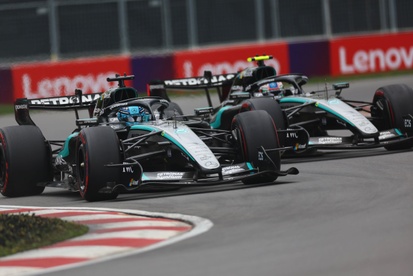
As the circus moves to Hungary, the focus in Brackley will shift from aerodynamic updates to a comprehensive audit of their energy management software. The team must "bottom out" these issues, as Resta phrased it, to ensure that the W15 is a reliable platform for both of its drivers.
Conclusion: A Race Against the Code
The situation at Mercedes highlights the paradoxical nature of modern Formula 1. The cars are more advanced than ever, yet they remain susceptible to "computer misbehavior" that can derail an entire weekend. For a team that once dominated the hybrid era, the current struggle to reconcile software logic with driving style is a humbling reminder that even the most advanced engineering firm in the world can be humbled by the margins of the sport.
As the engineers return to the wind tunnels and the simulation rigs, the goal is singular: to restore the power that should rightfully be at the driver’s disposal. Until the software is synchronized with the mechanical potential of the car, the Silver Arrows remain a wounded beast—capable of striking with pace, but vulnerable to the invisible failures lurking within their own complex systems. The upcoming races will be the ultimate test of whether Mercedes can master the machine, or if the machine will continue to dictate the terms of their engagement.


 Pevita Pearce
 Evan Lee Salim
 Neng Nana
 Nana Wu
 Lina Hope

 Sagoh
Sagoh
 Iffa Jayyana