
 Siti Muinah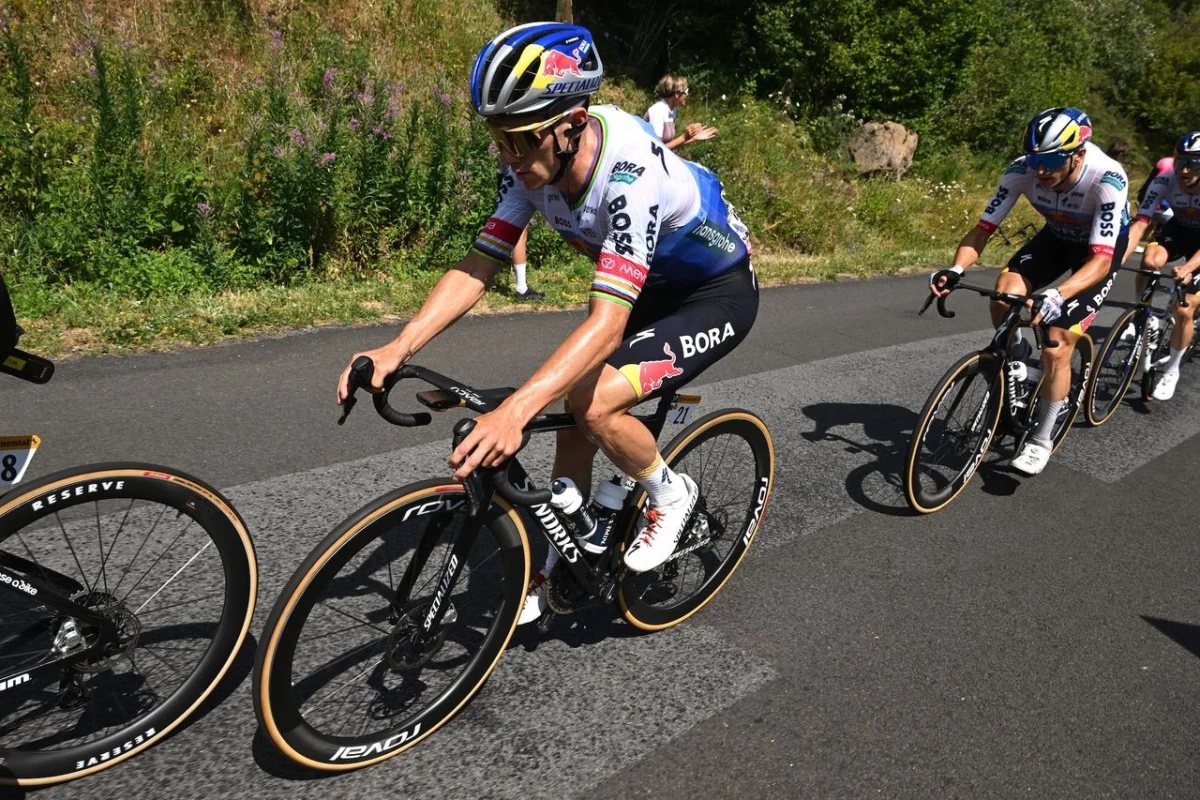
By Cycling Correspondent
As the 2026 Tour de France enters its pivotal mountain phase, the tactical landscape of the peloton is shifting. At the center of this evolution is Red Bull-Bora-Hansgrohe, a team that has defied traditional "single-leader" orthodoxy by deploying a dual-threat strategy featuring Remco Evenepoel and Florian Lipowitz. As the race heads into a grueling three-day block in the mountains, team management is banking on this shared leadership to disrupt the status quo and secure a coveted spot on the final podium in Paris.
The Strategic Landscape: Why Two is Better Than One
In the modern era of professional cycling, the dominance of a singular, untouchable figure—currently exemplified by Tadej Pogačar—has often forced rival teams into defensive, reactive positions. However, Red Bull-Bora-Hansgrohe has chosen a different path. By maintaining two high-caliber riders capable of challenging for the General Classification (GC), the team has effectively doubled its tactical options.
"When you have two leaders, you force the competition to make choices," noted a team spokesperson. "If a rival team commits their domestic force to neutralize one of our riders, the other has the freedom to launch a move. It is a mathematical advantage that allows us to dictate the terms of the engagement rather than simply following the wheel of the yellow jersey."
This approach comes on the heels of a public cooling-off period between Evenepoel and Lipowitz, following reported tensions earlier in the race. With internal communication restored, the team is now looking to translate that synergy into tangible results during the upcoming mountain trio, a series of stages that will define the shape of the 2026 General Classification.
Chronology of a Tense Campaign
The journey to the current mountain block has been anything but straightforward. The early stages of the 2026 Tour were marked by a high-intensity battle for control, with Red Bull-Bora-Hansgrohe navigating the internal friction of their dual-leadership structure.
The Opening Week: Friction and Alignment
During the first week, the team faced public scrutiny as Evenepoel appeared visibly frustrated by the lack of tactical coordination during a key transitional stage. The tension centered on whether the team should be riding exclusively for one leader or utilizing the pair to test the resolve of the UAE Team Emirates-XRG squad.
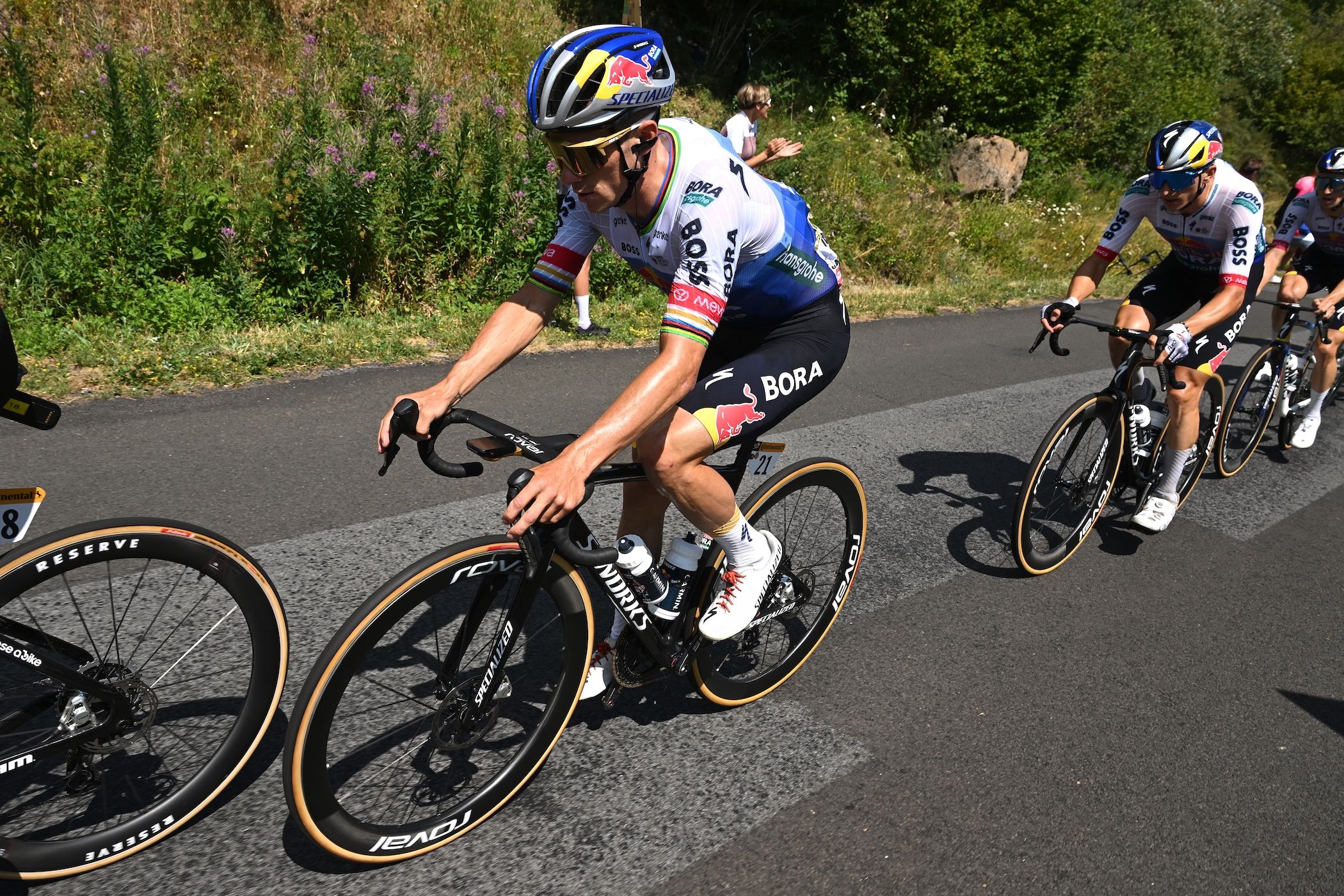
Following a series of closed-door meetings and a clear-the-air conversation between the two riders, the narrative shifted. Both athletes acknowledged that individual egos must remain secondary to the team’s objective of climbing the podium. By Stage 10, the collaboration was evident; the pair worked in tandem, sharing the burden of pacing and attacking, signaling a united front as they transitioned into the Massif Central and beyond.
The Path to Le Lioran
Stage 10, a demanding 166.6km route from Aurillac to Le Lioran, served as the ultimate test of their new partnership. As the road pitched upward, the ability of Evenepoel and Lipowitz to maintain a consistent pace while forcing other GC contenders to burn their matches became the hallmark of the day. This stage served as the catalyst for the team’s current confidence, proving that their dual-leadership model could survive the pressure of the high mountains.
Supporting Data: The Changing GC Math
While Tadej Pogačar remains in a league of his own, the battle for the remaining steps on the podium has become an incredibly volatile affair. Statistical analysis of the current standings suggests that the gap between the second and seventh place is the narrowest it has been in the last five years of the Tour.
| Rider/Team | Current GC Standing | Tactical Strength |
|---|---|---|
| Tadej Pogačar (UAE) | 1st | Individual Superiority |
| Red Bull-Bora (Evenepoel) | Top 5 | Tactical Flexibility |
| Red Bull-Bora (Lipowitz) | Top 10 | Tactical Flexibility |
| Rivals (Various) | Top 10 | Single-leader dependency |
The data highlights a clear trend: teams relying on a single leader are increasingly vulnerable to "tactical isolation." If a single leader has an "off" day, their team’s entire Tour campaign collapses. Conversely, by splitting the load between Evenepoel and Lipowitz, Red Bull-Bora-Hansgrohe has created a buffer. If one rider struggles on a steep incline, the other can serve as an anchor, ensuring the team remains in the hunt.
Official Perspectives and Team Philosophy
The management at Red Bull-Bora-Hansgrohe has been vocal about the necessity of this approach. "The sport is evolving," the team’s sporting director noted during a recent press conference. "We cannot expect to topple a talent like Pogačar by playing the same game he plays. We have to introduce variables that he cannot control. Having two leaders means that when we reach the final climb, we still have cards to play."
Evenepoel, speaking on the transition, emphasized the importance of the team’s unity. "We have had our moments of frustration, as any two competitive riders would, but the goal is the same: the team winning. We realize that if we ride together, we are much harder to beat. The mountain stages ahead will be the true litmus test for this partnership."
Lipowitz, the rising star of the squad, echoed these sentiments, noting that the pressure of the Tour is significantly mitigated when the responsibility is shared. "Knowing that I have a teammate like Remco—and that he has me—changes the way I approach the climbs. We aren’t racing against each other; we are racing for the team."
Implications for the Tour and Beyond
The implications of this dual-leadership experiment are significant, not just for the remainder of the 2026 Tour, but for the future of team tactics in professional cycling.
1. Changing the Tactical Blueprint
If Red Bull-Bora-Hansgrohe successfully places both riders on the podium, or manages to disrupt the yellow jersey’s dominance, it will likely trigger a shift in recruitment and strategy across the WorldTour. Other teams may begin to move away from the "sole captain" model in favor of "co-leadership" structures to protect against bad form, crashes, or tactical checkmates.
2. The Pressure on UAE Team Emirates-XRG
Pogačar’s team now faces the challenge of managing a two-pronged attack. They can no longer simply mark one rider. They must decide which of the two, Evenepoel or Lipowitz, poses the greater threat at any given moment. This requires a higher degree of communication and a potential depletion of their domestic resources, which could ultimately leave Pogačar isolated in the final week of the race.
3. The Psychological Warfare
Beyond the physical, there is a psychological element. By forcing the race leaders to constantly scan the road for two different threats, Red Bull-Bora-Hansgrohe is creating a state of perpetual alertness among their rivals. This fatigue—not just physical but mental—is exactly what the team hopes will pay dividends on the final mountain passes.
Conclusion: The Final Ascent
As the 2026 Tour de France approaches its final week, all eyes will be on the high peaks of the Alps and the Pyrenees. For Red Bull-Bora-Hansgrohe, the strategy is clear: they have built a dual-engine machine designed to withstand the heat of the race.
Whether this gambit will result in a yellow jersey, a spot on the podium, or a daring tactical failure remains to be seen. However, one thing is certain: by embracing the complexity of co-leadership, Remco Evenepoel and Florian Lipowitz have ensured that the fight for the 2026 Tour de France will be one of the most strategically fascinating battles in recent history. The mountains will soon decide if their gamble pays off, but for now, they have successfully redefined the narrative of the race, proving that in the high-stakes world of professional cycling, the path to the top is rarely a straight line.

 Reynand Wu
 Nana
Nana
 Neng Nana
 Nana Wu
 Lina Hope
 Sagoh
Sagoh
 Iffa Jayyana