
 rifanmuazin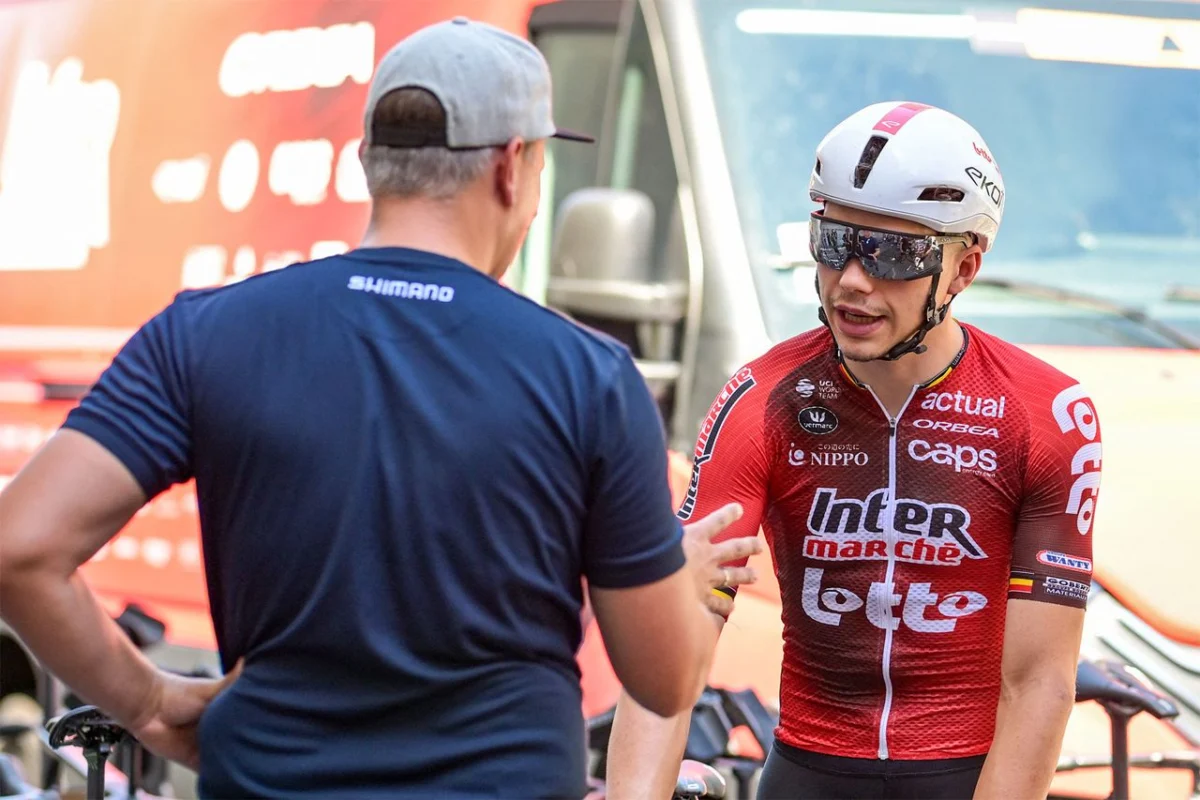
As the cycling world turns its collective gaze toward the Grand Départ of the 2024 Tour de France, the tension within the peloton is palpable. For every rider, the weeks leading up to July are a delicate calibration of training, recovery, and hygiene. However, for Lotto Dstny’s sprint powerhouse Arnaud De Lie and Visma-Lease a Bike’s versatile engine Edoardo Affini, the final countdown to the world’s most prestigious race has been marred by a cruel combination of illness and physical misfortune.
Both riders have recently faced setbacks that threatened their participation, casting a shadow of uncertainty over their respective teams’ strategic blueprints. Yet, as the race approaches, reports suggest that both athletes are on the mend, battling back from the precipice of physical depletion to stake their claim in the upcoming Grand Tour.
The Main Facts: A Dual Crisis of Timing
The timing of these setbacks could not be more critical. The Tour de France demands absolute physical perfection, and even a minor lapse in health can be the difference between a stage win and a DNF (Did Not Finish).
Arnaud De Lie, the young Belgian sensation who has been earmarked as a future king of the sprints, has endured a season defined by "double misfortune." After a premature exit from the Giro d’Italia in May—where he started the race already compromised by illness—De Lie was forced to miss the official Tour de France team presentation on Thursday. The culprit was a sudden-onset stomach problem, an all-too-common but devastating ailment for endurance athletes.
Simultaneously, Edoardo Affini has been navigating his own path to recovery following a crash that tested his physical limits. For Visma-Lease a Bike, a team that has faced its own share of injury-related turbulence this season, the health of a key domestique like Affini is paramount. While their individual circumstances differ, both riders represent the fragility of the human engine in the high-stakes environment of professional road racing.
A Chronology of Setbacks
To understand the severity of these challenges, one must look at the timeline of their disrupted preparations.
The Spring Struggles
For De Lie, the narrative began earlier in the spring. His Giro d’Italia campaign was intended to be a foundational experience for his development. Instead, it became a lesson in the brutality of stage racing. Entering the race with an existing illness, his body eventually capitulated to the demands of the Italian roads, forcing him to withdraw during the first week. This early exit was supposed to provide a window for recovery, but it left him with little margin for error.
The Pre-Tour "Taper"
As the peloton converged for the Tour de France, the final weeks of training are typically characterized by a precise "taper"—a reduction in volume to ensure maximum freshness. For De Lie, this period was interrupted by the aforementioned stomach ailment. Missing the team presentation—an event vital for sponsor obligations and team morale—is a clear indicator of the severity of his discomfort.
The Impact on Affini
Edoardo Affini’s timeline follows a different trajectory, dominated by the sudden trauma of a crash. In the tightly packed, high-speed nature of modern racing, crashes are an inevitable risk. For a rider whose role involves controlling the pace for the GC (General Classification) leaders, the impact of a crash is not just about the immediate injury; it is about the days of training lost while the body repairs tissue and manages inflammation.
Supporting Data: The Impact of Illness on Elite Performance
The physiological toll of these incidents is quantifiable. Medical experts in professional cycling note that stomach ailments—often viral or bacterial in origin—can lead to severe dehydration and electrolyte imbalances. In a rider like De Lie, whose explosive sprint relies on maximal power output, even a 5% deficit in muscle glycogen storage or hydration levels can result in a significant drop in power-to-weight ratio.
Data from similar cases in previous Tours suggests that riders who enter the race with "illness baggage" face a 60% higher risk of mid-race abandonment if they are forced to chase form during the first week.
Similarly, for a rider like Affini, the impact of a crash is often measured in "lost TSS" (Training Stress Scores). A rider who misses three to five days of high-intensity training during the final build-up faces a physiological "detraining" effect. Their heart rate variability (HRV) readings—a key metric for recovery—often remain depressed for several days following the incident, forcing the team to re-evaluate their role from "lead-out man" to "support rider" in the early stages.
Official Responses and Team Strategy
Lotto Dstny has maintained a cautious, professional stance regarding De Lie’s status. Team management has emphasized that while the stomach issue was significant enough to keep him away from the public eye on Thursday, the primary goal remains his gradual reintegration into the team environment. The team’s medical staff is employing a conservative approach, prioritizing rehydration and gut health over intensive training sessions in the final 48 hours before the start.
Visma-Lease a Bike has been equally stoic regarding Edoardo Affini. In a season where the team has already dealt with the high-profile injury woes of its marquee leader, Jonas Vingegaard, the team has mastered the art of managing media expectations. Their response has focused on Affini’s resilience, noting that he is a "tough professional" who has proven his ability to adapt to adverse conditions in the past.
Both teams have resisted the urge to replace their riders, signaling a level of confidence in their medical staff’s ability to "patch up" the athletes in time for the Grand Départ.
Implications for the Tour de France
The implications of these setbacks extend far beyond the riders themselves.
For Lotto Dstny: The Sprint Dilemma
If De Lie is not at 100% capacity during the opening stages of the Tour, the team’s entire strategy for the flatter, sprint-heavy stages may need to be overhauled. A compromised De Lie cannot contest the bunch sprints against the likes of Jasper Philipsen or Mads Pedersen. This forces the team to either hunt for breakaway stages or pivot their support to other riders, potentially leaving their sponsors with less exposure.
For Visma-Lease a Bike: The GC Protection
Affini is a vital cog in the Visma-Lease a Bike machine. His ability to pull on the front of the peloton for long stretches is essential for shielding their leaders from the wind and managing the gap to the breakaway. If he is not operating at full strength, the burden on other domestiques increases, potentially leaving the team’s leader vulnerable in the high mountains.
The Psychological Component
Perhaps the most overlooked implication is the psychological toll. Entering a three-week race with lingering doubts about one’s physical integrity creates an underlying layer of anxiety. The Tour de France is a mental grind as much as a physical one; riders who are "chasing" their form often find themselves making unforced errors in the chaotic finale of stages, leading to further risks of crashes.
Conclusion: The Final Countdown
As the clock ticks toward the start of the 2024 Tour de France, the stories of Arnaud De Lie and Edoardo Affini serve as a poignant reminder of the inherent volatility of professional cycling. These athletes are not machines, despite the data-driven world they inhabit. They are human beings subject to the same viruses, accidents, and vulnerabilities as any other.
Whether or not they emerge as stage winners or unsung heroes, their journey to the start line is a testament to the grit required to compete at the highest level. For now, the cycling world waits—not just to see who wins the Yellow Jersey, but to see how these resilient competitors navigate the inevitable challenges that lie ahead on the road to Nice. The Tour, as always, will be the final judge.

 Reynand Wu
 Nana
Nana
 Neng Nana
 Nana Wu
 Lina Hope

 Sagoh
Sagoh
 Iffa Jayyana