 Sagoh
Sagoh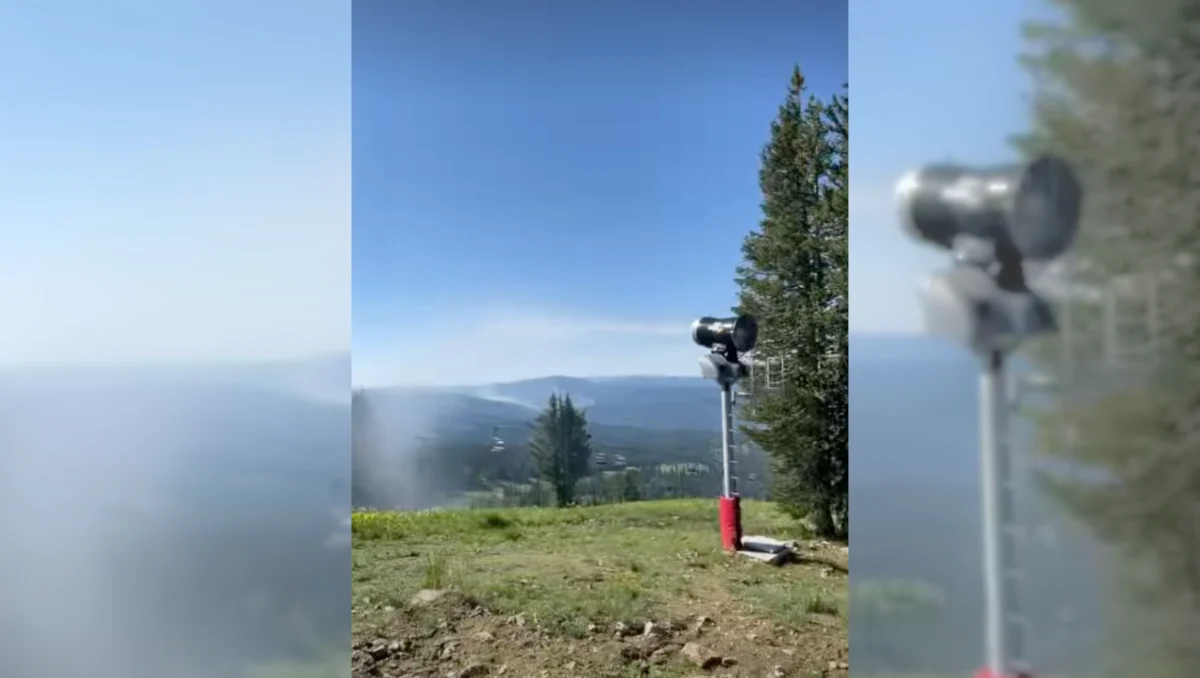
By [Your Name/Editorial Staff]
Updated July 15, 2026
In a surreal scene that would normally signal the height of winter anticipation, the air above Steamboat Resort was filled with the unmistakable, high-pitched hiss of industrial snow guns this week. But as the mercury climbed into the mid-summer heat of July, there was no promise of early-season corduroy or powder days. Instead, the resort’s snowmaking infrastructure—a multi-million dollar system designed to bridge the gap between lean winters and early openings—was repurposed into a high-stakes defensive line against the encroaching Fishhook Fire.
The deployment of this technology, while jarring to onlookers, marks a growing trend in mountain operations: using the very tools that define the ski industry to protect it from the increasing threat of climate-driven wildfires.
The Chronology of the Fishhook Fire
The crisis began on Sunday, July 12, when a lightning strike—common in the arid, high-altitude landscape of the Colorado Rockies—ignited a blaze on national forest land southeast of the Steamboat Resort property. The fire, dubbed the "Fishhook Fire," found immediate fuel in the dry, beetle-killed timber and steep, rugged terrain that characterizes the region.
By Monday morning, as the fire grew in size and intensity, the local fire management team and resort officials realized that the prevailing winds and terrain were pushing the blaze in the direction of the mountain’s primary infrastructure. Recognizing that the resort’s standard summer maintenance protocols would not suffice, Steamboat management made the tactical decision to activate their snowmaking cannons in the Sunshine area.
Throughout Tuesday and into Wednesday, the snow guns blanketed the periphery of the resort’s base areas and lift terminals with water, significantly increasing the moisture content of the surrounding vegetation. This "pre-wetting" strategy is designed to create a high-humidity buffer zone, making it significantly harder for a fire to jump from the forest canopy onto resort property.
As of the afternoon of July 15, the fire remains active. Ground crews, bolstered by aerial support dumping retardant and water, are working in tandem with the resort’s static snowmaking systems to contain the perimeter.
The Evolution of Resort Defense: Beyond Snowmaking
The strategy employed at Steamboat is not entirely unprecedented, but it represents a sophisticated evolution in how ski resorts manage wildfire risk. Historically, resorts relied on manual clearing, prescribed burns, and basic sprinkler systems. However, as wildfire seasons grow longer and more destructive across the American West, the infrastructure of the ski industry has become a frontline asset.
Case Studies in Resilience
Steamboat joins an elite group of resorts that have successfully utilized their snowmaking capabilities to stave off destruction.
- Angel Fire, N.M.: In previous years, the resort leveraged its high-pressure water systems to protect base facilities during nearby wildfire activity.
- Sierra-at-Tahoe, Calif.: The devastating Caldor Fire of 2021 proved the efficacy of these systems. While the resort suffered significant damage, the areas protected by snowmaking infrastructure remained largely unscathed, providing a blueprint for the industry.
- Mountain High, Calif. (2024): In a more recent example, Mountain High utilized its automated systems to protect base buildings from an aggressive fire, proving that even smaller resorts can harness their water distribution networks as a tactical weapon.
Supporting Data: Why Snowmaking Works
The effectiveness of snowmaking as a fire defense tool lies in the physics of the system. Modern snowmaking arrays consist of a complex network of high-pressure pumps, buried water mains, and thousands of feet of fire-rated piping.
When activated for fire defense, these systems offer three distinct advantages over traditional firefighting methods:
- Saturation: By soaking the ground and surrounding vegetation, the system raises the fuel moisture content. Dry timber and grasses have a very low ignition temperature; once saturated, they require significantly more heat energy to combust.
- Coverage: Many modern guns are mounted on towers or specialized sleds, allowing them to project a fine mist over a wide area, effectively acting as a massive sprinkler system that can reach high-elevation terrain where firefighters might struggle to deploy hose lines.
- Speed: Because the infrastructure is already in place, these systems can be activated almost instantaneously, providing a "first strike" capability that can hold a fire line while traditional ground crews navigate the difficult mountain terrain.
Official Responses and Operational Impacts
The incident has triggered a coordinated response between the U.S. Forest Service, Routt County fire officials, and the leadership at Steamboat Resort.
"Our primary concern remains the safety of our staff, the firefighting crews on the ground, and the surrounding community," a spokesperson for Steamboat Resort stated in a briefing earlier today. "We have adjusted our summer operations to ensure that our teams are out of harm’s way and that our snowmaking water reserves are prioritized for defense."
The resort has shuttered several hiking and mountain biking trails that intersect with the fire-affected zones. Visitors are being urged to steer clear of the area, not only to ensure their own safety but to keep roads and access points clear for the influx of heavy fire-suppression equipment.
Local authorities have noted that while the fire is currently uncontained, the collaboration between private resort infrastructure and public land management agencies has been exemplary. "The resort’s ability to act quickly using their existing systems has bought us significant time," said a lead fire incident commander. "It allows us to focus our ground crews on the most critical hotspots rather than having to defend static structures."
Implications for the Future of Skiing
The Fishhook Fire serves as a sobering reminder of the new reality facing the ski industry. Climate change is shortening the traditional ski season while simultaneously lengthening the wildfire season, creating a paradox where resorts must prepare for two extremes at once.
Financial and Environmental Trade-offs
The cost of maintaining these systems for fire defense is not trivial. It requires constant maintenance of pumps and water intakes during months when they would otherwise be dormant. Furthermore, water usage is a sensitive topic in the West. Resorts must balance the necessity of protecting their assets with the legal and environmental constraints regarding water rights and usage.
However, industry experts argue that the investment is increasingly necessary. "The ‘ski resort’ of the future is going to be a multi-use facility that functions as an emergency management hub," says Dr. Elena Vance, a wildfire management researcher. "We are seeing a convergence where the technology that makes skiing possible is becoming the technology that keeps these mountain communities on the map."
Preparing for the "New Normal"
As Steamboat navigates this current crisis, the lessons learned will likely be integrated into broader industry standards. We can expect to see:
- Enhanced Automation: Increased investment in remote-start snowmaking systems that can be triggered by sensors before a fire reaches a perimeter.
- Collaborative Agreements: Pre-negotiated protocols between resorts and fire districts that outline exactly how and when resort water systems will be utilized during a fire event.
- Strategic Forest Thinning: Combining snowmaking infrastructure with "defensible space" landscaping, where trees are thinned and brush is removed around high-value resort assets.
A Developing Situation
As of the late afternoon of July 15, the Fishhook Fire remains a dynamic threat. Smoke continues to blanket the Yampa Valley, and the visual of snow guns firing into a haze of smoke and fire remains a powerful symbol of the challenges ahead.
The management at Steamboat Resort has pledged to provide daily updates regarding operations and the status of the blaze. For now, the resort serves as a testament to the resilience of mountain communities and the ingenuity of the tools they use to survive. While the hiss of the snow guns is a welcome sound to any skier in January, in July, it has become the sound of a community fighting to preserve its future.
This is a developing story. SKI Magazine will continue to monitor the situation at Steamboat and provide updates as they become available.

 Iffa Jayyana
 Azzam Bilal Chamdy
 Neng Nana
 Nana Wu
 Lina Hope