
 Nana
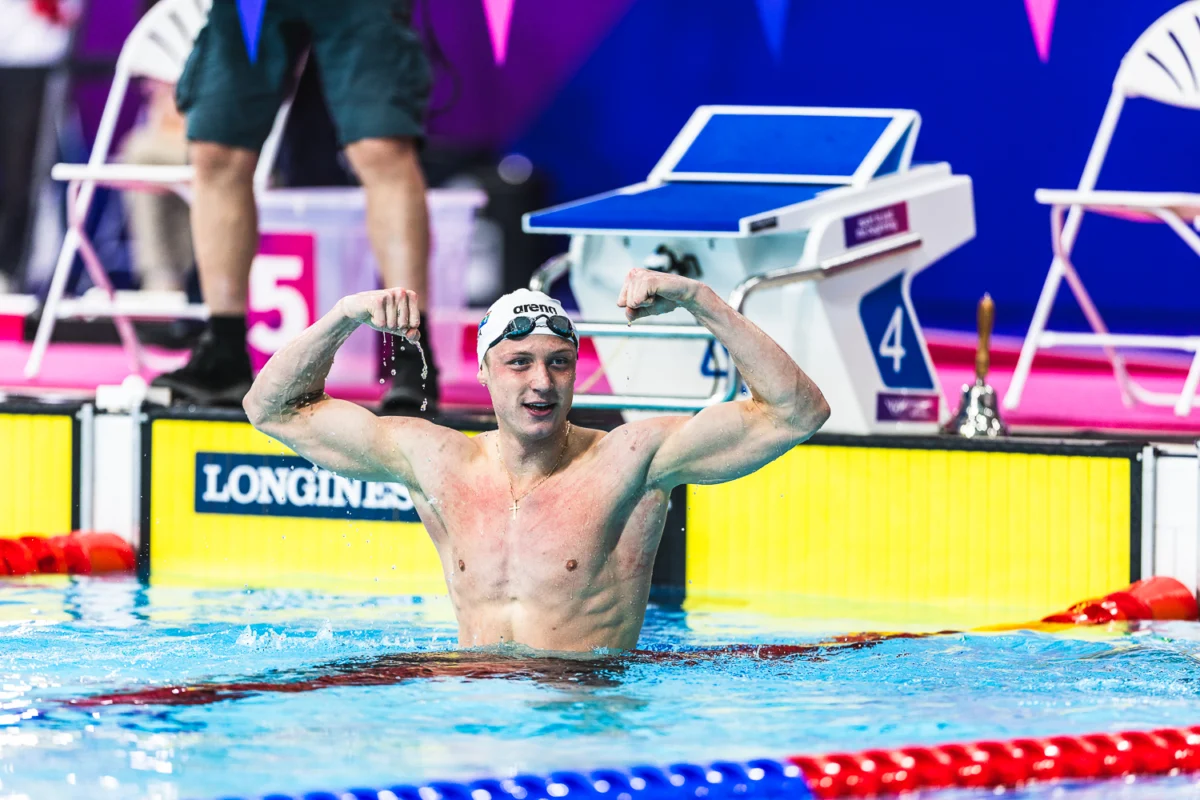
As the swimming world converges on Beijing for the 2026 World Aquatics Short Course Championships, the men’s backstroke events stand out as the undisputed centerpiece of the competition. With world records falling at an unprecedented rate throughout the autumn World Cup circuit, the stage is set for a historic collision of speed, tactical endurance, and emerging rivalries.
From the lightning-fast 50m sprint to the grueling 200m tactical masterclass, the fields are deeper and more competitive than ever. Below is an in-depth analysis of the contenders, the historical context of their progression, and the implications of these races for the sport of swimming.
The Landscape: A Shift in Power
The 2026 season has been defined by a "backstroke renaissance." The men’s 50m backstroke, in particular, has seen a whirlwind of record-breaking performances. For nearly four years, Kliment Kolesnikov’s 22.11 held firm, but the last two months have seen that benchmark shattered, leaving fans and analysts questioning where the physical limits of the stroke truly lie.
While some household names like Hubert Kos remain the favorites in the longer distances, the short-course pool in Beijing will test the adaptability of every athlete. The absence of certain specialists due to injury or scheduling conflicts—such as Gabriel Jett in the 200m—has only served to heighten the pressure on those remaining to claim the podium.
Chronology: The 50m Backstroke "Record-a-Thon"
To understand the stakes in Beijing, one must look at the rapid evolution of the 50m backstroke this year.
- November 2022: Kliment Kolesnikov sets the gold standard at 22.11, a time that would survive as a World Championship record for years.
- Early October 2026 (Tashkent): The dam breaks. South Africa’s Pieter Coetze clocks a 22.09, officially usurping Kolesnikov’s world record.
- The World Cup Series: During the three-stop circuit, Egor Kornev, Pavel Samusenko, and Coetze traded times in the low 22-second range. The volatility of these rankings underscored a new era of parity.
- Late October 2026: Just 15 days after Coetze’s breakthrough, China’s Xu Jiayu sent shockwaves through the sport, firing off a 22.03 at the Chinese SC National Championships. This stands as the current benchmark, setting up a high-pressure environment for the home crowd in Beijing.
Detailed Event Analysis
The Men’s 50m Backstroke: A Sprint to the Edge
The 50m backstroke is arguably the most volatile event at these championships. With the last three world record holders in the field, the margin for error is non-existent.
Key Contenders:
- Xu Jiayu (CHN): The current world record holder (22.03). Having not raced at Short Course Worlds since 2018, the 31-year-old is looking to cement his legacy in front of a home crowd.
- Pieter Coetze (RSA): The breakout star of the 2026 World Cup. His ability to maintain form across multiple stops suggests he is ready for the podium.
- Pavel Samusenko (RUS): Known for his remarkable consistency, Samusenko is the tactical pick to round out the medals.
- Hubert Kos (HUN): The "X-Factor." While primarily a 100/200 specialist, his 22.64 personal best keeps him in the hunt for a medal if he can find his rhythm early.
The Men’s 100m Backstroke: The Battle of Titans
In the 100m event, the field is remarkably dense. Eleven men have broken the 50-second barrier this season, but the race for gold is expected to be a four-way duel.
Hubert Kos enters as the man to beat. As the reigning world record holder (48.16), he carries the psychological advantage, though his lack of competition since the August European Championships presents a potential "rust" factor. Pieter Coetze, fresh off his Triple Crown victory in the World Cup, is the most direct threat. His 48.21 performance in Tashkent proves he is currently in the best form of his life.
The Men’s 200m Backstroke: The Kos Kingdom
While the 50m and 100m events are wide open, the 200m backstroke is firmly the domain of Hubert Kos. Having lowered the world record to 1:45.12 last year, Kos has established a level of dominance rarely seen in modern swimming.
However, the silver and bronze medals are highly contested. With Gabriel Jett out of the mix, the race for the podium has widened to include Hugo Gonzalez, Destin Lasco, and the rising Irish star John Shortt. Shortt, at only 19, has already shown the temperament required for big-stage racing, and his performance in the World Junior records suggests he is ready to take the next step into elite senior competition.
Supporting Data: Comparative Rankings
The following table highlights the current season-best times (SBT) of the top contenders heading into the Beijing meet.
| Event | Athlete | SBT | Lifetime Best |
|---|---|---|---|
| 50 Back | Xu Jiayu | 22.03 | 22.03 |
| 50 Back | Pieter Coetze | 22.09 | 22.09 |
| 100 Back | Hubert Kos | N/A | 48.16 |
| 100 Back | Pieter Coetze | 48.21 | 48.21 |
| 200 Back | Hubert Kos | N/A | 1:45.12 |
| 200 Back | Hugo Gonzalez | 1:47.84 | 1:47.84 |
Official Perspectives and Coaching Outlook
National federations have been quiet regarding specific strategies, but the consensus among performance directors is that "depth is the new gold." With athletes like Ralf Tribuntsov (Estonia) and Adam Chaney (USA) pushing the boundaries of the sub-22.8 range in the 50m, the days of coasting through preliminary heats are over.
Coaching staff are focusing heavily on underwater transitions. In the 25m pool, the difference between a podium finish and missing the final is often determined by the 15-meter mark off the start and turns. As one analyst noted, "We are no longer looking for the best stroke; we are looking for the best athlete who can master the technical nuances of the short course turn."
Implications for the Future of Swimming
The 2026 World Aquatics Championships represent a turning point for several reasons:
- The Rise of Non-Traditional Nations: The success of swimmers like Pieter Coetze (South Africa) and John Shortt (Ireland) signals a decentralization of swimming power. The monopoly historically held by a few nations is eroding, creating a more dynamic and unpredictable international field.
- The Longevity of Athletes: The presence of veterans like Xu Jiayu alongside teenagers like Shortt demonstrates that the modern professional swimmer has the tools to remain competitive well into their thirties, provided they manage their workload and recovery.
- The 47-Second Barrier: With the top contenders in the 100m backstroke consistently hovering in the low-48s, the conversation has shifted toward the viability of a sub-47-second performance. Such a feat would be the most significant milestone in the history of backstroke swimming.
As the athletes take to the blocks in Beijing, they carry the weight of expectation and the momentum of a historic season. Whether it is the sheer speed of the 50m sprint or the tactical endurance of the 200m, the 2026 World Aquatics Championships are poised to provide the most compelling narrative in recent memory. The question remains: who will thrive under the pressure of the bright lights, and who will be left in the wake of the next world record?

 Lina Hope
 Nila Kartika Wati

 Dwi Wanna

 Suro Senen

 Neng Nana

 Raul Delapena Setiawan