
 Neng Nana
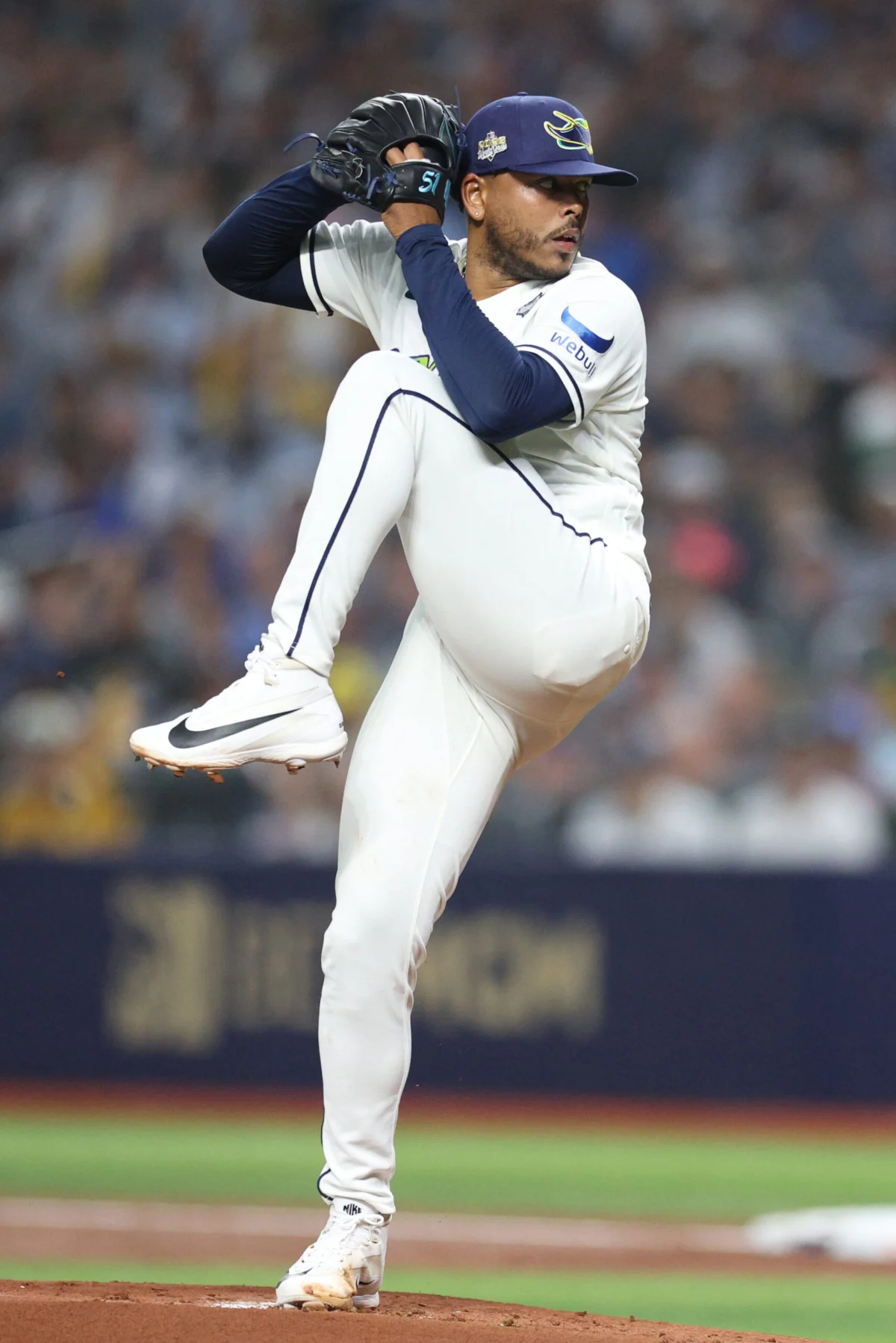
The Baltimore Orioles have made a definitive statement in the 2026-27 offseason, finalizing a five-year, $125 million contract with veteran right-handed pitcher Freddy Peralta. The agreement, which includes a $10 million signing bonus and guaranteed annual salaries of $23 million from 2027 through 2031, represents a cornerstone investment for the club. Perhaps most notably, the deal is free of deferred money and opt-out clauses, signaling a clean, straightforward commitment between the organization and the former All-Star.
Represented by ACES, Peralta enters the fold in Baltimore at a critical juncture for the Orioles’ rotation. Because he was traded midseason from the New York Mets to the Tampa Bay Rays, he was ineligible to receive a qualifying offer, meaning the Orioles do not forfeit any draft capital to acquire his services. This acquisition provides manager Craig Albernaz with a durable, high-upside arm to anchor a staff looking to sustain its competitive window.
A Tale of Two Signings: The Baltimore-Chicago Dynamic
The signing of Peralta serves as a functional replacement for Trevor Rogers, who just one day prior committed to the Chicago Cubs on a five-year, $120 million pact. While the two deals are strikingly similar in terms of length and financial commitment, the outcomes for the Orioles are distinct.
By allowing Rogers to depart, the Orioles secured a compensatory draft pick following the first round of the 2027 MLB Draft. Conversely, the arrival of Peralta requires no such draft compensation. While industry insiders suggest the O’s did not necessarily "choose" between the two pitchers—citing individual player preferences and team fits—the parallel trajectories of their contracts will inevitably invite comparison over the next half-decade. For Orioles President of Baseball Operations Mike Elias, this sequence of events is a calculated pivot, shifting the rotation’s ceiling while simultaneously padding the club’s future talent pipeline via the compensatory pick.
Chronology: A Rollercoaster 12 Months for Peralta
Peralta’s journey to Baltimore is defined by extreme volatility, marked by a career-best peak followed by a harrowing struggle in the nation’s largest media market, and finally, a redemption arc in Florida.
The 2025 Peak
Peralta’s 2025 season remains the gold standard of his career. Finishing fifth in National League Cy Young balloting, he logged a career-low 2.70 ERA across 33 starts for the Milwaukee Brewers. At that moment, he was widely considered one of the premier arms in baseball, with industry projections placing his potential free-agent earnings well north of $200 million.
The New York Nightmare
Following a trade to the New York Mets last offseason—a move necessitated by the Brewers’ long-term fiscal constraints—Peralta’s tenure in Queens began with stagnant extension talks and quickly devolved into on-field frustration. The 2026 season was, by all accounts, a disaster for the Mets, with Peralta at the center of the storm. He finished his stint in New York with an ERA approaching 5.00 across 22 starts. His strikeout rate plummeted by six percentage points, he surrendered home runs at an alarming clip, and he struggled to strand runners. While the Mets’ defensive woes certainly compounded his struggles, it was clear that the "vintage" Peralta was missing.
The Tampa Bay Rebound
The midseason trade to the Tampa Bay Rays acted as a reset. Re-energized, Peralta fired 55 1/3 innings of 3.25 ERA baseball down the stretch, proving instrumental in the Rays’ successful push for a World Series berth. He supplemented that with 21 1/3 innings of solid postseason work, re-establishing his value in the eyes of league executives.
Statistical Analysis: The "New" Peralta
While his late-season statistics were impressive, a deeper dive reveals a pitcher who had to evolve to survive. His strikeout rate remained below 20% during the regular season with Tampa Bay, and his 16:10 strikeout-to-walk ratio in October was far from dominant.
The primary driver of his late-season success was a shift in batted-ball luck. His BABIP (batting average on balls in play) plummeted from a bloated .313 with the Mets to an unsustainable .232 with the Rays. However, it would be reductive to attribute his turnaround entirely to luck. Under the tutelage of the Rays’ pitching infrastructure, Peralta implemented a significant repertoire adjustment, increasing his changeup usage—a hallmark of Tampa Bay’s developmental philosophy. Furthermore, his fastball velocity, which had hovered around 94 mph, ticked up to 95 mph in the regular season and spiked near 97 mph during the postseason.
While he is unlikely to maintain 97 mph over a full 30-start campaign, the data suggests that his "stuff" is still elite. He finished the year with a 4.42 ERA and league-average peripherals (21.4% strikeout rate, 8.6% walk rate) over 169 innings. It is a step back from his 2023-2025 peak, but it is enough to cement his status as a reliable #2 starter in a major league rotation.
Official Team Outlook and Roster Implications
With the signing of Peralta, the Orioles’ starting rotation takes on a more balanced look. He joins Kyle Bradish and Shane Baz in the upper tier of the rotation. This move slides Brandon Young into the #4 spot, creating a highly competitive environment for the fifth rotation slot. Young arms like Trey Gibson and Cade Povich are now joined by an exciting wave of prospects—including Michael Forret, Nestor German, Luis De León, and Anthony Eyanson—in vying for depth roles.
A Quest for the True Ace
Despite the acquisition, a lingering question remains: do the Orioles have a legitimate #1 starter? With Tarik Skubal off the board—having signed a massive $400M+ deal with the Mets—the market for true "aces" has dried up. While the front office is satisfied with the current depth, they remain active in the trade market. Speculation continues to swirl around high-ceiling targets like Logan Webb or Reid Detmers, should the Orioles decide to consolidate their minor-league depth to acquire a top-tier anchor.
Financial Flexibility
According to the MLBTR Payroll Tracker, the Orioles entered the day with a 2027 payroll projection of roughly $127 million. Given that the club opened the 2026 season with a payroll north of $160 million, they remain well-positioned to make further additions. Reports indicate that Mike Elias is still hunting for a corner outfielder and potentially a versatile bat to share time behind the plate with Samuel Basallo, who is expected to split duties between catcher and designated hitter.
The Strategic Importance of Durability
One of the most attractive attributes Peralta brings to Camden Yards is his ironman status. In an era of increasing pitcher attrition, Peralta’s availability is a massive asset. Having not visited the injured list since 2022, he is one of only two pitchers in the league—the other being Kevin Gausman—to have started 30 or more games in each of the last four seasons. For an Orioles team with championship aspirations, this level of reliability provides a floor that is arguably just as valuable as his strikeout-to-walk ratio.
Conclusion
The acquisition of Freddy Peralta is a hallmark move for the Baltimore Orioles: calculated, fiscally responsible, and focused on building a resilient, sustainable contender. By bypassing the compensatory penalties associated with other free agents and locking in a proven, durable arm, the Orioles have effectively insulated themselves against the volatility of the current starting pitching market.
Whether this move is the final piece of the puzzle or merely a precursor to a larger, more aggressive trade, one thing is certain: the Orioles have signaled that they are not content to rest on their laurels. As the 2027 season approaches, the spotlight will be on Peralta to see if he can replicate his Tampa Bay resurgence and provide the stability required to keep Baltimore at the top of the American League.
Reporting contributed by Hector Gómez of Z101, Ken Rosenthal of The Athletic, and Noah Trister of The Associated Press. Photo credits courtesy of Nathan Ray Seebeck, Imagn Images.

 Muslim
 Asro
 Raul Delapena Setiawan
 Lina Hope
 Nila Kartika Wati