
 Muslim
By Editorial Staff
November 24, 2026
The New York Mets continue to aggressively reshape their roster ahead of the 2027 campaign, announcing today that the organization has signed infielder Eddys Leonard to a minor league contract. The deal, first reported by Will Sammon of The Athletic, includes an invitation to the club’s major league spring training camp in Port St. Lucie.
While the acquisition of a depth piece may seem modest in the wake of the club’s high-profile move to sign veteran Paul Goldschmidt just 24 hours prior, Leonard represents a strategic addition to the Mets’ bench. At 26 years old, Leonard brings a unique profile of defensive flexibility and consistent Triple-A production, offering the Mets a versatile insurance policy as they look to navigate a crowded and highly competitive infield landscape.
The Core Facts: A Utilityman’s Opportunity
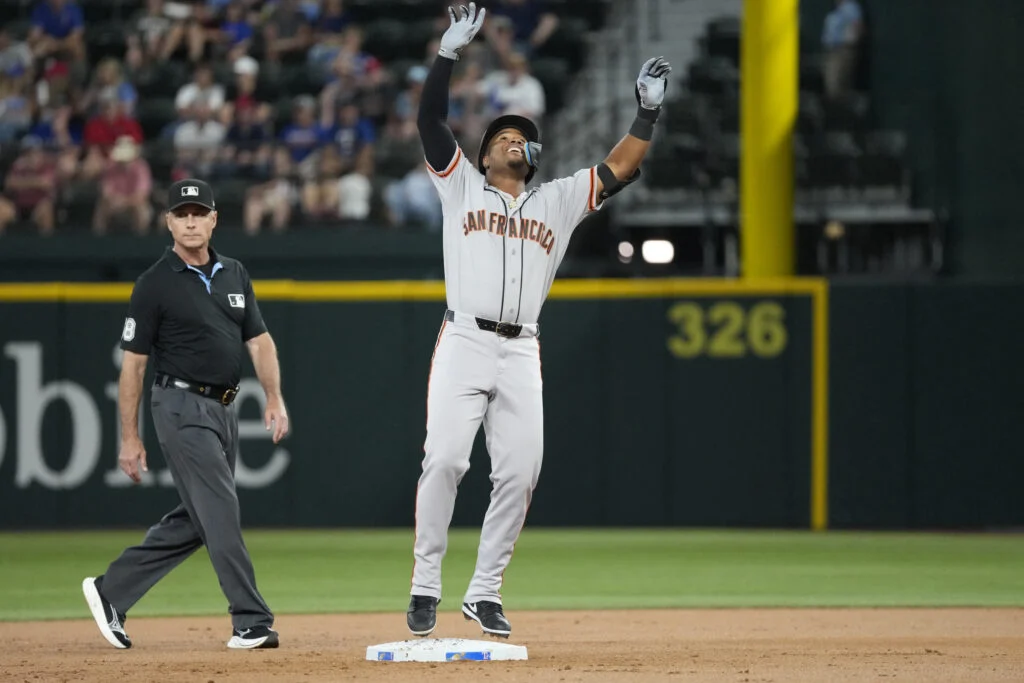
Eddys Leonard enters the Mets organization following a 2026 season characterized by movement and flashes of major league potential. After making his big league debut with the San Francisco Giants, Leonard saw limited action—tallying just eight plate appearances. However, he made the most of his brief opportunity, recording the first two hits of his career: a sharp single and a decisive double.
The majority of his 2026 campaign was spent at the Triple-A level, where he split time between the Giants and Milwaukee Brewers organizations. Across those stints, Leonard maintained a respectable slash line of .261/.342/.469. His ability to move around the diamond was his most valuable asset, as he logged time at all four infield positions and both outfield corners. For the Mets, this "super-utility" profile is precisely the type of depth required to survive the rigors of a 162-game season.
Chronology: A Career Built on Consistency
To understand why the Mets prioritized Leonard, one must look at the trajectory of his career in the minor leagues. Leonard has established himself as a model of consistency at the highest level of the minors, playing in parts of four Triple-A seasons.
- 2023: Leonard began to establish his reputation as a reliable middle-infielder with legitimate power potential, proving his ability to handle advanced breaking balls.
- 2024: During this season, Leonard expanded his defensive repertoire. Recognizing the need to diversify his skill set, he logged significant innings at third base and the outfield corners, transitioning from a pure shortstop to a defensive Swiss Army knife.
- 2025: Leonard’s offensive production stabilized. Over the last two seasons, spanning over 900 plate appearances at the Triple-A level, he has maintained a strikeout rate of just over 19%—an impressive figure for a player with his level of positional mobility.
- 2026: The breakout year for his professional resume. After earning a promotion to the Giants, Leonard proved he could handle major league pitching, albeit in a small sample size. His release and subsequent signing with the Brewers preceded his arrival in Queens this November.
Throughout this timeline, Leonard’s career batting line of .259/.329/.461 in Triple-A highlights a player who rarely goes through prolonged slumps. He provides a professional at-bat, maintains a disciplined walk rate of 8.3%, and possesses the high baseball IQ required for a bench role in the National League.
Supporting Data: The Metrics of Utility
The Mets’ front office relies heavily on analytics to identify undervalued talent, and Leonard’s defensive metrics are particularly telling. While he rose through the ranks as a shortstop, the transition to other positions has been statistically seamless.
Positional Breakdown
- Shortstop: His natural position, where he has logged the bulk of his professional innings.
- Second Base: With over 1,300 innings under his belt, Leonard is arguably most comfortable at the keystone. His range and turning of the double play have drawn praise from scouts.
- Third Base: Over 800 innings at the "hot corner" have demonstrated his ability to handle high-velocity plays and bunt defense.
- Outfield: While less experienced, his athleticism allows him to track balls effectively in the corners, providing the Mets with the ability to move players around mid-game without sacrificing defensive stability.
Offensive Stability
What makes Leonard an attractive signing is his strikeout-to-walk profile. In an era where "three true outcomes" baseball often leads to high-swing-and-miss rates, Leonard’s 19% strikeout rate is a positive outlier. He puts the ball in play, moves runners, and provides the type of situational hitting that is often absent in bench players.
Official Responses and Strategic Outlook
The Mets have remained tight-lipped regarding specific roster roles, but the team’s overarching strategy is clear: maximize depth at every position.
The front office’s recent activity suggests a "win-now" mentality. Following the signing of Paul Goldschmidt, the organization is clearly focused on bolstering both the starting lineup and the supporting cast. By adding Leonard, the Mets are insulating themselves against the inevitable attrition caused by injuries.
"We are always looking for players who can fill multiple roles and bring a professional approach to the clubhouse," a source within the organization stated. "Eddys brings that versatility. He’s a guy who can step in at any spot, give you a solid at-bat, and allow us to manage our starters’ workloads throughout the summer."
Implications: A Crowded House in Queens
The arrival of Leonard into the Mets’ system creates a fascinating dynamic regarding the 40-man roster. The Mets’ current infield is arguably one of the most crowded in Major League Baseball.
The Landscape
- First Base: With the signing of Paul Goldschmidt, the Mets have established a clear platoon strategy, likely pairing him with Jared Young.
- Middle Infield: The left side of the infield is anchored by franchise cornerstones Francisco Lindor and Bo Bichette. Second base is currently a rotation of Marcus Semien and Brett Baty.
- Utility/DH: Jorge Polanco provides a veteran presence capable of playing multiple spots, further compressing the available playing time for bench players.
The Roster Crunch
Perhaps the most significant implication of Leonard’s signing is the pressure it places on younger infielders currently on the 40-man roster. Both Mark Vientos and Ronny Mauricio remain with the organization, but both are currently out of minor league options. This means the Mets cannot send them to Triple-A without exposing them to waivers.
With the addition of Leonard, the Mets have signaled that they are prepared to make difficult decisions. Vientos and Mauricio now find themselves in "change-of-scenery" territory. If they do not secure a definitive spot during spring training, the Mets may look to trade them to teams seeking high-upside young talent, or they may risk losing them through roster consolidation.
Spring Training Outlook
Leonard will arrive at spring training with everything to play for. Because he is on a minor league deal, he does not occupy a 40-man roster spot immediately. However, his ability to play six different positions gives him a clear path to the Opening Day roster if he can outperform the incumbent utility options.
For the Mets, the move is low-risk and high-reward. If Leonard hits, he becomes an invaluable weapon for manager Carlos Mendoza. If he fails to secure a spot, the Mets have simply added depth to their Syracuse Triple-A affiliate, maintaining the professional standards of the organization from the top down.
Conclusion: The Road Ahead
As the 2026 calendar year winds down, the New York Mets are clearly not satisfied with their status quo. The signing of Eddys Leonard, while not a blockbuster, is a testament to the club’s commitment to building a resilient, adaptable roster.
The Mets have identified that championships are often won not just by the stars, but by the role players who can step into a variety of defensive alignments and maintain offensive production. As spring training approaches, all eyes will be on Port St. Lucie to see how Leonard integrates into the mix and whether his arrival sparks a larger move to consolidate the roster’s excess talent. One thing is certain: the competition in Queens is fiercer than ever.


 Asro


 Nila Kartika Wati

 Jia Lissa

 Layla Zulfa