
 Lina Hope
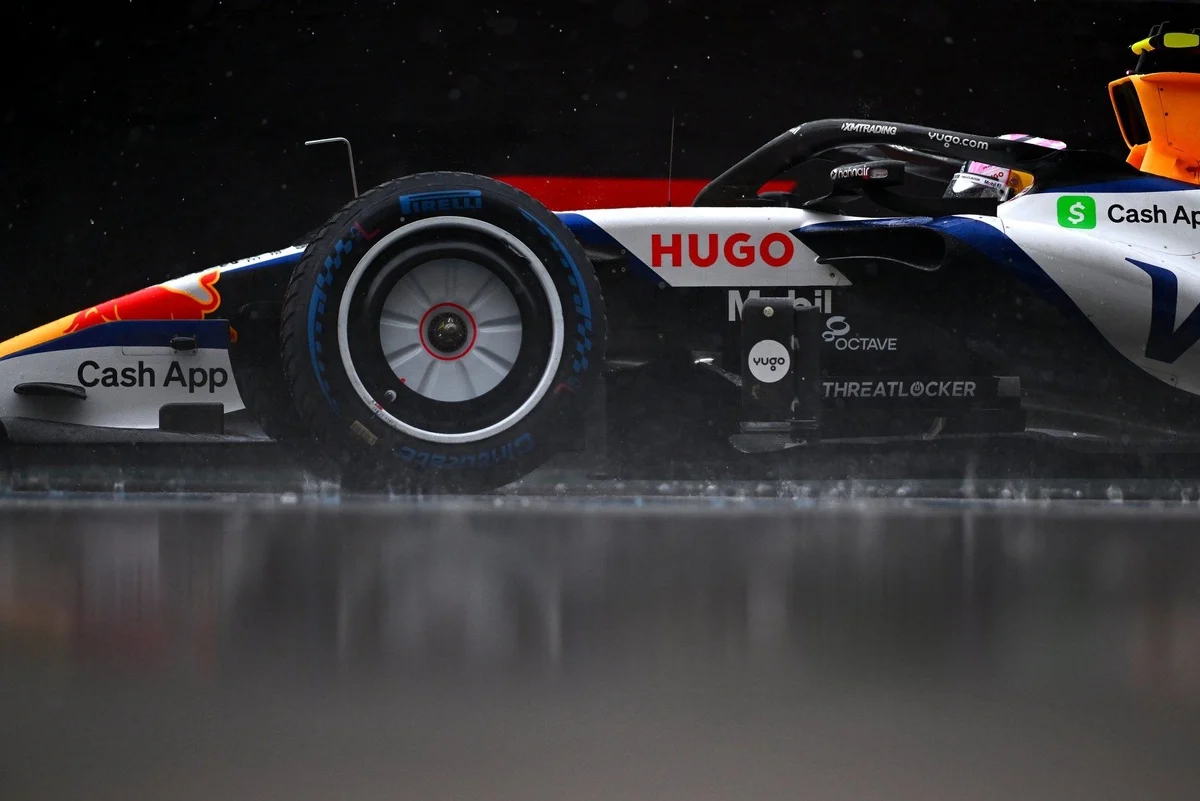
SAO PAULO — Formula 1’s dramatic wet-weather sessions have always served as the ultimate great equalizer, a theater where raw driver talent can completely outweigh a car’s aerodynamic or mechanical deficits. During a tense and chaotic qualifying hour at the Autódromo José Carlos Pace in Interlagos, Racing Bulls driver Liam Lawson once again proved he belongs in the upper echelon of grand prix machinery.
Yet, as the spray settled and the timing screens locked in, the young New Zealander cut a figure of frustrated ambition. Despite securing a highly lucrative and advantageous grid position for Sunday’s race, Lawson was immediately left to rue what could have been. A self-admitted mistake on his out-lap—clinging too closely to Fernando Alonso’s Aston Martin—robbed him of a golden opportunity to snatch a front-row start on merit, highlighting the razor-thin margins that define modern Formula 1 qualifying.
Thanks to a cocktail of on-track penalties for his rivals, Lawson will ultimately line up in third place. But as the paddock dissects a thrilling Saturday afternoon in Sao Paulo, the overarching narrative is not just about where the Racing Bulls driver starts, but where he should have been.
Main Facts: The Qualifying Breakdown and the P3 Ascent
When the checkered flag fell on a treacherous Q3 session dictated by worsening weather conditions, Lawson had set the fifth-fastest time overall. In normal circumstances, a fifth-place finish for a Racing Bulls driver would be heralded as a monumental success—a testament to both team execution and driver execution in a midfield car punching well above its weight class.
However, the grid order was thrown into immediate flux due to pre-race engine penalties. George Russell, who had put his Mercedes second-fastest on the timesheets, was slapped with a grid drop earlier in the weekend for taking new power unit components. Similarly, Ferrari’s Charles Leclerc found himself tumbling down the order due to separate infractions.
As a result, Lawson inherited two positions, elevating his starting slot to third on the grid (P3).
The mathematics of the session reveal just how close Lawson was to an even greater fairytale. He finished just 0.226 seconds slower than Kimi Antonelli, who had locked down the third-fastest qualifying time (which converted to an even higher starting position post-penalties). Had Lawson managed to bridge that micro-gap and beat the newly crowned world champion, he would have inherited an outright front-row start alongside pole position.

Instead of celebrating an unmitigated triumph, Lawson walked away from the media pen wondering how a minor spatial miscalculation on his out-lap cost him a career-best starting spot.
Chronology of a Chaotic Q3: How the Session Unfolded
To understand Lawson’s frustration, one must look at the chaotic, rapidly deteriorating meteorological conditions that defined Q3 at Interlagos.
As the final twelve-minute shootout commenced, radar imagery flashed red across team pit walls: heavy rain was inbound, threatening to completely saturate the Sao Paulo asphalt and render any late flying laps entirely obsolete. In weather-impacted sessions of this magnitude, track evolution goes out the window; the golden rule is simple: get out on track immediately, bank a representative lap time, and pray the heavens don’t open before you cross the line.
Capitalizing on the pit lane layout—where Racing Bulls is situated further down the pit lane—Lawson was among the absolute first drivers to peel out of the garage when the pit exit green light illuminated. He slotted in directly behind veteran master Fernando Alonso.
Being near the front of the queue was meant to be a strategic advantage, ensuring clean air and a dry-enough track surface. However, it quickly transformed into a tactical trap.
- The Out-Lap Error: Eager to build tire temperature and stay close to the experienced Spaniard, Lawson inadvertently closed the gap to Alonso too aggressively.
- The Interruption: Trapped in dirty air and losing aerodynamic stability in the swirling mist, Lawson caught the back of the Aston Martin prematurely. The disruption forced him to check up, compromising the rhythm of his preparation.
- The Compromised Run: His first flying lap was severely disrupted by the traffic bottleneck. When he attempted to reset for a secondary push, the window of opportunity slammed shut.
- The Deluge: By the time Lawson completed his sole viable representative effort, the ambient temperature had plummeted, and heavy rain began pelting the circuit. The track had slowed down dramatically, making any subsequent improvements mathematically impossible for the entire field.
His single banker lap was enough to secure P5 on raw pace, which subsequently morphed into P3 once the stewards applied penalties to Russell and Leclerc. But for a driver operating at the absolute peak of his powers, knowing the car had the pace for more made the outcome a bitter pill to swallow.
Supporting Data and Driver Reflections
Speaking candidly to Sky Sports F1 immediately after climbing out of his cockpit, Lawson did not attempt to mask his disappointment behind boilerplate team PR answers.
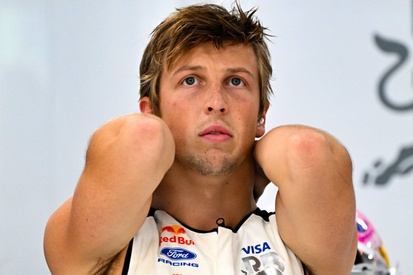
"I think as a driver you want to maximise it and I feel like we didn’t quite today," Lawson admitted, his brow furrowed with competitive fire. "We’re in a really good place out of the box. Obviously, we get lucky with the pit lane that we’re further down than the top teams. So I went out there and then I caught Fernando too much on the first lap and had to abort the second one. And then I didn’t get to really maximise it."
The numbers bear out his frustration. A deficit of just over two-tenths to Antonelli across a damp, slippery Interlagos lap is microscopic. In wet conditions—where driver confidence, braking feel, and car control dictate lap time far more than raw horsepower—Lawson was extracting every ounce of performance from his Racing Bulls chassis.
When pressed by reporters on whether a front-row start was genuinely achievable on pure pace, Lawson didn’t hesitate, though he acknowledged the unpredictable nature of the weather.
"I mean, as a driver, I’m going to say yes, but obviously you never know," he said. "And obviously the rain was coming down. So by the time I got to the end of the lap… You never know. I don’t know when everybody else did it. But, yeah, considering we got one lap, I think we did a good job."
Reflecting on his net-gain promotion to third place, Lawson adopted a pragmatic outlook, acknowledging that free grid positions are currency you never turn down in Formula 1.
"It’s still a good place to start," he noted. "Obviously, I always take the free positions, but you always want to maximise as a driver as well. I think either way it’s going to be a tough race here. I think it’s unlikely it’s going to be fully dry. But I think we have a quick car in all conditions."
Official Responses and the Paddock Perspective
Lawson’s stellar qualifying performance sent ripples through the Interlagos paddock, amplifying an ongoing storyline that has dominated the latter half of the F1 season: his unconfirmed future.
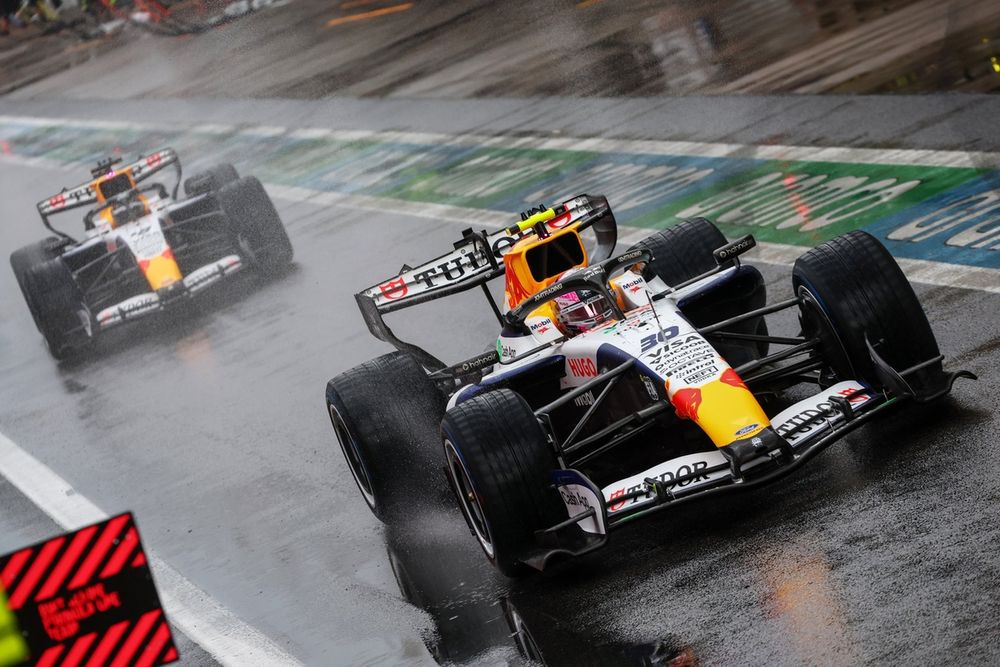
While Racing Bulls management has publicly preached patience—insisting that the team will make the "right decision" regarding their 2026 driver lineup—delays in finalizing Lawson’s contract have increasingly frustrated both fans and pundits. Performances like his wet-weather masterclass in Sao Paulo only serve to underline the absurdity of leaving a talent of his caliber twisting in the wind without a guaranteed seat for the future.
Paddock insiders noted that Lawson’s ability to seamlessly adapt to changing track conditions mirrors the poise of a seasoned world champion rather than a driver still fighting to cement his long-term tenure in the sport. Racing Bulls’ engineering team lauded the Kiwi’s feedback loop during the session, noting that his quick-thinking allowed them to capitalize on the fleeting window of dry-to-damp transition before the deluge arrived.
Meanwhile, rivals were quick to acknowledge Lawson’s threat. Mercedes and Ferrari engineers alike admitted in post-qualifying debriefs that the Racing Bulls car had demonstrated unexpected aerodynamic efficiency in the low-grip environment, neutralizing some of the power advantages enjoyed by the factory teams.
Implications for the Sao Paulo Grand Prix
As the Formula 1 community turns its collective gaze toward race day at Interlagos, Lawson’s P3 grid slot sets up a fascinating tactical chess match.
- The Weather Wildcard: Weather forecasts for race day indicate a high probability of mixed conditions or outright heavy rain. Lawson has repeatedly proven that his racecraft and car control in low-traction environments are elite. Starting from the second row puts him immediately in the mix to challenge for podium positions from the lights out.
- Strategic Vulnerability vs. Opportunity: Starting on the clean side of the grid (thanks to Russell’s penalty) gives Lawson a clear drag-race path down to Turn 1 (Senna S). However, defending against fast-charging factory cars behind him will require tactical brilliance and tire management, particularly if the race transitions between wet and intermediate compounds.
- The Audition Continues: With his contract future still officially unresolved, every single lap Lawson completes under the microscope of the F1 paddock acts as a high-stakes audition. A podium finish in Sao Paulo would not only validate his blistering Saturday speed but serve as an undeniable statement to the Red Bull hierarchy that sidelining him for the future would be a catastrophic miscalculation.
Liam Lawson may walk away from Sao Paulo qualifying lamenting a minor out-lap error that cost him a shot at the front row, but make no mistake: the entire Formula 1 world has once again taken notice. When the lights go out at Interlagos, the young New Zealander will have his sights firmly fixed on redemption.

 Pevita Pearce
 Neng Nana
 Raul Delapena Setiawan

 Laily UPN

 Nana
 Iffa Jayyana