
 Nana Muazin
By [Your Name/Journalistic Staff]
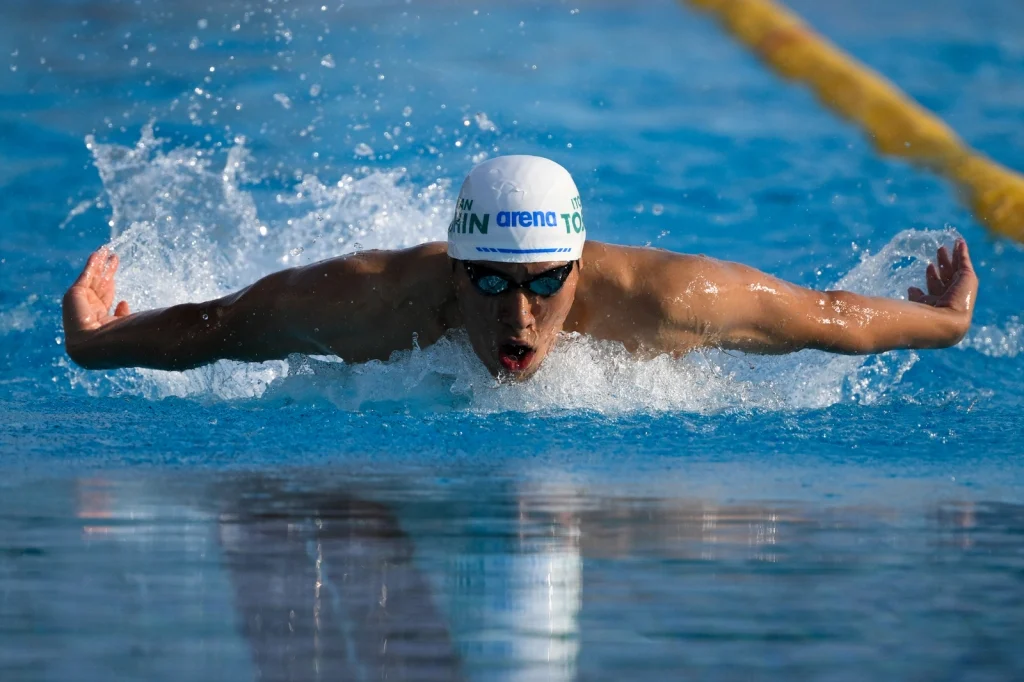
In a landmark decision that sends shockwaves through the elite swimming community, the Japanese Swimming Federation (JASF) has officially handed down a 21-month competitive ban to Olympic silver medalist Tomoru Honda. The disciplinary action, announced on November 4, 2026, stems from a serious criminal conviction related to a "dangerous, reckless, and malicious" driving incident that occurred last year.
The suspension, which effectively sidelines one of Japan’s most decorated butterfly specialists, is set to last until August 2028. This timeline carries a devastating consequence for the athlete: Honda will be ineligible to participate in the 2028 Summer Olympic Games in Los Angeles, effectively closing the door on his pursuit of a second Olympic podium finish during the prime of his career.
The Gravity of the Incident: A Legal and Ethical Breach
The origins of this suspension trace back to a vehicular collision in 2025. According to court records and subsequent reports, Honda was involved in a high-speed accident where he failed to negotiate a curve, resulting in a direct collision with another vehicle. The impact was severe enough to cause significant injuries to the driver of the other car.
The legal fallout for the swimmer was swift and severe. Honda was handed a one-year prison sentence, though the judiciary granted a three-year suspension of that sentence, provided he adheres to strict probation conditions. The court characterized his driving behavior as "reckless and malicious," a description that painted a stark contrast to the disciplined, controlled image required of an international sporting representative.
Following the incident, the JASF took immediate preliminary steps, removing Honda from the rosters for both the Pan Pacific Championships and the Asian Games. However, the formal 21-month suspension marks the final, definitive administrative action from the Federation, signaling that the organization views the infraction not merely as a personal legal matter, but as a direct violation of the integrity and conduct standards expected of Japan’s elite athletes.
Chronology of the Controversy
The path to this suspension has been a tumultuous period for both Honda and the Japanese sporting establishment.
- 2021 (The Olympic Breakthrough): Honda captures the silver medal in the men’s 200m butterfly at the Tokyo 2020 Olympic Games (held in 2021). He is heralded as a cornerstone of the future of Japanese swimming.
- 2024 (The Peak and The Shift): Honda claims the gold medal at the World Championships, cementing his status as the world’s best in his discipline. However, he faces a jarring transition months later, finishing in a disappointing 22nd place in the 200m butterfly at the Paris 2024 Olympic Games.
- 2025 (The Incident): Honda is involved in a "dangerous and reckless" driving accident. Following the crash, he is removed from major international competition rosters by the JASF.
- 2026 (The Verdict): After a period of internal deliberation, the JASF Executive Board convenes on November 4, 2026, to finalize the disciplinary outcome.
- November 4, 2026 (Formal Announcement): The JASF issues a public statement confirming a 21-month suspension, citing Article 4 of the Federation’s Disciplinary Regulations.
- August 2028 (The Aftermath): The expiration date of the suspension. By this time, the Los Angeles Olympic Games will have concluded, ensuring Honda’s absence from the world’s biggest stage.
Official Response from the Japan Swimming Federation
The JASF’s decision was communicated with a somber tone, emphasizing the necessity of maintaining the reputation of the sport. In an official release, the federation stated:
"Today, November 4, 2026, the Executive Board of this Federation held a meeting to discuss disciplinary action against athlete Tomoru Honda. Based on Article 4 of the Federation’s Disciplinary Regulations, the Federation has decided to suspend Tomoru Honda’s registration status for 21 months. The Federation takes this incident very seriously and will continue to thoroughly implement compliance education to prevent recurrence and restore trust."
According to reporting from Yahoo Japan, the logistics of the ban are precise. The suspension officially begins the moment the Federation confirms that Honda has received the formal disciplinary notice, which was dispatched via post on the Thursday following the announcement. This bureaucratic finality ensures that there is no ambiguity regarding his status: Honda is effectively erased from the competitive swimming landscape for nearly two years.
Supporting Data and Athletic Legacy
The tragedy of this suspension is underscored by the sheer caliber of the athlete being sidelined. Tomoru Honda has long been a titan in the pool, particularly in the 200m butterfly.
Career Highlights:
- Olympic Success: Silver medalist (200m Butterfly, 2020 Tokyo).
- World Championship Glory: Gold medalist (2024 World Championships).
- Record-Breaking Performance: Honda remains the reigning World Record holder in the Short Course Meters (SCM) version of the 200m butterfly, a testament to his technical mastery and raw speed.
Despite his recent dip in form at the 2024 Olympic Games—where he placed 22nd—the swimming world largely expected a resurgence from the Japanese star. His technical ability, combined with his SCM world record, suggested he was still among the top tier of international competitors. By removing him from the competitive circuit until August 2028, the JASF has essentially forced a "lost period" that is statistically difficult for any elite athlete to overcome.
The Wider Implications: Compliance and Reputation
The decision to ban Honda for 21 months serves as a clear message from the Japanese Swimming Federation to its entire national team: high performance does not grant immunity from ethical and legal standards.
In the Japanese sporting culture, the concept of budō—the martial way—often extends to all athletes, where personal conduct is considered as vital as technical prowess. By invoking Article 4 of their Disciplinary Regulations, the JASF is emphasizing that the "compliance education" mentioned in their statement is not merely a formality. They are actively seeking to reshape the culture surrounding their elite athletes, moving away from a model that prioritizes victory at any cost toward one that demands accountability.
Impact on the Japanese National Team
The loss of a swimmer of Honda’s pedigree creates a massive vacancy in the Japanese men’s butterfly squad. For the upcoming international cycle, the Federation must now pivot toward younger, less experienced talent. While this provides an opportunity for new swimmers to rise, the absence of a proven world-record holder leaves a significant void in terms of mentorship and competitive intimidation at the international level.
The Challenge of Return
For an elite swimmer, 21 months away from competitive racing is an eternity. The physiology of a world-class athlete requires constant, high-intensity stimulus to remain at the peak of the sport. Without access to official federation training centers or sanctioned meets, Honda faces an uphill battle to maintain his conditioning. Even if he resumes training independently, the loss of race-readiness, the psychological toll of the scandal, and the progression of his rivals mean that even when his ban expires in 2028, his path back to the podium will be fraught with difficulty.
Conclusion
The case of Tomoru Honda stands as a cautionary tale of how a moment of poor judgment can dismantle a career years in the making. While his achievements in the pool—the Olympic silver, the World Championship gold, and the SCM world record—will remain in the history books, his immediate future has been permanently altered by the consequences of his actions on the road.
As the JASF moves forward, the federation will continue its internal audit and compliance measures. For Honda, the next 21 months will be a period of profound isolation from the sport that defined his identity. Whether he can ever regain his former glory remains a question for the distant future, but for now, the finality of the Federation’s decision is clear: the road to Los Angeles 2028 will be traveled without one of Japan’s most talented, yet deeply flawed, stars.

 Pevita Pearce
 Evan Lee Salim
 Iffa Jayyana


 Asro
 Siti Muinah