
 Evan Lee Salim
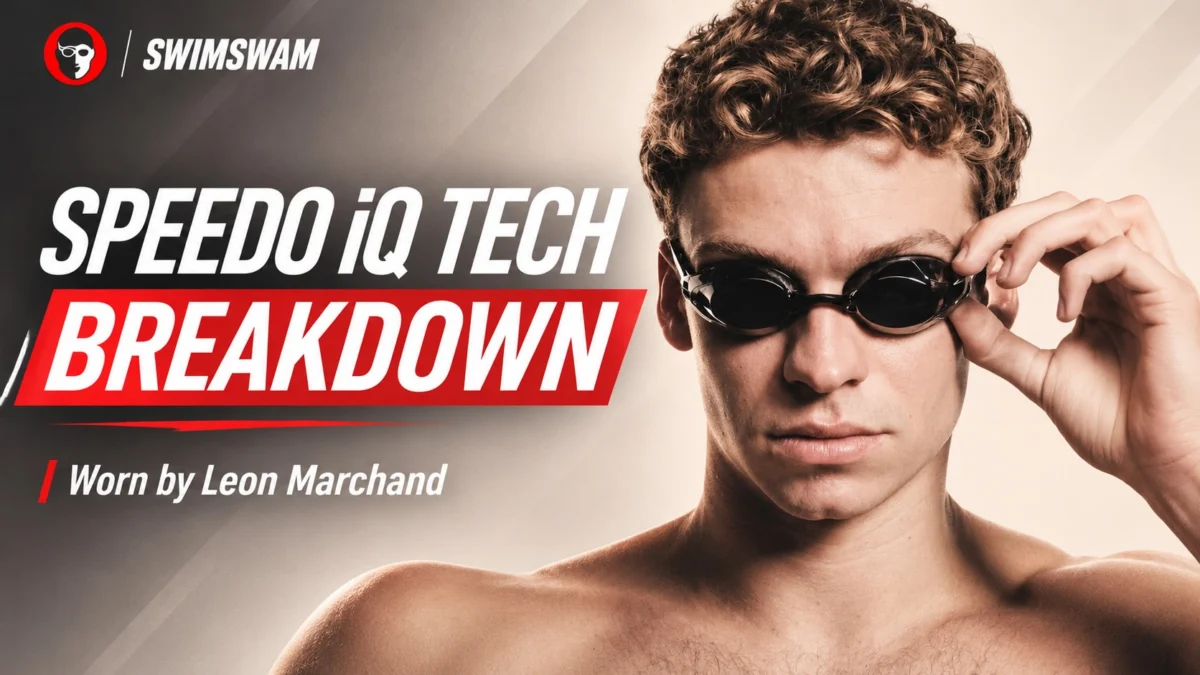
For over two decades, the swimming industry has been captivated by a singular technological dream: the "smart goggle." The vision was alluring—a heads-up display (HUD) providing real-time biometric and stroke data directly within the swimmer’s field of vision. Yet, despite repeated attempts by various manufacturers, the promise remained largely unfulfilled, hampered by clunky hardware, compromised comfort, and a fundamental mismatch between tech-integration and the high-performance demands of elite athletes.
In a landmark shift for the sport, Speedo has officially entered the arena with the launch of Speedo iQ. This release represents more than just a new gadget; it is a calculated response to the barriers that have prevented previous iterations from gaining traction. By prioritizing the integrity of the classic Vanquisher 3.0 goggle and sidestepping the distraction of HUDs, Speedo is betting that the key to unlocking human performance lies not in looking at data, but in collecting it seamlessly.
The Chronic Barrier: Why Smart Goggles Failed for 20 Years
To understand the significance of Speedo iQ, one must first understand the "intimacy" of the swimming goggle. Unlike a running watch or a cycling computer, goggles are a sensory extension of the athlete. For a swimmer, the seal, the peripheral vision, and the drag profile of the goggle are non-negotiable. If a goggle leaks or creates unnecessary resistance, it is discarded immediately, regardless of what advanced analytics it might offer.
For two decades, the industry fell into the trap of trying to force technology into the lens. Engineers prioritized the visual display, often at the expense of the goggle’s hydrodynamic profile and comfort. This resulted in devices that were too heavy, too bulky, or simply uncomfortable, leading swimmers to reject them in favor of traditional, "dumb" goggles that they knew and trusted.
Speedo’s approach with iQ acknowledges this historical failure. By partnering with Nate Tracy, Speedo’s VP of Innovation Design and Future Concepts, and Luke Mears, Lead Product Manager at Pentland Brands, the company has effectively "de-coupled" the technology from the visual experience.
Chronology of Development: From Concept to Competition
The development process for Speedo iQ was not a sprint, but a marathon of iterative testing and athlete feedback. The project began with a fundamental question: How do we extract high-fidelity data without altering the feel of the world’s most trusted goggle?
- The Foundation (The Vanquisher Legacy): Speedo chose to build the iQ ecosystem around the Vanquisher 3.0. This choice was strategic; the Vanquisher is arguably the most recognizable and widely trusted goggle in the competitive swimming world. By utilizing a proven chassis, Speedo removed the hurdle of "goggle-anxiety."
- The Modular Pivot: Recognizing that swimmers are wary of permanent electronic attachments, the engineering team developed a removable sensor module. This allowed for easier maintenance, charging, and the ability to swap the tech between pairs.
- The "No-HUD" Decision: Perhaps the most controversial decision was the removal of the heads-up display. In testing, elite swimmers reported that HUDs were distracting, particularly during high-intensity sets or race scenarios where focus must be absolute. Speedo opted for a sensor-only approach, which keeps the lens clear and the profile sleek.
- World Aquatics Approval: The final hurdle was the "race-ready" certification. Many wearables are relegated to practice sessions because they fail to meet competition safety or equipment standards. By securing approval from World Aquatics, Speedo iQ became the first major wearable of its kind that can be worn during official competition, allowing for data analysis under the extreme stress of a race environment.
Supporting Data and Technical Specifications
At the heart of Speedo iQ is a sophisticated sensor array capable of tracking the "Big Four" strokes—Freestyle, Backstroke, Breaststroke, and Butterfly. Unlike generic activity trackers that simply count laps, the iQ system is designed to provide granular, biomechanical feedback.
Key Performance Metrics:
- Stroke Efficiency: Analyzing the relationship between stroke count and distance per stroke (DPS).
- Head Position: Monitoring the stability of the swimmer’s head, a critical factor in reducing frontal drag.
- Breathing Mechanics: Identifying patterns in oxygen intake that may correlate with fatigue or stroke breakdown.
- Turn Analysis: Utilizing internal gyroscopes and accelerometers to measure wall impact and breakout velocity.
The data is captured via the module and synced post-swim, ensuring that the swimmer remains completely focused on the water while training. By removing the subscription model—a major pain point for modern consumers—Speedo has taken a consumer-friendly stance. The $189 price tag represents a one-time investment in a tool that provides long-term, actionable insights.
Official Responses: The Philosophy of Innovation
In the latest episode of the SwimSwam Podcast, Nate Tracy and Luke Mears provided a deep dive into the engineering philosophy behind the device. According to Tracy, the goal was never to create a "computer on your face," but rather a "coach in your pocket."
"We listened to the athletes," Mears noted during the interview. "They told us that the moment you put a screen in front of their eyes, their stroke changes. They start watching the numbers rather than feeling the water. By removing the display, we allowed the athlete to remain in the ‘flow state’ while capturing the data necessary for coaches to make objective, data-driven decisions."

The role of elite coaches in this development was paramount. They acted as the gatekeepers, ensuring that the metrics collected were not just interesting, but actionable. If a coach couldn’t use the data to tell a swimmer exactly how to improve their flip turn or streamline, the engineers went back to the drawing board.
Implications for the Future of Swimming
The release of Speedo iQ opens the door to a new era of swimming analytics that could fundamentally alter the landscape of the sport.
The "Connected" Broadcast
With World Aquatics approval, there is a clear path toward incorporating this data into television broadcasts. Imagine watching a major international championship where the viewers can see real-time stroke rates, turn velocities, and breathing intervals overlaid on the broadcast feed. This level of transparency would bring swimming closer to the analytics-heavy models seen in Formula 1 or the NBA, making the sport more engaging for casual fans and more analytical for enthusiasts.
The Ecosystem Expansion
The $189 price point for the iQ module is a starting point, not an end goal. As the technology shrinks further, we may see this sensor integrated into a wider range of Speedo goggles, including training-specific models with optional HUDs for those who prefer visual feedback during practice.
Furthermore, the lack of a subscription fee signals a strategic shift. Speedo is clearly aiming to build an "ecosystem" rather than a service. By positioning itself as the primary hardware provider for performance data, Speedo is creating a platform where third-party coaching apps or AI analysis tools could eventually plug in, turning a pair of goggles into the central hub of a swimmer’s training program.
The Human Element
Despite the surge in tech, the most important question remains: Can the intelligence make swimmers faster?
The answer lies in the transition from raw data to coaching intervention. Data is merely noise until it is interpreted by a coach. Speedo iQ provides the objective truth of a performance—revealing the subtle decelerations in a breaststroke pull-out or the minute imbalances in a freestyle stroke that the naked eye might miss. The potential for improvement is massive, provided that the swimming community embraces the data with the same rigor they apply to their physical training.
Conclusion
Speedo has achieved what many thought impossible: a high-tech, race-approved wearable that respects the traditional, intimate relationship between a swimmer and their goggles. By stripping away the gimmicks and focusing on precision, comfort, and, most importantly, the removal of barriers, Speedo iQ has set a new standard.
As we look toward the next Olympic cycle, the question is no longer whether swimmers will adopt technology, but how effectively they will use it to push the limits of human speed. With Speedo iQ, the sport of swimming has officially entered the era of Big Data—and it has done so without losing the essence of what makes swimming the most beautiful, and the most challenging, of all athletic pursuits.
For more information on the development of Speedo iQ, be sure to catch the full interview with Nate Tracy and Luke Mears on the latest Gold Medal Media podcast, presented by SwimOutlet.com.


 Sagoh

 Nana Wu

 Dwi Wanna
 Asep Darmawan
 Nana

 Iffa Jayyana

 Asro