
 Iffa Jayyana
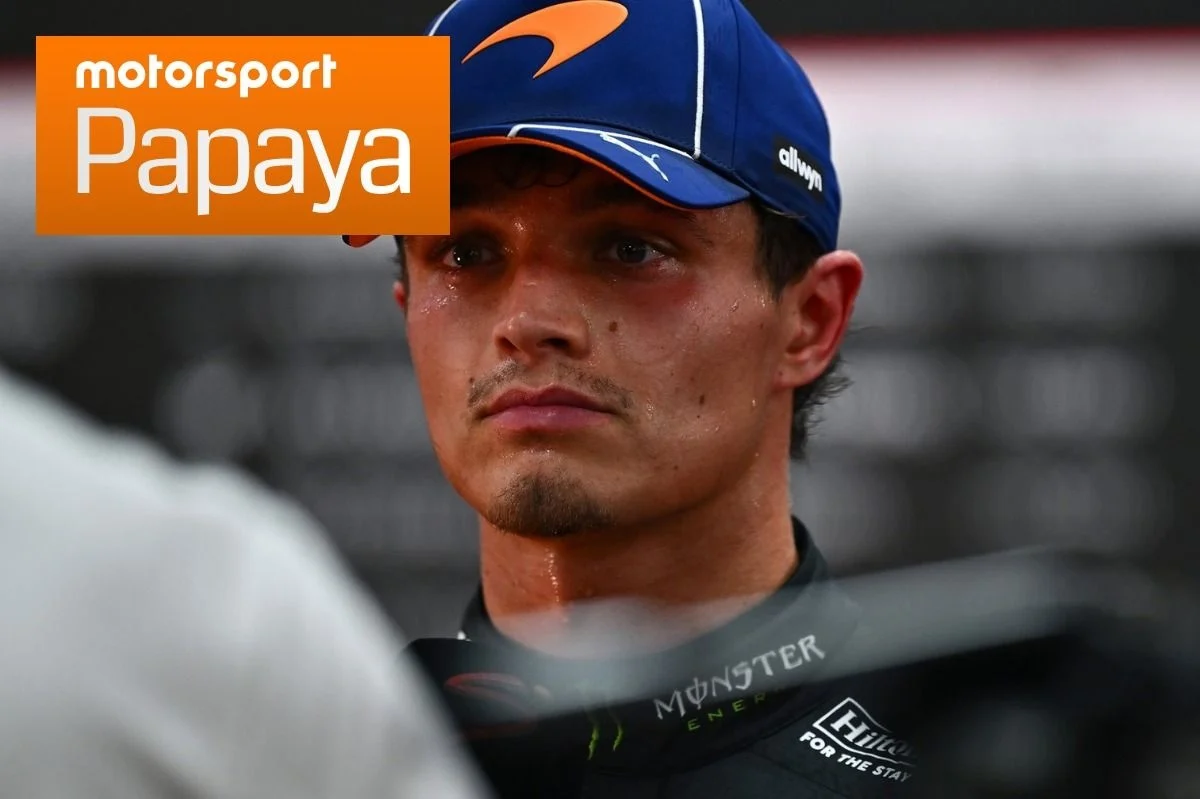
MEXICO CITY — For decades, the slipstream has been celebrated as the ultimate tactical weapon in a Formula 1 driver’s arsenal. It is the invisible hook that drags a challenger alongside a defender, setting up the thrilling theater of late-braking lunges, wheel-to-wheel cornering, and heart-stopping straight-line passes.
However, according to McLaren driver Lando Norris, the modern technical regulations have effectively neutered this foundational racing art.
Following a grueling and largely processional afternoon at the Autódromo Hermanos Rodríguez during the Mexico City Grand Prix, Norris didn’t hold back. Trapped in a frustrating DRS and battery-deployment "train" for much of the race, the British contender leveled heavy criticism at Formula 1’s current car design philosophy. He argued that an artificial ceiling—governed by strict caps on battery deployment and top-speed limits—renders overtaking virtually impossible when matching evenly paced machinery.
Main Facts: The Bottleneck of Modern F1
The core of Norris’s frustration stems from a technological paradox built into current and upcoming Formula 1 regulations. While engineers push the boundaries of hybrid powertrains and active aerodynamics to make cars faster and more efficient, software limits step in to cap top speeds on long straightaways.
At a venue like Mexico City—where the main straight stretches for an impressive 1.2 kilometers into the heavily braking zone of Turn 1—these restrictions become glaringly obvious.
- The Speed Limiter Wall: According to Norris, when a driver successfully uses a slipstream to close the gap to a rival down a straight, a pre-programmed speed limiter acts as an invisible glass ceiling.
- Neutralized Advantage: Once a chasing driver gets within a couple of tenths of a second of the car ahead, they hit the exact same software-enforced speed threshold as the leader. Consequently, the slipstream advantage is entirely nullified.
- The Solution is Software: Norris insists that powertrain modifications or future engine rule shifts are irrelevant to the problem. In his view, the fix is as simple as tweaking a line of code to raise the speed limiter.
"I mean, the main thing with overtaking is you just have the limiter on," Norris explained to media gathered in the paddock. "Like you literally have a limiter that stops you from going over a speed, so it doesn’t matter if you come out two tenths behind the guy, you just hit the limiter and the same limiter as them, and then you cannot do anything, so it kind of ruins racing."
Chronology: A Weekend Stifled by Limits
The timeline of the Mexico City Grand Prix weekend illustrated just how difficult it is for drivers to break free from the constraints of the current regulations once a hierarchy is established.

Saturday: The Root Cause
While Norris spent Sunday afternoon complaining about the raceability of the cars, he was quick to acknowledge that his primary impediment originated 24 hours earlier. McLaren struggled to unlock optimal single-lap pace during Saturday qualifying, leaving Norris buried further down the grid than expected. In modern F1, passing a rival car of comparable performance requires a massive pace delta; without it, drivers are entirely at the mercy of track position.
Sunday: The Autódromo Hermanos Rodríguez Procession
As the lights went out on Sunday, the race quickly devolved into a tactical stalemate. Drivers found themselves locked into aerodynamic and electronic formations. Even with the aid of the Drag Reduction System (DRS) along the sweeping 1.2-kilometer front straight, the hard electronic ceiling prevented attackers from building the necessary momentum to complete a pass into Turn 1.
Norris found himself locked in a multi-car train, powerless to make progress despite having a competitive McLaren chassis underneath him. The race finished with track positions largely mirroring the order established in the early laps—a phenomenon that has drawn increasing ire from fans and drivers alike.
Supporting Data: F1 Cars vs. MotoGP Speeds
To emphasize how unnecessary and restrictive he believes the current speed caps are, Norris drew a striking comparison to the premier class of two-wheeled motorsport: MotoGP.
Under the 2026 regulations, Formula 1 heavily features active aerodynamics, incorporating a low-drag "Straight Mode" designed to maximize velocity down long straightaways. Yet, Norris argues that the governing body is keeping the pinnacle of four-wheeled motorsport on an unnecessarily tight leash.
+------------------+-----------------------+----------------------------------+
| Motorsport Class | Typical Top Speed     | Safety / Restraint Context       |
+------------------+-----------------------+----------------------------------+
| MotoGP           | Up to 370+ km/h       | Riders unprotected by seat belts |
| Formula 1 (2026) | Artificially Capped   | Multi-million dollar safety cell |
+------------------+-----------------------+----------------------------------+
"It’s something that they need to improve for next season," Norris demanded, highlighting the performance disparity in raw courage and velocity. "Especially when motorbikes go 370 [km/h], and you don’t have a seat belt or anything, and we should easily be able to go quicker than a motorbike, you know."
When pressed by journalists on whether upcoming engine rule changes for future power units might organically resolve this top-speed plateau, the 26-year-old Woking star firmly shut down the theory. He reiterated that hardware changes will change nothing if the software handcuffs remain.

"No, I mean that’s got nothing to do with it," he clarified. "We still achieve the same top speeds when you have Straight Mode, and in Straight Mode and with the same power next year you still achieve the same top speed, so you just need to make the limiter higher. It’s as simple as that."
Official Responses and Accountability
Despite his harsh critique of the rulebook and the racing product on Sunday, Norris steadfastly refused to use the speed cap as a total excuse for missing out on a podium finish or a higher points haul.
He maintained a pragmatic stance regarding McLaren’s performance over the weekend, shifting the ultimate blame back onto his own team’s garage for failing to secure a better starting position in qualifying.
"Nothing ruined today," Norris confessed when asked if the regulations single-handedly destroyed the race. "It’s just you have to be very quick to pass. No one could get any overtakes unless you’re a lot quicker. So nothing to blame but our poor Saturday."
Thus far, the FIA and Formula 1 management have not issued a formal counter-response to Norris’s specific call for raising the speed limiter. However, discussions surrounding active aerodynamics, energy deployment management, and overtaking aids for upcoming regulation cycles remain hot topics in technical working group meetings.
Implications: What This Means for the Future of F1 Racing
Lando Norris’s public critique touches on a nervous system vulnerability within modern Formula 1: the delicate balance between technological sustainability, safety, and pure entertainment.
- The Energy Management Dilemma: As F1 pushes toward a near 50-50 power split between internal combustion engines and electrical energy for future regulations, managing battery deployment and regeneration has become paramount. Teams and rulemakers implement strict energy caps to prevent cars from running out of electrical power mid-straight, which inherently creates performance plateaus.
- The Spectacle vs. Technology Trade-off: Fans tune in to see gladiatorial combat on the asphalt. If electronic limiters mean that two evenly matched cars cannot fight past one another—even with DRS and slipstreams—the sport risks alienating viewers who crave unpredictable, wheel-to-wheel action.
- Driver Empowerment: Norris’s willingness to openly criticize the technical framework reflects a broader trend of modern drivers demanding a direct voice in how the sport is shaped. By calling for a simple "software fix," he puts pressure directly on the FIA and technical directors to prioritize racing spectacle over rigid electronic boundaries.
As Formula 1 continues to refine its technical roadmap for the coming seasons, feedback from frontline competitors like Norris will serve as a crucial litmus test. Whether the governing body chooses to lift the electronic leash remains to be seen, but the debate over what constitutes true "racing" in the hybrid era is louder than ever.

 Siti Muinah
 Nana

 Pevita Pearce

 Nana Muazin
 Asro

 Layla Zulfa