
 Azzam Bilal Chamdy
Main Facts
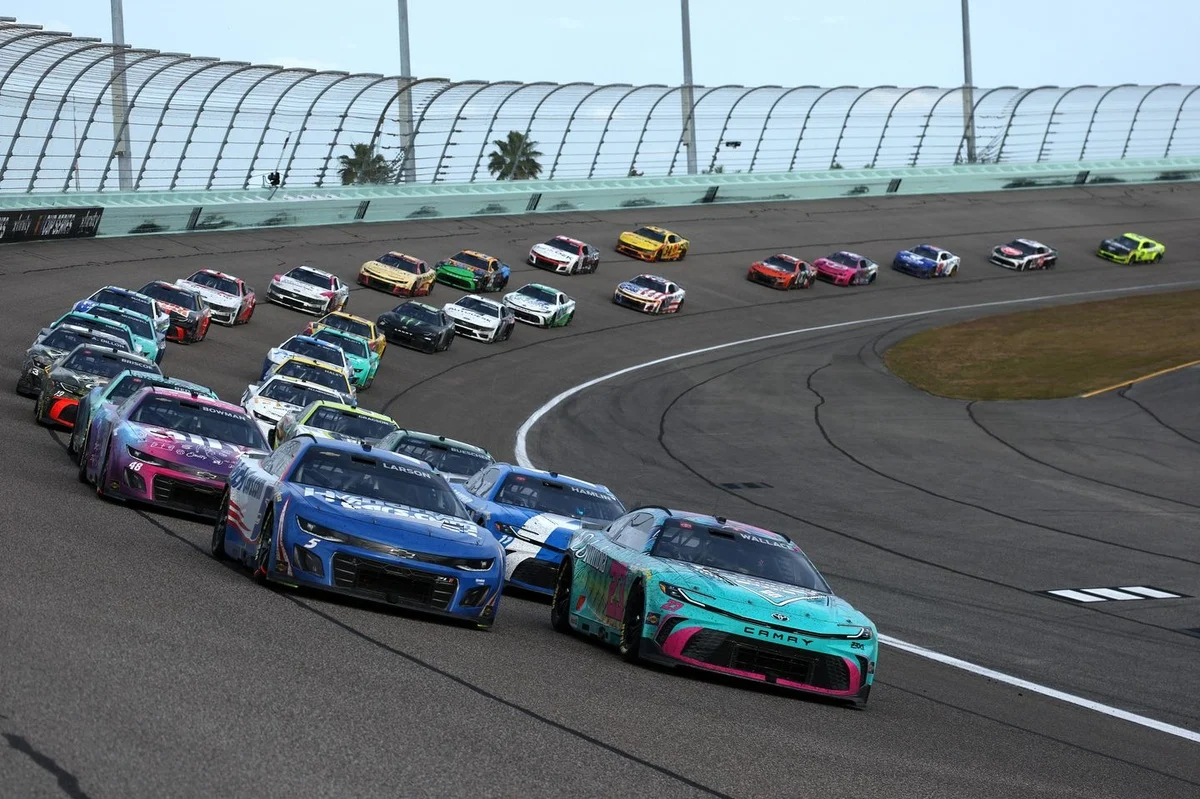
The 2026 NASCAR Cup Series season is barreling toward a dramatic conclusion at Homestead-Miami Speedway, and the entry list for the championship-deciding weekend boasts a hard-fought milestone that has been exceedingly rare throughout the calendar year. For only the fifth time in 2026, the premier stock car racing division will feature a full, 40-car grid, maximizing the capacity of the track and setting the stage for a fiercely contested finale.
The grid will be comprised of the standard 36 chartered, full-time entries alongside a robust cohort of four open, non-chartered entries. While the championship contenders will command much of the broadcast attention as they battle for the ultimate season-long prize, the undercard of open entries features historic career milestones, returning fan-favorites, and rising superstars looking to play the role of giant-killers on championship weekend.
Chief among the storylines for the open entries are monumental appearance milestones for two seasoned veterans of the sport. J.J. Yeley is set to make his milestone 400th career NASCAR Cup Series start, piloting the No. 44 NY Racing Team Chevrolet. Meanwhile, veteran racer Casey Mears will finally cross a long-awaited threshold, making his 500th career Cup Series start behind the wheel of the No. 62 Beard Motorsports Chevrolet.
They will be joined on the grid by Chad Finchum, who returns to action in the No. 66 "Garage 66" Ford, and young phenom Corey Heim, who steps back into the spotlight to pilot the No. 67 entry for 23XI Racing. Heim enters the weekend looking to cap off a remarkable part-time campaign with his third victory of the 2026 season, having already captured stunning, headline-making wins earlier this year in San Diego and Indianapolis.
Beyond the premier Cup Series, the supporting national touring divisions are also gearing up for substantial participation. The NASCAR O’Reilly Series features a strong 38-car entry list, while the NASCAR Truck Series boasts 35 trucks ready to tackle the speedway as the sanctioning body wraps up another grueling, action-packed championship weekend.
Chronology: The Road to the 40-Car Maximum Grid
To understand the significance of a full 40-car field at the 2026 finale, it is necessary to examine how the grid composition has evolved over the course of the grueling 36-race season. The introduction of the charter system years ago guaranteed 36 spots on the grid for chartered teams, but the health and financial viability of running open entries have fluctuated significantly throughout the modern era of the sport.
Early Season Struggles and the Open Entry Drought
At the dawn of the 2026 season at Daytona International Speedway, the allure of the "Great American Race" naturally drew a massive influx of open entries, easily filling the 40-car field and forcing several notable teams to go home after the Blue-Green Vacations Duels. However, once the regular season settled into its weekly rhythm on intermediate tracks and short tracks, the economic realities of modern NASCAR engineering began to take a toll.
Throughout the spring and summer months of 2026, the Cup Series grid routinely hovered between 36 and 38 cars. Independent and open teams faced steep competition against heavily funded powerhouse organizations, leading to a noticeable dip in part-time entries. For weeks at a time, the 36 chartered cars made up the entirety of the field, rendering the concept of "missing the show" all but obsolete for fully-funded operations, while starving independent outfits of the race data and prize money needed to grow.
The Turning Point: Summer Surprises and Part-Time Successes
The tide began to turn during the chaotic summer stretch. Breakthrough performances by part-time and open entries injected a fresh sense of unpredictability into the field. Most notably, Corey Heim’s breathtaking victories in San Diego and Indianapolis proved that elite open entries could not only qualify for races on speed alone but could legitimately outrun powerhouse championship contenders on any given Sunday.
Heim’s triumphs served as a clarion call for manufacturers, sponsors, and tier-two teams looking to showcase their capabilities on the grandest stage. As the playoffs commenced in the fall, teams began locking in plans for end-of-year showcases. Organizations like Beard Motorsports, NY Racing Team, and 23XI Racing began finalizing their technical alliances and sponsorship packages for the championship stretch, ultimately culminating in the rush of open entries that secured the fifth full 40-car grid of the 2026 campaign at Homestead-Miami.
Supporting Data: By the Numbers
To fully appreciate the scope of the 2026 NASCAR Cup Series finale and the entries that make up the historic 40-car field, a deeper dive into the statistical data reveals fascinating trends regarding team participation, veteran longevity, and modern chassis development.
Grid Composition Breakdown
- Total Grid Capacity: 40 Cars
- Chartered Entries: 36 (90% of the field)
- Open Entries: 10% of the field (4 cars)
- Frequency of Full Fields in 2026: 5th occurrence out of 36 races (approx. 13.8% of the season)
Milestone Tracker: Longevity in the Cup Series
The milestone achievements of J.J. Yeley and Casey Mears highlight the immense dedication required to sustain a career in NASCAR’s top flight over multiple decades.
-
J.J. Yeley (No. 44 NY Racing Team Chevrolet):
- Milestone: 400th Career Cup Series Start
- Career Arc: Spanning over two decades, Yeley has transitioned from a USAC open-wheel legend into one of the sport’s most reliable and resilient journeymen drivers, wheeling equipment for dozens of different organizations across eras.
-
Casey Mears (No. 62 Beard Motorsports Chevrolet):
- Milestone: 500th Career Cup Series Start
- Career Arc: A former Cup Series race winner (Fontana, 2007), Mears has spent the latter portion of his career selectively picking high-leverage races, primarily focusing on superspeedways and select intermediate tracks with part-time outfits like Beard Motorsports.
Rising Star Impact: Corey Heim’s 2026 Campaign
- No. 67 23XI Racing Entry:
- Wins in 2026: 2 (San Diego, Indianapolis)
- Significance: Represents the continued dominance and expanding footprint of 23XI Racing, showcasing how elite part-time entries can disrupt the status quo and challenge full-time championship contenders.
Supporting Series Metrics
- NASCAR O’Reilly Series: 38 entries confirmed for their season-ending showdown.
- NASCAR Truck Series: 35 entries locked in for a high-stakes championship battle.
Official Responses and Industry Reactions
The confirmation of a full 40-car field for the season finale has elicited glowing praise from series executives, team principals, and the drivers themselves, who view the robust entry list as a testament to the health and competitive allure of NASCAR’s premier division.
NASCAR Leadership Weighs In
Speaking on the health of the garage area heading into the championship weekend, NASCAR Vice President of Competition expressed satisfaction with the diversity of the field.
"To hit our maximum grid size for the fifth time this season at a championship venue like Homestead-Miami is a tremendous indicator of the strength of our sport," said a league spokesperson. "When you look at the blend we have this weekend—storied veterans hitting monumental start milestones like J.J. Yeley and Casey Mears, combined with rising superstars like Corey Heim and elite chartered organizations—it encapsulates everything that makes NASCAR compelling. Fans are guaranteed a full house of incredible racing talent."
Team Perspectives: Milestone Moments
For independent and part-time teams, getting onto the grid at Homestead-Miami is the culmination of months of logistical planning, mechanical preparation, and partnership building.
John Beard, speaking on behalf of Beard Motorsports, emphasized what reaching the 500-start plateau means for Casey Mears and the organization:
"Casey has been an integral part of our family here at Beard Motorsports for a long time. Getting him to his 500th career start is a massive achievement that speaks volumes about his character, his race craft, and his enduring speed. To do it in a full 40-car field at a historic track like Homestead makes it all the more special."
Similarly, representatives for NY Racing Team underscored the pride of helping J.J. Yeley reach his 400th start in the No. 44 Chevrolet. NY Racing has consistently punched above its weight class by deploying veteran drivers in high-stress environments, and Yeley’s wealth of experience is viewed as an invaluable asset for the team’s engineering feedback loop.
23XI Racing and the Next Generation
Corey Heim, who has captured the imagination of the NASCAR fan base with his stunning victories this year, shared his excitement about stepping back into the No. 67 23XI Racing machine for the finale.
"Every time I get behind the wheel of a Cup car for 23XI, I know I have equipment capable of winning," Heim said in a recent media availability. "Winning in San Diego and Indianapolis were career highlights, but you never want to rest on past success. We are coming to Homestead to add a third trophy to the shelf, and doing it against a full 40-car field just makes the challenge—and the reward—that much sweeter."
Implications of a Full Field for the Future of NASCAR
While the immediate excitement of the Homestead-Miami weekend centers on the championship battles across all three national touring series, the broader implications of achieving a full 40-car grid reverberate across the entire ecosystem of professional stock car racing.
Economic Health of Part-Time and Open Teams
The scarcity of full 40-car fields earlier in the 2026 season sparked ongoing industry discussions regarding the financial barriers to entry for open teams. The cost of manufacturing Next Gen chassis, securing competitive engine leases, and assembling traveling pit crews has strained independent operations.
However, the late-season surge proving that open entries can not only survive but win—evidenced by Heim’s triumphs—demonstrates that the return on investment for sponsors participating in select races remains remarkably high. When an open car captures headlines or runs inside the top ten, it validates the business model for boutique teams and encourages new corporate partners to invest in part-time entries moving forward.
Technical Data Gathering and Track Prep
For the chartered teams, a full 40-car field provides a more realistic and crowded racing environment during practice and qualifying sessions. Drafting dynamics, dirty air management, and tire degradation profiles change significantly when the track is packed from wall to wall. Crew chiefs and race strategists rely heavily on traffic density data to set up their cars for the long, tire-wearing green-flag runs that Homestead-Miami is famous for.
With all 40 stalls on pit road occupied, pit crew execution will also be under a microscope. Navigating tight pit boxes with cars pitted directly in front and behind adds an extra layer of high-stakes drama to an already intense championship atmosphere.
Looking Ahead to the Next Era
As NASCAR prepares to close out the 2026 season, the sight of a completely full grid serves as a powerful springboard into the off-season. It signals to manufacturers, team owners, and prospective investors that the appetite for top-tier stock car competition is as robust as ever.
Whether the championship hardware goes to a powerhouse playoff contender or an underdog veteran like Yeley or Mears manages to steal the spotlight, the 2026 season finale at Homestead-Miami is guaranteed to deliver a historic spectacle worthy of the maximum grid size.

 Siti Muinah
 Reynand Wu
 Suro Senen
 Raul Delapena Setiawan
 Neng Nana
 Lina Hope