
 Siti Muinah
By Motorsport.com Staff
Updated: October 2024
Introduction: The Smoking Gun of SMT Data
In the high-stakes, high-velocity world of the NASCAR Cup Series, driver denials have long been a staple of post-race media availability. When put in a position where admitting fault carries heavy financial and competitive penalties, drivers frequently lean toward plausible deniability. However, modern motorsports no longer rely solely on the spoken word. In an era defined by telemetry, high-definition onboard cameras, and advanced analytics, the truth rarely hides for long.
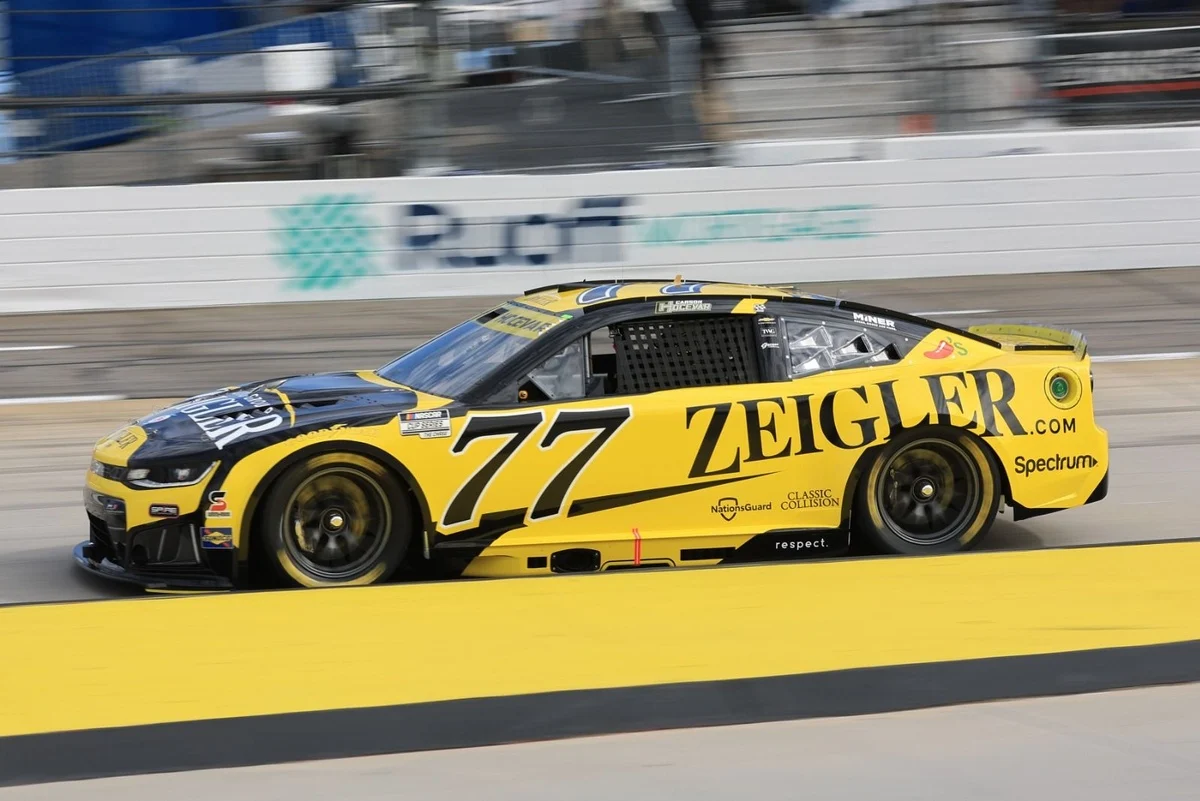
Following a turbulent weekend of short-track racing at Martinsville Speedway, the spotlight has fallen squarely on sophomore Cup Series driver Carson Hocevar. While Hocevar has publicly downplayed the severity of his late-race clash with Team Penske driver Austin Cindric—cheekily claiming to reporters that "we were just having fun"—the telemetry tells an entirely different story.
On this week’s episode of Inside the Race, veteran crew chief Steve Letarte and former Cup Series driver Jamie McMurray tore into the SMT (Systems Made Transparent) data to break down the incident. What the data reveals is not a racing accident, nor a miscalculation in heavy traffic, but a deliberate, calculated brake-check that catastrophically ended Cindric’s afternoon. As the racing community demands accountability, the conversation has shifted from whether Hocevar caused the crash to how NASCAR will handle a growing pattern of aggressive and controversial behavior.
Main Facts: Anatomy of a Contrived Crash
To understand the gravity of the Martinsville incident, one must look at the specific physics of what transpired between Hocevar’s No. 77 Spire Motorsports Chevrolet and Cindric’s No. 2 Team Penske Ford.
Martinsville Speedway, affectionately known as "The Paperclip," is a notorious half-mile oval where braking zones dictate success, and tempers routinely boil over. Because the turns are tight and passing is notoriously difficult, drivers must manage their momentum meticulously. Brake-checking a competitor in this environment is the equivalent of pulling the rug out from under them at full sprint.
Key Elements of the Incident:
- The Culprit: Carson Hocevar, driving the No. 77 Spire Motorsports entry.
- The Victim: Austin Cindric, driving the No. 2 Team Penske Ford, whose race was effectively ended by structural damage.
- The Evidence: SMT data logs showing more than 1,000 pounds of abrupt brake pressure applied at an unnatural point on the track layout.
- The Public Reaction: Widespread condemnation from racing legends and peers alike, who argue that Hocevar’s driving standards cross the line from hard racing to dangerous retaliation.
While drivers are expected to protect themselves and their teams from disciplinary action by denying intent, the raw telemetry provided by NASCAR’s data systems strips away room for interpretation. The numbers do not lie, and they point directly to a premeditated maneuver.
Chronology: How the Martinsville Clash Unfolded
To fully grasp how the situation escalated from standard short-track bumping to a race-ending disaster, it is necessary to trace the sequence of events during the Martinsville weekend.
1. The Build-Up on Track
Throughout the race, tensions had been simmering throughout the field. Martinsville is a pressure cooker where grievances compound lap after lap. Hocevar and Cindric found themselves racing in close proximity during a crucial stage of the event. Rubbing is racing on short tracks, but the physical contact soon graduated from standard door-slamming to targeted aggression.

2. The Initial Contact
The initial skirmish between Hocevar and Cindric left the No. 2 Ford with minor cosmetic and mechanical bruises. While the contact was forceful, Cindric’s car was still structurally viable. Under normal circumstances, Cindric would have been able to continue fighting for position, nursing his wounded machine to the finish line.
3. The Decisive Brake-Check
Realizing that Cindric was still able to press forward, the situation took a dark turn. According to the SMT data analyzed on Inside the Race, Hocevar evaluated the situation—likely checking his mirrors or spotting Cindric in his window net—and decided to finish the job.
As the rest of the field accelerated away from the corner, everyone jumped back on the throttle. Hocevar, however, did the exact opposite. He slammed on the brakes in a part of the track where deceleration made zero competitive sense, turning his car into a stationary brick wall for the unsuspecting Cindric. The resulting impact destroyed the front end of the No. 2 Ford, bringing an immediate and definitive halt to Cindric’s day.
4. Post-Race Spin and Denials
Immediately following the checkered flag, media outlets swarmed the drivers involved. When questioned about the clash, Hocevar offered a dismissive defense, stating, "We were just having fun." This remark only served to infuriate his competitors further, setting off a firestorm of criticism across the paddock and social media.
Supporting Data: What the SMT Telemetry Tells Us
The crown jewel of NASCAR’s officiating toolkit is SMT data—a comprehensive telemetry suite that records throttle input, brake pressure, steering angle, vehicle speed, and G-forces in real-time. For analysts like Steve Letarte and Jamie McMurray, this data functions like a black box on a commercial airliner.
During their deep dive on Inside the Race, Letarte brought the data to life for viewers at home.
"You’re going to see him come to the bottom and you’re going to see the stomp on the brakes," Letarte explained, gesturing to the telemetry line graphs on screen. "That is 1,000 pounds of brake pressure on the 77 car [Hocevar]. He gets off the brakes and then back on the brakes to make the corner."
This initial brake application caused the first layer of damage. But it was the exit phase of the corner that damned Hocevar completely.
"Carson Hocevar looks out the window and he says, ‘Yeah, he’s gonna be able to continue,’ so I’m going to go now and everybody’s in the gas except for me," Letarte continued, offering a relatable analogy. "That is as simple as driving down I-77 [highway] and stomping on the brakes."
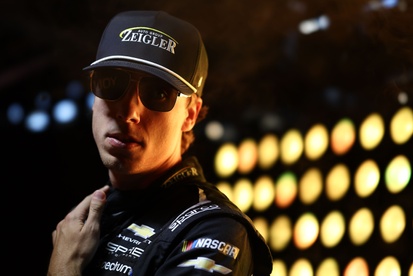
The data charts highlighted a staggering 1,023 pounds of brake pressure applied at a moment when full acceleration was standard procedure. Letarte concluded emphatically: "The evidence is 100% clear."
Jamie McMurray corroborated his co-analyst’s assessment, focusing on the mechanics of the trap Hocevar set.
"The max pressure on exit is the same as what you saw on entry, so that’s all that Carson can give it," McMurray noted. "As soon as he starts to pick the throttle up, he lets off, slams on the brakes. If you’re in the 2’s [Cindric] position, it happened so quick you almost can’t defend against it."
McMurray acknowledged the reality of why drivers lie to the media, noting that admitting guilt invites immediate repercussions from NASCAR or rival drivers. However, he stressed that the data leaves no room for debate. "There’s no denying it because of the data we have on the car," McMurray stated.
Official Responses and Peer Backlash
The racing community has not remained silent in the wake of the Martinsville incident. Veteran voices and former champions have lined up to condemn Hocevar’s tactics, arguing that his driving style is detrimental to the sport’s integrity.
Earlier in the week, NASCAR legends Jeff Burton and Dale Jarrett did not mince words when discussing Hocevar on air, blasting the young driver with the blunt assessment: "That’s not racing."
For decades, the unwritten rules of stock car racing have dictated a code of conduct. While retaliation and aggressive blocking are historical facets of NASCAR culture, intentionally deploying a brake-check to destroy a competitor’s equipment is widely viewed as crossing a dangerous line. When drivers of Burton and Jarrett’s stature—men known for hard, fair racing throughout their storied careers—step forward to condemn an action, the gravity of the offense is magnified.
Despite mounting pressure, Hocevar has pushed back against allegations that he spins out or crashes rivals on purpose, maintaining his innocence even as critics point to his growing archive of controversial on-track maneuvers.
Implications: A Pattern of Behavior and NASCAR’s Dilemma
The core issue facing NASCAR officials isn’t just a single isolated incident at Martinsville; it is a developing trend.
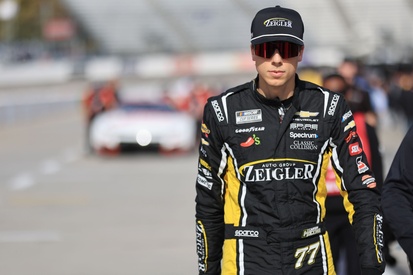
Carson Hocevar is undeniably one of the brightest young talents in American motorsports. His raw speed, car control, and racecraft have earned him a coveted seat in the Cup Series at a remarkably young age. However, his rise through the ranks has been shadowed by a series of controversies, questionable cautions, aggressive blocks, and even a physical fistfight in the garage area.
Already this season, Hocevar’s name has been synonymous with controversy, earning him a trip to the dreaded NASCAR hauler for a stern conversation with race officials. Yet, talks and warnings appear to have done little to curb his aggressive tendencies on the track.
This puts NASCAR leadership in a difficult position. Historically, sanctioning bodies prefer to let drivers police themselves on the track. However, when telemetry data provides undeniable proof of intentional wrecking—a safety hazard that risks driver injury and undermines competitive fairness—regulatory intervention becomes necessary.
Even though drivers rarely confess to intentional wrecks out of fear of punishment, NASCAR has repeatedly proven that it does not need a confession to hand down penalties. The governing body has access to the exact same SMT telemetry analyzed by Letarte and McMurray.
If NASCAR chooses to ignore the damning data from Martinsville, it risks signaling to the rest of the garage that high-pressure brake-checking is an acceptable tactic. Conversely, dropping the hammer on Hocevar could serve as a watershed moment for the season, establishing a definitive boundary on what constitutes acceptable racing conduct in the modern Cup Series.
As the series prepares for the next round of the schedule, all eyes will be on the NASCAR hauler. Will officials look past the public denials and let the 1,023 pounds of brake pressure speak for themselves? Or will Carson Hocevar walk away with a severe penalty that alters the trajectory of his sophomore campaign? One thing is certain: in the modern era of NASCAR, you can try to spin the narrative, but you can never outrun the data.

 Reynand Wu
 Nana
 Basiran
 Laily UPN
 Iffa Jayyana
 Nana Wu