Muslim
Updated October 23, 2026
Spend enough time carving turns through the heavy, moisture-laden powder of the Pacific Northwest (PNW), and you will quickly realize you are rarely alone. Even when the chairlifts empty and the trails clear, a silent, furry spectator seems to watch from the tree line. The mythical Sasquatch has woven itself so deeply into the fabric of PNW ski country that it appears everywhere—stamped onto trail maps, immortalized in resort titles, painted across mountain restaurants, and sculpted out of recycled steel overlooking sweeping alpine bowls.
In a region defined by towering old-growth evergreens, jagged mountain ranges, and relentless winter storms, Bigfoot has evolved from a campfire cryptozoological curiosity into the unofficial mascot of alpine recreation. But how did this legendary creature make the definitive leap from dense backcountry folklore into mainstream ski culture? The answer lies at the intersection of rugged geography, indigenous history, modern resort marketing, and the enduring human appetite for wilderness mystery.
1. Main Facts: The Cryptidification of PNW Ski Country
The presence of Bigfoot in Pacific Northwest ski culture is neither subtle nor confined to a single resort. Across Washington, Oregon, and British Columbia, the legend permeates the winter tourism ecosystem, serving as a playful bridge between the civilized comforts of ski resorts and the untamed wilderness that surrounds them.
Consider Washington’s Mission Ridge, where an 11-foot sculpture near the top of Chair 2 undergoes a seasonal metamorphosis. Constructed from recycled steel and chain, the towering figure adapts to its environment. During the peak of winter, it catches rime ice and heavy snowfall, transforming visually into a Himalayan Yeti. Come summer, the melting snow reveals the rusted metal links underneath, turning the installation back into a classic Bigfoot striding across the ridgeline.
"In winter he’s coated in rime and snow and becomes a Yeti," explains Matt Kung, Mission Ridge’s marketing and data systems manager. "Come summer, the rusted chain shows through, and he’s a Bigfoot walking over the ridgeline."
Further south in Oregon, Mt. Hood—widely celebrated for its premier snowpack and year-round skiing opportunities—serves as a literal hotspot for cryptid lore. According to regional tourism data, Mt. Hood Territory reportedly boasts more documented Bigfoot sightings than anywhere else in the state. Skiers navigating the upper elevations and steep glacial terrain are effectively shredding through the country’s most active Sasquatch territory.
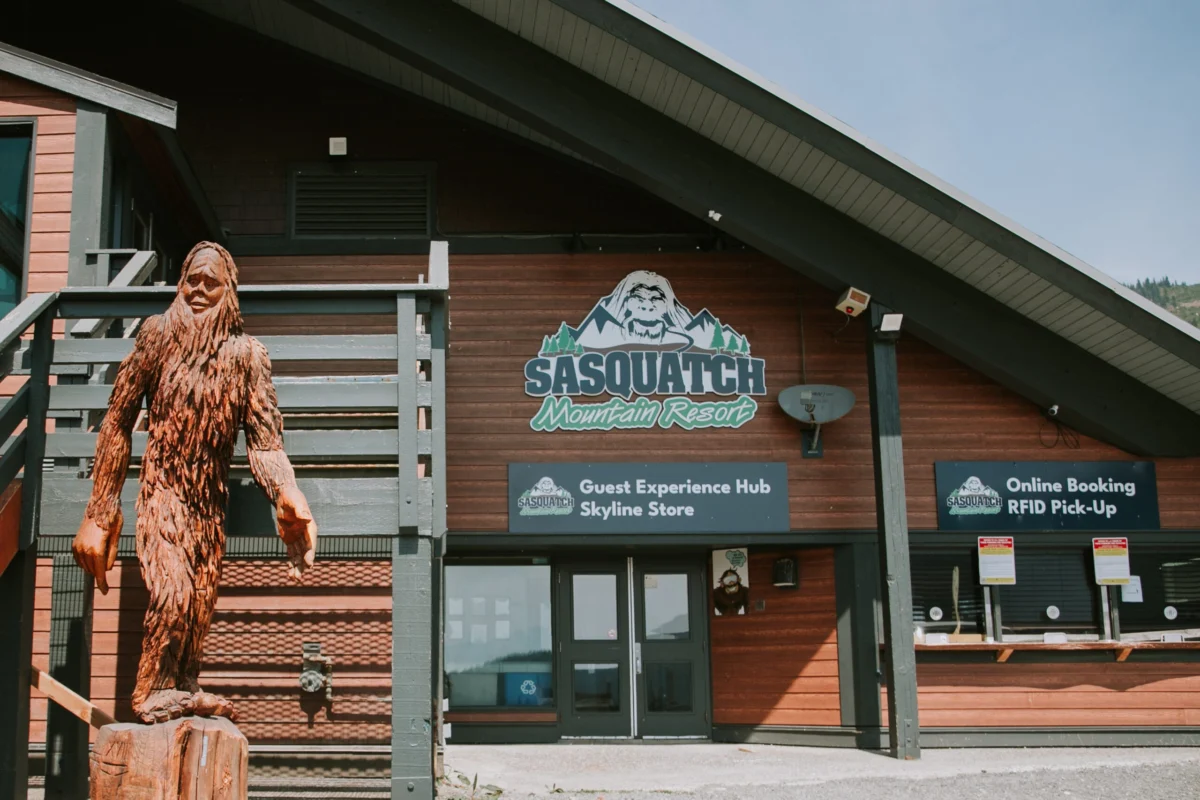
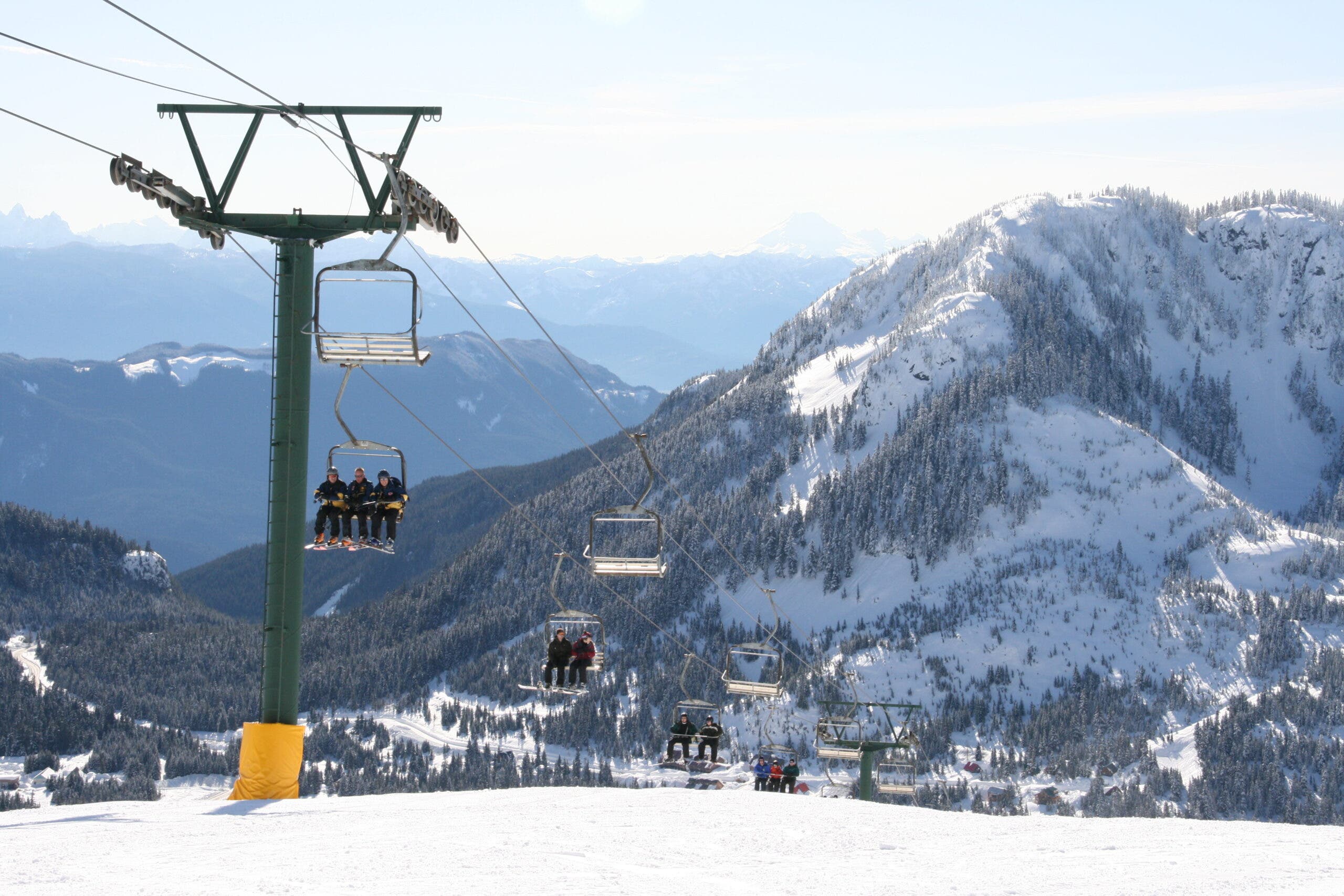
In British Columbia, the branding reaches its zenith at Sasquatch Mountain Resort (formerly known as Hemlock Valley Resort). Following a strategic rebranding by new ownership, the resort fully embraced its local folklore, complete with the Sasquatch Triple Chair, a designated Bigfoot run, and a beginner magic carpet playfully named "Littlefoot."
Even along the transit routes to the slopes, the culture persists. Drivers traveling up to Stevens Pass in Washington frequently pull over at the Espresso Chalet, a roadside coffee stand featuring a giant Sasquatch statue, themed merchandise, and overt nods to Hollywood’s 1987 classic Harry and the Hendersons. Up north, Big White Ski Resort in BC channels the theme into its culinary scene with Sasquatch Sushi, proving that the legend is as versatile in commerce as it is in folklore.
2. Chronology: From Indigenous Oral Tradition to Modern Resort Rebranding
To understand how Bigfoot arrived on the ski slopes, one must look backward through layers of history, moving from ancient oral traditions to modern corporate rebranding strategies.
- Pre-Colonial Era: Long before ski lifts or European settlers arrived in the Pacific Northwest, Sasquatch stories were foundational to the oral histories of Indigenous nations. In British Columbia, the very word Sasquatch is an anglicized adaptation of Sásq’ets, a term in the Halq’eméylem language belonging to the Sts’ailes people, translating roughly to "hairy man."
- Mid-20th Century: The modern global obsession with Bigfoot began to take shape following major media coverage of footprint discoveries in the mid-20th century—most notably the 1967 Patterson-Gimlin film shot in Bluff Creek, California. This era cemented the visual archetype of the bipedal ape-man in the American consciousness.
- Late 20th Century: Pop culture cemented the creature’s endearing status. Movies like Abominable and the Snowman and Harry and the Hendersons (1987) shifted public perception of Sasquatch from a terrifying monster to a misunderstood, gentle giant of the deep woods—a transition that made the creature far more marketable for family-friendly ski resorts.
- The 21st Century Rebrand: Recognizing that generic alpine branding (such as "Alpine Meadows" or "Pine Valley") lacked local flavor, regional ski areas began leaning aggressively into local folklore. Hemlock Valley Resort underwent a major cultural and operational pivot, officially renaming itself Sasquatch Mountain Resort to honor the geographical and mythos-driven identity of the Harrison and Fraser Valley regions.
3. Supporting Data: The Statistics and Geography of Sightings
While skeptics demand physical evidence, the cultural data supporting Bigfoot’s dominance in the Pacific Northwest is robust. Organizations like the North American Bigfoot Center in Oregon track historical encounters, geographic concentrations, and ecological patterns that explain why the region is such fertile ground for the myth.
- Geographic Correlation: According to data compiled by tracking organizations, the highest density of reported Bigfoot encounters correlates almost perfectly with temperate rainforests, dense coniferous canopies, and mountainous elevations—precisely the ecosystems where major ski resorts operate.
- Recreation Overlap: The vast majority of reported sightings do not come from deep-woods hermits, but rather from outdoor recreationists: hikers, campers, hunters, anglers, and, increasingly, backcountry and resort skiers.
- Economic and Tourism Impact: Regional municipalities have successfully monetized the legend. Harrison Hot Springs, located near Sasquatch Mountain Resort, operates a dedicated Sasquatch Museum, driving off-season and winter tourism by capitalizing entirely on the cryptid economy.
4. Official Responses and Cultural Perspectives: Balancing Folklore with Heritage
As commercial entities increasingly adopt Indigenous and folkloric symbols, questions of cultural sensitivity and authenticity have taken center stage. Resort operators are acutely aware that the cartoonish statues on their slopes represent something much deeper and more sacred to the original stewards of the land.
Nikita Romane, inside operations manager at Sasquatch Mountain Resort, emphasizes that the resort’s fun branding exists alongside a profound respect for regional history.
"While the resort embraces the Sasquatch legend as part of its identity, it is important to recognize that stories of Sasquatch-like beings have deep roots in the Indigenous cultures of the Pacific Northwest," Romane states. She points out that the resort operates directly on the unceded traditional territory of the Sts’ailes people, noting that management actively strives to respect those cultural origins while celebrating the shared regional legend.
From a sociological perspective, experts view the mascot’s popularity as an expression of a deeper psychological need. Cliff Barackman, curator of the North American Bigfoot Center, points out that the creature fills a specific cultural niche.
"Bigfoot has become such a recognizable symbol of the Pacific Northwest that it almost functions as a regional mascot," Barackman explains. He describes the cryptid not merely as a monster, but as a living emblem of ultimate wilderness, untamed mystery, and the comforting reassurance that vast pockets of the Earth remain beyond human mapping and control.
"He’s never been pinned down; he goes wherever he wants, and he belongs completely to the wild places most people only visit," adds Matt Kung of Mission Ridge.
5. Implications: What Bigfoot Means for the Future of PNW Skiing
The embedding of Bigfoot into Pacific Northwest ski culture has profound implications for how resorts market themselves in an increasingly homogenized corporate ski landscape.
As major conglomerates acquire independent ski areas across North America, many mountains risk losing their distinct local flavor, replacing regional character with standardized trail signage, identical base lodges, and cookie-cutter amenities. By leaning into Bigfoot folklore, PNW ski resorts have successfully anchored their identities in something utterly unique to their geography. You cannot copy-paste a Sasquatch culture onto a resort in Vermont or Colorado with the same authenticity; it belongs intrinsically to the Douglas firs, the relentless marine snowpacks, and the damp, misty valleys of Cascadia.
For the everyday skier, the presence of Bigfoot offers a subtle psychological enhancement to the winter sport experience. Modern skiing can sometimes feel overly institutionalized, managed, and predictable—bounded by rope lines, ski patrollers, and digital lift tickets. Discovering an 11-foot steel sculpture near a windy ridge, navigating a run named "Sasquatch," or spotting a whimsical wooden carving tucked into the trees reintroduces a sense of childlike wonder and untamed exploration.
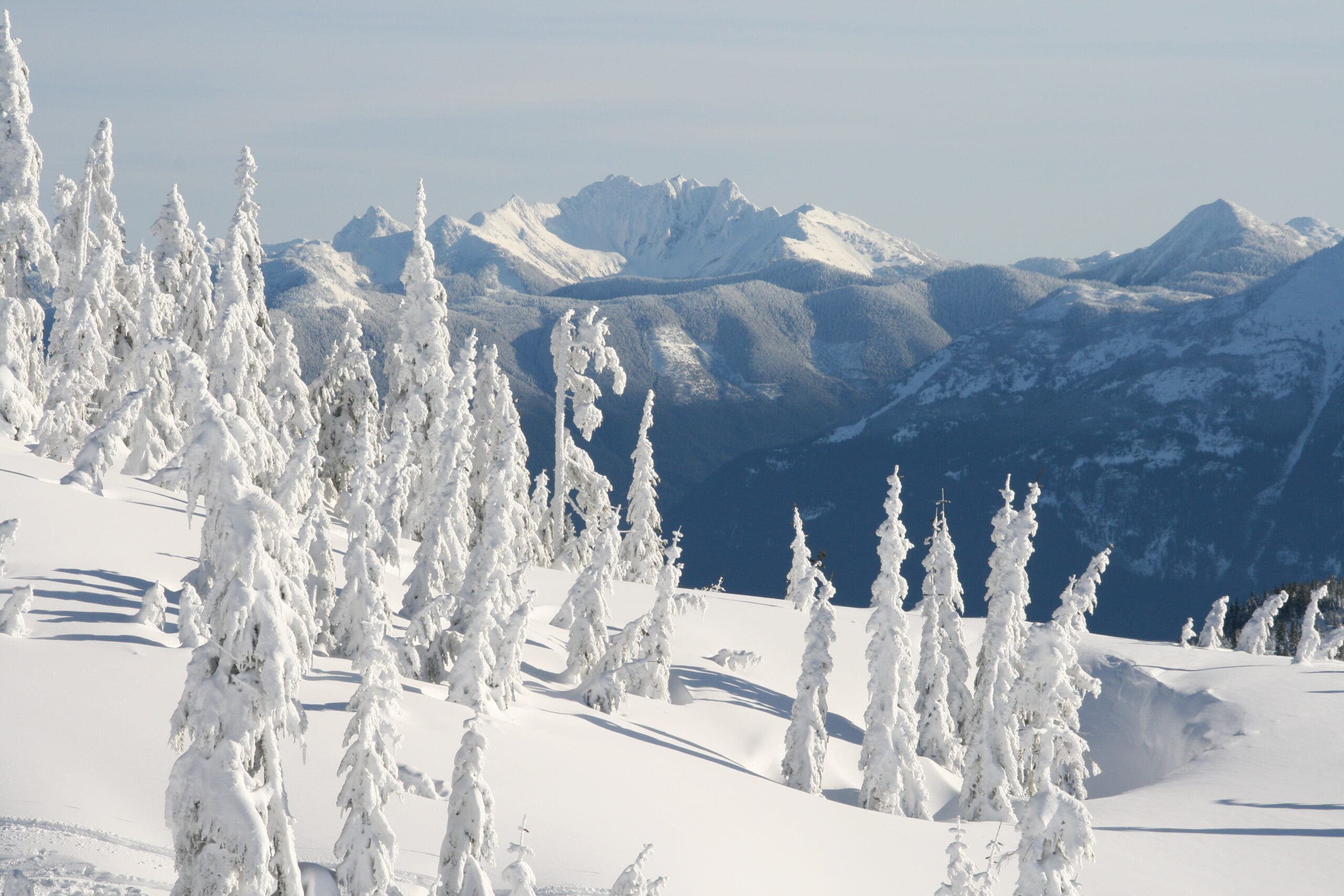
Ultimately, whether Bigfoot is a biological reality hiding in the deep backcountry or simply a brilliant psychological construct of regional folklore matters little to the skier carving through knee-deep powder. In the Pacific Northwest, skiers come for the legendary snow, but they stay—and look a little closer at the tree line—for the mystery.

 Ammar Sabilarrohman

 Reynand Wu

 Iffa Jayyana

 Azzam Bilal Chamdy

 Asro