
 Ammar Sabilarrohman
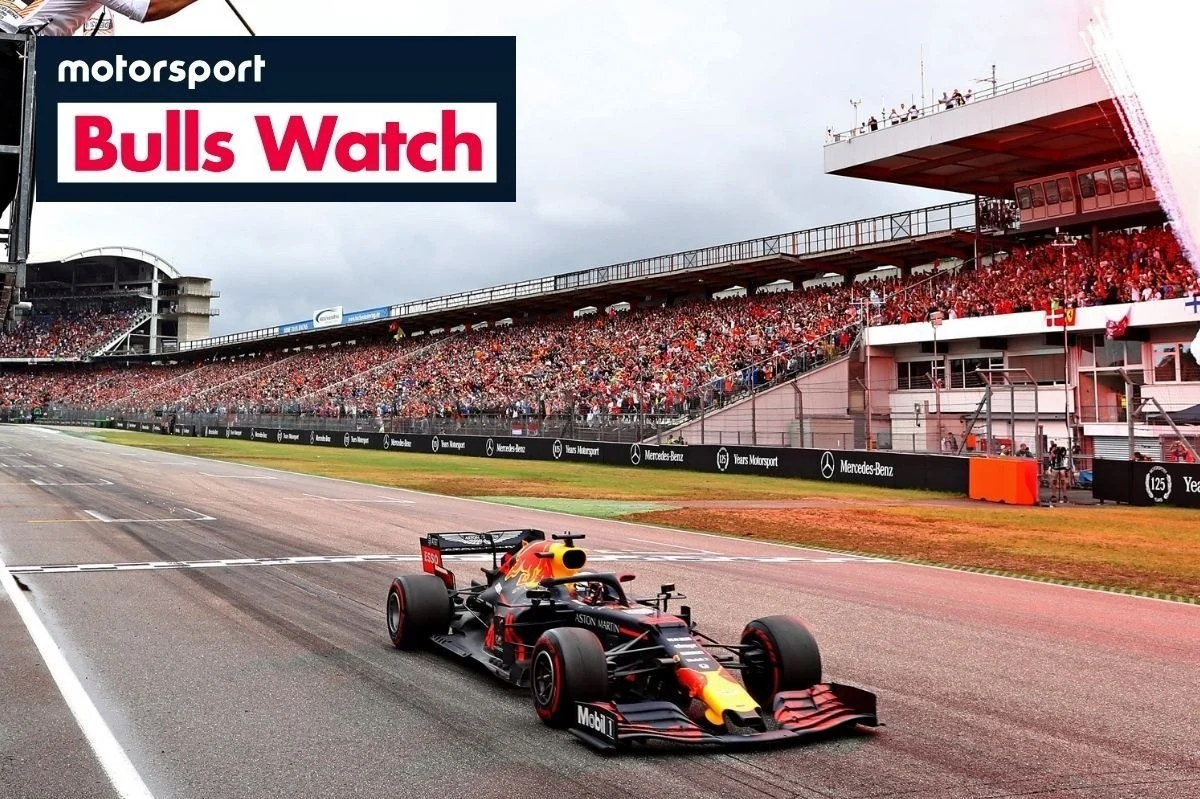
MILTON KEYNES — As the 2026 Formula 1 World Championship begins to take shape under the sport’s radical new technical regulations, warning signs are already flashing inside the Red Bull Racing garage. According to prominent broadcaster and former racing driver Naomi Schiff, the Milton Keynes-based outfit is once again battling a notoriously fickle machine. Schiff has cautioned that Red Bull’s increasingly narrow operational window is actively compromising both Max Verstappen and teammate Isack Hadjar as they navigate the rigorous demands of the 2026 campaign.
The underlying fragility of the team’s package was thrown into sharp relief during a chaotic United States Grand Prix weekend, where early race dramas derailed both drivers’ afternoon before the red lights had even faded into the distance.
Main Facts: A Weekend of Missed Opportunities and Mechanical Woes
The structural vulnerabilities of Red Bull’s 2026 challenger were brutally exposed during the race start at the Circuit of the Americas.
- The Incidents: Isack Hadjar suffered a severe launch issue off the grid, a problem so debilitating it prompted the young French-Algerian driver to publicly demand a complete clutch redesign from the team. Meanwhile, reigning powerhouse Max Verstappen faced a critical lack of electrical energy deployment exiting Turn 1.
- The Consequences: Verstappen’s power delivery deficit instantly dropped him out of lead contention, forcing the Dutchman into a grueling, race-long defensive and offensive battle against the resurgent Ferrari squad.
- The Expert Verdict: Speaking on the Up To Speed podcast, Naomi Schiff argued that these high-profile start issues are merely symptoms of a deeper, systemic malady plaguing the Red Bull camp: a razor-thin working window that leaves zero margin for error.
"It was such a shame that they both didn’t get off the line there because it was a battle we were looking forward to between Max and Kimi [Antonelli], but then also Isack being in there could have really caused a little bit of an upset and potentially, who knows, clinched his first victory in Formula 1," Schiff remarked, highlighting the magnitude of what was lost.
Chronology: How the United States Grand Prix Unraveled for Red Bull
To understand the scale of Red Bull’s current predicament, one must look at how the weekend’s events unfolded chronologically, compounding errors from practice straight through to the checkered flag.
Free Practice and Qualifying: Fighting the Balance
Throughout Friday and Saturday sessions, telemetry and onboard footage indicated that neither Verstappen nor Hadjar was entirely comfortable with the handling characteristics of their cars. While raw pace was occasionally unlocked through heroic driving inputs from Verstappen, the car looked visibly twitchy over the bumps of Austin. The engineering team was forced into aggressive overnight set-up changes, chasing a balance that seemed to shift with every minor fluctuation in track temperature and wind direction.
The Race Start: Immediate Disaster
When the lights went out on Sunday, the foundational cracks in Red Bull’s weekend erupted. Hadjar’s car experienced a catastrophic lack of bite at the clutch release, leaving him stranded as the midfield swarmed around him. Simultaneously, Verstappen dumped the clutch and mashed the throttle, only to experience an agonizing energy deployment delay exiting Turn 1. Deprived of the hybrid boost vital for modern F1 acceleration, the Red Bull was swallowed up by the chasing pack.
The Mid-Race Recovery and Strategy Missteps
Relegated to the midfield fray, Red Bull’s afternoon transitioned into pure damage limitation. Compounding their mechanical woes, the tactical side of the garage struggled to find a clean path through traffic. Verstappen was audibly frustrated over team radio, launching a passionate critique after being pitted directly back out into "dirty air." The reigning champion made it clear that the team’s pre-race strategy calls had misfired, locking them into a suboptimal path that wasted precious tires and compromised their overall race pace.
Supporting Data: The Perils of a "Knife’s Edge" Philosophy
Schiff’s observations point to a historical design philosophy at Red Bull that has persisted for several seasons, but which may be uniquely hazardous under the 2026 regulations.
"That Red Bull this whole weekend, it just feels like there’s, besides the clutch, there’s a lot that needs to be looked at," Schiff explained. "It feels like there’s really not a very big operational window that works with that car, and that it’s really on a knife’s edge, as it has been for a number of years now."
The 2026 Technical Landscape
The 2026 regulations have introduced entirely new power units—featuring a near 50/50 split between internal combustion engines and electrical power—alongside active aerodynamic elements and smaller, lighter chassis dimensions. In this new era, energy management and seamless power deployment are absolute dictating factors for success.
When a car possesses a narrow set-up window:
- Targeting the Sweet Spot Becomes a Gamble: Engineers must hit an infinitesimally small window regarding ride heights, mechanical stiffness, and aerodynamic rake. Miss it by a millimeter, and the car transforms from a race-winner to an unpredictable handful.
- Driver Confidence Erodes: As Schiff noted, "That car just doesn’t seem to be very easy to drive for either of those drivers at the moment." When a driver cannot trust how the rear axle will react mid-corner or whether the deployment will hit precisely on throttle application, lap times suffer and mistakes multiply.
- Strategic Inflexibility: A knife-edge car cannot easily adapt to changing track conditions. If ambient temperatures drop or rubber builds up on the racing line, the operating window can slam shut entirely, rendering pre-planned strategies obsolete.
Official Responses and Internal Repercussions
In the wake of the race, the mood within the Milton Keynes motorhome was understandably somber, though outwardly defiant. Senior figures within Red Bull Racing acknowledged that the operational issues observed in Austin are unacceptable if the team wishes to fend off relentless development pushes from Ferrari, Mercedes, and McLaren in 2026.
Verstappen’s Candid Admission
Max Verstappen, characteristically blunt in his assessment of team performance, conceded that the strategic framework laid out before the race hindered their recovery.
"Max admitting at the end that maybe the strategy call that they had from the beginning wasn’t right," Schiff pointed out, referencing the driver’s post-race media engagements.
Verstappen’s radio messages—teeming with frustration over being dumped into dirty air—signal growing internal pressure. While the Dutchman’s extraordinary car control often masks structural deficiencies, even he has limits when the car’s deployment software and aerodynamic platform work against him.
Hadjar’s Call for Hardware Overhauls
For Isack Hadjar, the rookie or sophomore sensation thrust into the furnace of a front-running team, the start issues were a harsh lesson in F1 reliability. His sharp demand for a "clutch redesign" underscores the immediate hardware changes required at the factory. Red Bull’s powertrain and transmission departments are now under intense scrutiny to resolve the launch anomalies before the next round of the championship.
Implications for the Remainder of the 2026 Season
As the Formula 1 circus packs up and looks ahead to the subsequent grands prix of the grueling 2026 calendar, the warning bells sounded by Naomi Schiff carry profound implications for Red Bull’s championship ambitions.
1. Development War Intensification
In a tightly contested regulation era where the competitive order is converging, a team cannot afford to waste weekends playing catch-up with baseline mechanical issues. While rivals like Ferrari and Mercedes are steadily widening their operational windows, Red Bull’s reliance on a knife-edge set-up leaves them vulnerable to high-variance weekends. Every race spent managing damage limitation is a missed opportunity to score maximum points.
2. Intra-Team Dynamics and Rookie Pressure
For Isack Hadjar, the mental toll of battling unreliable equipment early in his career could stunt his development. Red Bull has historically been unforgiving to second drivers who struggle to tame tricky machinery. Ensuring that Hadjar has a predictable, manageable platform is vital not only for his confidence—and potential first career victory—but for the team’s Constructors’ Championship aspirations.
3. The Verstappen Factor
As long as Max Verstappen is behind the wheel, Red Bull will always be a threat. However, asking a driver to constantly drive around mechanical deficiencies, clutch anomalies, and sub-optimal deployment strategies is an unsustainable strategy. If Red Bull’s engineering team cannot widen that operational window, they risk burning through the goodwill and patience of their star driver.
Conclusion
Naomi Schiff’s analysis serves as a timely reality check for the reigning titans of Formula 1. The 2026 season rewards precision, adaptability, and unwavering reliability. If Red Bull Racing cannot quickly diagnose and rectify the narrow set-up window and launch anomalies plaguing their challengers, what began as damage limitation in Austin could well define the trajectory of their entire world championship campaign.

 Neng Nana
 Siti Muinah
 Reynand Wu

 Ali Ikhwan

 Lina Hope