
 Ali Ikhwan
Main Facts: Damage Control in the Texas Desert
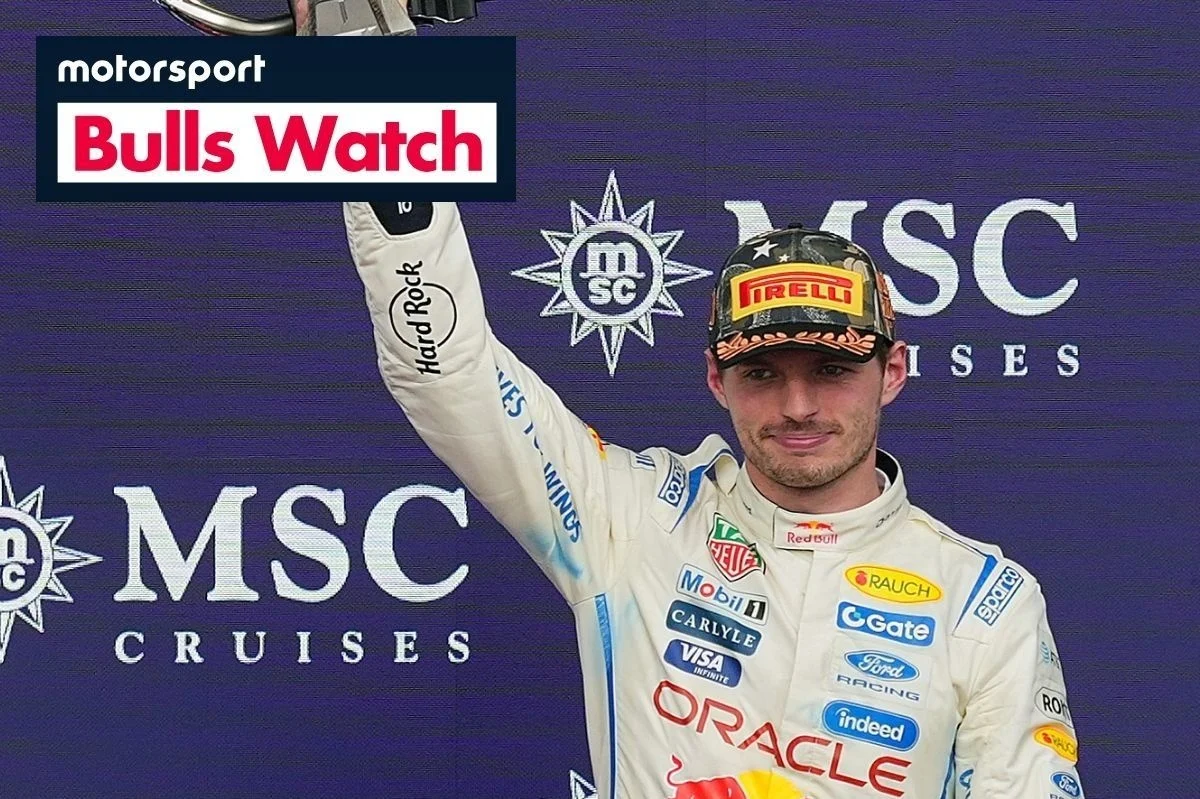
Formula 1 race weekends rarely unfold according to a neat, predictable script. More often than not, they are shaped by chaos, sudden mechanical anomalies, and raw, unfiltered human emotion broadcasted live to millions of viewers. The 2025 United States Grand Prix at the Circuit of the Americas (COTA) was no exception. When Max Verstappen hauled his RB22 across the finish line to secure a hard-fought podium, the relief on the pit wall should have been palpable. Instead, it was immediately drowned out by the reigning world champion’s blistering radio tirade.
Climbing out of the cockpit, Verstappen made no secret of his disdain for the team’s performance. Over the global broadcast, he lambasted the pit stops, the tyre compounds, and the engine braking, describing the package as "complete garbage."
Faced with a disgruntled star driver and a public relations firestorm, Red Bull Racing CEO and Team Principal Laurent Mekies was forced into immediate damage control. Rather than pointing the finger at the engineering department for botching the car’s setup, Mekies shifted the narrative toward a more insidious culprit: a rogue piece of carbon fibre debris.
While Verstappen’s post-race complaints focused on strategic missteps and poor vehicle dynamics, Mekies claimed that the car’s fate was sealed just minutes after the race got underway. Despite finishing third to claim his 12th podium of the 2025 season, Red Bull left Austin with plenty of introspection to do. Yet, beneath the veneer of mechanical frustration and driver discontent lies a surprising statistical silver lining: Red Bull vaulted into third place in the Constructors’ Championship, while Verstappen closed to within striking distance of second place in the Drivers’ standings.
Chronology of a Chaotic Weekend at COTA
To truly understand how Red Bull salvaged a podium finish from the jaws of a potential disaster, one must look back at how the weekend evolved at the Circuit of the Americas.
Practice and Qualifying: Early Warning Signs
From the moment the cars hit the track for Friday practice, the Milton Keynes-based squad struggled to find a harmonious balance. While the high-speed sweeping corners of COTA usually reward stable aerodynamic platforms, the RB22 proved temperamental. Engineers wrestled with ride heights and mechanical grip, constantly chasing a moving target as track temperatures fluctuated under the Texas sun. Despite these underlying gremlins, Verstappen managed to drag the car into a respectable grid slot, though the telemetry suggested that race pace over a long stint would be an uphill battle against the front-running contenders.
Race Day: Lap 8 and the Turning Point
When the lights went out, Kimi Antonelli made a blistering start from the front row, immediately asserting authority and checking out into the distance. Behind him, Verstappen attempted to settle into a rhythm, managing his Pirelli rubber while keeping the chasing pack at bay.
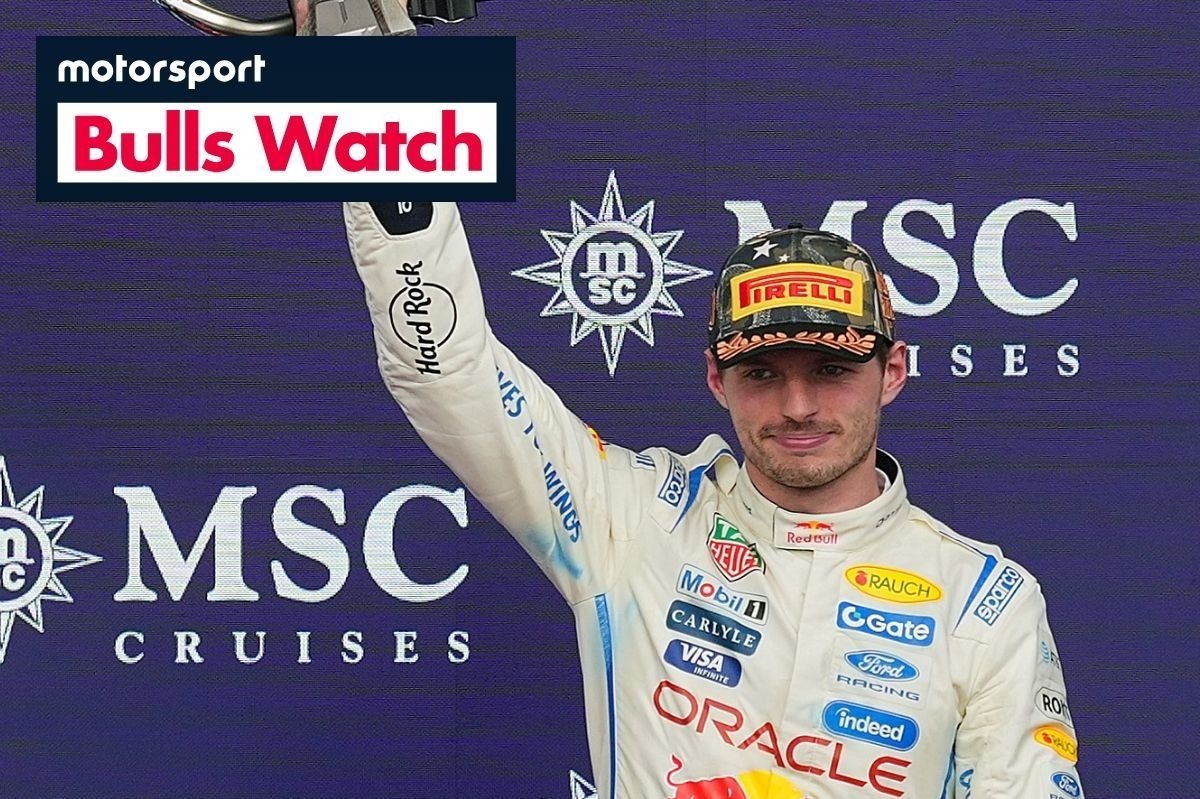
However, the defining moment of Verstappen’s afternoon occurred early in the Grand Prix. Around Lap 8, as cars jostled for position and kicked up detritus from previous skirmishes, Verstappen’s RB22 struck a stray piece of carbon fibre debris.
The impact compromised the aerodynamic floor of the car, instantly disrupting the delicate pressure distributions underneath. What followed was a race of attrition for the Dutch driver. As the aerodynamic balance shifted, tyre degradation spiked dramatically. The degradation forced Verstappen into defensive driving, stripping him of the raw pace required to mount a challenge against Antonelli, who drove a flawless, unchallenged race to take the checkered flag.
The Mid-Race Drama and Hadjar’s Nightmare
While Verstappen was dealing with his wounded machinery, his teammate, Isack Hadjar, was enduring an entirely different tier of motorsport purgatory. Hadjar’s afternoon was compromised before the first corner by a faulty clutch that left him swamped off the line. To make matters worse, a sudden and total radio blackout severed communication between the young driver and the pit wall. Without the ability to relay real-time updates or coordinate strategic adjustments, Hadjar’s race strategy was effectively derailed, turning a promising data-gathering weekend into a survival exercise.
The Chequered Flag and the Radio Eruption
As the laps ticked down, tyre wear became critical. Verstappen fought valiantly to hold onto second place, but the degraded state of his tyres and the lingering effects of the floor damage proved insurmountable, allowing his rivals to slip past. Crossing the line in third position was an impressive salvage job under the circumstances, but Verstappen’s adrenaline-fueled radio message set the tone for a tense post-race debrief.
Supporting Data: Performance Metrics and Championship Standings
The raw data from the United States Grand Prix paints a clear picture of why Red Bull suffered during the race, while simultaneously highlighting why the weekend was not a total failure.
- Verstappen’s Podium Count: Third place at COTA marked Max Verstappen’s 12th podium finish of the 2025 Formula 1 season, a testament to his sheer consistency even on weekends where the car lacks race-winning pace.
- The Turning Point (Lap 8): Telemetry analysis post-race confirmed a sudden drop in downforce and an immediate spike in tyre surface temperatures following the impact with carbon fibre debris.
- Drivers’ Championship Gap: Following the Austin round, Verstappen narrowed the gap to second place in the Drivers’ standings to a mere six points.
- Constructors’ Championship Shift: Despite the operational hurdles and mechanical failures across both cars, Red Bull Racing successfully moved up to third place in the Constructors’ Championship standings.
These numbers illustrate a fascinating duality: while the team’s operational execution and car reliability left much to be desired in Texas, their championship aspirations received an unexpected statistical boost.
Official Responses: Inside Red Bull’s PR Strategy
Faced with a public relations challenge following Verstappen’s blunt assessment of the RB22, Laurent Mekies moved quickly to manage expectations and shield his technical department from undue criticism. Speaking to the media after the race, the Red Bull Team Principal offered a transparent assessment of the team’s shortcomings while defending his drivers.

"Max’s car hit some debris around lap eight and picked up some damage," Mekies explained to reporters. "On top of that, we had a few issues that hurt the balance and, as a result, the pace dropped off, the degradation increased, and Max couldn’t hang on to second place."
Mekies was equally candid about the team’s inability to match the outright speed of race winner Kimi Antonelli, who commanded the event from the front.
"It’s fair to say that, despite a 12th podium of the season with Max finishing third, we are leaving Austin not fully satisfied," Mekies confessed. "We lost a bit of our edge today, and I don’t think we had enough pace to fight with Kimi, who had a very strong race, so well done to him."
Addressing the nightmare afternoon endured by Isack Hadjar, Mekies did not mince words, accepting responsibility for the mechanical failures that plagued the rookie’s garage.
"It was a similar story for Isack, whose race was compromised by the start and then by a couple of problems during the race," Mekies admitted. "Once again, the starts weren’t perfect, but the team is working to make sure we have the tools to fix that in the future."
Despite the litany of complaints, Mekies kept his gaze fixed on the bigger picture.
"A challenging Sunday, but we’ll take the podium knowing that we didn’t fully realise the potential of the car today, and we’ll take learnings from this weekend to come back stronger next week in Mexico," he noted, before dropping the crucial championship takeaway: "Despite all that, we have now moved up to third in the constructors’ championship, and Max is now only six points behind second place in the drivers’ championship."

Implications: The Road to Mexico City and Beyond
The fallout from the United States Grand Prix carries significant ramifications for the remainder of the 2025 Formula 1 season. With only a handful of rounds remaining, the development race in the factories at Milton Keynes and rival headquarters has reached a fever pitch.
1. Solving the Clutch and Reliability Conundrum
For Isack Hadjar and the engineering team on his side of the garage, diagnosing and rectifying the clutch issues that have plagued their race starts is priority number one. In the hyper-competitive midfield and front-running group, losing positions off the line places an immense tactical burden on the strategists, often rendering optimal race plans useless.
2. Protecting the Aerodynamic Floor
Verstappen’s incident in Austin highlights the vulnerability of modern ground-effect Formula 1 cars. A minor strike with rogue carbon fibre can instantly ruin an aerodynamic platform worth millions of dollars, costing valuable tenths of a second per lap. Red Bull’s aerodynamicists will be looking at ways to mitigate the sensitivity of the RB22’s floor edges for future Grands Prix.
3. The Mexico City High-Altitude Challenge
The Formula 1 circus moves immediately from the Texas plains to the high-altitude air of the Autódromo Hermanos Rodríguez in Mexico City. The thin air presents a unique aerodynamic and power-unit challenge, requiring maximum downforce configurations despite the low atmospheric density. If Red Bull can successfully dial in the aerodynamic balance of the RB22 and eliminate the mechanical gremlins that hampered them in Austin, Max Verstappen is in prime position to hunt down second place in the Drivers’ Championship before the season draws to a close.
As the paddock packs its bags for Mexico, one thing is certain: Red Bull may have survived the storm in Austin, but the margin for error has evaporated entirely.

 Reynand Wu
 rifanmuazin
 Neng Nana
 Siti Muinah
 Lina Hope
 Ammar Sabilarrohman