
 Muslim
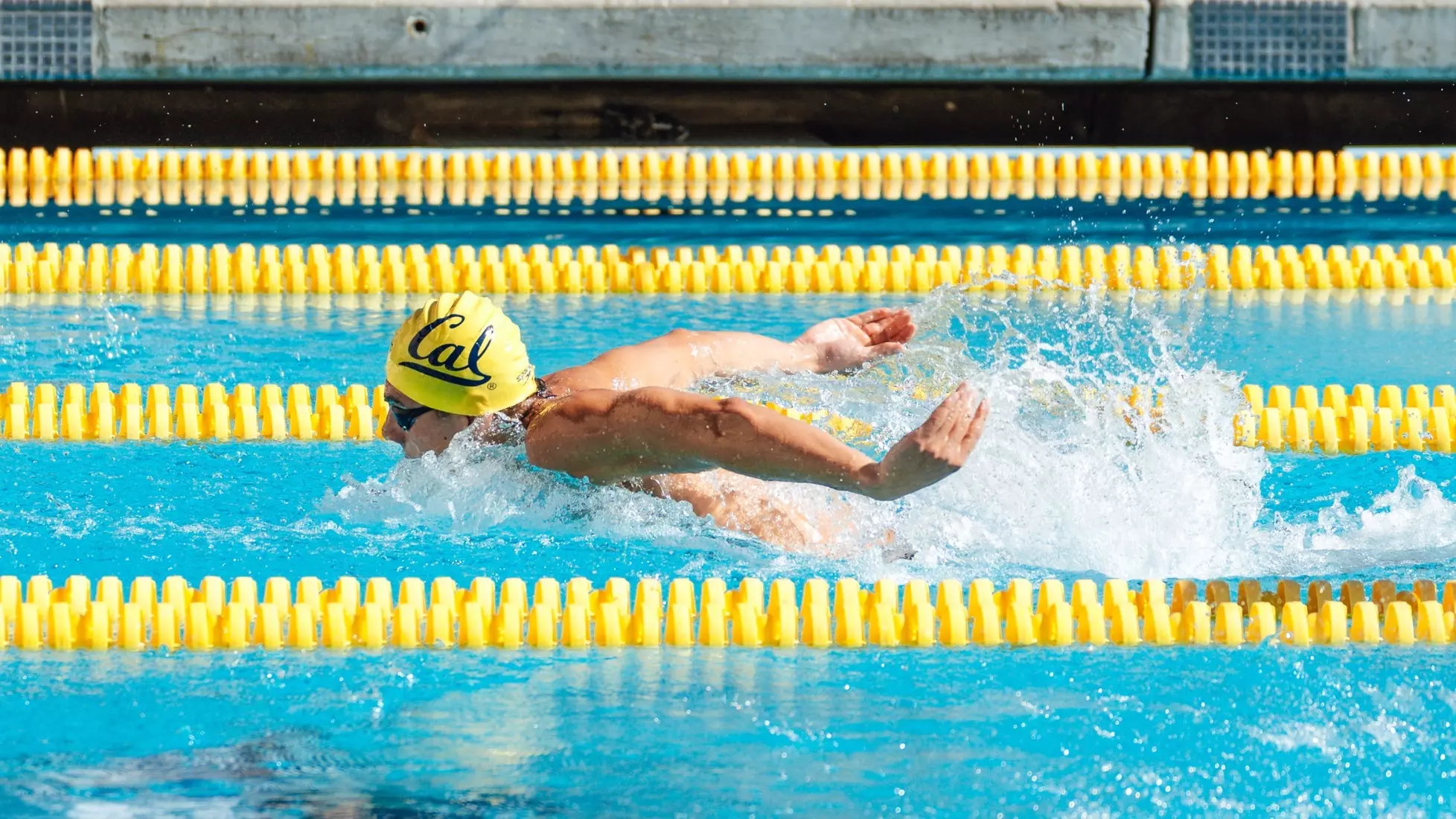
In a commanding display of collegiate swimming prowess, the University of California, Berkeley’s Golden Bears turned in an overwhelming performance against in-state rival Saint Mary’s College. The dual meet, held at Cal’s home pool, served as a stark reminder of the depth and caliber of the Berkeley program. Both the men’s and women’s teams showcased total dominance, effectively sweeping every event on the program to secure lopsided victories: the women triumphed 172-68, while the men closed out their side of the meet with a 158-87 victory.
While the result was never in doubt, the meet provided a crucial early-season benchmark for the Golden Bears, who continue to position themselves as national title contenders. For the Saint Mary’s Gaels, the afternoon served as a challenging gauntlet against one of the most decorated programs in the country.
The Main Facts: A Total Team Effort
The statistical outcome of the meet highlights a level of proficiency that is rare in early-season dual meets. By winning every single event—spanning distance freestyle, technical backstroke, breaststroke, and the sprint disciplines—Cal demonstrated that their conditioning is already at an elite level.
The women’s victory was built on a foundation of consistency, with individual standouts setting the pace for a roster that functioned with clockwork precision. The men’s victory, characterized by the same level of intensity, saw several athletes flexing their versatility across multiple disciplines. For Cal, this meet was not just about winning; it was about executing race strategies and setting personal markers in an October environment that typically favors training loads over high-intensity taper swims.
Chronological Breakdown: Highlights from the Blocks
The Distance and Technical Prowess
The meet opened with the long-distance events, where Cal’s endurance swimmers immediately established dominance. Freddy Klein set the tone for the men’s team early, securing a decisive victory in the 1000-yard freestyle with a time of 8:55.92.
On the women’s side, Camille Henveaux delivered one of the day’s most significant performances. Her winning time of 9:33.15 in the 1000-yard freestyle was not only a season-best but moved her into the top four all-time for the storied California Golden Bears program. This achievement underscores the high-performance culture currently being fostered at Cal, where historical benchmarks are being challenged even in the fall months.
Backstroke and IM Mastery
Finley Anderson emerged as a breakout star for the women, sweeping the backstroke events. Anderson clocked a 53.48 in the 100-yard backstroke before returning to win the 200-yard event in 1:55.92. Her ability to hold form through the back half of both races suggests a high level of aerobic capacity.
The men’s 100-yard backstroke provided one of the most tactical races of the day, featuring a head-to-head battle between Humberto Najera and Casper Puggaard. While Puggaard took an aggressive early lead with a 22.24 opening 50, Najera displayed superior closing power. Najera’s back-half split of 23.65—nearly a full second faster than his opponent—secured him the win in 46.36, compared to Puggaard’s 46.80.
In the 200-yard individual medley, both Freddy Klein and Keaton Jones left their marks. Klein doubled up his day’s wins with a 1:48.86 in the IM, while Jones delivered a statement performance in the 200-yard backstroke, touching the wall in 1:40.00.
Breaststroke and Sprint Dominance
The breaststroke events saw Silje Slyngstadli claim the spotlight for the women, as she became the only female swimmer of the day to break the one-minute barrier, clocking a 59.33 in the 100-yard breaststroke. For the men, Zachary Tan utilized a powerful October training base to secure the 100-yard breaststroke in 53.02.
The men’s 50-yard freestyle was arguably the deepest event of the day for the Golden Bears. Cal claimed the top six positions in the race, a demonstration of depth that few programs in the NCAA can replicate. Martin Wrede led the charge with a 42.77, followed closely by Samuel Quarles (43.32) and Jordan Ragland (43.40).
Supporting Data: The Gaels’ Resilience
While the scoreboard reflected a clean sweep for Berkeley, the Saint Mary’s Gaels provided spirited competition, particularly in the later stages of the meet. The Gaels’ efforts were highlighted by strong finishes from Melody Mimi Okano and Eliza Taylor. The duo finished 3rd and 4th in the women’s 100-yard freestyle, with Taylor’s 51.42 showing significant grit against a packed Cal field. Taylor later added a runner-up finish in the 200-yard IM with a time of 2:05.49.
On the men’s side, Giorgio Sportaro kept things competitive in the sprint events, earning a 2nd-place finish in the 50-yard freestyle with a 20.68. His teammate, Santiago Leiva, also showcased high-level speed by dipping under the 21-second barrier to finish 3rd in 20.97. These performances indicate that despite the overwhelming gap in team scores, the Saint Mary’s athletes are hitting their own season-best targets.
Official Perspective and Implications
The Cal Trajectory
For the California coaching staff, this meet serves as a validation of the current training block. When athletes like Camille Henveaux move into all-time school records during a dual meet, it signals that the team is not merely "going through the motions." The ability of the men’s team to sweep the top six spots in the 50 free is an ominous sign for conference rivals, suggesting that the team’s sprint depth remains a primary weapon.
The consistency across the board—from the distance events to the technical strokes—points toward a well-balanced squad capable of scoring points across all disciplines at the end-of-season championship meets.
The Broader Impact on Collegiate Swimming
The meet reinforces the current hierarchy of California collegiate swimming. For programs like Saint Mary’s, these meets are essential for testing endurance against the highest possible caliber of opposition. While the Gaels did not walk away with event wins, the experience of racing alongside national-level talent is invaluable for their tactical development.
Looking forward, the Golden Bears will carry the momentum of this performance into the heart of their season. The emphasis on finishing strong—exemplified by Najera’s come-from-behind win in the 100 back—is a trademark of the Cal program. If they continue to refine these splits and maintain this level of internal competition, the Bears are poised to remain a formidable force on the national stage.
Conclusion
The Cal-Saint Mary’s dual meet was a masterclass in program execution. By dominating the events from start to finish, the Golden Bears sent a clear message that their depth, conditioning, and competitive hunger are as sharp as ever. As the season progresses, the performances of athletes like Finley Anderson, Freddy Klein, and Camille Henveaux will serve as the bar against which the rest of the conference will be measured. For the spectators in attendance, it was a showcase of speed and technique, marking a high-water point for the early stages of the swim season.

 rifanmuazin
 Asro
 Ammar Sabilarrohman
 Pevita Pearce
 Siti Muinah

 Basiran