
 Basiran
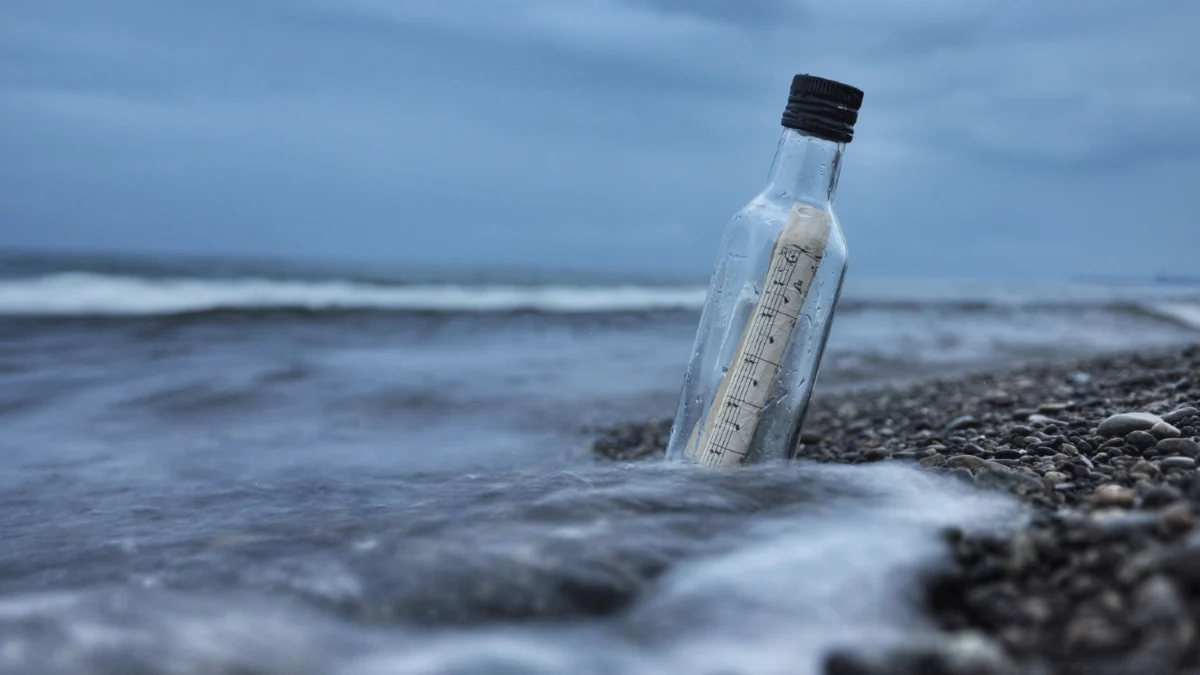
It is a trope often reserved for cinematic dramas and literary fiction: a message in a bottle, cast into the vast, uncaring expanse of the Atlantic, destined to be reclaimed by the tide decades later. Yet, for Allison Spencer, a biology teacher from Ann Arbor, Michigan, this romanticized notion became a tangible reality. A weathered Coca-Cola bottle, discarded into the surf off the coast of New Jersey in 1973, has surfaced more than half a century later, carrying with it a poignant, playful echo of a childhood long since passed.
The recovery of this artifact is more than a mere curiosity of marine debris; it is a bridge across time. The note, penned by a 16-year-old Spencer but born from the vivid, imaginative mind of her 9-year-old sister, Laurie Blair, offers a window into a summer afternoon that defined the bond between two siblings. Today, that note serves as a bittersweet memento, a final, unexpected communication from a sister who is no longer here to share the joke.
The Genesis: A Summer Afternoon in 1973
The story began on August 20, 1973, on the sun-drenched sands of Second Street Beach in Ocean City, New Jersey. It was an era before the digital saturation of the modern world, where children’s entertainment was often fueled by the raw currency of imagination.
Laurie Blair, then just nine years old, was the architect of the narrative. As Allison Spencer recalls, her younger sister possessed an irrepressible creative spirit, constantly spinning elaborate yarns of peril and adventure. On that particular day, Laurie concocted a fictional tale of kidnapping, casting herself as the damsel in distress. She dictated the plot to Allison, who dutifully transcribed the high-stakes drama onto a scrap of paper.
The resulting message was a masterpiece of childhood hyperbole:
"This bottle was set adrift on August 20th, 1973, on Second Street Beach, Ocean City, as my captors were transporting me to an island offshore in the Atlantic. Please notify my family that a band of ruthless sponge fishermen are forcing me to dive for them in shark-infested waters. Please return this note to my home. You may have saved my life! Thank you! Laurie Blair."
With the gravity of a formal dispatch, the sisters sealed the note inside an iconic glass Coca-Cola bottle. With a collective heave, they launched the vessel into the Atlantic, sending their "call for help" toward the horizon. They did not expect a reply; they simply expected the thrill of the act. Then, the two sisters grew up, life moved forward, and the bottle vanished into the currents, becoming a silent traveler in the deep.
Chronology of a Long-Distance Voyage
The journey of the bottle remains largely a mystery, a testament to the erratic and powerful forces of the Atlantic Ocean. For 53 years, the bottle bobbed through seasonal storms, migratory paths, and the relentless churning of the Gulf Stream. It survived the corrosive effects of salt water, the abrasive nature of sand, and the hazards of maritime traffic.
In the decades that followed the bottle’s release:
- 1973–1985: The bottle likely traversed the mid-Atlantic, potentially circulating in the northern gyres.
- 1986–2005: The bottle remained submerged, perhaps buried in coastal sediment or trapped in a quiet eddy, effectively becoming part of the ocean floor’s permanent collection of refuse.
- 2006–2025: As coastal currents shifted and extreme weather events increased in frequency, the bottle was eventually dislodged, pushed steadily toward the shoreline of the Jersey coast once more.
The final leg of the journey concluded not in a dramatic wash-up during a hurricane, but through the vigilant efforts of John Kauterman, a co-founder of the Tidelands Initiative. Kauterman, who spends his time cleaning the beaches of the mid-Atlantic, is accustomed to finding plastic waste, discarded fishing gear, and the occasional piece of historical debris. When he spotted the Coca-Cola bottle, he recognized its age immediately.
"I was like, ‘Wow… the bottle’s old,’" Kauterman told People magazine. "I peeked into it and… I was like, ‘Oh my gosh, yeah, we got a good one here.’"
The Emotional Return: Bridging the Gap
When John Kauterman successfully retrieved the note and made contact with the family, the discovery reached Allison Spencer in Ann Arbor. The emotional impact of the recovery was profound, compounded by the tragedy that had occurred in the intervening years.

Laurie Blair, the imaginative child who had scripted the "kidnapping," passed away nine years ago after a battle with breast cancer. She was in her early 50s. The arrival of the bottle felt, to Spencer, like a message from beyond the veil.
"My sister passed away nine years ago," Spencer shared. "She had breast cancer, and she died only in her 50s and I really miss her a lot, so it’s really a wonderful, special thing to me that the note came back. It seems very miraculous to me that this note came back to me. She would be wildly entertained by these events."
For Spencer, the note serves as a physical connection to a vibrant, imaginative child who is now gone. It is a reminder of the specific, shared language that siblings develop—the inside jokes, the theatrical play, and the uncomplicated joy of a summer day in 1973.
Implications of Ocean Debris and Historical Artifacts
The discovery of the Blair-Spencer bottle invites a broader conversation about the nature of our oceans and the longevity of our waste. While this particular instance resulted in a heartwarming human-interest story, it also highlights the reality of the "plastic and glass problem" in global marine environments.
The Science of "Beachcombing"
Groups like the Tidelands Initiative, led by individuals like Kauterman, are essential in managing the health of our shorelines. Oceanographers often track these objects to understand surface current patterns, though glass bottles are increasingly rare compared to the millions of tons of microplastics that now permeate the ocean.
Preservation of Personal History
This story also underscores the importance of artifacts in personal history. In an age of ephemeral digital communication—where emails are deleted and texts are lost in cloud storage—the physical letter, written in ink and preserved in glass, possesses a permanence that digital media cannot replicate. The bottle was a literal "time capsule," one that waited for the precise moment when the recipient would need a reminder of a beloved sister.
Official Responses and Public Reaction
The story has resonated with a public weary of negative news cycles. On social media and through news outlets, the narrative of the two sisters has been widely shared. Experts in sentiment analysis note that stories of "lost-and-found" items trigger a sense of closure and serendipity, offering a brief respite from the chaotic nature of contemporary life.
While no government agency has commented on the specific recovery, environmental groups have used the opportunity to emphasize the need for continued coastal stewardship. The fact that the bottle survived for 53 years is a testament to the durability of glass, but also a reminder that our physical footprints—whether they are messages in a bottle or pieces of trash—have a much longer shelf life than we often assume.
Conclusion: The Legacy of a Summer Day
The story of Laurie Blair and Allison Spencer is a poignant reminder that while time is linear, the memories we create can be circular. A small act of childhood play, cast off a pier in 1973, eventually found its way back to its creator, providing comfort during a time of mourning and celebrating a life cut too short.
As Allison Spencer looks at the note—the shaky, youthful handwriting of her sister—she sees more than just a fictional tale about "ruthless sponge fishermen." She sees the spark of a creative mind, the warmth of a shared childhood, and the enduring power of love. The Atlantic Ocean, in its immense and mysterious way, chose to return a piece of the past, ensuring that Laurie Blair’s imagination would continue to enchant and inspire long after the bottle had been pulled from the surf.
In the end, the message was delivered exactly when it needed to be: not when the sisters were young, but when the survivor needed it most. It is a reminder that even in the vast, turbulent waters of life, some things are destined to find their way home.


 Siti Muinah

 Nana Wu

 Ammar Sabilarrohman

 Muslim

 Pevita Pearce


 rifanmuazin