
 Pevita Pearce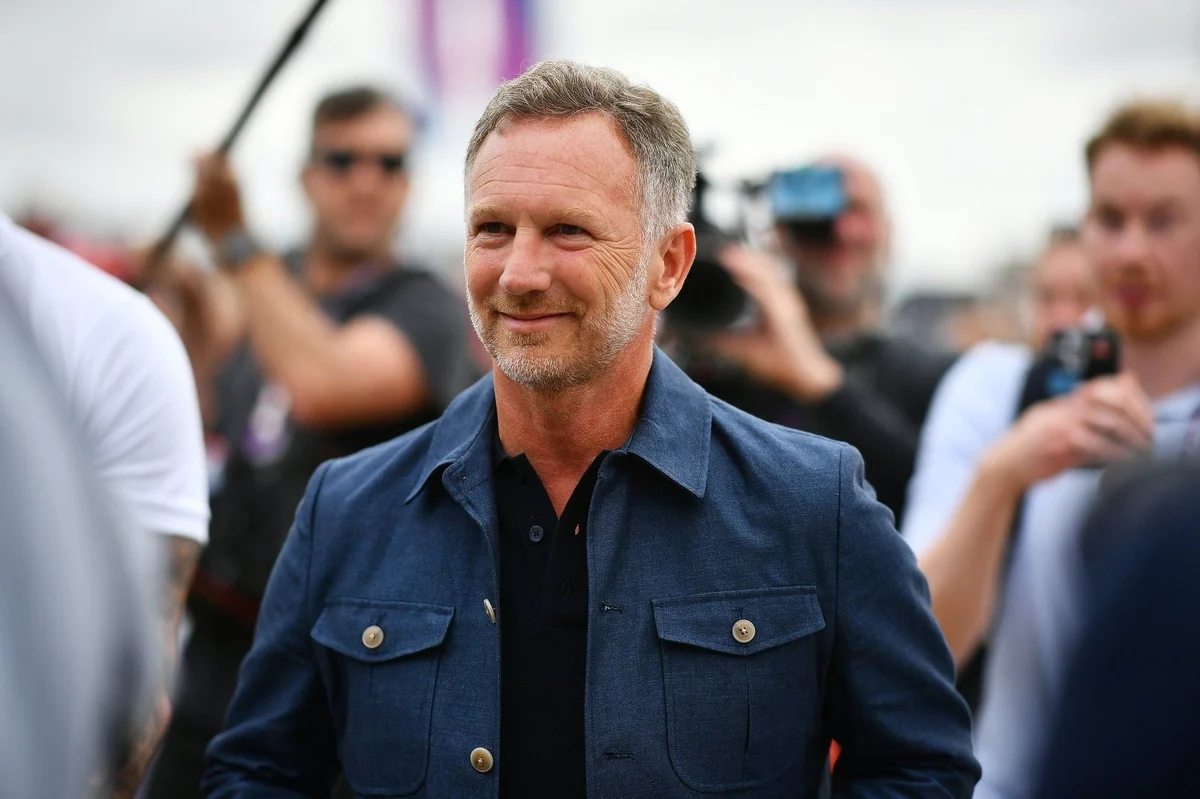
LONDON — Formula 1’s rumor mill has once again gone into overdrive following explosive comments from former Red Bull Racing team principal Christian Horner regarding his potential future in the sport. However, former Haas F1 team principal Guenther Steiner has poured cold water on the most tantalizing headline to emerge from the paddock: the idea of Horner joining forces with current Ferrari team boss Frédéric Vasseur at the Scuderia.
In a recent interview that sent shockwaves through the motorsport world, Horner admitted that taking the helm at Ferrari would be "the dream." He further noted that the prestigious Italian outfit is the only team for which he would consider accepting a non-ownership leadership role at this stage of his illustrious career.
Yet, according to Steiner, who offered his trademark candor during an appearance on The Red Flags Podcast, Horner’s remarks should be viewed through a pragmatic, highly strategic lens rather than a concrete career roadmap. Steiner dismissed the concept of Horner and Vasseur sharing power in Maranello as an operational impossibility, suggesting instead that the British executive is simply pivoting his tactics to engineer a high-profile return to the Formula 1 grid—all while enjoying a helpful PR boost for an upcoming literary project.
Main Facts: The Horner-Ferrari Speculation
The narrative surrounding Christian Horner’s next professional chapter has been one of the most closely watched subplots in the modern paddock.
- The Spark: In a candid interview with The Times, Horner addressed his future in motorsport, revealing that a leadership role at Ferrari represents "the dream."
- The Condition: Horner explicitly stated that Ferrari is the sole team where he would entertain a role without holding equity or ownership stake—a stark departure from his long-standing posture at Red Bull, where he was a central pillar of the team’s corporate and sporting architecture.
- Steiner’s Rebuttal: Speaking on The Red Flags Podcast, Guenther Steiner analyzed Horner’s statements, identifying them as a calculated "Plan B." Steiner argued that because Horner’s initial preference—likely a high-level ownership or executive stake elsewhere in the sport—proved unfeasible, the former Red Bull chief has set his sights on the most iconic seat in racing.
- The Coexistence Problem: Steiner unequivocally ruled out the possibility of Horner and current Ferrari Team Principal Frédéric Vasseur working side by side, citing egos, corporate structure, and the absolute lack of spatial or operational room for two alpha leaders in Maranello.
Chronology of Events: From Red Bull Exit to Maranello Dreams
To understand how Formula 1 reached this juncture of high-stakes speculation, it is necessary to trace the timeline of leadership shifts and public declarations that have shaped the paddock’s landscape over recent seasons.
Phase 1: The Red Bull Era and Subsequent Departure
For nearly two decades, Christian Horner was synonymous with Red Bull Racing. Under his stewardship, the Milton Keynes-based squad secured multiple Constructors’ and Drivers’ World Championships, establishing one of the most dominant dynasties in Formula 1 history. However, internal turbulence, shifting corporate dynamics within the Red Bull empire, and intense political maneuvering ultimately led to a parting of ways, leaving Horner on the sidelines and casting a long shadow over the transfer market.
Phase 2: Seeking the Next Chapter ("Plan A")
Upon exiting Red Bull, Horner’s immediate priority was widely understood to be finding a venture where he could command significant influence, ideally backed by financial equity. Rumors linked him to various investment groups and prospective team entries. However, as doors closed and the realities of modern F1 team valuations set in—where acquiring a stake in an existing franchise costs billions—Horner was forced to re-evaluate his options.
Phase 3: The Pivot to The Times Interview ("Plan B")
Realizing that full ownership or equity stakes were largely off the table at elite outfits, Horner adjusted his strategy. His declaration to The Times that Ferrari is the "dream" and the only place he would work without ownership marked a clear psychological pivot. By publicly anointing the Scuderia as his ultimate destination, Horner placed maximum pressure on the traditional motorsport narrative, instantly injecting his name into conversations regarding Italy’s most hallowed racing institution.
Phase 4: Steiner’s Paddock Critique
Enter Guenther Steiner. Known for his unfiltered assessments during his tenure at Haas and subsequent media work, Steiner seized upon Horner’s media maneuver during his podcast appearance. Breaking down the psychology of top-tier F1 management, Steiner argued that Horner’s public affection for Ferrari is a textbook survival and repositioning tactic designed to keep his name relevant, secure a premier job, and coincidentally drive attention toward his upcoming book release.
Supporting Data and Industry Context: The Economics of F1 Leadership
To contextualize Steiner’s skepticism, one must examine the current operational realities of Formula 1 team management, particularly at the sport’s historic apex: Ferrari.
The Value of Ferrari Contracts
Steiner touched upon the fragility of contracts in Formula 1, noting dryly: "Fred [Vasseur] has got a contract and how much are they worth in Formula 1? Not a lot, I guess." While employment contracts for team principals do carry legal weight, history demonstrates that underperforming spells or shifting corporate mandates from parent companies (such as Ferrari N.V. in Maranello or Exor) can lead to swift, unceremonious dismissals.
However, Vasseur’s current position is far from precarious. Since taking over the Scuderia, the Frenchman has initiated a painstaking, methodical restructuring of the team’s technical, strategic, and operational departments.
The Anatomy of Maranello Leadership
Ferrari has historically operated under a unique internal pressure cooker. The Italian media (The Gazzetta dello Sport, Autosprint, etc.) and the tifosi demand nothing short of perfection. Historically, the team has functioned best under a singular, undisputed focal point of authority.
Consider the modern history of Ferrari leadership:

- Jean Todt Era: Todt held absolute operational control, working hand-in-glove with Ross Brawn and Michael Schumacher. There was no co-leadership; Todt’s word was law.
- Maurizio Arrivabene and Mattia Binotto: Both held distinct periods of unitary authority, though both ultimately fell short of delivering the elusive World Championship, leading to their respective departures.
- Frédéric Vasseur Era: Vasseur was brought in to stabilize the technical department, improve operational execution, and foster a more collaborative, less politically fractured environment.
Introducing Christian Horner—a high-profile, aggressively competitive, and politically astute operator who has spent his entire career accustomed to absolute executive dominance—into the same organizational ecosystem as Vasseur would create an immediate structural bottleneck.
Official Responses and Stakeholder Perspectives
While neither Christian Horner nor Frédéric Vasseur has formally engaged in a point-counterpoint debate via official press releases regarding Steiner’s comments, the broader F1 community and media landscape have weighed heavily on the matter.
Guenther Steiner’s Full Evaluation
Expanding on his podcast remarks, Steiner dissected the core incompatibility of the two personalities:
"I don’t think that’s going to happen that Fred is staying there working for Christian. Fred in himself is a very successful guy. But first of all, I don’t know that Fred wants to leave or that he has to leave. In the end, [there is] no space for the two of them. That’s my opinion on it. That is not going to happen."
Furthermore, Steiner did not miss the opportunity to highlight the commercial and promotional timing of Horner’s media splash:
"The other thing, there’s nothing bad for him in it as well. He’s releasing a book so it will help the sale of that one, or maybe not, we don’t know, but at least it’s a little bit of publicity."
The Horner Camp Perspective
Horner has long mastered the art of media manipulation and paddock chess. By stating that Ferrari is the only team he would work for without ownership, he accomplishes two objectives:
- He flatters Ferrari, keeping a potential future line of communication wide open should the Scuderia’s upper management ever decide to seek a high-profile leadership change.
- He distances himself from mid-field or back-marker projects, reinforcing his status as an elite-tier candidate who only moves for championship-winning infrastructure.
The Vasseur and Ferrari Stance
Internally, Ferrari has consistently sought stability. Vasseur’s mandate from Ferrari CEO Benedetto Vigna and Chairman John Elkann has been to build a long-term winning culture, recruit top-tier engineering talent from rival outfits (such as the high-profile acquisition of Lewis Hamilton for 2025 and ongoing technical poaching), and streamline race-day execution. Disrupting this delicate rebuilding phase by introducing a titanic personality like Horner would run counter to everything Vasseur has fought to establish since relocating to Maranello.
Implications for the Formula 1 Paddock
Steiner’s dismissal of the Horner-Vasseur pairing carries profound implications for the future alignment of Formula 1’s power brokers.
1. The Saturation of Executive Talent
Formula 1 is currently experiencing a tightening market for elite leadership. With teams largely locked into multi-year structural plans under the cost-cap era, the traditional churn of team principals has slowed. For a heavyweight executive like Horner, finding a landing spot that matches his ambition, pedigree, and financial expectations is extraordinarily difficult. If equity is off the table everywhere except through newly formed or heavily capitalized startup ventures (such as prospective new manufacturer entries), elite leaders may find themselves sidelined for extended periods.
2. Stability at Maranello
For Ferrari, the immediate takeaway is that management is firmly backing Frédéric Vasseur. Speculation from the British media regarding Horner does not alter the day-to-day reality in Maranello, where the focus remains squarely on closing the performance gap to McLaren and Red Bull on the track. Vasseur’s position appears secure, and any external noise regarding a coup or management reshuffle is being correctly categorized by industry insiders as speculative posturing.
3. The Marketing and PR Machine of F1
Steiner’s remark regarding Horner’s book release underscores an essential truth about modern Formula 1: the paddock is as much a theatre of public relations as it is an engineering championship. Leaders, former leaders, and drivers alike understand the utility of a well-timed headline. Whether Horner genuinely envisions a future in red or was simply generating strategic leverage and promotional momentum, the episode demonstrates that the sport’s most compelling drama frequently unfolds away from the asphalt.
Conclusion
As Formula 1 hurtles through an increasingly competitive era defined by strict budget caps, grueling double- and triple-headers, and microscopic regulatory scrutiny, leadership stability has become the ultimate currency.
While Christian Horner’s admission that Ferrari represents his ultimate "dream" job will forever linger in the annals of paddock lore, Guenther Steiner’s assessment remains the most grounded interpretation of the saga. Maranello is simply not big enough for two alpha leaders of the caliber of Horner and Vasseur. Until concrete structural vacancies arise, the prospect of the former Red Bull chief walking through the iron gates of Via Abetone Inferiore remains firmly in the realm of fascinating paddock fiction.

 Evan Lee Salim
 Asro
Asro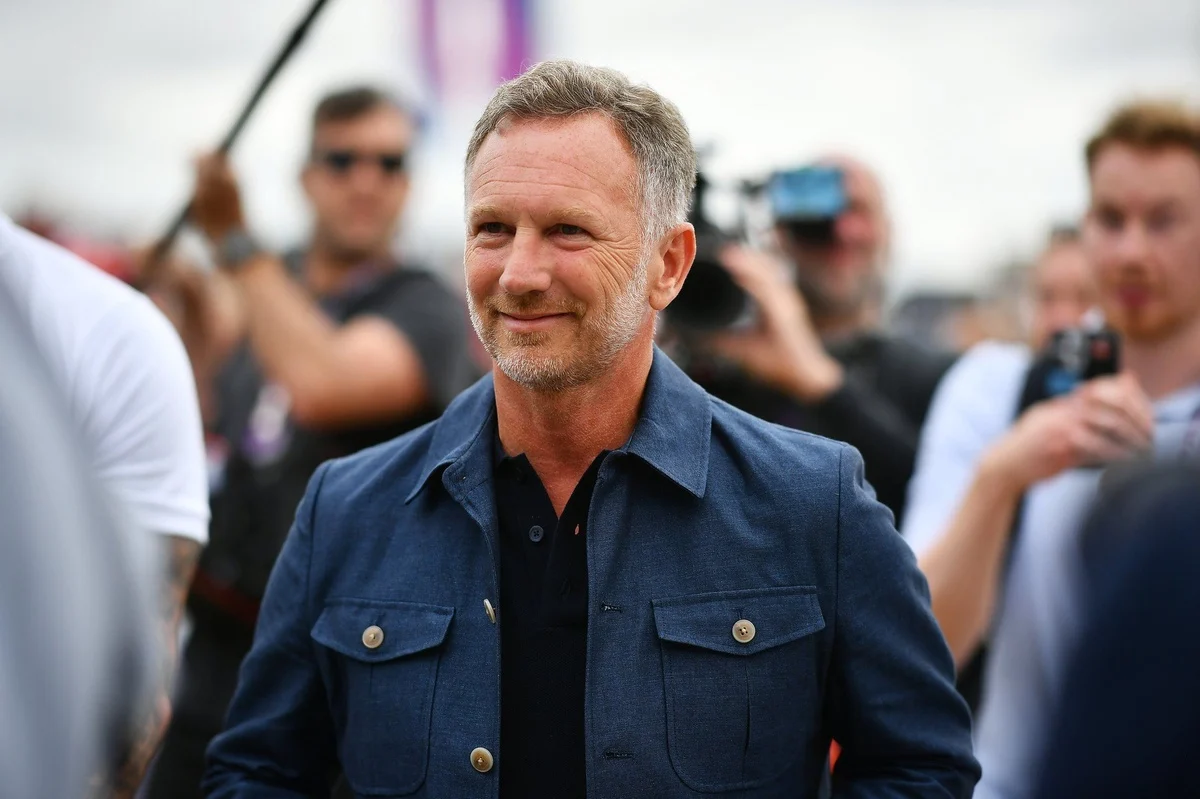
 Neng Nana
 Nana Wu
 Lina Hope

 Sagoh
Sagoh
 Iffa Jayyana