
 Lina Hope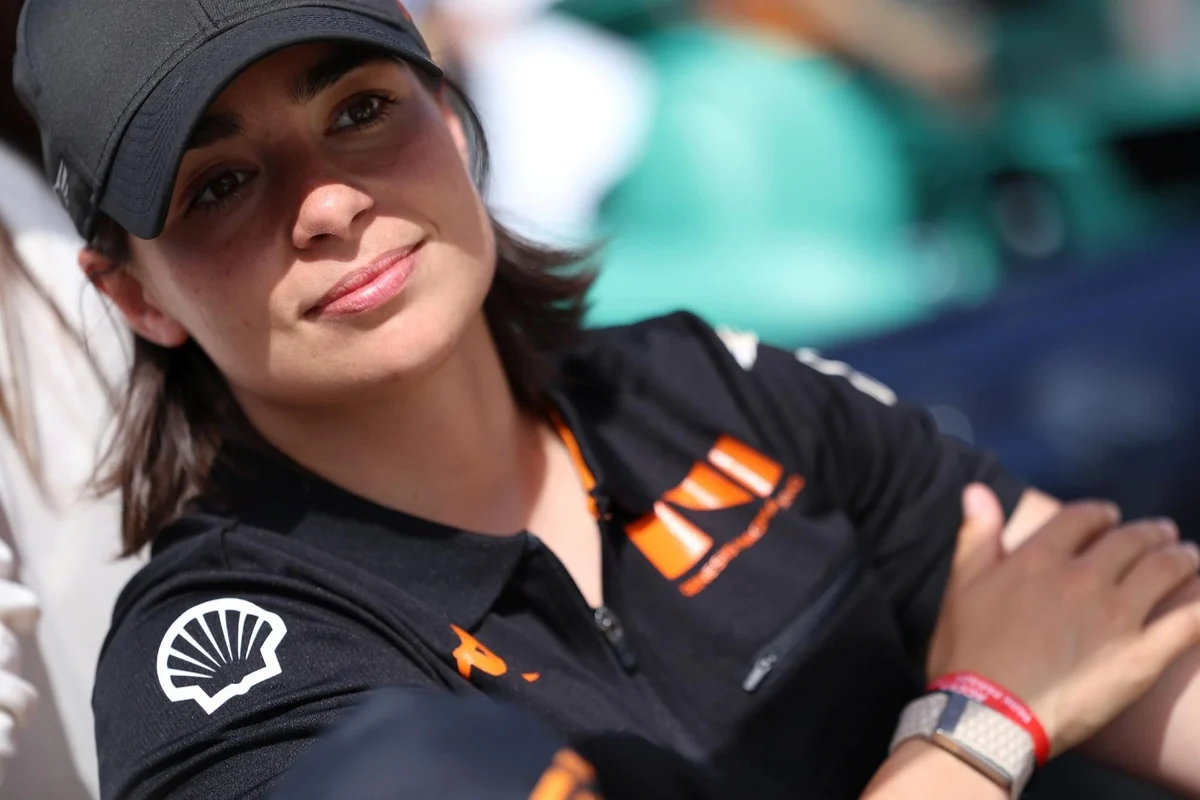
Main Facts: The Weight of Being a Pioneer
Three-time W Series champion Jamie Chadwick has opened up about the profound psychological burden she faced as one of the very few high-profile female drivers competing on the elite single-seater racing ladder. In a candid appearance on the Significant Figures podcast, Chadwick reflected on an era in her career when a poor performance on the track was rarely treated as just a normal, off-day slump. Instead, she felt her struggles were unfairly weaponized or generalized as a broader reflection of her entire gender’s capabilities in motorsport.
For years, Chadwick stood at the vanguard of women in professional single-seater racing. While her victories were celebrated as historic milestones, her setbacks carried an unwelcome and disproportionate weight. "When I wasn’t fast, I just want to be slow. I don’t have to… if I am slow, it’s not because I’m a woman. I’m slow because I’m slow today. Just let me be slow," Chadwick shared during the podcast.
This sentiment underscores a unique pressure experienced almost exclusively by trailblazers in male-dominated fields: the loss of the right to fail anonymously. While male drivers could afford a difficult weekend of testing or a poor qualifying session without systemic implications, Chadwick felt that every sub-par lap brought intense scrutiny upon women as a collective.
However, the British racing star noted that the landscape has thankfully shifted. Thanks to a concerted effort across various racing series to foster diversity, the presence of women in motorsport has grown significantly over the past half-decade. With more female drivers carving out spaces on the grid, the microscopic focus on individual drivers has begun to ease, allowing racers like Chadwick to be evaluated purely on their merits as athletes rather than as representatives of their gender.
Chronology: A Trailblazing Career in Motorsport
To understand the magnitude of the pressure Chadwick faced, one must look at her remarkable chronological ascent through the ranks of global motorsport—a journey defined by historic firsts and relentless perseverance.
Early Success and British GT History (2015)
Chadwick’s competitive career gained widespread attention in 2015 when she etched her name into the history books. Competing in the British GT Championship, she became not only the youngest-ever competitor to win a title in the series but also the first female driver to achieve the feat. This explosive entry into national sports car racing signaled that Chadwick was a talent to watch, setting high expectations for her future transition into open-wheel machinery.
Stepping into Open-Wheelers: British F3 (2017–2018)
Buoyed by her GT success, Chadwick transitioned to single-seaters, taking on the intensely competitive British Formula 3 Championship across the 2017 and 2018 seasons. Racing against some of the fiercest young talents in Europe, she faced a steep learning curve. It was during these formative years in junior formulae that the infrastructure supporting female drivers was minimal, heightening the scrutiny she described experiencing "four or five years ago."
The W Series Dynasty (2019–2022)
The launch of the all-female W Series in 2019 provided a vital platform to showcase female talent and offer financial and logistical pathways into higher levels of motorsport. Chadwick seized this opportunity with absolute dominance. She secured the inaugural 2019 title, defended it successfully when the series returned after the COVID-19 pandemic in 2021, and claimed a historic third consecutive championship in 2022. While the W Series provided invaluable seat time and global exposure, it also cemented Chadwick as the definitive face of women’s single-seater racing, intensifying the public spotlight on her every move.
Breaking New Ground in the US: Indy NXT (2023–Present)
Looking for her next major challenge, Chadwick crossed the Atlantic to compete in the Indy NXT championship—the premier feeder series for the NTT IndyCar Series. In a championship renowned for its physical demands and fierce competition, she shattered another glass ceiling by becoming the first woman to win a race on a road or street course in the category. Her transition to American open-wheel racing proved that she could mix it up at the highest levels of junior formula competition globally.
Multi-Disciplinary Expansion and Mentorship
Beyond single-seaters, Chadwick’s résumé expanded to include stints in the European Le Mans Series and the pioneering electric off-road championship, Extreme E. Furthermore, she has cemented her role as an ambassador for the future generation, serving as a Williams Racing ambassador and a driver academy adviser for the all-female F1 Academy series.
Supporting Data: The Changing Landscape of Female Representation
Chadwick’s reflections on the Significant Figures podcast highlight a crucial evolutionary phase in modern motorsport. Statistics from global governing bodies and racing promotions over the last decade paint a clear picture of how the ecosystem has transformed.

- The Scarcity Era (Pre-2020): Four to five years ago, the percentage of female drivers competing in FIA-sanctioned international single-seater championships hovered near statistical insignificance. Outside of specialized initiatives, a grid featuring a single female driver was considered diverse. This scarcity naturally concentrated all media and fan attention onto that solitary individual, turning every race into a referendum on female capability.
- The Pipeline Effect (2019–Present): The introduction of targeted programs like the W Series, and subsequently the F1 Academy, dramatically accelerated the talent pipeline. Hundreds of young girls and women now participate in karting and junior car racing globally, supported by manufacturer backing and dedicated mentorship schemes.
- Diversified Participation: Data from motorsport talent searches show a double-digit percentage increase in female karting registrations year-on-year since 2021, directly challenging the historical gender imbalance at the grassroots level.
This data validates Chadwick’s observation: as the sheer volume of women competing increases, the cultural pressure on any single driver diminishes. The narrative is shifting from "Can a woman succeed?" to "Which driver will win?"
Official Responses and Industry Perspectives
Chadwick’s comments have resonated deeply throughout the global motorsport community, prompting reactions from team principals, series organizers, and fellow competitors who recognize the heavy toll of being a pioneer.
Industry leaders have long acknowledged the unique psychological challenges faced by female athletes in male-dominated sports. Speaking on the integration of women into high-performance racing academies, sporting directors have noted that psychological resilience training is now a critical component of driver development.
Motorsport executives stress that while initiatives like F1 Academy and the W Series were essential for creating visibility and driving financial investment, the ultimate goal has always been to normalize female participation to the point where specialized categories are no longer necessary.
Fellow drivers and motorsport analysts have also praised Chadwick for her brutal honesty. Admitting to the vulnerability of wanting "to just be slow" without socio-political implications humanizes an athlete who has spent her entire adult life carrying the expectations of millions. By articulating the "weight of the flag," Chadwick has given voice to a struggle shared by minority athletes across all professional sports—the desire to be judged simply as a competitor, free from the burden of representation.
Implications: What Chadwick’s Revelations Mean for the Future of Motorsport
The dialogue opened by Jamie Chadwick’s podcast appearance carries profound implications for the future direction of driver development, media reporting, and gender equity in professional sports.
1. Shifting the Media and Fan Narrative
The sports media landscape has a responsibility to mature in how it covers minority athletes. When analysts and fans stop treating a female driver’s poor performance as a reflection of gender capability and instead view it through the standard lens of vehicular balance, tire degradation, or driver error, the sport achieves true parity. Chadwick’s comments serve as a timely reminder that equality requires not just giving women a seat in the car, but also granting them the human right to have an off-day.
2. Psychological Support in Driver Academies
As more programs—such as the Williams Driver Academy—actively scout and mentor female talents, psychological support systems must evolve. Preparing young drivers to handle media scrutiny, public expectations, and the weight of representation is just as important as telemetry analysis and physical conditioning. Future champions will need robust mental frameworks to compartmentalize external noise and focus purely on lap times.
3. The Path Forward for F1 Academy and Beyond
Chadwick’s journey from the W Series to Indy NXT and her advisory role with F1 Academy illustrates the blueprint for modern female racing success. The ultimate implication of her remarks is that the success of initiatives like F1 Academy will ultimately be measured by how quickly they become obsolete—meaning a future where female drivers are distributed naturally across Formula 1, Formula 2, Formula 3, and international sports car series without needing a segregated springboard.
Until that day fully arrives, the sport owes a debt of gratitude to pioneers like Jamie Chadwick. By speaking candidly about the invisible weights she carried, she has not only liberated herself from those expectations but has also paved a smoother, less burdened path for the next generation of women ready to take the wheel.

 Jia Lissa
 Lina Irawan
 Iffa Jayyana
 Ali Ikhwan
 Neng Nana
 Dwi Wanna