
 Dwi Wanna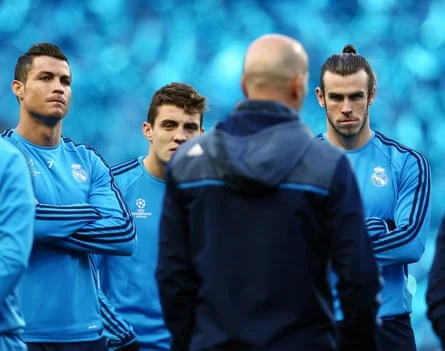
Even in his playing days, Zinedine Zidane was a man of shadows and silence—an artist who communicated through the geometry of a perfect touch rather than the noise of a press conference. As a manager, that sense of distance has only metastasized. Having conquered the European summit three times with Real Madrid without ever clearly articulating a defined "Zidane philosophy," he remains football’s most successful cipher. Now, as he embarks on his most daunting challenge yet—taking the reins of the French national team—the world waits to see if the enigma will finally reveal its substance.
The Dawn of a New Era
On Friday, the footballing world turns its eyes to the Nations League, where Zidane will lead France against Turkey in his debut as head coach. It is a moment of profound significance, representing a long-awaited homecoming for a man who is arguably the greatest French player in history.
France remains, perhaps, the most perplexing football nation on the planet. It is a country that possesses a talent pool so deep that its "B-team" would likely reach the semi-finals of any major tournament. Yet, under the long and often stifling tenure of Didier Deschamps, the national team was defined by a nagging sense of unfulfillment. They were a team that progressed, but rarely entranced—a squad that felt like a collection of individuals awaiting a spark. That changed during the recent World Cup, where France adopted a more cavalier, attacking style, only to be tactically overrun in midfield by a clinical Spanish side.
Zidane arrives with the mandate to transform this mercurial talent into a cohesive, dominant force. For the French Football Federation, the appointment is a gamble on aura as much as it is on tactical acumen.
A Career Defined by Paradox: The Real Madrid Years
To understand the task ahead, one must grapple with the paradoxical legacy of Zidane’s time at the Santiago Bernabéu. He is one of only five coaches in history to have won the Champions League on three or more occasions, placing him in the pantheon alongside Bob Paisley, Pep Guardiola, and Luis Enrique, and just behind the unparalleled Carlo Ancelotti.
He stands alone as the only manager to secure three consecutive Champions League trophies. Yet, in a strange twist of public perception, few analysts would categorize him as an "elite" tactical mastermind in the vein of a Jürgen Klopp or a Thomas Tuchel. His domestic record—two La Liga titles in four full seasons—is statistically "par" for a manager at a club with Real Madrid’s resources.

His departure from Madrid, just five days after his third consecutive European title, was as opaque as his personality. He cited a "need for change," a vague sentiment that left fans and pundits scrambling for deeper meaning. When he returned in March 2019 to rescue the club from the ashes of the Julen Lopetegui and Santiago Solari eras, he proved his worth by securing another league title. But the question remains: was Madrid’s dominance a product of his tactical genius, or did his presence merely provide the necessary oxygen for an already legendary squad to breathe?
The Mechanics of Success
Critics point to the fact that during his first stint, Madrid were crushingly dominant, yet the "how" remained elusive. His side set records for consecutive scoring games (73) and successive away wins (13). These are the metrics of a juggernaut, yet they didn’t produce the aesthetic beauty one might expect from a team led by a man who played with such grace.
When looking at the Champions League triumphs, the evidence for Zidane’s "system" is thin. In 2016, Madrid’s path to the trophy was defined by narrow margins—beating Roma and Wolfsburg, edging Manchester City on penalties, and scraping past Atlético Madrid in an unmemorable final. The 2017 victory was more emphatic, bolstered by Cristiano Ronaldo’s absolute dominance. By 2018, the cracks were showing; the quarter-final against Juventus saw a three-goal lead evaporate, and the final against Liverpool was decided by a combination of a freak injury to Mohamed Salah and a catastrophic error by goalkeeper Loris Karius.
Was Zidane a genius, or a "player whisperer"? He inherited a midfield trio of Casemiro, Modric, and Kroos that functioned like a Swiss watch. He didn’t reinvent their roles; he simply let them be. In the high-pressure cooker of the Bernabéu, perhaps that is a skill in itself. While many of his predecessors failed by trying to over-coach and stifle the creative impulses of superstars, Zidane acted as a conductor who allowed the virtuosos to play.
Discipline and the "Zidane Effect"
The transition to international management presents a different set of challenges. Unlike club football, where a coach spends daily hours with his players, international football is about managing culture, temperament, and egos in short bursts.
France has a history of volatility. The scandals of the 2002 World Cup and the infamous player strike at Knysna in 2010 left deep scars on the national psyche. Didier Deschamps’ greatest contribution over his 14-year tenure was not necessarily the tactical evolution of the team, but the restoration of discipline. He prevented the sort of structural collapse that had previously plagued the Les Bleus.
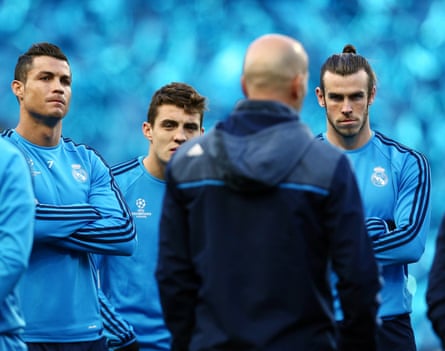
Zidane, however, is bringing a new energy. His first act as manager—banning the press from covering player arrivals at the Clairefontaine training base—was a clear signal: he is the authority. He is eager to exert control over the environment from day one. By cutting off the "circus" atmosphere that often follows high-profile players like Kylian Mbappé, he is attempting to foster a more professional, focused, and insular culture.
Implications for the Future
The squad facing Turkey this Friday is not a mirror image of the Deschamps era. It features new faces, a different tactical complexion, and the undeniable weight of Zidane’s shadow. For the first time, Zidane is not managing a team of established, veteran "Galacticos" who have already conquered Europe. He is managing a group of talented, hungry, and potentially fragile individuals who are looking for a new identity.
The implications of this appointment are massive. If Zidane can translate his ability to manage elite egos into a cohesive national identity, he could define the next decade of French football. If he struggles to implement a clear tactical structure, the criticism that he is merely a "lucky" manager will only intensify.
National teams offer a coach more autonomy than club counterparts. There is no transfer market to hide behind and no budget to outspend the opposition. It is pure, concentrated management. In this environment, the "great enigma" of world football will finally be forced to show his hand.
Will he be the man who continues to rely on the individual brilliance of his stars, or will he emerge as a tactical visionary who can craft a team in his own image? The French public, the players, and the watching world wait for an answer. As the whistle blows on Friday, the era of mystery will officially come to an end. The Zidane project has begun, and for the first time in his career, there is nowhere for the master of silence to hide.

 Asro
Asro
 rifanmuazin
 Layla Zulfa
 Nila Kartika Wati
 Nana Wu
 Neng Nana
 Ali Ikhwan