
 Iffa Jayyana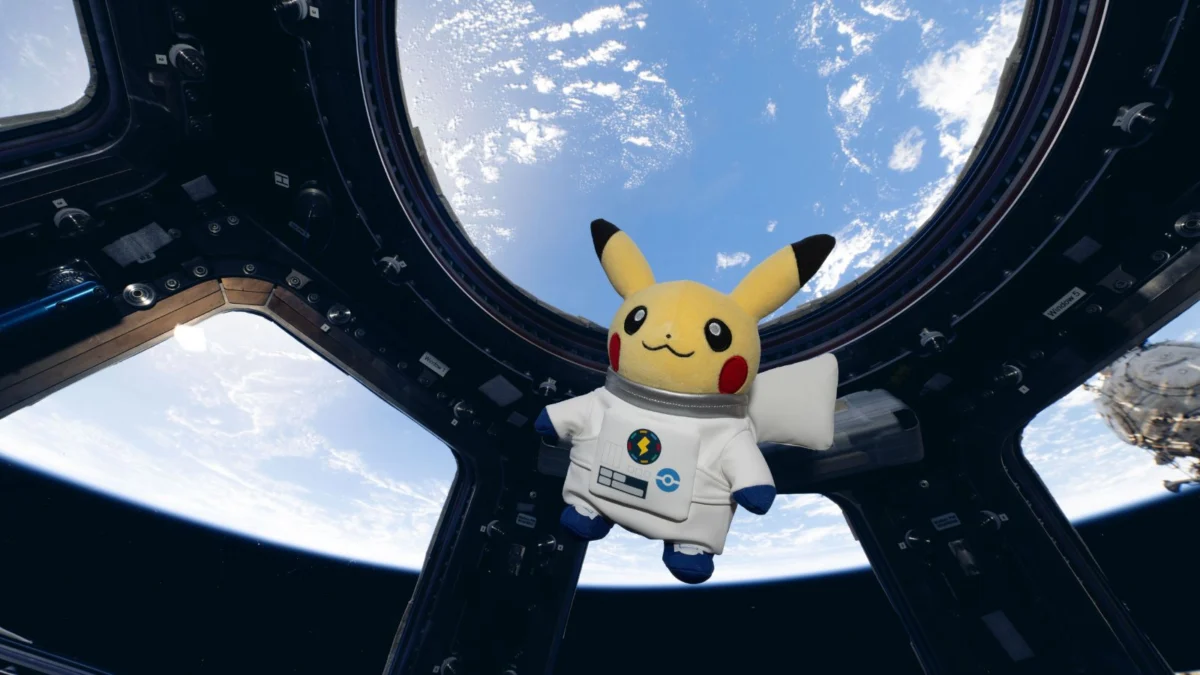
In a landmark convergence of pop culture and aerospace exploration, the European Space Agency (ESA) and The Pokémon Company International have launched a unique, continent-wide collaboration. At the heart of this initiative is a pint-sized, yellow electric-type traveler: a Pikachu plush that has officially returned from a 67-day residency aboard the International Space Station (ISS). This partnership, timed to coincide with World Space Week, aims to bridge the gap between complex scientific inquiry and the curiosity of younger generations, proving that the spirit of exploration knows no bounds—not even those of the Pokémon universe.
The Voyage: A 1,040-Orbit Odyssey
The mission, which concluded earlier this year, saw the mascot of the world’s most successful media franchise journey into the vacuum of space. The plushie departed for the ISS on April 11, 2026, alongside ESA astronaut Sophie Adenot. For the duration of its 67-day tenure in low-Earth orbit, the Pikachu served as a symbolic mascot for the mission, floating in microgravity as the station completed approximately 1,040 orbits around our planet.
The plushie safely returned to Earth on June 17, 2026, marking the end of its celestial residency. Its journey was not merely a publicity stunt; it served as the cornerstone for a broader educational campaign intended to stimulate interest in STEM (Science, Technology, Engineering, and Mathematics) fields. By positioning such a recognizable cultural icon within the sterile, high-stakes environment of the ISS, the ESA has successfully captured the imagination of millions who might otherwise feel disconnected from the realities of space travel.
Chronology: From Launchpad to Museum Halls
The collaboration has been meticulously planned to span several months, ensuring sustained engagement across various platforms.
- April 11, 2026: The Pikachu plush officially launches to the International Space Station as part of ESA astronaut Sophie Adenot’s mission.
- April 11 – June 17, 2026: The plush resides in orbit, completing 1,040 orbits of Earth.
- June 17, 2026: The plush returns to Earth, beginning its transition from flight hardware to museum exhibit centerpiece.
- September 19, 2026: Official announcement of the collaboration, revealing the "Astronaut Pikachu" exhibition.
- Late September – Early October 2026: Debut of the exhibition at ESA Open Days in major European cities, including Paris, Rome, Noordwijk, Darmstadt, Villanueva de la Cañada, and Harwell.
- October 4 – 10, 2026: World Space Week celebrations, featuring special Pokémon GO activations at key museum locations.
- October 4, 2026 – April 30, 2027: The extended Pokémon GO in-game event runs, offering players unique challenges at participating sites.
- April 2027: Conclusion of the traveling exhibition tour, which encompasses the Science Museum in London, the Deutsches Museum in Nuremberg, and Lucca Comics and Games.
The Exhibition: A Synthesis of Science and Fantasy
The traveling exhibition is designed to function as a mobile educational tool. ESA sites and major European museums will host a series of curated panels that blend genuine scientific data—explaining how the ISS operates, the mechanics of microgravity, and the challenges of long-term space habitation—with the whimsical world of Pokémon.

By integrating Pokémon characters into the narrative of European space missions, the ESA is utilizing "soft power" to make intimidating scientific concepts accessible. Visitors can learn about the history of space flight while seeing how their favorite creatures might theoretically interact with these scientific phenomena. The exhibit is not static; it is an evolving experience that travels from high-traffic museum spaces to academic institutions, ensuring that a diverse demographic, from schoolchildren to lifelong fans, can engage with the material.
Digital Integration: Astronaut Pikachu in Pokémon GO
Perhaps the most interactive aspect of this collaboration is the integration of "Astronaut Pikachu" into the mobile juggernaut Pokémon GO. From October 4, 2026, through April 30, 2027, the game will feature special raids at six participating museums, including the prestigious Science Museum in London, Cité de l’espace in Toulouse, and Space Expo in Noordwijk.
Trainers who visit these locations can challenge an "Astronaut Pikachu" in one-star raids. Success in these encounters offers players a chance to capture the character with a unique "Location Background," marking the physical visit to the museum. Furthermore, the chance to encounter a Shiny version of this special Pikachu adds a layer of exclusivity that drives foot traffic to these scientific institutions.
The gameplay is supported by a broader event during World Space Week (October 4–10). During this window, space-themed Pokémon—such as Clefairy, Magnemite, Starmie, Lunatone, Solrock, Elgyem, and Blipbug—will experience increased spawn rates near these museums. This encourages players to explore their local science hubs, effectively turning the game into a scavenger hunt for knowledge.
Official Responses and Strategic Vision
ESA Director General Josef Aschbacher has been a vocal proponent of the partnership, viewing it as a vital step in modernizing the agency’s public outreach. "Inspiring future generations is a key part of ESA’s mission," Aschbacher stated during the project’s launch. "Through this collaboration with Pokémon, we are unlocking new ways for people across Europe to connect with space. It is about showing that science is not just for the experts; it is for everyone."

The strategy is clear: by aligning with a brand as globally recognized as Pokémon, the ESA is positioning itself at the intersection of entertainment and intellectual discovery. This is not the first time Pokémon has ventured into this territory; in 2020, fans were gifted "Kibo’s Pikachu" in the Pokémon Sword and Shield games, a character themed after the Japanese Experiment Module "Kibo" on the ISS. However, this new collaboration represents a significantly larger physical and institutional commitment, moving beyond in-game gifts to a pan-European educational tour.
Implications for Public Science Literacy
The implications of this collaboration are significant. By embedding scientific institutions within the digital ecosystem of Pokémon GO, the ESA is addressing a recurring challenge in science communication: how to remain relevant in a world dominated by digital distractions.
- Increased Museum Engagement: By tying in-game rewards to physical locations, the project creates a tangible reason for players to visit museums that they might otherwise overlook.
- Multigenerational Appeal: The collaboration successfully targets both the younger demographic who engage with Pokémon GO and the older, nostalgic demographic who grew up with the series, providing a common ground for families to visit scientific exhibits together.
- Demystifying Space Exploration: By framing space exploration through the lens of a familiar character, the project lowers the barrier to entry for complex topics, potentially fostering the next generation of aerospace engineers and astronomers.
A Legacy in the Making
As the exhibition prepares to travel through 2027, the success of the initiative will likely be measured by more than just visitor numbers or in-game raid completions. It will be measured by the curiosity it ignites. The "Astronaut Pikachu" is more than a mascot; it is a catalyst for conversation.
Whether it is a child asking why the plushie floated in the station, or a gamer learning about the history of the ISS while waiting for a raid to begin, the project serves its primary goal: to keep the eyes of the public pointed toward the stars. As the ESA continues to push the boundaries of what is possible in low-Earth orbit and beyond, it is clear that they have found a powerful ally in the most famous electric mouse in the world.
In an era where the divide between the virtual and the physical is increasingly blurred, this partnership sets a precedent for how global institutions can leverage digital culture to advance the cause of scientific literacy. From the cold, vacuum-sealed chambers of the ISS to the bustling halls of London’s Science Museum, Pikachu’s journey serves as a reminder that science is an adventure—one that is, quite literally, out of this world.

 Asro
Asro
 Nana
Nana
 Layla Zulfa
 Nila Kartika Wati
 Nana Wu
 Neng Nana
 Ali Ikhwan