
 Laily UPN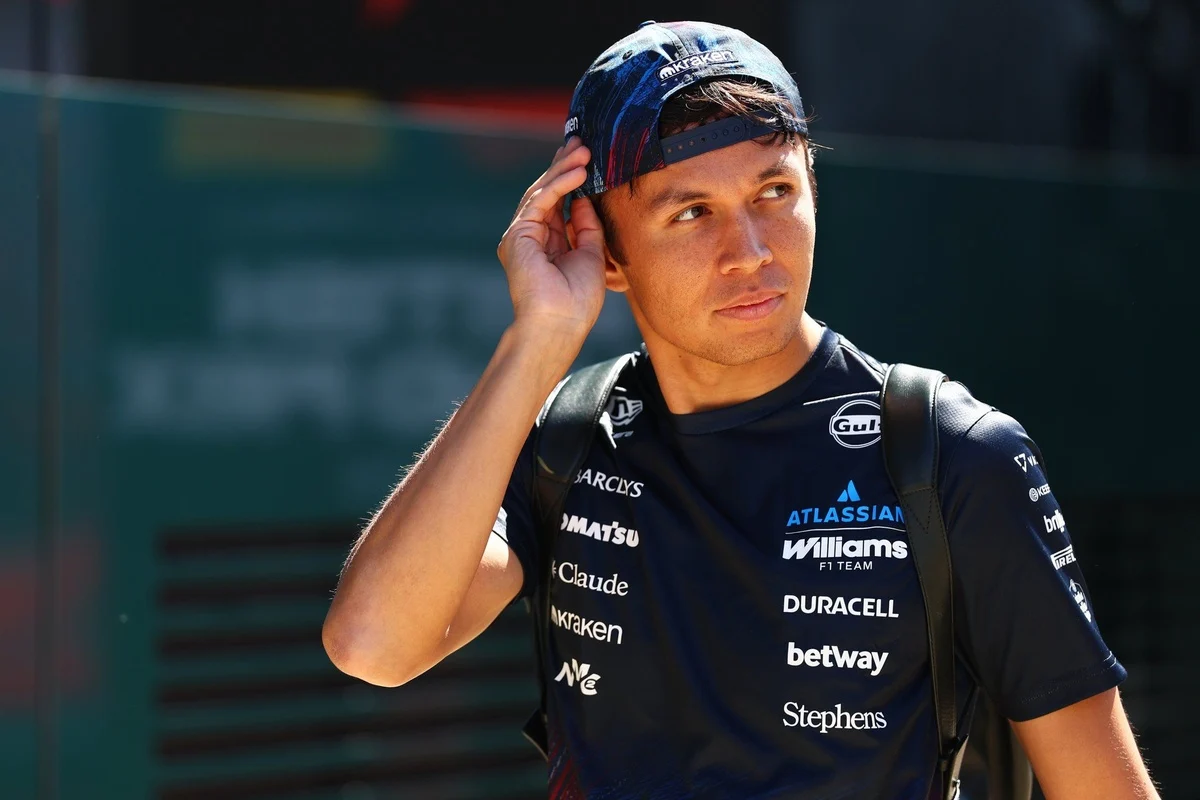
MONACO — To the outside world, the life of a Formula 1 driver is an intoxicating whirlwind of private jets, five-star hotels, high-speed adrenaline, and untouchable glamour. Yet, away from the roaring grandstands and the intense pressure of the pit lane, the day-to-day reality for the sport’s elite is surprisingly domestic.
In a revealing and candid behind-the-scenes feature released by the Williams F1 team, fan-favorite driver Alex Albon has offered a rare glimpse into his off-track life. Filmed on a Tuesday following a grueling race weekend alongside his fiancée, professional golfer Lily Muni He, the video strips away the corporate veneer of Formula 1 to expose the cozy, hyper-concentrated, and surprisingly mundane reality of living in the Principality of Monaco.
While Albon’s revelations offer a lighthearted look at the brotherhood—and neighborly proximity—shared by the grid’s biggest stars, they also arrive against the backdrop of a demanding professional season. As Williams navigates a challenging campaign, Albon’s downtime provides essential physical and mental equilibrium before the sport heads into its punishing Asian leg.
Main Facts: The Monaco Microcosm
The core revelation of Albon’s featurette is the sheer inescapable nature of the Monaco ecosystem for Formula 1 drivers. With the vast majority of the 20-driver grid residing within the tiny 2.02-square-kilometer city-state, privacy from colleagues is virtually nonexistent.
"We’ll grab breakfast this morning and we’re going to play some padel today. I will not be surprised at all if you will see some F1 drivers there," Albon remarked to the camera while sitting at a local café with Muni He, highlighting the leisurely 10:45 AM start to his day off.
Far from being an isolated sanctuary for the wealthy, Monaco functions more like a high-end university campus for racing drivers. Because the principality measures a mere 3.5 kilometers from end to end, the city’s top athletes are perpetually orbiting one another. Albon noted that roughly half of the F1 drivers on the grid share the exact same gym, while multiple competitors often live within a minute’s walk of one another.
This hyper-local living creates an environment where professional rivals transition seamlessly into everyday neighbors. Far from discussing championship points, aerodynamics, or race strategies, Albon revealed that off-duty conversations among drivers often drift into the mundane realities of domestic life—such as home renovations, furniture shopping, and dogs.
Chronology: A Standard Tuesday in the Principality
To better understand the rhythm of an F1 driver’s rest day, Albon’s video chronicled the sequence of events following a race weekend:
- 10:45 AM – Morning Routine & Coffee: Albon and Muni He begin their morning lazily, heading out to a newly opened café in Monaco. The late start underscores the physical toll of a Grand Prix weekend, noting that many of his fellow competitors are only just waking up at this hour.
- The Breakfast Coincidence: Demonstrating the claustrophobic nature of the principality, Albon recounts an incident from the previous day. While driving to a new breakfast spot, he found himself directly behind fellow driver Carlos Sainz. Upon arrival, the seemingly random gathering snowballed: Lando Norris arrived separately, Gabriel Bortoleto joined them, and George Russell had already finished breakfast earlier that morning. In total, five F1 drivers crossed paths at a single establishment within minutes.
- Afternoon Padel Session: Following breakfast, Albon traded the steering wheel for a padel racket, meeting up with Formula E stars Nick Cassidy and Mitch Evans for a competitive match.
- Endurance Training: The afternoon concluded with physical conditioning. Albon incorporated running alongside his fiancée into his routine, utilizing the sweltering Monaco heat as a natural acclimation tool ahead of high-humidity races in Southeast Asia.
Supporting Data: Training for the Heat and Navigating a Difficult Season
While Albon’s day off carried an air of relaxation, physical preparation remains a non-negotiable constant. The physical demands of Formula 1 require meticulous maintenance, but Albon admits his training regimen has specific preferences.
"I do bicycle a little bit, not crazy. I’m not good on a bicycle," Albon admitted. "That’s for Carlos. Carlos is the bicycle man. I’m running a lot more. Lily also runs with me, and then we just go together."
Crucially, the timing of these grueling runs in the oppressive Monaco summer has a distinct tactical purpose. With the F1 calendar shifting toward the grueling humidity of the Singapore and Malaysian Grands Prix, outdoor training in high temperatures serves as a vital physiological adaptation tool. Drivers lose liters of fluid during races in Southeast Asia, making heat acclimation a top priority during European off-weeks.
However, this physical preparation is paired with a mentally taxing professional reality. Albon is currently enduring a difficult and uphill campaign with Williams. The Grove-based team faced a turbulent start to the year after arriving at pre-season testing with an overweight chassis and missing the crucial private shakedown in Barcelona entirely. As a result, Williams has struggled to unlock consistent pace, leaving Albon fighting valiantly for scraps in the midfield. He currently sits 17th in the FIA Formula 1 World Drivers’ Championship standings, holding a hard-fought five points.
Official Responses and Perspectives
The lighter side of the Williams feature has resonated strongly within the motorsport community, offering a stark contrast to the sterile, media-trained persona drivers often project during official race weekend press conferences.
Formula 1’s commercial growth, heavily fueled by docuseries like Netflix’s Drive to Survive, has created an insatiable appetite for authentic, behind-the-scenes content. By pulling back the curtain on how drivers interact away from the paddock, Williams has successfully humanized its lead driver.
While neither Carlos Sainz nor George Russell have issued formal statements regarding Albon’s playful exposé of their breakfast habits, the camaraderie highlighted in the video underscores a broader shift in modern F1 culture. Unlike the fiercely hostile locker-room environments of past decades, contemporary F1 drivers—many of whom grew up racing against each other in karting categories or competing on the junior formulas—frequently share social circles, training camps, and living spaces.
Implications: The Psychological Balance of Modern F1
The insights provided by Albon’s video extend far beyond light entertainment; they shed light on the modern athlete’s need for psychological sanctuary in an increasingly saturated global sport.
With the Formula 1 calendar expanding to an unprecedented 24 races per season, the mental burden of constant travel, media scrutiny, and high-stakes performance is heavier than ever. For Albon, having a stable home base in Monaco—shared with a partner who understands the unique pressures of professional elite sports, given Lily Muni He’s career on the LPGA Tour—is critical to sustaining peak performance.
Furthermore, the "Monaco bubble" offers a paradox. On one hand, the inability to escape fellow competitors means drivers can rarely fully disconnect from their professional identity. Running into five different racers at breakfast or the gym means shop talk is never far away. On the other hand, sharing these mundane moments—complaining about furniture shopping, grabbing coffee, or sweating through a padel match—provides a normalizing counterweight to the surreal, high-pressure environment of the Formula 1 paddock.
As Albon and Williams head into the final, grueling stretch of the season, these quiet moments in the principality—punctuated by runs in the heat, matches with Formula E friends, and quiet breakfasts with family—remain the anchor keeping one of the grid’s most respected drivers grounded amidst the storm.

 Suro Senen
 Pevita Pearce
 rifanmuazin
 Nana
Nana
 Asro
Asro
 Muslim