
 Basiran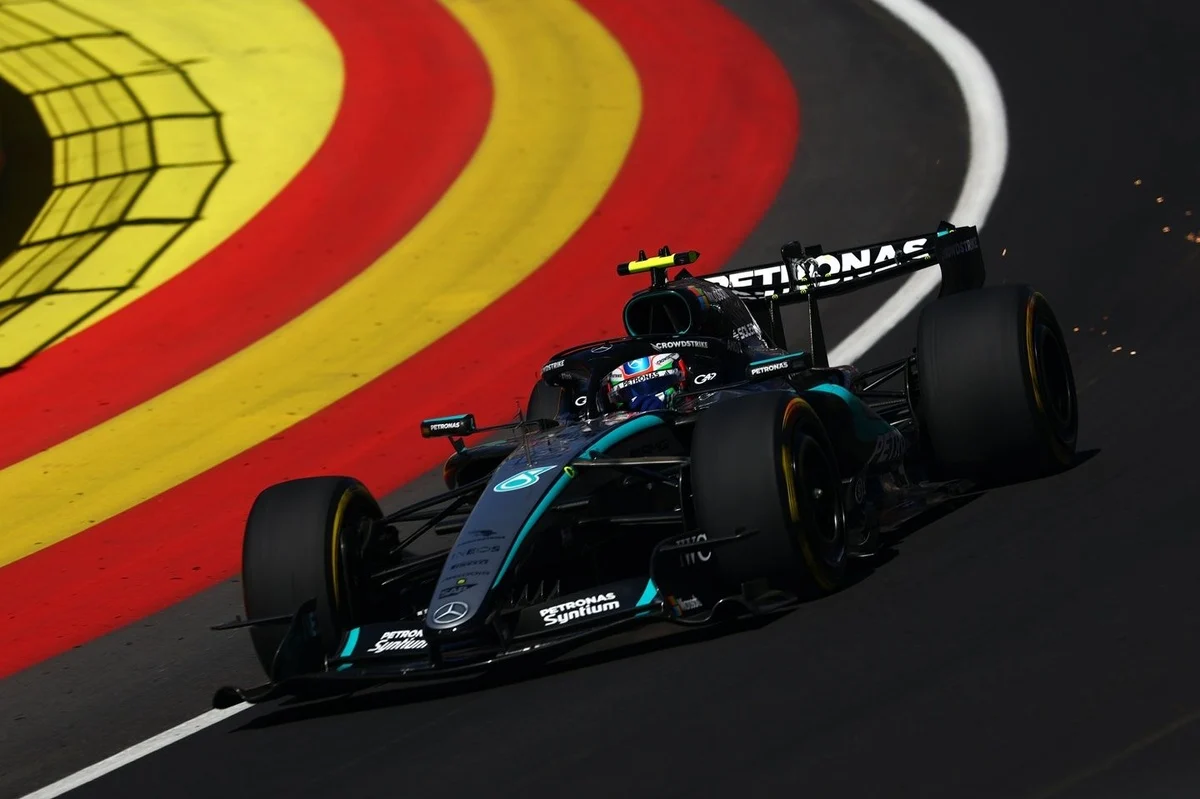
By Motorsport News Desk
Main Facts
The 2026 Formula 1 World Championship has reached an intriguing inflection point, and the narrative continues to be dictated by the resurgence of the sport’s most successful modern constructor. Mercedes-AMG Petronas F1 Team currently sits at the summit of the Constructors’ Championship with a formidable 145-point advantage over their nearest challengers. Meanwhile, young sensation Andrea Kimi Antonelli leads the Drivers’ Championship, cementing his status as a transcendent talent in his early career.
Despite navigating a turbulent period through F1’s previous ground-effect era, the Brackley-based squad has completely mastered the 2026 technical regulations. They have secured 10 victories out of the opening 14 Grands Prix. However, even with this commanding cushion, Team Principal Toto Wolff has confirmed that the organization has already shifted its primary developmental focus toward the 2027 challenger.
The strategy highlights a luxury exclusive to dominant constructors: the ability to balance ongoing defense of a current championship title with the early research and development necessary to stay ahead of an aggressive chasing pack. While rivals such as Ferrari and McLaren continue to funnel heavy upgrade packages into their 2026 cars, Mercedes has adopted a measured approach—bringing a sparse schedule of updates while keeping a wary eye on the horizon.
Chronology of the 2026 Campaign
To understand how Mercedes constructed its massive 145-point lead, one must trace the timeline of the 2026 season so far, tracking both on-track triumphs and developmental milestones.

Early Season: Mastering the New Regulations
When the 2026 technical regulations rolled out, preseason paddock chatter suggested that several teams might master the complex aerodynamic and power-unit shifts faster than others. Mercedes hit the ground running. Their aerodynamic efficiency and power-unit reliability immediately paid dividends, allowing Andrea Kimi Antonelli and his teammate to establish early dominance.
While Ferrari and McLaren struggled to extract consistent window parameters from their machinery in the opening rounds, the Silver Arrows systematically stacked up podiums and race wins. By the time the European leg of the season approached, Mercedes had already carved out a comfortable margin in both standings.
The Mid-Season Development Shift
Unlike previous years, where development wars raged deep into the autumn, Mercedes made a strategic administrative decision well before the summer shutdown. Recognizing the diminishing returns of developing a current-generation car once a championship lead stabilizes, Wolff and his technical directors began reallocating wind tunnel time and computational fluid dynamics (CFD) resources toward the 2027 car.
"2027 started a while ago, before the summer," Wolff revealed following Antonelli’s masterclass victory at the inaugural Spanish Grand Prix held at the Madring circuit. "Summer we switched resources into next year and that continues as per the plan independent of where we’re standing in the championship."
The Summer Stretch and Upgrades
While Mercedes has slowed the cadence of its factory upgrades compared to its rivals, it has not entirely frozen development on the W17 (or equivalent 2026 chassis). The team introduced a significant upgrade package at the Canadian Grand Prix in May, which successfully solidified their aerodynamic advantage on high-speed circuits.

Between Canada and the late-summer races, the team deployed minor, track-specific tweaks to optimize cooling and downforce levels. Meanwhile, competitors like Ferrari and McLaren aggressively pushed updates every few rounds. McLaren, powered by strong performances from Lando Norris—who secured two notable race wins—has shown immense momentum. Yet, the sheer points deficit has rendered their late charge an uphill climb against the relentless consistency of the Silver Arrows.
Supporting Data and Championship Landscape
An analytical look at the 2026 Formula 1 season underscores why Mercedes feels comfortable executing an early developmental pivot, though numbers alone never tell the entire story in motorsport.
The Constructors’ Picture
- Mercedes Lead: 145 points clear of the nearest constructor.
- Grand Prix Win Rate: 10 victories out of 14 races (approximately 71% success rate).
- Main Challengers: Ferrari and McLaren, both of whom have experienced fluctuating fortunes regarding tire degradation and correlation between factory wind tunnels and real-world track data.
The Drivers’ Battle
Andrea Kimi Antonelli’s championship campaign has been nothing short of remarkable. Stepping into the spotlight with Mercedes, the Italian driver has absorbed pressure with the poise of a seasoned veteran. His recent victory at the Madring circuit in Spain further extended his lead at the top of the Drivers’ Standings.
Behind him, Lando Norris has staged an impressive fightback for McLaren, capitalizing on consecutive wins to inject life into the title race. However, Norris and McLaren face a race against time. With only a handful of rounds remaining, the mathematical probability of overturning Antonelli’s lead grows slimmer by the weekend.
Upgrade Trajectories
A comparative look at the developmental rate paints a stark contrast between Mercedes and its adversaries:

- Ferrari: Heavy, consistent introduction of floor and sidepod revisions to cure mid-corner instability.
- McLaren: Frequent aero packages aimed at maximizing high-speed cornering performance, spearheaded by Norris’s driving form.
- Mercedes: Highly targeted, sparse updates (Canada in May, followed by a planned package in Malaysia), prioritizing long-term project stability over short-term developmental sprints.
Official Responses and Paddock Perspectives
Toto Wolff remains famously cautious, refusing to pop champagne corks until mathematically impossible scenarios become absolute realities. Speaking to the media, the Austrian executive emphasized that Formula 1 is too volatile a sport to coast on laurels.
"You can DNF, you can crash out. It happens two times in a row and then suddenly what looked like a nice buffer is not anymore because you have six races to go," Wolff warned on Sunday. "So, in my opinion, we just need to ignore the points until it is mathematically not realistic anymore or not real anymore for them to win, and until then just concentrate on each and every week and try to bring your best game."
Despite this conservative public stance, Mercedes is still pushing forward with a carefully calibrated update for the upcoming round. Addressing Sky Sports on Saturday ahead of the triple-header stretches, Wolff confirmed that a robust package is inbound for the Asian leg of the calendar.
"I think we are bringing a solid upgrade in Malaysia," Wolff said, looking ahead to the Asian venue. "So, we got to survive another one in Baku and let’s see, but sometimes it doesn’t correlate with the road so well. So, I hope that it does and hopefully that puts us on par with the others in terms of upgrades, but we never know."
This acknowledgment of potential correlation issues—a notorious ghost that haunted several teams during the early ground-effect era—highlights the psychological tension within top-tier engineering teams. Even when leading comfortably, the fear that a new floor or wing might induce bouncing or unpredictable handling keeps engineers humble.
Implications for the Future
Mercedes’ dual-track strategy—defending a massive 2026 lead while quietly laying the groundwork for 2027—carries profound implications for the rest of the F1 grid.
1. Psychological Advantage Over Rivals
For Ferrari and McLaren, knowing that Mercedes has already turned its primary intellectual firepower toward the following year’s regulations can be demoralizing. It suggests that Mercedes views its current package as fundamentally sound enough to cruise to the title unassisted, freeing up precious wind tunnel hours—which are heavily restricted under F1’s sliding-scale aerodynamic testing regulations—to build an even more formidable machine for 2027.
2. The Sliding Scale of Aero Testing
Under current FIA regulations, the team that leads the Constructors’ Championship receives the least amount of wind tunnel and CFD time, while lower-ranked teams receive progressively more. By shifting focus early, Mercedes is maximizing the efficiency of its limited testing allocation, ensuring that every hour spent in the tunnel directly targets long-term architectural goals rather than minor, marginal gains for a car that is already winning races.
3. Driver Dynamics and Antonelli’s Ascension
Andrea Kimi Antonelli’s stellar performance this season has validated Mercedes’ long-term driver strategy. By grooming and backing young talent, the team has secured a cornerstone driver who can deliver championships under pressure. If Antonelli closes out this 2026 title, it will mark the dawn of a new era for the team, echoing the dominant streaks of the past while ushering in a youthful new benchmark for the sport.
4. Broader Paddock Shifts
As Mercedes manages its internal resources, the rest of the F1 ecosystem is undergoing its own structural turbulence. Recent news cycles have highlighted heavy personnel movements across the pit lane—such as former Mercedes technical chief Mike Elliott taking up the CTO role at Alpine, and ongoing discussions regarding technical regulations and governance involving figures like Fernando Alonso and the FIA. In this high-stakes environment, stability is currency, and Mercedes’ ability to calmly manage its multi-year roadmap proves why they remain the benchmark of modern Formula 1 management.

As the circus heads toward Baku and eventually to Malaysia, all eyes will be on whether Mercedes’ "solid upgrade" performs as anticipated, and whether any team can mount an improbable miracle to halt the Silver Arrows’ march toward history.

 Suro Senen
 Lina Hope
 Iffa Jayyana
 Pevita Pearce
 Reynand Wu