
 Ali Ikhwan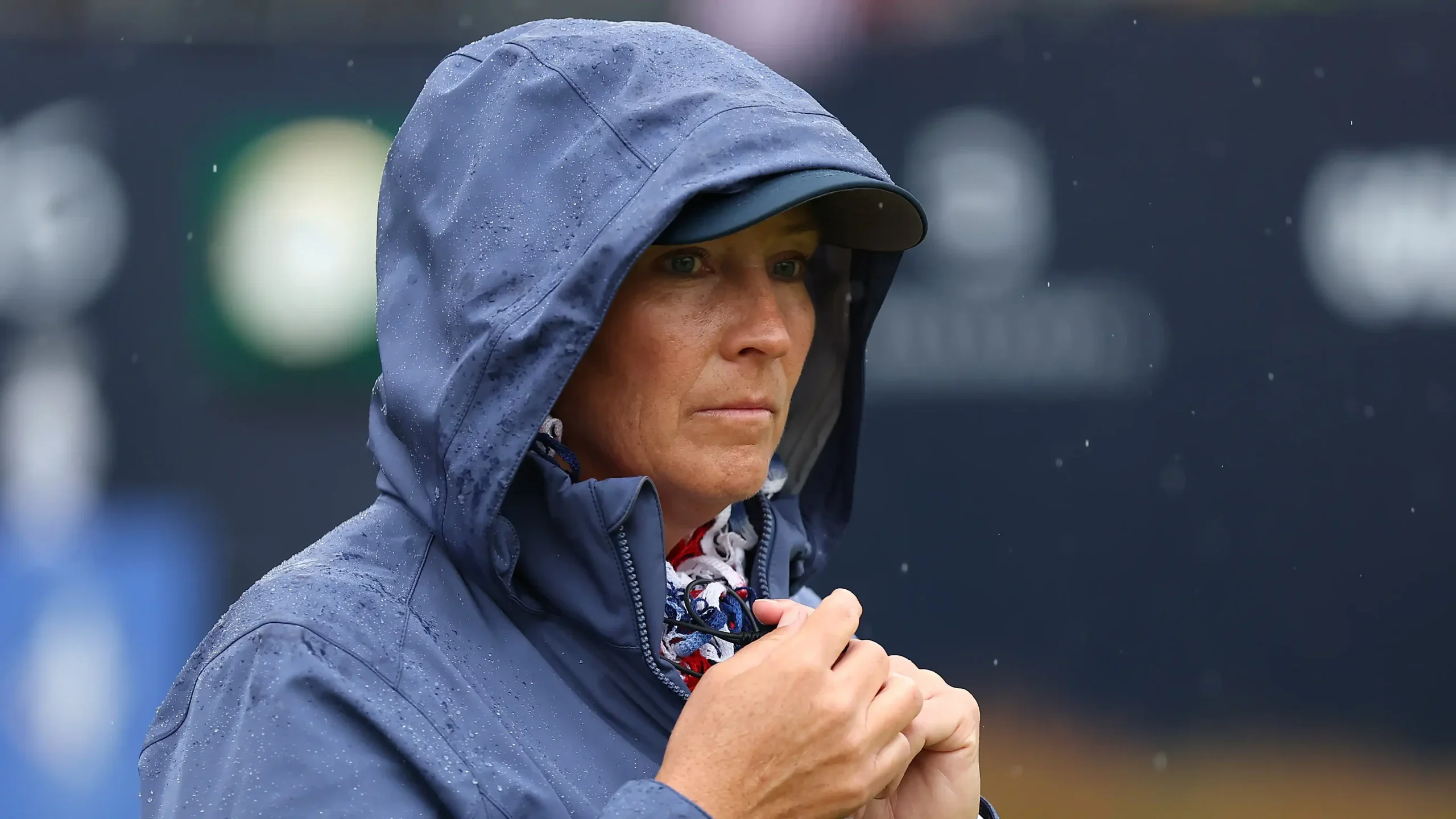
By Alan Bastable
September 13, 2026
The aftermath of a Solheim Cup defeat is a familiar, somber ritual for U.S. captains. Standing before a sea of cameras and microphones in the Netherlands, U.S. captain Angela Stanford faced the inevitable, haunting inquiry: Is there anything you would have done differently?
Following a grueling 13–15 loss to the European side at the picturesque Bernardus Golf, the defeat felt particularly stinging for the Americans. Despite a roster brimming with talent, the U.S. team emerged sluggish during the pivotal Sunday singles matches, surrendering six of the first eight points to the Europeans. As the dust settled on the Dutch fairways, the conversation shifted from missed opportunities on the scorecard to the physical state of the course itself—specifically, the speed of the greens.
The Anatomy of a Defeat: A Chronological Breakdown
The 2026 Solheim Cup was a masterclass in tension, but the momentum decisively shifted in the final hours of competition.
Early Struggles and Momentum Shifts
Entering the final day, the U.S. team required a strong start to bridge the gap. However, the anticipated charge never materialized. Instead, the Americans appeared to struggle with the nuance of the greens, a challenge that seemed to persist from the first round through the final putt. By the time the marquee players were sent out to salvage the afternoon, the European lead had become insurmountable.
The Post-Match Autopsy
In her Sunday-evening press conference, Stanford defended her tactical choices, specifically her decision to slot some of her highest-ranked players later in the lineup, citing a necessity for rest. However, when pressed on the root cause of the team’s lackluster putting performance, her answer turned toward the agronomy of Bernardus Golf.
"If you listen to everything I’ve ever said, Europeans always putt better," Stanford remarked with a wry laugh. "I don’t know why. I still don’t know why. I mean, I have a good idea, but I’m not going to say it right now." She lightheartedly added that perhaps she simply hadn’t cultivated a close enough relationship with the superintendent.
The "Gluey" Greens: A Recurring Narrative
The conversation quickly pivoted from jovial frustration to a more serious discussion regarding the Stimpmeter readings of the greens. When asked directly if the slow surfaces caught her team off guard, Stanford was blunt.
"Yeah, for sure," she admitted. "Even when we showed up in July, they were faster. And I don’t think it had anything to do with the rain, either."
The Burden of Preparation
Stanford assumed full responsibility for the team’s inability to adapt, expressing a sense of internal conflict regarding her pre-tournament messaging. "It’s my responsibility to get the team ready. This is the one thing I am kicking myself for—I just didn’t keep pushing. We had to figure out how to hit our putts a little bit harder, which is really difficult when you’re trying to change the way you putt."
She noted that while her players never complained, she wished she had "hammered it home more" that the conditions would be significantly slower than what most American pros encounter on the domestic tour. "We don’t play on greens this slow usually," she lamented.
Historical Context: A Familiar Echo
Stanford’s frustrations are not isolated. The narrative of "slow greens" has become a haunting refrain in recent American golf losses. The scene in the Netherlands bore a striking resemblance to the 2025 Ryder Cup at Bethpage Black, where the U.S. team suffered an identical 13–15 defeat.
The Shadow of Bethpage Black
Following the Ryder Cup loss at Bethpage, captain Keegan Bradley and vice-captain Jim Furyk spoke at length about the difficulty of adjusting to surfaces that failed to meet expected speeds. Bradley had requested that the greens roll at a 12.5 on the Stimpmeter—a standard that theoretically favors American players—but weather conditions and other factors saw the surfaces remain "gluey."

Furyk’s assessment at the time mirrors Stanford’s current plight: "Guys had a hard time getting putts to the hole… I think the request was always there to set the golf course up with less rough, but I think also believing that the greens would be firmer. It’s not how we were looking at the golf course."
The fact that these concerns have resurfaced within a year suggests a deeper systemic issue: the difficulty for U.S. players to adapt to European-style conditions during high-pressure international match play.
Official Responses and Gamesmanship
The most provocative element of the controversy was the suggestion of gamesmanship. Did the Europeans intentionally "defang" the greens to stifle the American game?
When the question was put to European captain Anna Nordqvist, her reaction was one of genuine surprise. Upon hearing that Stanford had suggested the greens were deliberately kept slow, Nordqvist was quick to clarify.
"Who said that?" Nordqvist asked, before firmly refuting the notion of a tactical setup. She acknowledged that the greens were indeed softer than anticipated, but attributed this solely to a rainy September in the region. "That’s obviously the weather; we can’t control that," she said.
A Focus on Fair Competition
Nordqvist emphasized that her goal throughout the week was to "showcase women’s golf" rather than manipulate the environment. "I’m not sure I believe a lot in setting up a way to fit Europe because these girls play the same golf courses week-in and week-out competing," she added.
Her defense was simple: she trusted her 12 players to perform regardless of the terrain, a philosophy that ultimately yielded a victory.
Implications for Future Solheim Cups
The aftermath of this loss forces a necessary introspection for the U.S. team as they look toward the 2028 Solheim Cup at Valhalla Golf Club in Kentucky.
Bridging the Gap
The recurring theme of green speed suggests that the U.S. coaching staff must adopt a more rigorous approach to conditioning their players for diverse turf environments. If the American team is to reclaim the trophy, they must move beyond simply relying on the high-speed greens of the domestic tour. This may involve:
- Specialized Putting Camps: Holding training sessions on varying turf types during the months leading up to the event to normalize the feel of slower, softer greens.
- Advanced Data Analytics: Utilizing green-speed simulation technology to better prepare players for the specific environmental conditions of the host venue.
- Psychological Resilience: As Stanford noted, the challenge is not just technical but mental. Teaching players to adjust their stroke force without second-guessing their mechanics is paramount.
The Road to Valhalla
The next Solheim Cup on home soil provides a blank slate. As Stanford pointed out, the mowers at Valhalla will be at the ready, and the expectation will be that the U.S. team is better equipped to handle whatever the course—and the weather—throws at them.
For now, however, the American team is left to ponder what might have been. The 13–15 scoreline is a narrow margin, and in the high-stakes world of professional match play, it is often the smallest details—the speed of a blade of grass, the weight of a putt, the conviction of a captain—that determine who lifts the trophy and who is left answering the difficult questions.
The lesson from the Netherlands is clear: in the modern era of the Solheim Cup, preparation must be as precise as the putts themselves. Whether or not the greens were intentionally slow is a debate that will continue in the locker rooms, but for the American contingent, the path forward requires an honest assessment of their own limitations in the face of changing conditions.


 Pevita Pearce
 rifanmuazin
 Laily UPN
 Nana
Nana
 Lina Hope
 Evan Lee Salim
 Asro
Asro