
 Pevita Pearce
By Josh Sens
September 13, 2026
In the high-stakes arena of professional team golf, the line between a morale-boosting celebration and a premature victory lap is thinner than the rough at a major championship. At the 2026 Solheim Cup in the Netherlands, that line was blurred by the windows of a luxury coach bus, turning a moment of genuine team bonding into a flashpoint for intense public scrutiny and debate.
The incident, which saw members of the U.S. Solheim Cup team celebrating with beer following a dramatic Saturday comeback, has reignited long-standing questions regarding team culture, the impact of social media optics, and whether the "highs" of match play can effectively coexist with the disciplined focus required for Sunday singles.
The Catalyst: Saturday’s Euphoria
The drama began on Saturday evening, a day that had proven to be a roller coaster of emotional extremes. For much of the day, the American side faced the prospect of entering the final day of competition in a significant hole. However, a late-afternoon surge, anchored by Jennifer Kupcho’s brilliant heroics in the fourball format, successfully clawed the U.S. team back into a deadlock.
As the score leveled at 8-8, the tension that had gripped the squad for 36 holes dissipated in a wave of collective relief. Boarding the team bus, the players allowed themselves a moment of release. Beers were opened, laughter echoed through the aisles, and videos of the scene were uploaded to social media platforms. Within minutes, the footage had traveled across the globe, inviting immediate reaction from fans and pundits alike.
Chronology of a Controversy
The timeline of the "bus incident" serves as a case study in how modern digital exposure can color the perception of athletic competition.
- Saturday, 5:00 PM: Jennifer Kupcho secures a clutch victory, tying the overall score at 8-8.
- Saturday, 7:00 PM: Videos of the U.S. team celebrating on the bus circulate on X (formerly Twitter) and Instagram.
- Saturday, 9:00 PM: Online discourse shifts from celebrating the comeback to questioning the optics. Critics argue the celebration was "too soon" and lacked the professional gravity expected of an international representative team.
- Sunday, 9:00 AM: The European team arrives at the course with a visible sense of renewed focus.
- Sunday, 3:00 PM: The European team dominates the singles matches, winning six of the first eight bouts to secure a decisive lead and eventually, the Solheim Cup.
Analyzing the Optics: The Price of a Party
The criticism directed at the U.S. team was rooted in the age-old sports adage: "Act like you’ve been there before." Critics argued that by engaging in a public, alcohol-fueled celebration while the score was still tied, the American players provided the European squad with a potent source of "bulletin board material."
For the Europeans, the footage wasn’t just a video; it was an indictment of the Americans’ seriousness. Whether or not it provided a psychological edge is a matter of debate, but there is no denying that the narrative surrounding the U.S. team shifted from "resilient comeback artists" to "players who lost their focus."
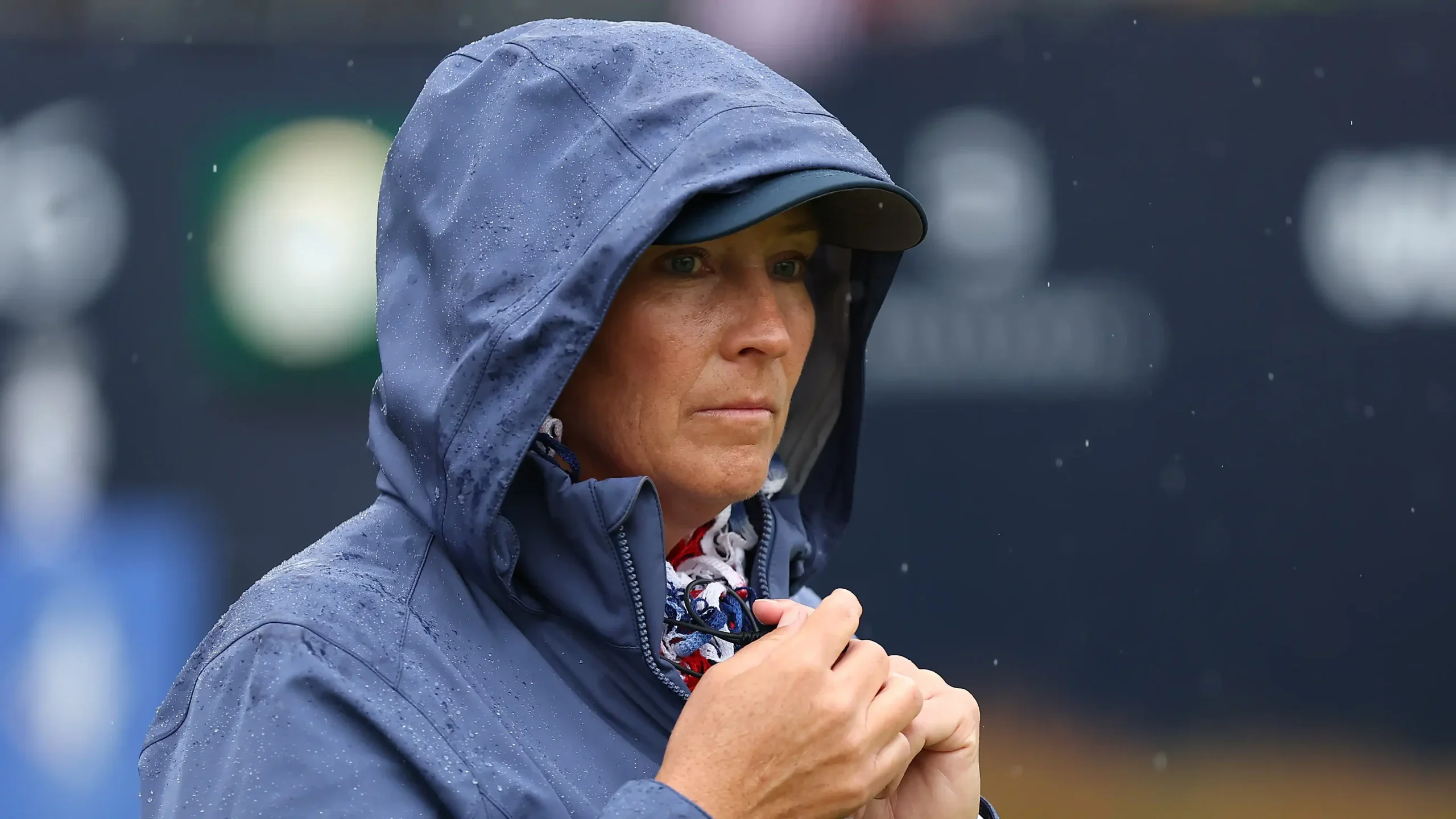
U.S. Captain Stacy Stanford found herself navigating a precarious path when pressed on the matter. Stanford, a seasoned veteran of team golf, acknowledged that balancing the mental health of players with the need for discipline is a delicate tightrope walk.
"Well, that’s kind of tricky because you don’t ever want to take away from that moment," Stanford stated when asked about the team’s emotional management. "The worst thing I could have done is go in there and be like, ‘Okay, y’all, come off this high.’ We’re never going to see anything like that again. I talked to Kupcho and everybody, and they said they got good rest, but yeah, it did take a minute to come off because it was a pretty high high."
The "Invisible" Culture: Europe’s Approach
While the American celebration was captured in high definition, the European team was quietly cultivating its own internal culture, albeit one that remained shielded from the public eye. Assistant captain Mel Reid offered a fascinating window into how Europe handled similar emotional peaks.

Reid noted that after Friday’s session—where Celine Boutier saved a critical half-point with a spectacular up-and-down—the European bus was equally rowdy. However, the difference was in the privacy afforded to the squad.
"The team bus is a special place for Team Europe," Reid said. "I think it’s where we really unite, we really get together. We put the music on and it’s a special place. I’m just glad there’s no cameras there."
Reid’s comments highlight a significant cultural divide in modern sports: the management of the "private" space versus the "public" image. For the Europeans, keeping the celebration behind closed doors allowed them to process their emotions and reset for the following morning without the need to perform for an online audience. By the time they reached their hotel, the emotional reset was complete.
The Sunday Hangover: From Celebration to Defeat
The contrast in results on Sunday was stark. While the U.S. team struggled to regain the momentum that had defined their Saturday comeback, the Europeans appeared to have moved past their own emotional spikes with clinical efficiency.
According to Reid, the European team’s Sunday morning routine was almost entirely devoid of traditional pep talks. The players arrived with a singular, quiet purpose. "Not one of us needed to speak to any player, really," Reid observed. "They just kind of knew what their job was today in a very calm, passionate, and fierce way. The horses are ready, just let them go, and they delivered."
This observation poses a difficult question for the U.S. contingent: did the intensity of the "high" from Saturday night make the "low" of Sunday morning harder to overcome? While athletes are professionals capable of compartmentalizing, the human element of exhaustion—both physical and emotional—cannot be entirely dismissed.
Implications for Future Solheim Cups
The 2026 Solheim Cup will likely be remembered for the "bus incident," but the deeper takeaway is a lesson in the dangers of the digital age. As athletes become increasingly accessible via social media, the boundaries between private decompression and public posturing have vanished.
For future captains, the incident serves as a cautionary tale about the management of team spaces. While team unity is the bedrock of Solheim Cup success, the optics of that unity can be weaponized by opponents or scrutinized by an unforgiving public.
- Digital Literacy: Teams must decide whether to embrace the "behind-the-scenes" access fans crave or whether to implement stricter media blackouts during critical junctures.
- Emotional Regulation: The "high" of a match-play comeback is a powerful tool for morale, but as Stanford admitted, it can be difficult to dial back. Coaching staffs must determine how to facilitate joy without allowing it to compromise the competitive edge.
- The "Bus" as a Symbol: The bus has become a metaphor for the team itself—a confined space where internal energy is generated. Whether that energy is used to propel the team forward or causes it to crash depends entirely on the leadership inside.
Conclusion: The Horses Got the Cup
Ultimately, the debate over the U.S. team bus is a distraction from the reality of professional golf: the scoreboard is the only thing that matters. The American team’s celebration was a reflection of their passion and their genuine belief in their comeback. However, in the unforgiving theater of the Solheim Cup, passion is rarely a substitute for consistency.
Europe arrived at the 2026 Solheim Cup with a mission, and they executed it with a cold-blooded efficiency that turned Sunday into a coronation. While the U.S. team’s bus ride became the defining image of the tournament, the European performance on the course was the defining reality.
As the dust settles on the Dutch fairways, the lesson remains clear: the bus may get the headlines, but in the end, it is the horses—the players who can channel their emotions, stay focused through the noise, and execute under the weight of expectation—who get the Cup. For Team USA, the long road home will be filled with reflections on what might have been, and perhaps, a better understanding of the fine line between celebrating a moment and letting it slip through your fingers.

 Ali Ikhwan
 rifanmuazin
 Laily UPN
 Nana
Nana
 Lina Hope
 Evan Lee Salim
 Asro
Asro