
 Raul Delapena Setiawan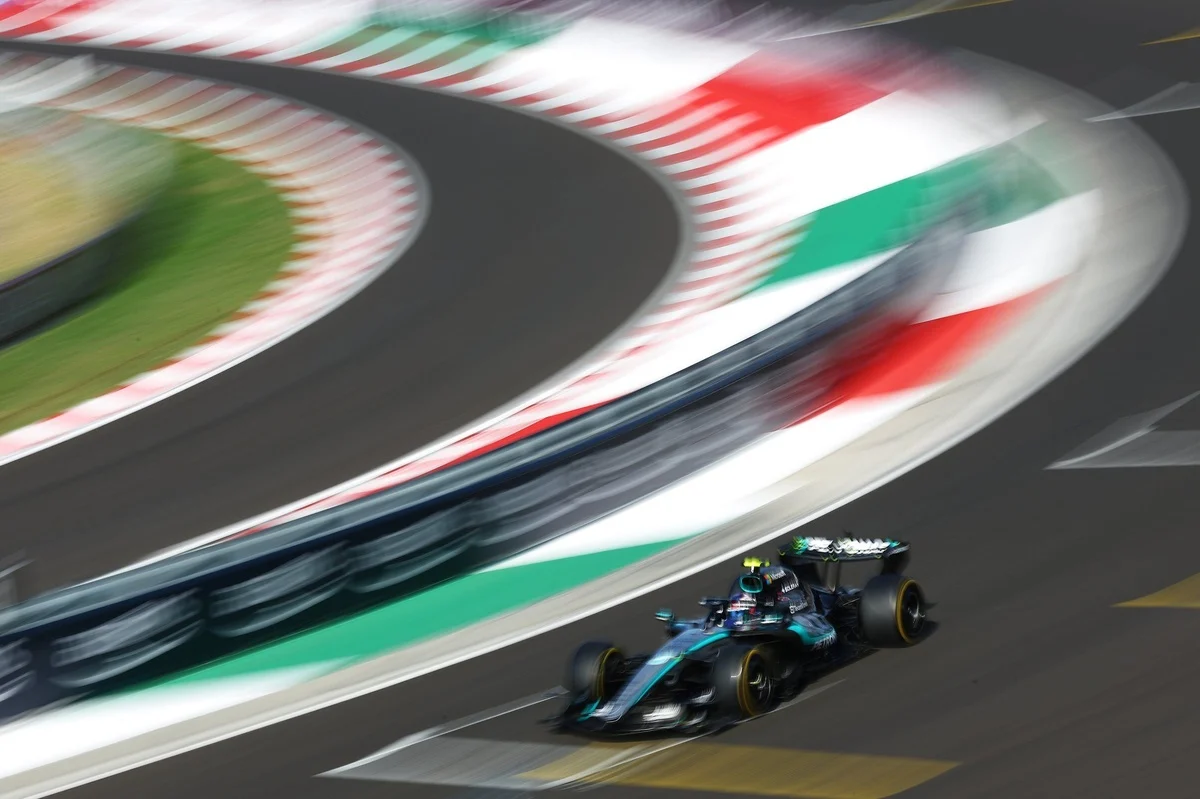
The Formula 1 paddock descended upon the sweltering Hungaroring this weekend with one burning question: which team has finally unlocked the secret to sustainable race pace? On the surface, Friday’s practice sessions for the Hungarian Grand Prix appeared to be a masterclass from Ferrari. The Scuderia topped both Free Practice 1 and Free Practice 2, asserting a half-second advantage over their closest rivals. However, as the sun set over the Budapest circuit and the engineers poured over the telemetry data, the narrative shifted from one of dominance to one of deep-seated concern.
In the high-stakes world of Formula 1, the timesheet is a notorious deceiver. While the qualifying simulations—often run on lower fuel loads—suggested a Ferrari runaway, the long-run simulations painted a drastically different picture. The true pace of the field lies in the high-fuel, race-trim data, and here, it is championship leader Kimi Antonelli who has emerged as the man to beat.
The Illusion of Ferrari’s Single-Lap Prowess
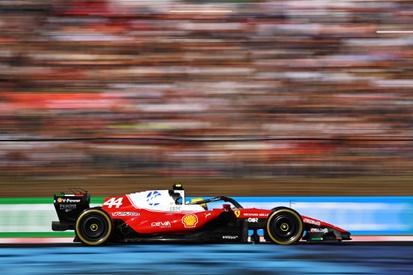
Ferrari’s performance on Friday was a tale of two distinct philosophies. Over a single flying lap, the SF-24 proved to be an absolute weapon, extracting maximum grip from the soft compound tyres. Charles Leclerc looked comfortable, pushing the car to the limit and setting the benchmark that the rest of the field struggled to match.
Yet, the long-run data tells a sobering story for the Maranello-based squad. When the cars were loaded with fuel to simulate race stints, the Ferrari’s consistency evaporated. Adjusting for tyre degradation and stint lengths, Leclerc’s race pace was significantly adrift of the pace set by Mercedes’ Kimi Antonelli. Specifically, the championship leader was, on average, 0.46 seconds per lap faster than the Monegasque driver.

This creates a tactical headache for Ferrari. If they prioritize a high-downforce setup to secure pole position on Saturday, they risk cooking their tyres during the race. If they pivot toward a race-focused setup, they risk losing the track position that is so vital at a circuit as notoriously difficult for overtaking as the Hungaroring.
Chronology of a Friday Shift
The day began with anticipation, as the track temperature soared and the teams tested their latest aerodynamic configurations.
Free Practice 1: The opening session saw a flurry of activity as teams evaluated initial balance. Lewis Hamilton, in the Ferrari, displayed flashes of brilliance, posting long-run times that were roughly four-tenths of a second faster than his teammate George Russell. However, the session was not a true barometer, as championship leader Kimi Antonelli sat out, allowing Frederik Vesti to gather critical data. This absence left a void in the data set that would only be filled in the afternoon.
Free Practice 2: The afternoon session was defined by the transition from qualifying simulation to race-distance endurance testing. The session was interrupted by a red flag caused by Franco Colapinto, which hampered several teams’ plans. Antonelli, having missed the morning, hit the ground running. Despite a minor error on his second attempt and the disruption caused by the red flag, he maintained a relentless, metronomic pace that dwarfed the competition.
Supporting Data: The Pace Gap
When we look beyond the headline figures, the data reveals a complex hierarchy. The "long-run" analysis, which remains the most accurate predictor of race performance, offers a startling look at the current competitive order:
- Kimi Antonelli (Mercedes): The clear pacesetter. His ability to maintain consistent lap times despite the heat and heavy fuel load marks him as the current favorite for Sunday.
- Lando Norris (McLaren): Norris finished the long runs +0.52s off the pace of Antonelli. While not the fastest, the McLaren package looks stable and predictable, a vital characteristic for tire management.
- George Russell (Mercedes): Russell clocked in at +0.61s. His performance suggests that the Mercedes duo will be a formidable force, provided they can manage the heat cycles on the rear tyres.
- Lewis Hamilton (Ferrari): A disappointing +0.67s behind the leader. Hamilton’s struggle with the long-run consistency is perhaps the most surprising element of the weekend so far.
The contrast between the single-lap speed and the race-distance deficit for Ferrari and Red Bull is stark. It suggests that both teams have dialed in their cars for a "glory run" rather than a 70-lap grind.
Red Bull’s Struggle for Rhythm
Red Bull Racing, usually the gold standard for race pace, appears to be in a state of flux. Max Verstappen’s weekend has been characterized by a lack of correlation between his qualifying pace and his race simulation.
In FP1, Verstappen looked sharp, but as the fuel loads increased in FP2, the RB20 began to struggle with balance. Isack Hadjar finished his long runs an average of 0.79 seconds per lap slower than Antonelli, with Verstappen trailing by 0.82 seconds. Unlike Ferrari, who showed some promise in the morning, Red Bull’s long-run pace has been lackluster throughout the day. This raises the prospect of a radical setup change overnight, a risky move that could sacrifice qualifying performance for a better Sunday result.

The Aston Martin Upgrade: A Step in the Wrong Direction?
One of the most anticipated storylines of the weekend was the major upgrade package brought by Aston Martin. The team, struggling to find form this season, arrived in Budapest hoping to bridge the gap to the midfield.
Unfortunately, the initial findings are far from promising. Fernando Alonso, the veteran who usually extracts the maximum from any machinery, found himself struggling to keep pace. In the long runs, he was the second-slowest driver on the grid, lagging by a massive 3.42 seconds per lap. Only Valtteri Bottas, who was 3.93 seconds off the pace, fared worse.
The primary culprit remains the car’s top-speed deficit. The data shows that the Aston Martin is hemorrhaging time in the first sector, where the long start-finish straight exposes their aerodynamic drag. If the team cannot rectify this, they face a long, lonely race at the back of the pack.
Midfield Dynamics: The Battle for the Points
While the front-runners grapple with their race-pace woes, the midfield remains a tight, highly competitive scrap. Nico Hulkenberg continues to be the outlier for his team, posting impressive long-run data that puts him at +1.25s off the leader. Hulkenberg has been a consistent performer on Fridays, though his inability to translate this into points remains a lingering question.

The Racing Bulls (+1.46s) appear to be the most likely challengers to Hulkenberg for the final points-paying positions. Alpine, meanwhile, seems to be slipping further away from the pack at +2.16s. Further down the field, Williams is facing a difficult weekend, currently closer to the struggling Aston Martin and Cadillac teams than to the midfield contenders.
Official Responses and Tactical Implications
While team principals have remained tight-lipped in the media pens, the sense of urgency is palpable. Ferrari engineers are reportedly working late into the night, analyzing the delta between their qualifying and race setups. The goal is clear: they must find a way to stabilize the car’s rear end without compromising the front-end bite that makes the SF-24 so fast over a single lap.
For Mercedes, the atmosphere is one of cautious optimism. The team has been careful not to overhype their position, acknowledging that the track conditions at the Hungaroring are notoriously volatile. Antonelli’s performance, however, speaks for itself. If he can replicate that form on Sunday, Mercedes may have the strategic flexibility to control the race from the front, or at least keep the pressure on Ferrari until the final pit stops.
Conclusion: The Road to Sunday
As the paddock prepares for Saturday’s qualifying session, the Hungarian Grand Prix is shaping up to be a strategic chess match rather than a simple sprint. The disparity between single-lap speed and long-run consistency has turned the weekend on its head.

If the race were held today, Ferrari would be at a significant disadvantage, struggling to maintain the pace required to keep the Mercedes cars at bay. Red Bull, too, is in a precarious position, forced to choose between a strong qualifying position and a sustainable race pace.
For the fans, this unpredictability is a blessing. The Hungaroring, with its tight, twisty layout, rarely provides easy overtaking, but with the field so tightly packed in the midfield and a genuine question mark over the top three teams, we are poised for one of the most tactical races of the season. The question is no longer who is the fastest over one lap, but who has the smartest engineers and the most robust race-day strategy. The mirage of Friday is beginning to clear, and the reality of a wide-open Sunday is finally taking shape.


 Pevita Pearce
 Evan Lee Salim
 Neng Nana
 Nana Wu
 Lina Hope

 Sagoh
Sagoh
 Iffa Jayyana