
 Ammar Sabilarrohman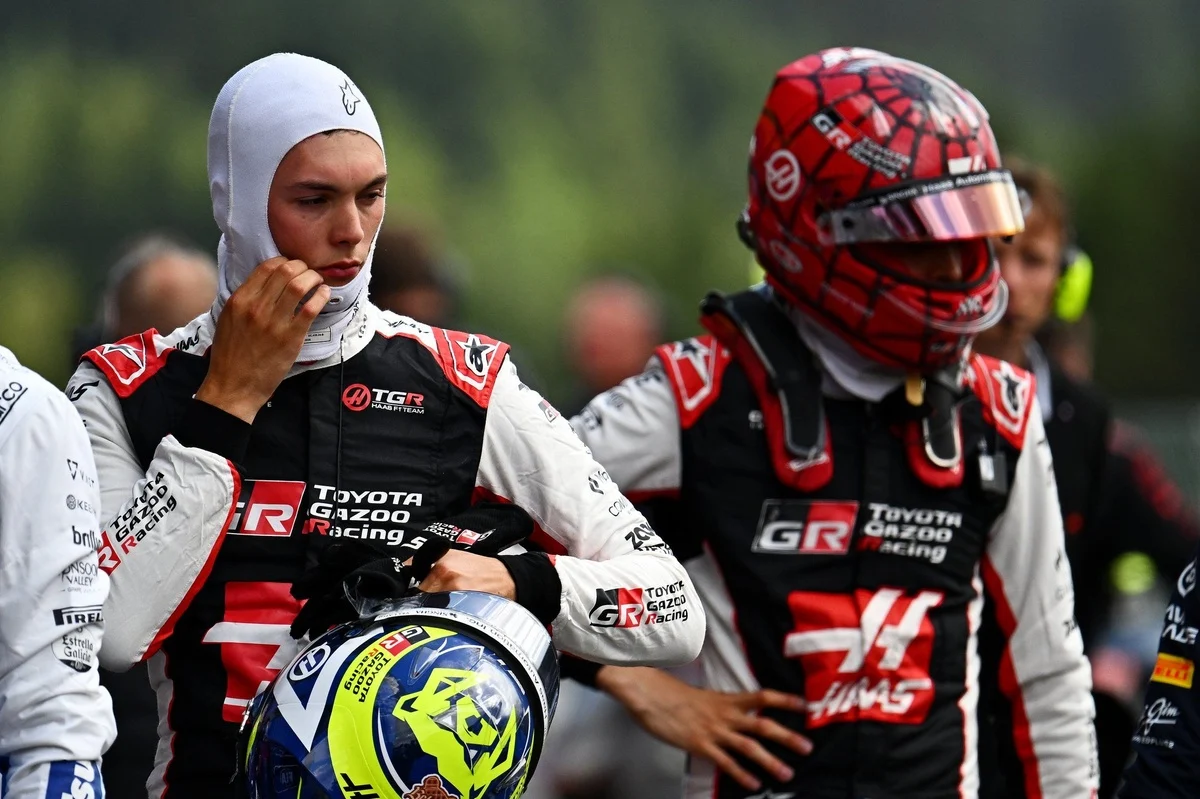
The 2026 Formula 1 season, once viewed as a window of opportunity for the Haas F1 Team, has descended into a period of acute frustration. Following a dismal showing at the Belgian Grand Prix at Spa-Francorchamps, the American outfit has now extended its points-less streak to four consecutive races. This lack of production has not only stifled the team’s momentum but has also exposed a widening gap between Haas and their midfield rivals, specifically Racing Bulls and the newly competitive Audi entry, both of which have successfully leapfrogged the Kannapolis-based squad to battle for scraps alongside Alpine.
A Season of Diminishing Returns
The early stages of the 2026 season offered a glimmer of hope for Haas. The VF-26 appeared to be a stable platform capable of occasionally challenging for the bottom end of the top ten. However, as the development race in the paddock has accelerated, Haas has found itself increasingly marginalized. In modern Formula 1, the rate of technical evolution is the primary determinant of success, and it has become painfully clear that Haas has been outpaced by the engineering resources and tactical agility of its direct competitors.
The Belgian Grand Prix was intended to be a reset, yet it resulted in a total collapse. The team’s inability to find a setup that could extract performance from the VF-26 was compounded by the fact that both drivers—Esteban Ocon and his teammate—were fighting a losing battle against the car’s fundamental handling characteristics.
The Spa Debacle: A Chronicle of Miscommunication
The race at the historic Spa-Francorchamps circuit was effectively over for the Haas team before the field had even navigated the opening lap. As the lights went out and the pack funneled into the tight constraints of the La Source hairpin, a chaotic sequence of events unfolded.

The incident involved a three-wide scenario that left no room for error. According to eyewitness accounts and telemetry analysis, the confusion stemmed from a technical issue experienced by one of the Haas cars, which created a bottleneck. Esteban Ocon, caught in the middle of the sandwich, attempted to navigate the congestion, only to find himself entangled with his teammate. The resulting contact sent Ocon off-track and left both machines suffering from tire punctures, forcing an immediate trip to the pits that effectively relegated both cars to the back of the field for the remainder of the afternoon.
"It was not even a real fight," Ocon explained in the aftermath of the race. "Ollie [Bearman] had his issues with his gear out of the corner. We were three wide because we were trying to avoid him. He was a slow-moving object. I was on the inside, Nico [Hülkenberg] was there. Ollie was slightly in the back, actually. I braked early to let Nico go. At the last second, I saw Ollie coming, and we collided. It’s quite unfortunate really."
Technical Stagnation and Midfield Dynamics
The statistical reality for Haas is grim. The team has failed to register a point since the opening quarter of the season, a dry spell that has allowed Racing Bulls and Audi to pull away in the Constructors’ Championship. While Alpine has shown inconsistent form, they have still managed to secure vital points in scenarios where Haas has faltered.
The primary issue appears to be a lack of aerodynamic efficiency and an inability to optimize tire degradation over a full race distance. When the VF-26 is forced to fight in close-quarters traffic—as seen in Spa—the car’s lack of downforce and thermal management issues become magnified, leading to the erratic behavior that resulted in the opening-lap collision.

The team’s inability to bring consistent, performance-enhancing upgrades to the car has led to a stagnation that has not gone unnoticed by the drivers. Esteban Ocon, in particular, has faced a challenging tenure with the team this season. His public comments reflect a driver who is aware that the car’s performance ceiling is simply too low to compete with the midfield leaders.
Command and Control: Ayao Komatsu’s Response
For Team Principal Ayao Komatsu, the collision between his drivers was the breaking point in a series of operational errors. Known for his methodical and calm approach to management, Komatsu’s post-race reaction was uncharacteristically firm. He made it clear that while he values open dialogue, the "rules of engagement" must be strictly adhered to moving forward.
"We just have to make sure it doesn’t happen again," Komatsu told the media during the lead-up to the Hungarian Grand Prix. "As always, even on a Sunday after the race, I just wanted to hear points of view from both sides, and then I put my points of view, and then we spoke about it, and then days after as well, so it’s all fine."
When pressed for his specific assessment of who was at fault, Komatsu chose to pivot away from finger-pointing, focusing instead on the systemic requirement for professionalism. "I don’t think I need to share that here. My interest is, of course, whatever the reason, it just cannot happen again. Full stop. So, we just have to have a clear rule of engagement."
This directive is a signal that internal patience is wearing thin. In a sport where every position in the Constructors’ Championship translates into millions of dollars in prize money, internal collisions are viewed as a luxury that a struggling team like Haas cannot afford.
Implications for the Future
The incident at Spa has raised broader questions regarding the long-term stability of the Haas project. With Esteban Ocon’s future at the team currently the subject of intense speculation, the internal friction could not have come at a worse time. Ocon has maintained a professional stance, suggesting that the team will "come out stronger" from the incident, but the underlying tension is palpable.
"It’s not something that we want to happen because we’re already struggling to be exactly on pace to be in the point-scoring zone," Ocon noted. "We had a discussion with Ayao, Ollie, and myself straight away after the race. A very straightforward conversation. It must not happen, for sure. It’s not like we’re fighting for the World Championship."
The Path Forward
For Haas to salvage anything from the 2026 season, they must address three critical areas:

- Operational Discipline: The "rules of engagement" mentioned by Komatsu must be codified and strictly enforced to prevent further self-inflicted damage.
- Development Velocity: The engineering department must identify why the VF-26 has failed to evolve at the same rate as the Audi and Racing Bulls chassis. Without a breakthrough in aerodynamic efficiency, the team will remain a backmarker for the remainder of the calendar.
- Driver Cohesion: With the team struggling, the relationship between the drivers must remain collaborative. If the drivers view one another as obstacles rather than assets, the atmosphere within the garage will inevitably degrade, further impacting performance.
As the F1 circus moves into the second half of the season, the pressure on Haas is mounting. The team is at a crossroads; they can either use the lessons from the Spa incident to foster a more disciplined approach to the final races, or they risk drifting further into the bottom of the standings.
The 2026 season was intended to be a year of growth, but it has instead become a test of resilience. For Ayao Komatsu, the task is clear: stabilize the ship, enforce the rules, and find the pace necessary to return to the points. Anything less will be considered a failure of the current technical and management cycle.
As fans look toward the next Grand Prix, the spotlight remains firmly on the Haas garage. Whether they can translate their "straightforward conversations" into improved performance on the track remains the biggest question of the season. In Formula 1, silence is often the sound of a team falling behind, and Haas can no longer afford to be quiet.


 Neng Nana
 Nana Wu

 Lina Hope
 Sagoh
Sagoh
 Iffa Jayyana