
 Ali Ikhwan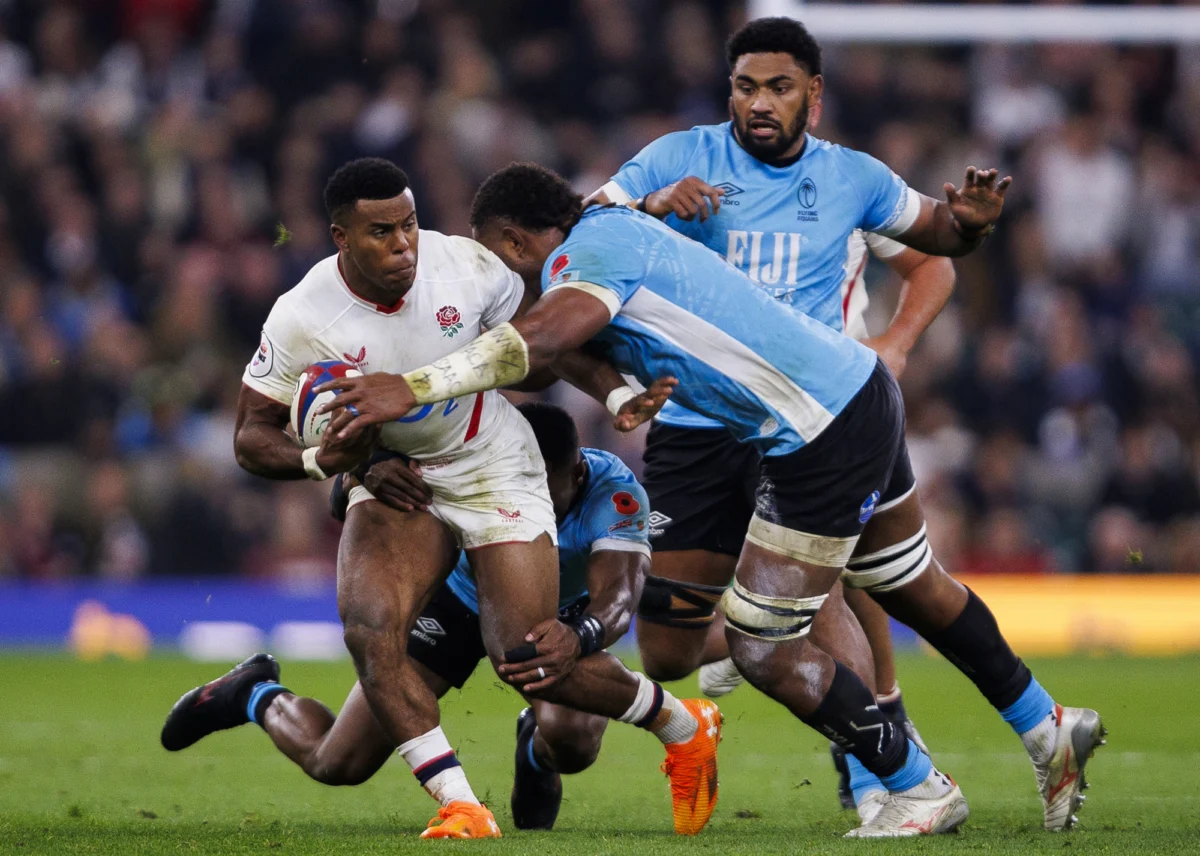
The eyes of the rugby world turn to Merseyside this weekend as Everton’s state-of-the-art Hill Dickinson Stadium prepares to host its first-ever international rugby union fixture. In an intriguing twist of tournament logistics, this Nations Championship encounter sees Fiji take on England in what is nominally a home fixture for the Pacific Islanders. For Steve Borthwick’s England, the match represents far more than a simple test of strength; it is a desperate search for a turning point following a dismal run of five consecutive defeats.
Main Facts: The Stakes of the Nations Championship
This weekend’s clash is defined by contrasting pressures. For England, the narrative is one of stagnation. Coming off a demoralizing humbling at the hands of the world-champion Springboks in Johannesburg last week, Borthwick’s side is in the midst of their worst slump in recent memory. A five-match losing streak has left the England head coach under immense scrutiny, with supporters and pundits alike calling for a fundamental shift in both tactical approach and personnel.
Conversely, Fiji enters the fray with a point to prove. Despite their reputation as the sport’s most dangerous entertainers, their campaign opener against Wales in Cardiff ended in disappointment. Ranked ninth in the world, the Flying Fijians are acutely aware that their 2023 victory over England at Twickenham remains the gold standard for their program. Under acting head coach Senirusi Seruvakula, they have opted to host their Nations Championship fixtures in the UK to optimize travel logistics, and they are hungry to claim another major scalp on English soil.
Chronology: The Road to Liverpool
The journey to this historic match has been one of tactical recalibration for both camps. Fiji’s decision to base themselves in the UK was a strategic move aimed at minimizing the toll of long-haul travel, allowing them to focus entirely on physical conditioning and high-intensity training. Following the loss to Wales, the Fijian management team took swift action, announcing seven changes to their starting XV. The return of Caleb Muntz to the fly-half position is a clear signal of intent; the coaching staff is prioritizing creative distribution and a more fluid backline attack to dismantle the English defense.
England’s preparation has been defined by defensive consolidation and a search for a coherent attacking rhythm. Steve Borthwick has opted to shuffle his deck, moving the dynamic Tommy Freeman to the wing to accommodate a new-look midfield partnership. The selection of Henry Slade alongside Seb Atkinson suggests a desire for greater tactical control and distribution in the center channels. Furthermore, the inclusion of Guy Pepper in the pack over the seasoned Tom Curry indicates a shift toward a specific defensive profile, aimed at neutralizing the breakdown threats that Fiji inevitably poses.
Supporting Data: Tactical Analysis and Team Composition
The team sheets reflect the differing philosophies currently at play. Fiji’s lineup is built for pace and unpredictability. With the explosive Josua Tuisova at inside center and the elusive Salesi Rayasi at fullback, Fiji will look to isolate England’s defenders in wide channels. Their pack, captained by Tevita Ikanivere, is tasked with providing the platform for what is arguably the most dangerous backline in the competition.
England’s selection, meanwhile, is a blend of experience and experimental hunger. Captain Jamie George remains the heartbeat of the side, but the inclusion of three uncapped players on the bench—George Kloska, Benhard Janse van Rensburg, and Noah Caluori—highlights Borthwick’s acknowledgment that the status quo is no longer sufficient.
Match Details
- Venue: Hill Dickinson Stadium, Liverpool
- Referee: Hollie Davidson (Scotland)
- Assistant Referees: Eoghan Cross (Ireland), Sam Grove-White (Scotland)
- TMO: Mike Adamson (Scotland)
The appointment of Hollie Davidson as the referee for this fixture is a landmark moment. Her presence adds to the professionalism of the officiating team, which will be heavily reliant on the TMO Mike Adamson to manage the technical complexities of the breakdown—a critical area where the game will likely be won or lost.
Official Responses and Tactical Implications
Steve Borthwick has been characteristically measured in his press engagements throughout the week. When questioned about the five-match losing streak, he emphasized "process over results," a stance that has drawn both praise for its stability and criticism for its perceived lack of urgency. His insistence on continuity in the pack, balanced with tactical adjustments in the backline, reveals a coach trying to build a foundation while the roof is under heavy fire.
Senirusi Seruvakula, speaking for the Fijian camp, has been more effusive. He believes that the neutral ground of Liverpool provides his team with a unique opportunity to express themselves without the pressure of a hostile, partisan home crowd. "We have seen what we are capable of," Seruvakula noted. "Against Wales, we lost our shape. Against England, we need to maintain our composure for the full eighty minutes."
The Global View: How to Watch
For fans unable to attend the match at the Hill Dickinson Stadium, the game is available through a variety of global broadcasting partners. Residents in the UK, Ireland, and France are particularly well-catered to with free-to-air options.
However, as is common in the modern era of broadcasting rights, geo-blocking restrictions often prevent viewers from accessing their home services when traveling abroad. For those currently overseas, the use of a Virtual Private Network (VPN) has become the standard solution. By masking your IP address, a VPN allows you to connect to servers in your home country, effectively bypassing digital borders. Tech experts at platforms like TechRadar consistently rank providers such as NordVPN as top-tier solutions for sports fans, citing their robust encryption and high-speed streaming capabilities.
Note: We recommend VPN services strictly for legal, recreational purposes. We do not support the use of VPNs to circumvent copyright or to consume pirated content.
Implications: What a Result Means for Both Nations
The ramifications of this fixture extend far beyond the Nations Championship points table.
For England, a loss would be catastrophic. A sixth consecutive defeat would place Borthwick’s position under unprecedented pressure and raise existential questions about the direction of the national program. It would suggest that the gap between England and the elite tiers of global rugby is widening, rather than closing. Conversely, a convincing victory would provide the team with the psychological lift required to reset their season and build momentum heading into the next international window.
For Fiji, a win would confirm their status as a tier-one force, justifying their inclusion in the global elite. It would provide the necessary evidence to support their long-standing argument that the current structure of international rugby is outdated and that the Pacific nations deserve more regular, high-stakes opportunities against the traditional powerhouses.
As the players take to the pitch in Liverpool, they do so with the weight of expectation and the promise of history. Whether it is a day of English resurgence or another glorious chapter in the story of Fijian rugby, the Hill Dickinson Stadium is set to witness a defining moment in the 2024 rugby calendar.
Fans are encouraged to tune in early for the pre-match analysis, as the tactical battle between Borthwick’s structured approach and the intuitive, high-risk, high-reward style of the Flying Fijians promises to be one of the most compelling narratives of the season. Regardless of the outcome, this match reinforces the importance of the Nations Championship in bringing diverse rugby cultures together and testing the very best in new, atmospheric environments.

 Nana Wu
 Nana Muazin
 Neng Nana
 Lina Hope

 Sagoh
Sagoh
 Iffa Jayyana